
Sacred Temples Worldwide
Explore sacred places, seek blessings, and plan your spiritual visits to temples across the world.
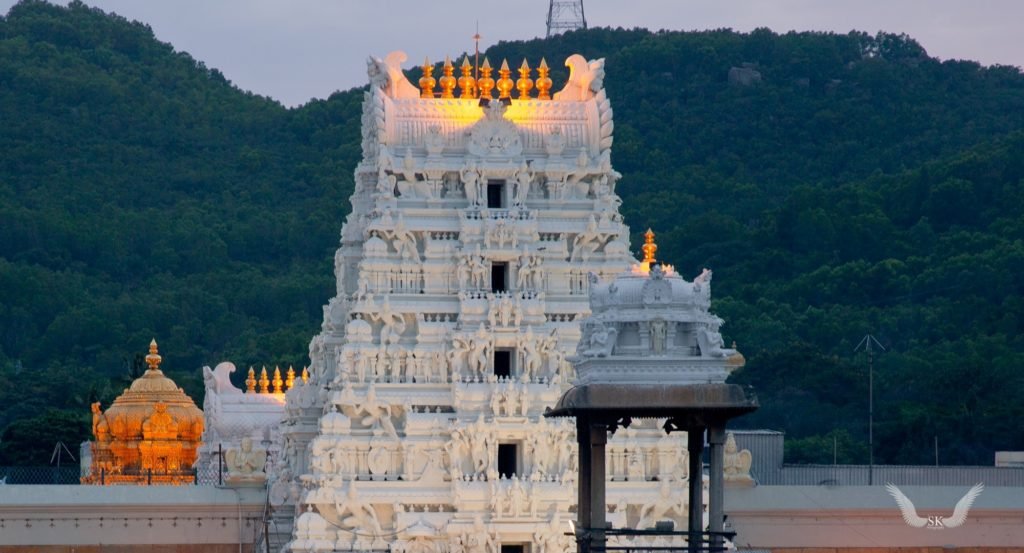
Sri Venkateswara Swami Temple
Sri Venkateswara Swami Temple is the principal shrine of Tirumala, dedicated to Lord Venkateswara, a form of Lord Vishnu. The temple stands on the Seshachalam Hills and is the centre of the Venkateswara tradition followed by millions of pilgrims. The shrine is known for its Vaishnava worship, the Ananda Nilayam Vimanam, the daily Nitis and Sevas, Brahmotsavam, Vaikunta Ekadashi and the long-standing tradition of offering one's hair as a vow. The sacred landscape also includes Bhu Varaha Swamy Temple, Swami Pushkarini and several other places connected with the Tirumala pilgrimage.
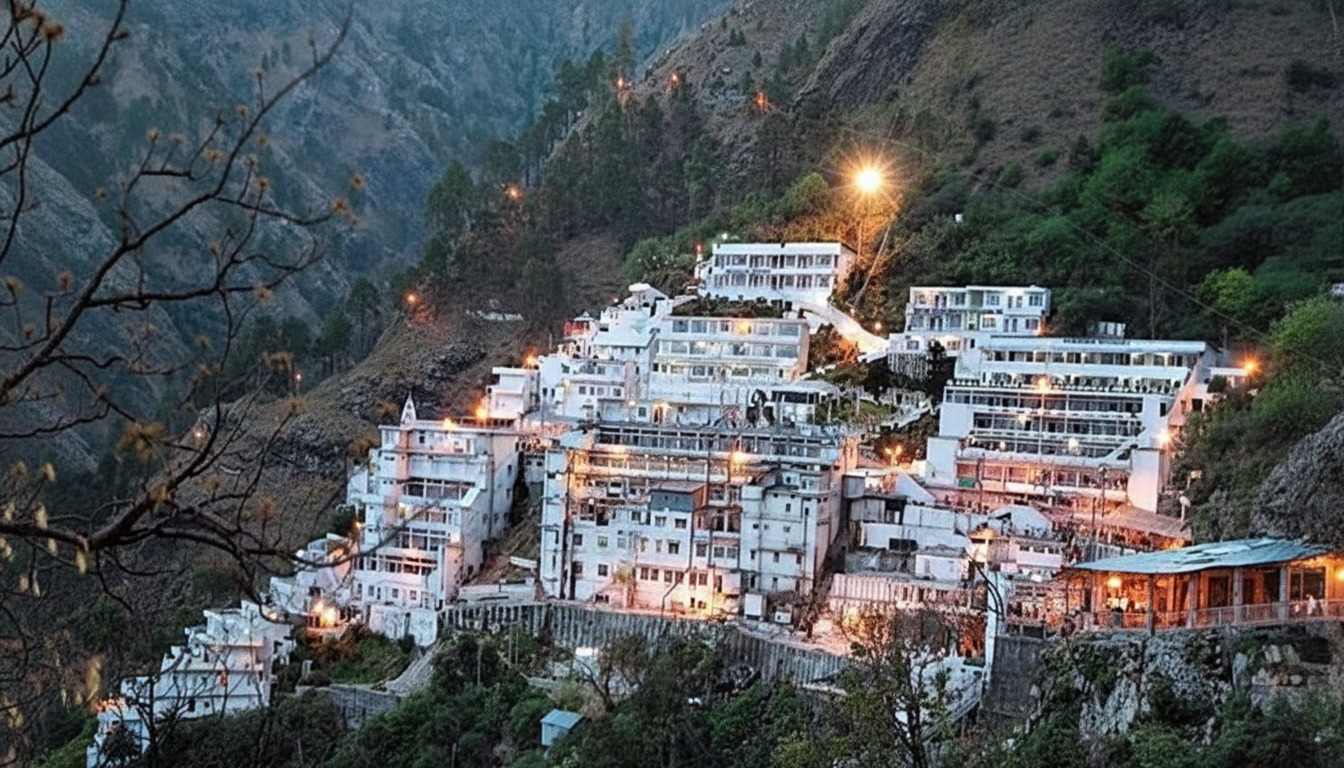
Vaishno Devi Temple
Vaishno Devi Temple, formally the Shri Mata Vaishno Devi Shrine, is a cave shrine in the Trikuta Hills near Katra. The pilgrimage ends at Bhawan, where devotees enter the Holy Cave for darshan of the three natural Pindies worshipped as Maha Kali, Maha Lakshmi and Maha Saraswati. The route to the cave passes through places associated with the Vaishno Devi tradition, including Banganga, Charan Paduka and Ardhkuwari, before reaching Bhawan and, traditionally, Bhairon Ghati.
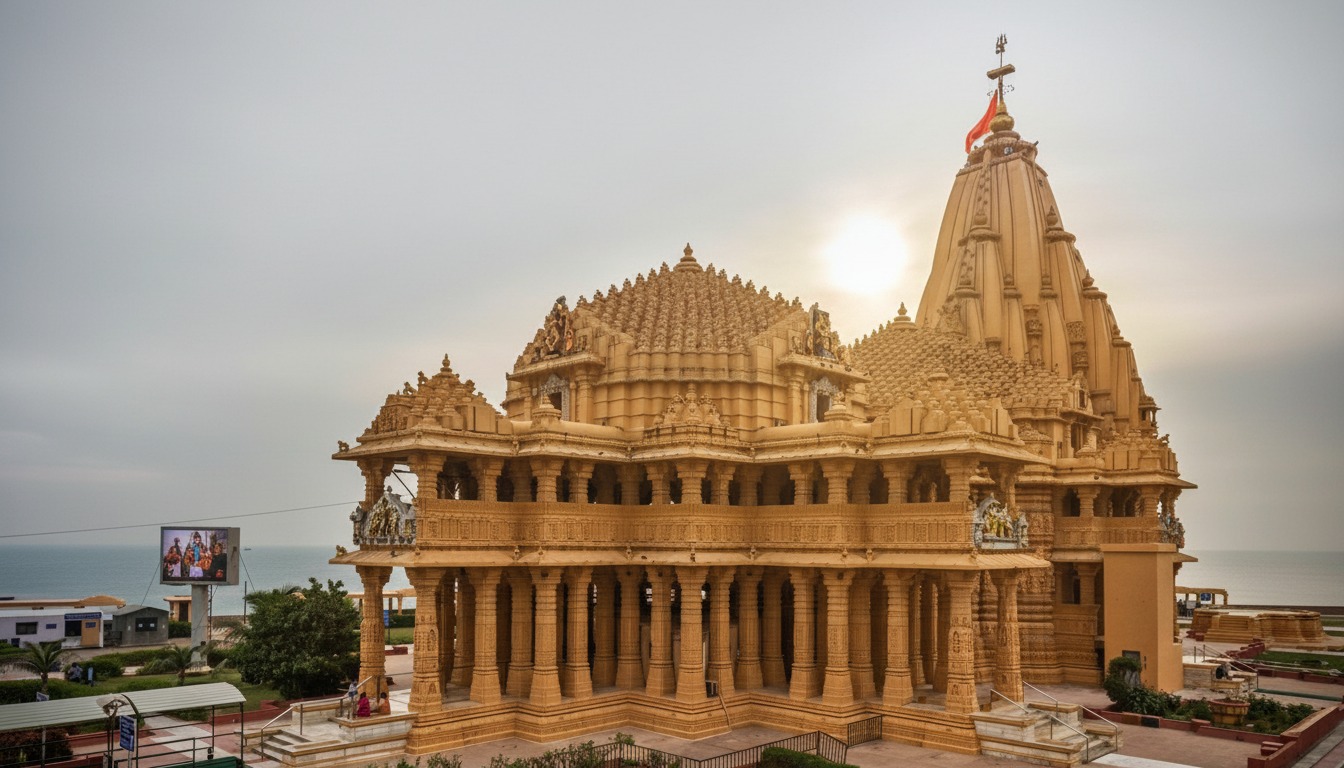
Dwarkadhish Temple
Dwarkadhish Temple, also known as Jagat Mandir, is dedicated to Lord Krishna in his form as Dwarkadhish, the Lord of Dwarka. The temple stands near the Gomti creek on the western coast of Gujarat and is one of the principal pilgrimage centres associated with Krishna. Dwarka holds a distinctive place in Hindu tradition. Here, Krishna is remembered not as the child of Gokul or the youthful Krishna of Vrindavan, but as the ruler who established his kingdom at Dwarka. The temple's importance therefore comes from the connection between Krishna's sacred story, the historic temple at the heart of the city, and the living traditions that continue to shape pilgrimage in Dwarka.
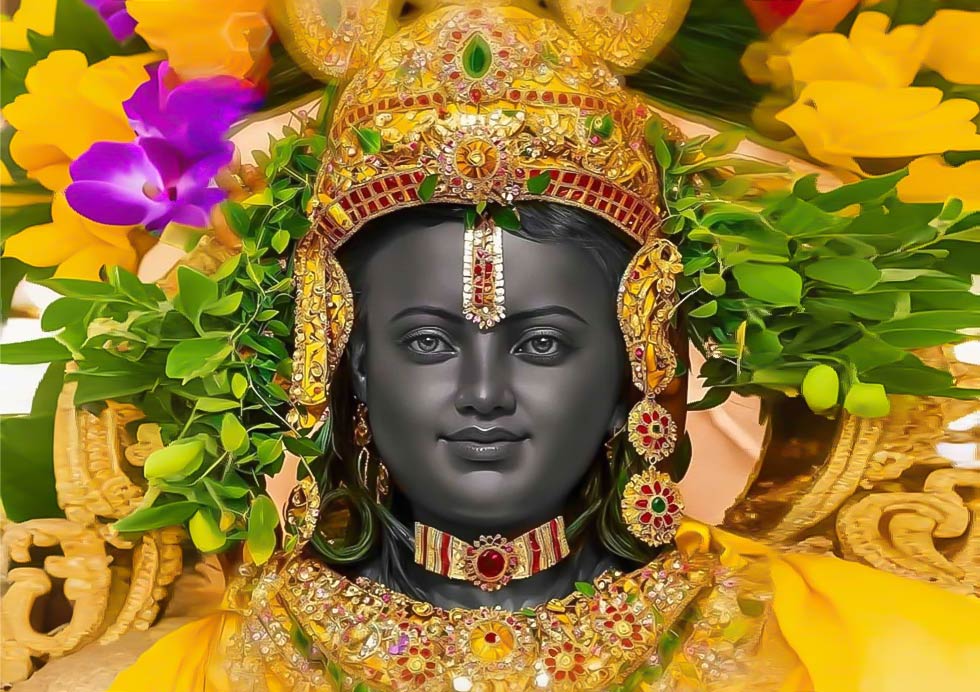
Ram Janmabhoomi Temple
Ram Janmabhoomi Temple is situated in Ayodhya, a city whose sacred identity is closely associated with Shri Ram. In Hindu tradition, Ayodhya is regarded as the birthplace of Shri Ram and is counted among the Sapta Puri, the seven sacred cities of Hindu pilgrimage. The present temple stands at the centre of a sacred site whose religious importance predates the modern structure. Its contemporary history also includes a long legal dispute, the Supreme Court judgment of 2019, the beginning of temple construction and the Pran Pratishtha of Ram Lalla in January 2024.
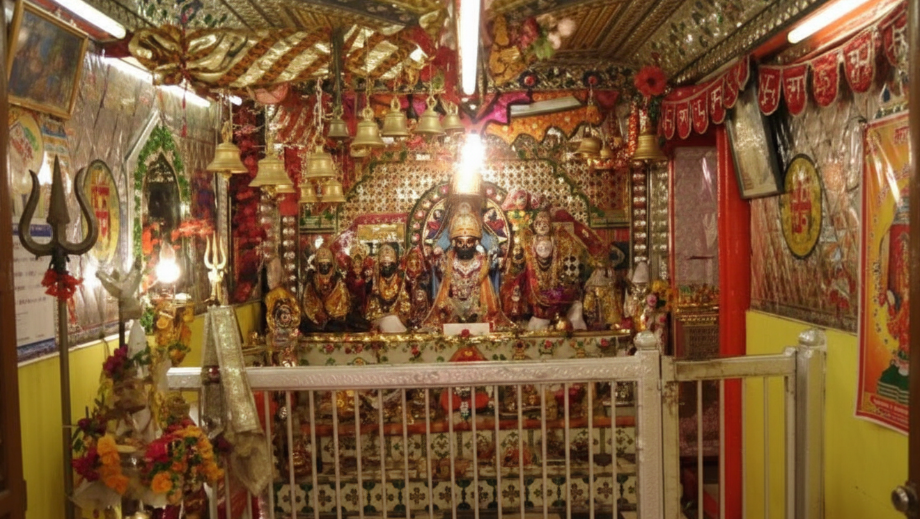
Badrinath Temple
Badrinath Temple is dedicated to Lord Vishnu, worshipped here as Badrinarayan, and is one of the four all-India Char Dham pilgrimage sites. It is also one of the 108 Divya Desams of Vaishnavism and the principal shrine of the Panch Badri tradition. The temple stands at about 3,133 metres in the Garhwal Himalayas, beside the Alaknanda River and between the Nar and Narayan ranges. Badrinath is not only a destination reached after a long Himalayan journey; its identity is tied to Badarikashram, Nara-Narayana, the Badrinarayan murti, seasonal worship and the sacred places that surround the temple.
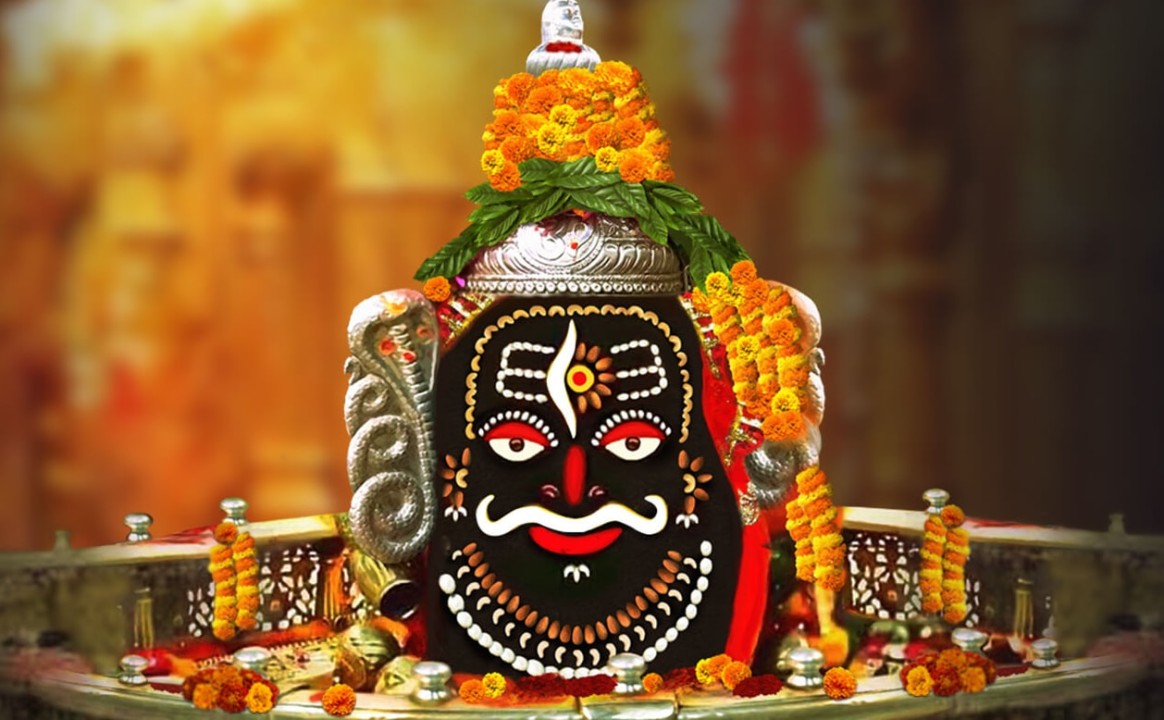
Mahakaleshwar Jyotirlinga
Mahakaleshwar Jyotirlinga is one of the twelve Jyotirlingas of Lord Shiva and the presiding deity of Ujjain. The temple is traditionally associated with Mahakal, Shiva as the Lord beyond ordinary measures of time, and the Jyotirlinga is revered as Swayambhu, or self-manifested. Mahakaleshwar is distinctive among the Jyotirlingas for its south-facing form, known as Dakshinamukhi. The temple is also known for its daily Bhasma Aarti, the Mahakal Sawari during Shravan, and the annual opening of the Nagchandreshwar shrine on Nag Panchami.
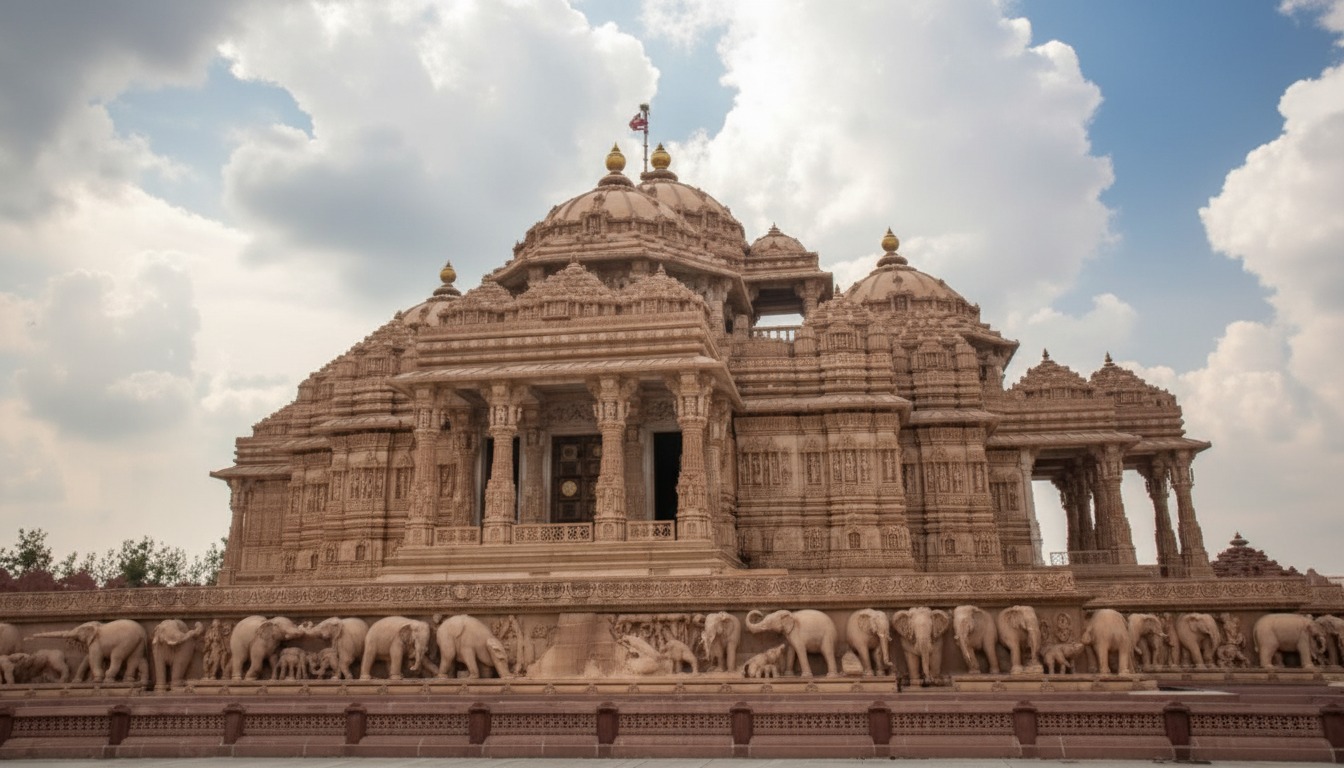
Swaminarayan Akshardham New Delhi
Swaminarayan Akshardham New Delhi is a Hindu mandir and spiritual-cultural campus dedicated to Bhagwan Swaminarayan. The Akshardham Mandir at its centre was inaugurated on 6 November 2005. The mandir brings together worship, sacred murtis and traditional Indian temple architecture. Its history is closely connected with Yogiji Maharaj’s vision for a mandir on the banks of the Yamuna and Pramukh Swami Maharaj’s efforts to bring that vision to New Delhi.
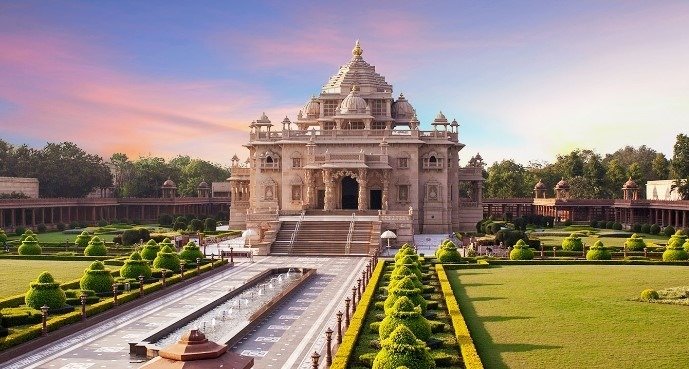
Swaminarayan Akshardham Gandhinagar
Swaminarayan Akshardham Gandhinagar is dedicated to Bhagwan Swaminarayan and was inaugurated in 1992 during the centenary celebrations of Yogiji Maharaj. The complex grew from Yogiji Maharaj's vision for a mandir in Gandhinagar and was developed under the guidance of Pramukh Swami Maharaj. The Akshardham Mandir stands at the centre of the complex. Around it are the exhibition spaces, Abhishek Mandapam, gardens and other cultural facilities through which the life and teachings of Bhagwan Swaminarayan and the values of Hindu tradition are presented.
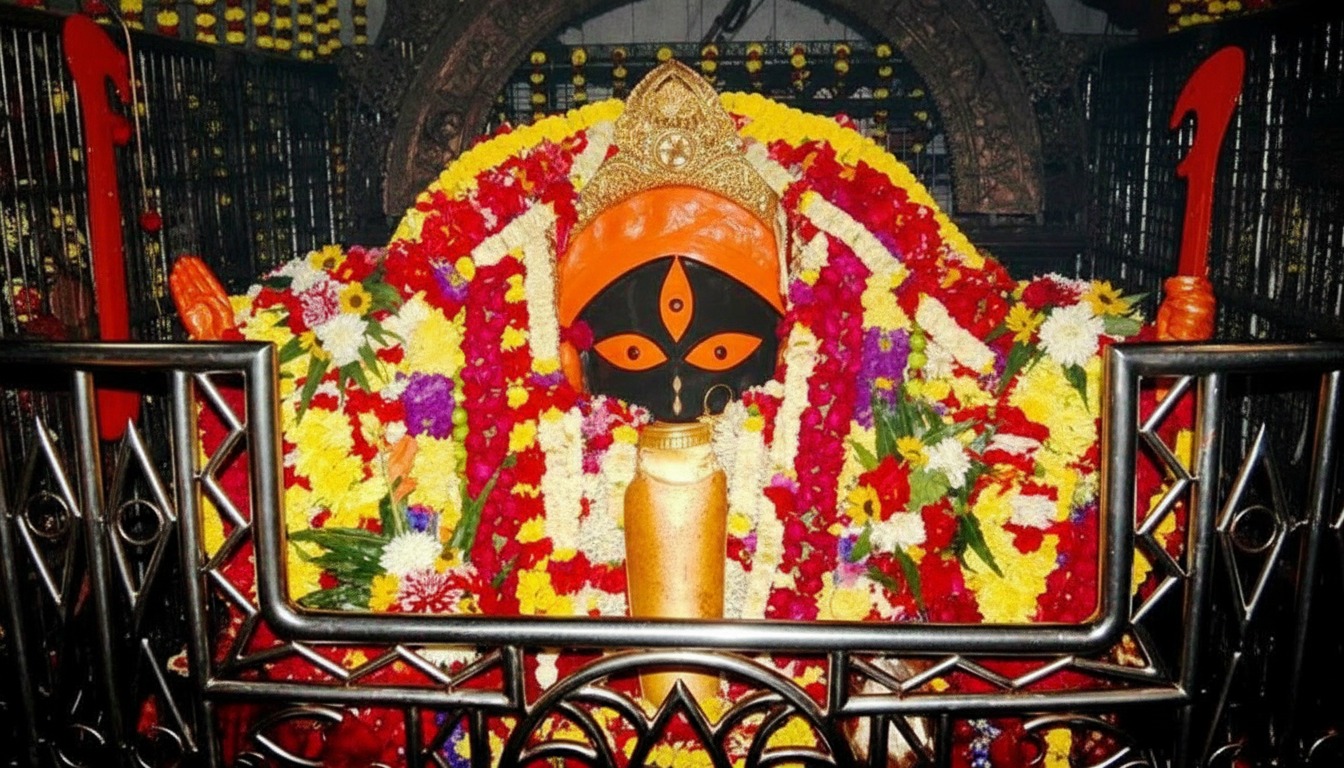
Kalighat Kali Temple
Kalighat Kali Temple is dedicated to Goddess Kali and is one of the major Shakta pilgrimage centres of Kolkata. The temple stands beside the Adi Ganga and is traditionally identified with a Shakti Peetha associated with the toes of Sati's right foot. The present temple dates to the early 19th century and was completed in 1809 under the patronage of the Sabarna Roy Choudhury family. Kalighat is known for its distinctive form of Kali, the Nakuleshwar Bhairava shrine, its Shakta and Tantric traditions, Kali Puja and the sacred spaces that surround the main sanctum.
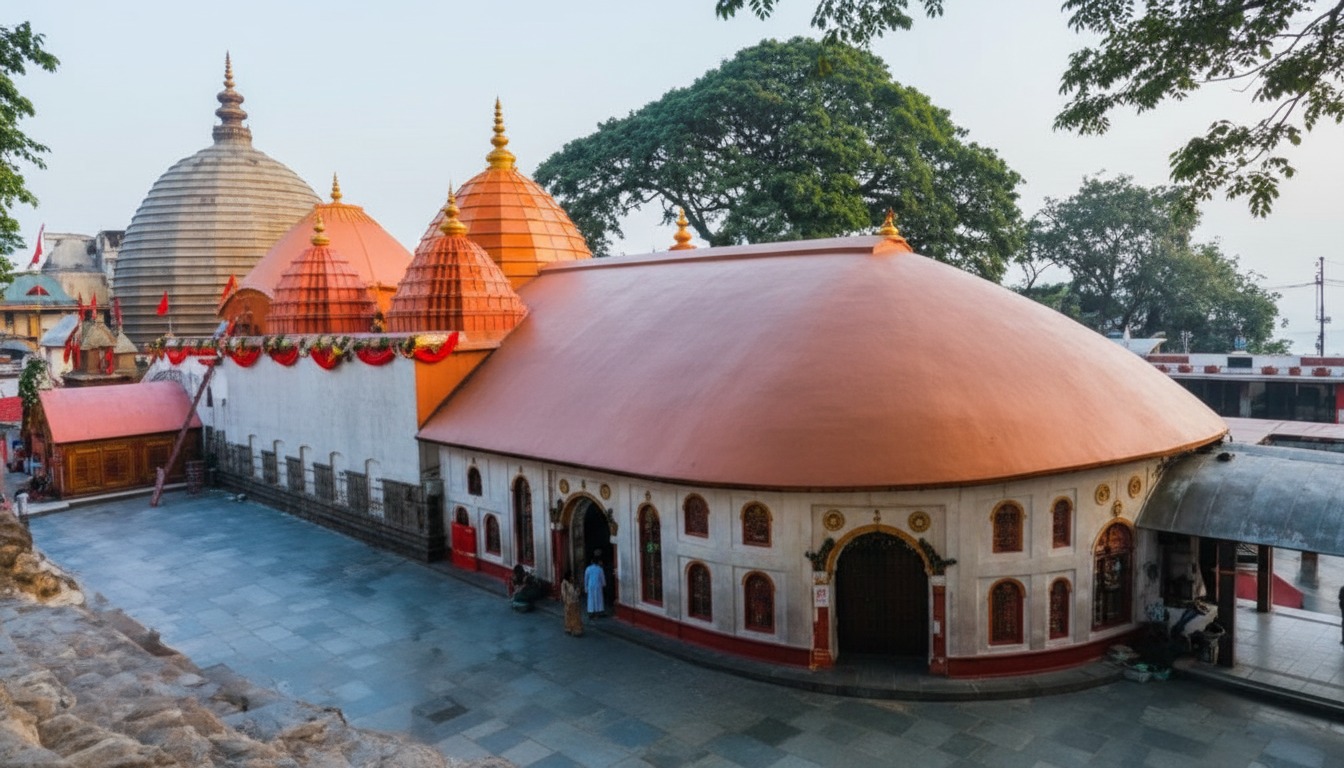
Kamakhya Temple
Kamakhya Temple is dedicated to Goddess Kamakhya and stands on Nilachal Hill in Guwahati, Assam. It is one of the major Shakti Peethas of the Hindu tradition and an important centre of Shakta and Tantric worship. The principal form of the goddess is not a conventional idol. In the sanctum, Kamakhya is worshipped as a sacred yoni-shaped stone associated with a natural underground spring. The temple is also known for Ambubachi Mela, its distinctive Nilachal architecture and the group of Mahavidya and Shiva shrines spread across Nilachal Hill.
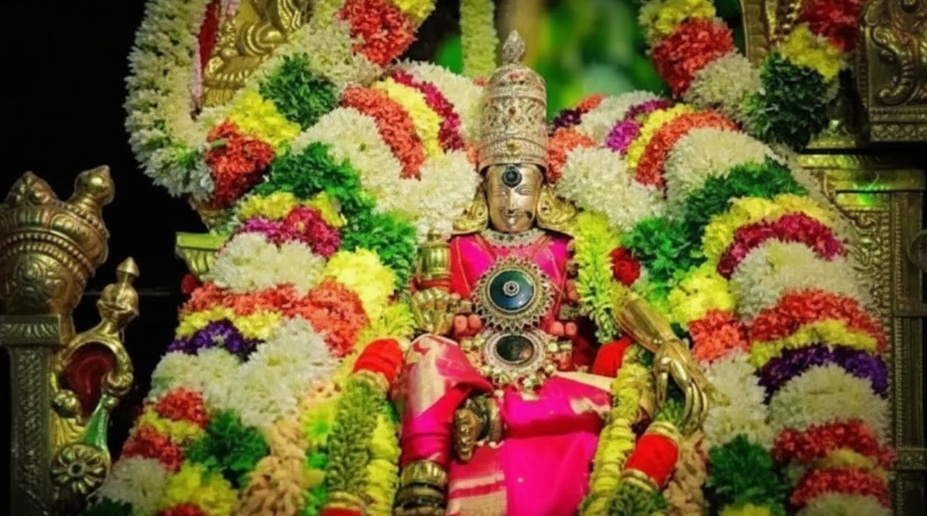
Meenakshi Temple
Meenakshi Temple, also known as Sri Meenakshi Sundareswarar Temple, is dedicated to Goddess Meenakshi and Lord Sundareswarar, the Madurai forms of Parvati and Shiva. The temple stands at the centre of Madurai and has shaped the city's religious and urban identity for centuries. The temple is known for its towering gopurams, sculpted mandapas, the Golden Lotus Tank, the Thousand Pillared Hall and the sacred marriage of Meenakshi and Sundareswarar celebrated during the Chithirai Festival. Its importance comes from the way history, temple worship, Tamil Shaiva tradition and the city's religious life remain closely connected.
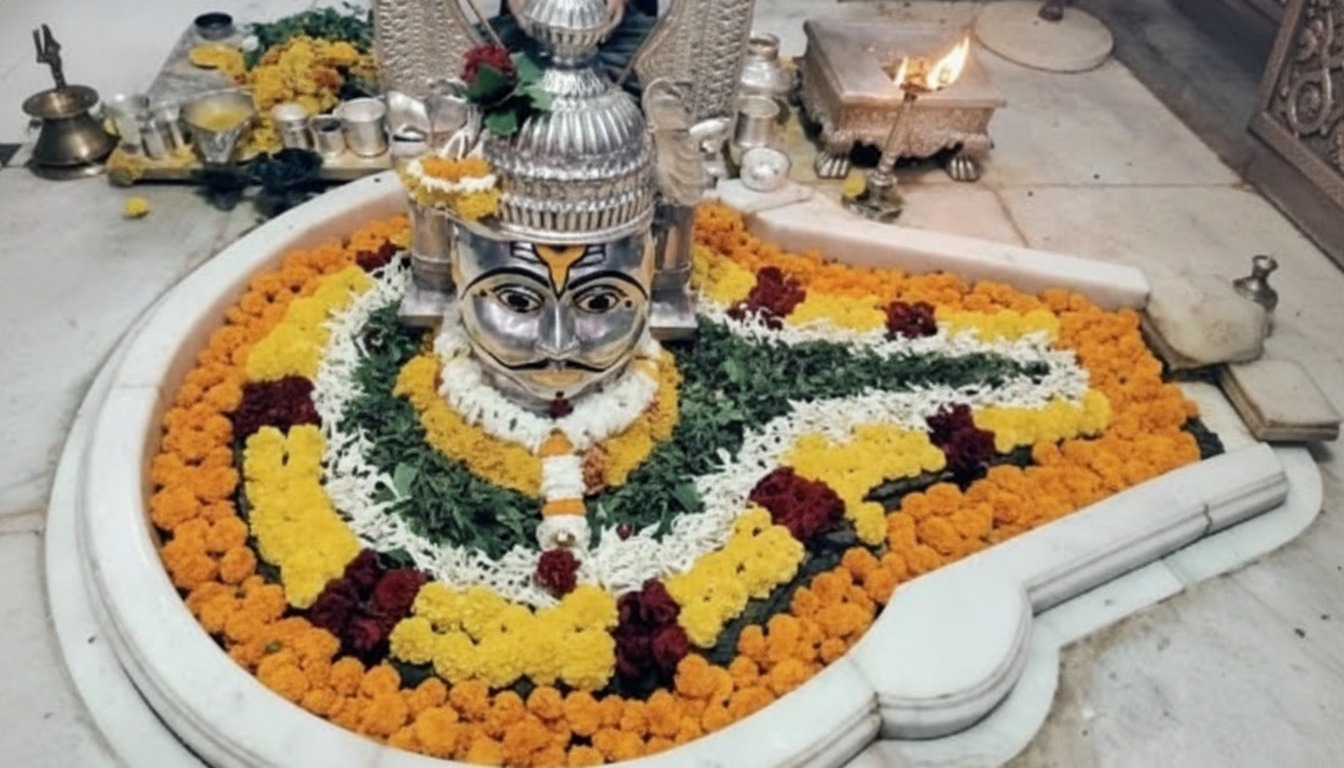
Trimbakeshwar Jyotirlinga Temple
Trimbakeshwar Jyotirlinga Temple is one of the twelve Jyotirlingas of Lord Shiva. It stands at Trimbak, near the Brahmagiri Hills, about 28 kilometres from Nashik, in the sacred landscape associated with the origin of the Godavari River. The shrine is known for its distinctive three-faced Jyotirlinga, its association with Gautama Rishi and the Godavari, the sacred Kushavarta Kund, and its long connection with Shaiva and Nath traditions. The present temple dates to the Peshwa period, while the pilgrimage tradition around Trimbakeshwar is much older.
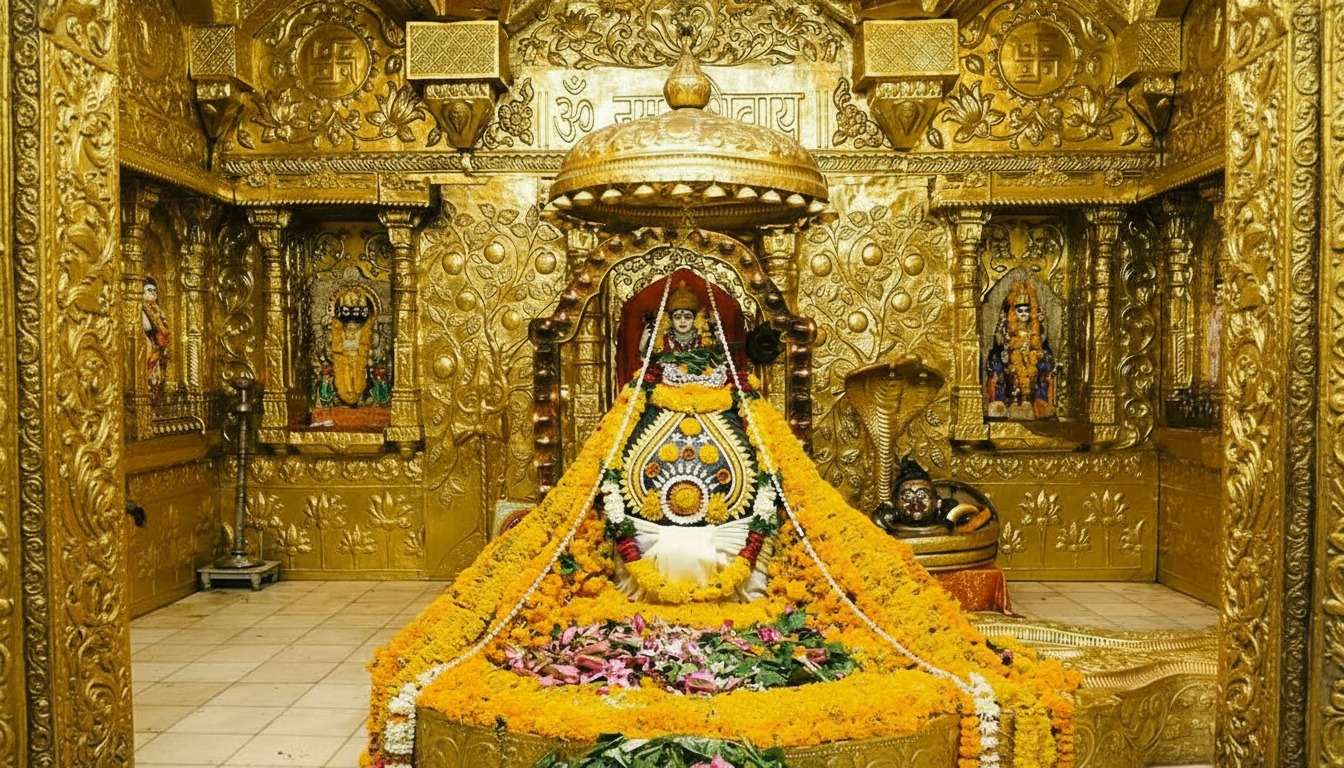
Somnath Jyotirlinga
Somnath Jyotirlinga is a major Shiva shrine on the western coast of Gujarat, at Prabhas Patan near Veraval. It is traditionally regarded as the first among the twelve Jyotirlingas and is worshipped as Lord Somnath, the Lord associated with Soma or the Moon. The temple stands beside the Arabian Sea and is closely connected with the sacred landscape of Prabhas. The site is known for the Chandra legend, the Triveni Sangam tradition, the present Chaulukya-style temple and a long history of destruction, rebuilding and continued worship.
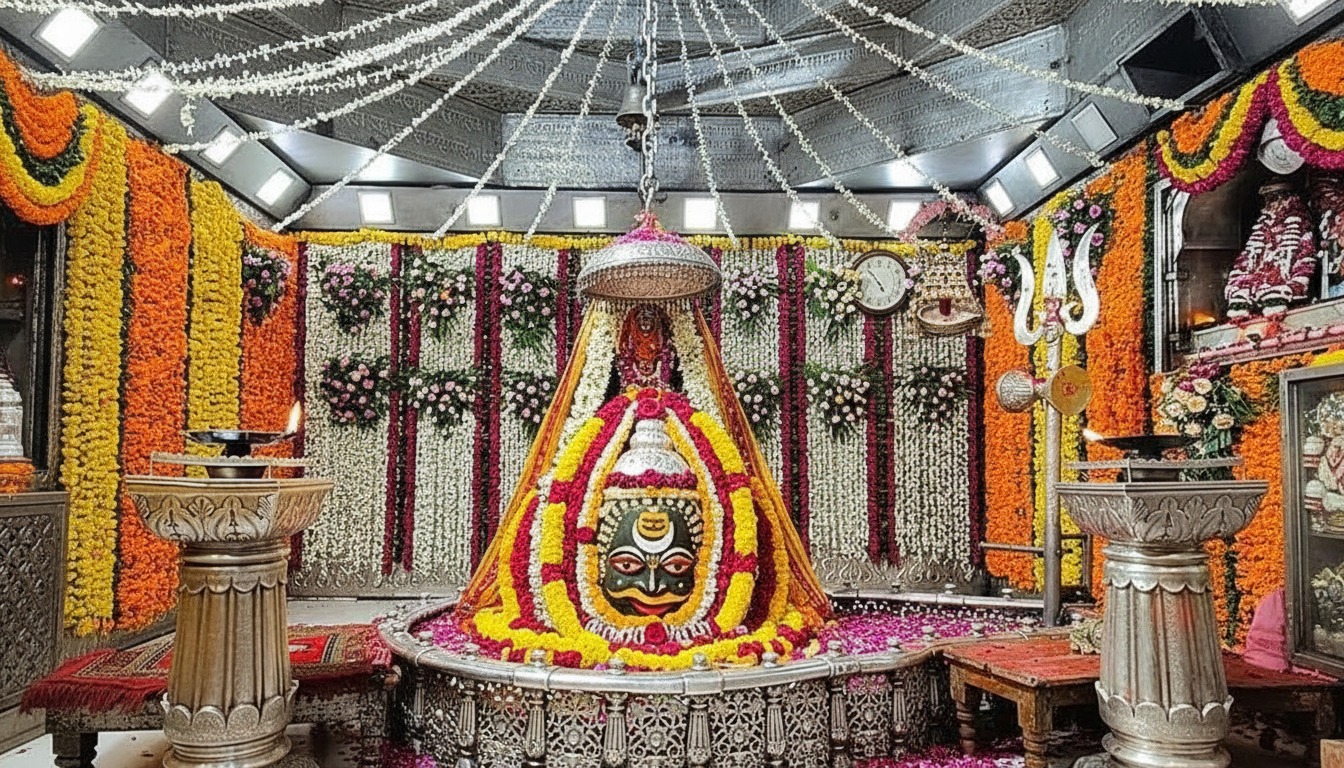
Omkareshwar Temple
Omkareshwar Temple is one of the twelve Jyotirlinga shrines of Lord Shiva, situated on Mandhata Island in the Narmada River in Madhya Pradesh. The island is also known as Omkar Parvat, and its traditional association with the sacred syllable Om is central to the identity of the pilgrimage site. The shrine is closely connected with Mamleshwar Temple on the southern bank of the Narmada. Together, Omkareshwar and Mamleshwar form an important Shaiva pilgrimage centre, surrounded by ancient temples, ghats, sacred river crossings and the traditional path around Omkar Parvat.
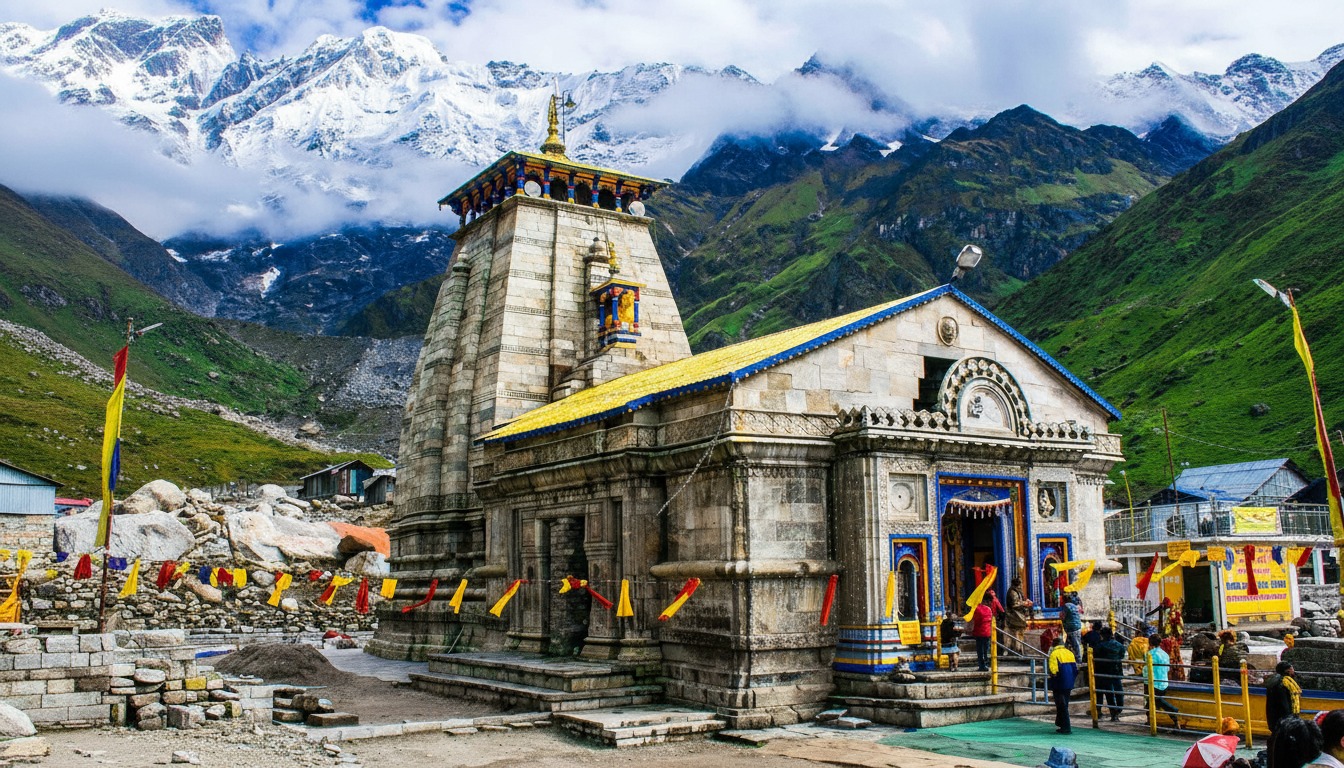
Kedarnath Temple
Kedarnath Temple is dedicated to Lord Shiva and is one of the twelve Jyotirlingas. It stands at about 3,580 metres in Rudraprayag district, near the source region of the Mandakini River, and forms part of Uttarakhand's Chota Char Dham and Panch Kedar traditions. The shrine is known for its large stone structure, the natural rock form worshipped as Shiva, the traditional story of the Pandavas and the annual movement of the deity's winter worship to Ukhimath. Its importance comes from the combination of an old Himalayan pilgrimage tradition, living Shaiva worship and the sacred geography surrounding Kedarnath.
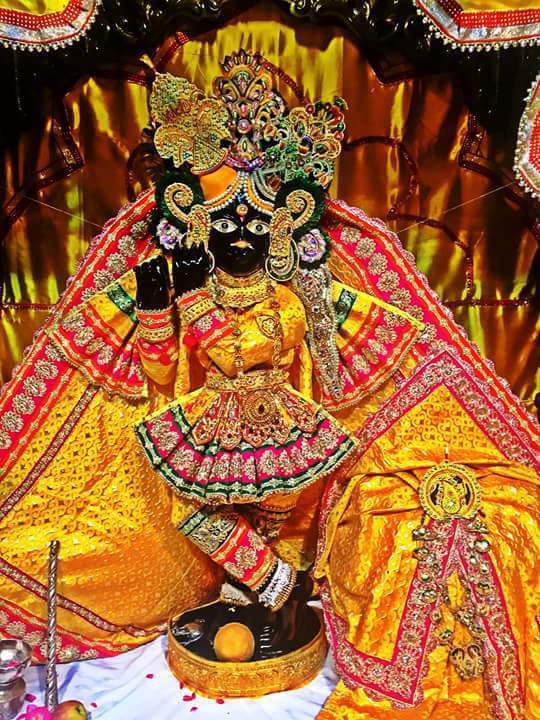
Banke Bihari Temple
Banke Bihari Temple in Vrindavan is dedicated to Thakur Shri Banke Bihari Ji, worshipped in the Braj tradition as the combined form of Radha and Krishna. The deity was originally worshipped at Nidhivan under the name Kunj Bihari before being installed at the present temple in the 19th century. The shrine is closely associated with Swami Haridas and the Haridasi tradition of Krishna devotion. Its worship is known for Jhanki Darshan, the absence of regular Mangala Aarti, seasonal Shringar and Rajbhog, and the major festivals of Holi, Jhulan Yatra, Janmashtami, Akshaya Tritiya, Sharad Purnima and Bihar Panchami.
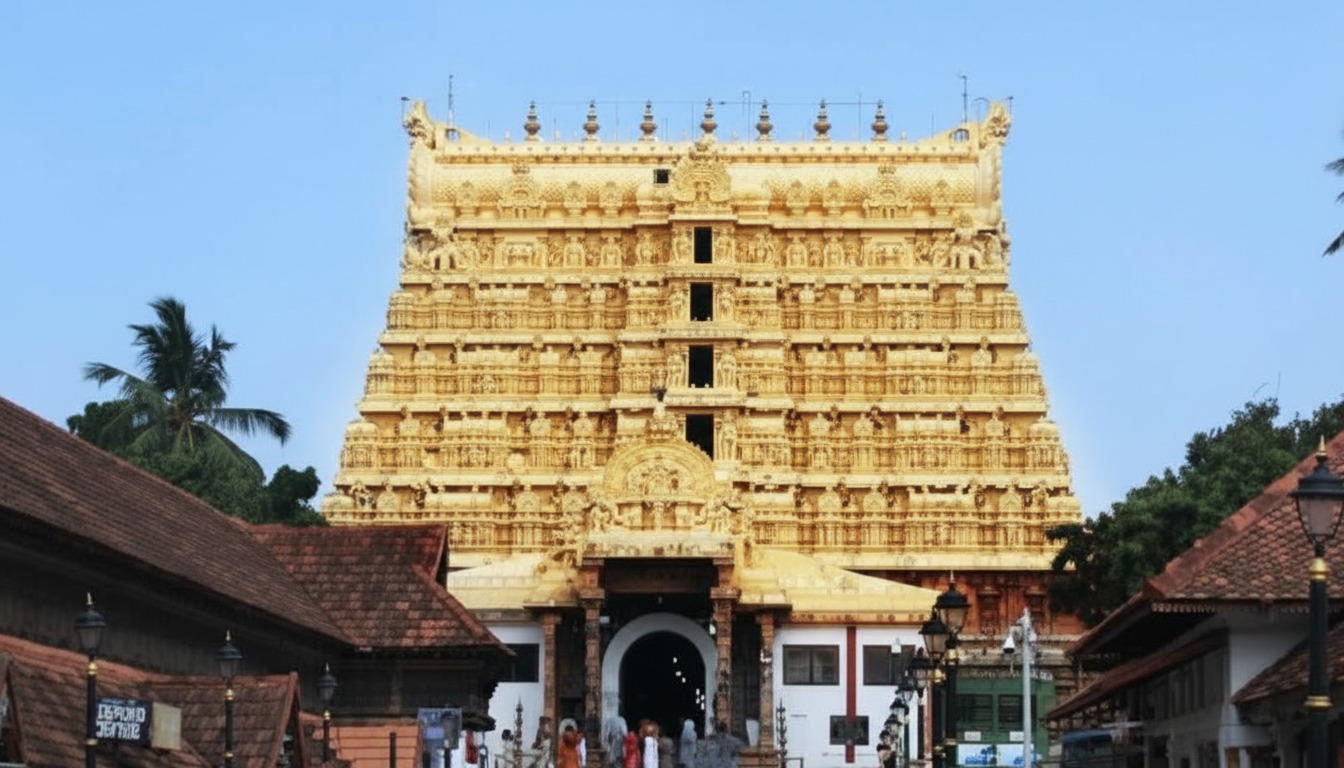
Padmanabhaswamy Temple
Padmanabhaswamy Temple is dedicated to Lord Padmanabhaswamy, a form of Lord Vishnu reclining on the serpent Anantha. The temple is one of the 108 Divya Desams of the Sri Vaishnava tradition and stands within the historic East Fort of Thiruvananthapuram. The shrine is known for its Ananthasayanam form of Vishnu, its Kerala and Dravidian architectural features, the daily temple rituals and its close connection with the former Travancore royal family. The name Thiruvananthapuram itself is associated with Anantha, the serpent on whom the Lord reclines.
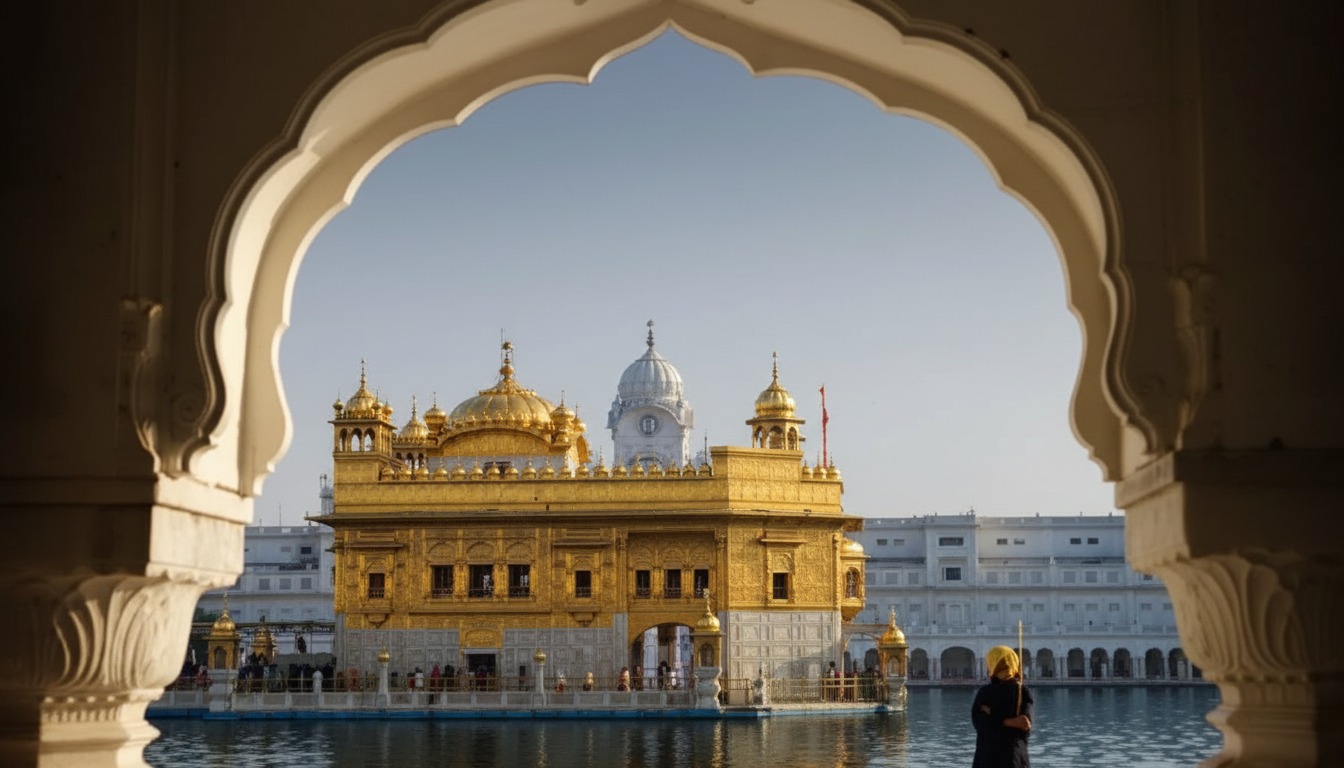
The Golden Temple
The Golden Temple, also known as Sri Harmandir Sahib or Sri Darbar Sahib, is the central religious shrine of Sikhism in Amritsar. The gurdwara stands in the middle of the Amrit Sarovar, with a marble causeway connecting it to the surrounding parikrama. The complex is known for the presence of the Guru Granth Sahib, continuous Gurbani Kirtan, the Akal Takht and the tradition of Guru Ka Langar. Its history runs from the establishment of Amritsar by Guru Ram Das to the construction of Harmandir Sahib under Guru Arjan and the later rebuilding and gilding associated with Maharaja Ranjit Singh.
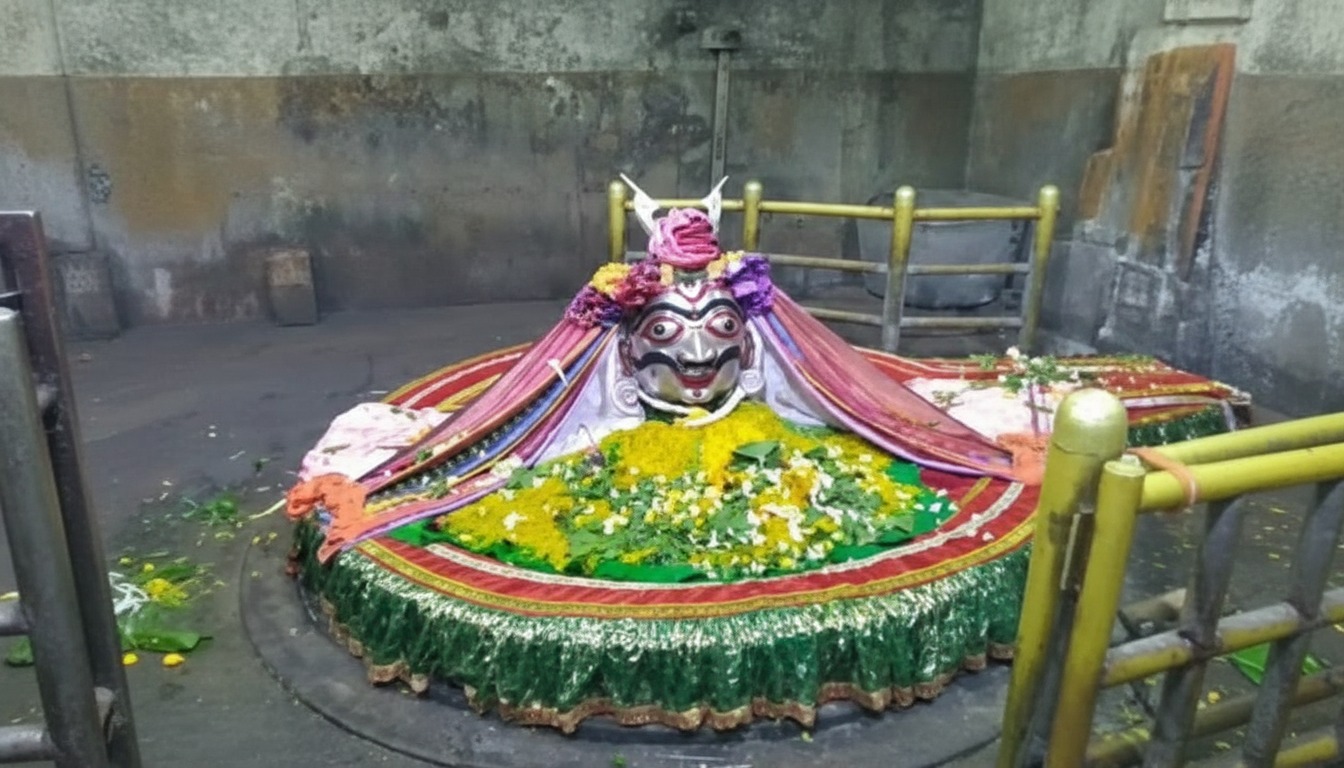
Lingaraj Temple
Lingaraj Temple is one of the oldest and most important temples of Bhubaneswar, dedicated to Lord Lingaraj. The presiding deity is worshipped as Harihara, a form that brings together Shiva and Vishnu, and the shrine remains the centre of worship in the historic Ekamra Kshetra. The temple is known for its Swayambhu linga, its 11th-century Kalinga architecture, its large collection of subsidiary shrines and festivals such as Maha Shivaratri and Rukuna Ratha Yatra. Around the main temple, Bindu Sagar, Ekamra Van and several older shrines form part of the sacred landscape of Old Bhubaneswar.
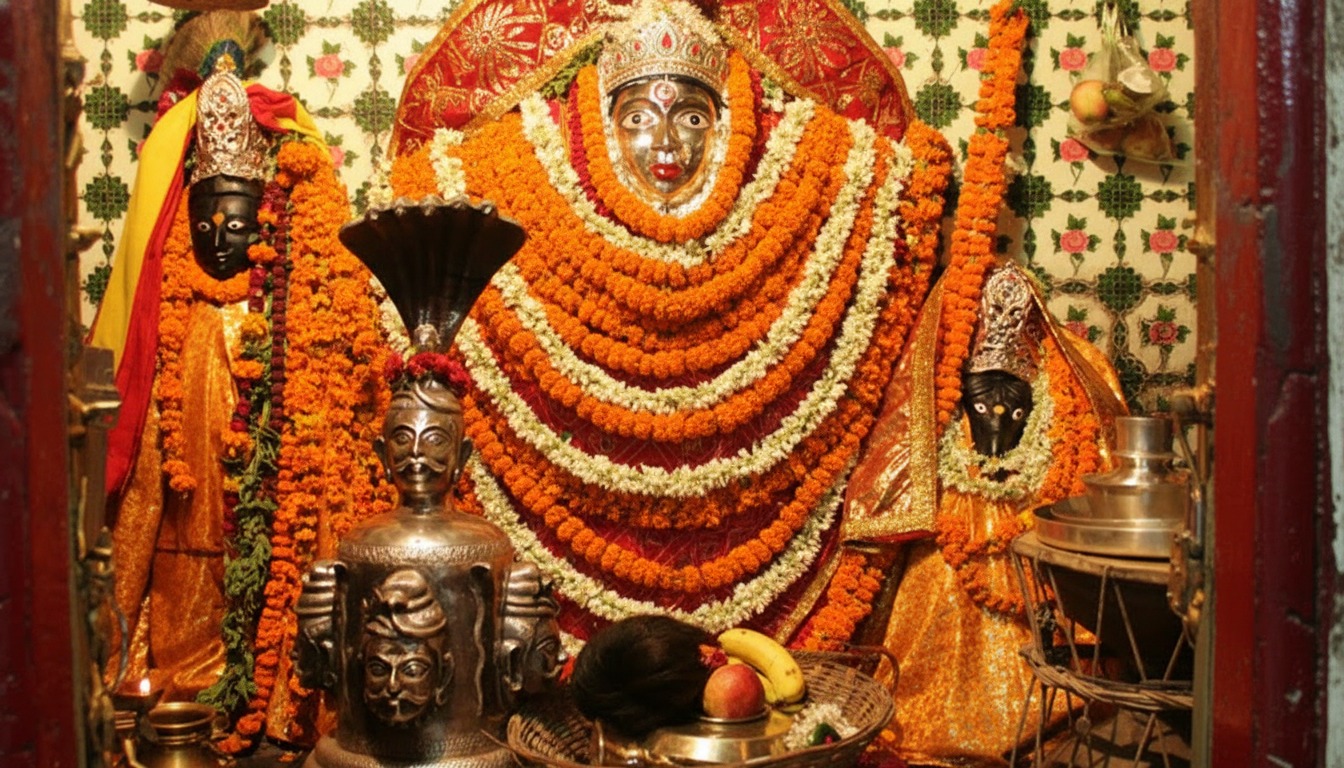
Kashi Vishwanath Temple
Kashi Vishwanath Temple is dedicated to Lord Shiva, worshipped here as Vishwanath or Vishweshwara, the Lord of the Universe. It is one of the twelve Jyotirlinga shrines and stands in the old city of Varanasi near the western bank of the Ganga. The present temple was built in 1780 under Maharani Ahilyabai Holkar of Indore. The shrine is known for its sacred Jyotirlinga, the golden shikharas, daily worship and its close connection with the religious life of Kashi.
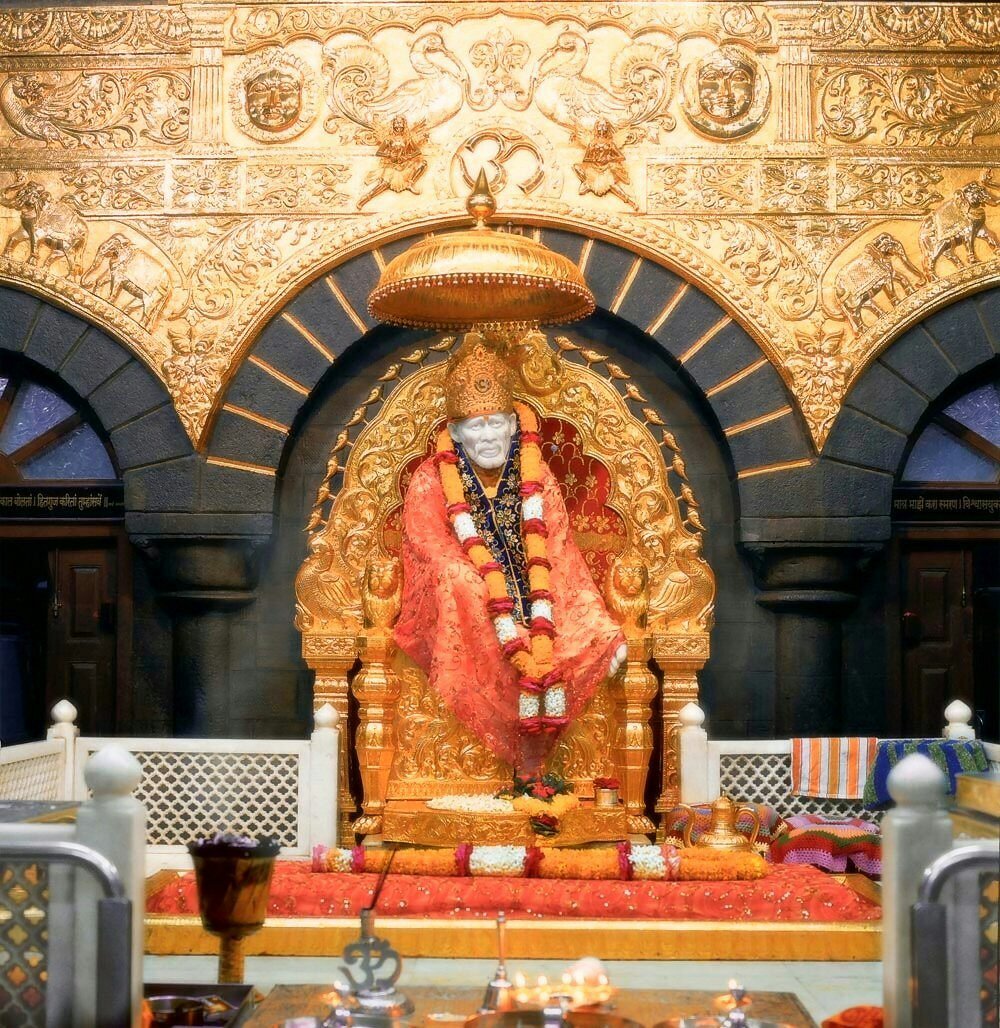
Sai Baba Mandir
Sai Baba Mandir in Shirdi is centred on the Samadhi Mandir, where the mortal remains of Sai Baba are enshrined. The shrine grew out of the stone Buti Wada built during Baba’s final years and became the principal place of worship after his Mahasamadhi on 15 October 1918. The temple complex also preserves the places most closely associated with Baba’s life in Shirdi: Gurusthan, Dwarkamai, Chavadi and Lendi Baug. Together, these places form the religious landscape through which Sai Baba’s life, teachings and worship continue to be remembered.
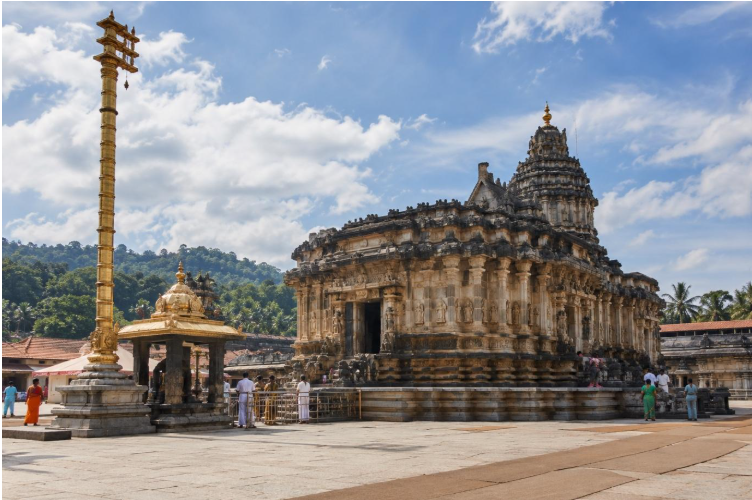
Sringeri Sharada Peetham Temple
Sringeri Sharada Peetham is a historic centre of Advaita Vedanta on the banks of the Tunga River in Karnataka. According to the Peetham's tradition, Adi Shankaracharya established the Dakshinamnaya Sri Sharada Peetham here more than twelve centuries ago. It is regarded as the southern Amnaya Peetham among the four associated with his teaching tradition. At the centre of the complex is Sri Sharadamba Temple, dedicated to Goddess Sharadamba, the form of Saraswati worshipped here as the deity of knowledge. The wider Peetham also includes Sri Vidyashankara Temple and several other shrines, while Vedic study, worship and the Guru Parampara remain part of Sringeri's living tradition.
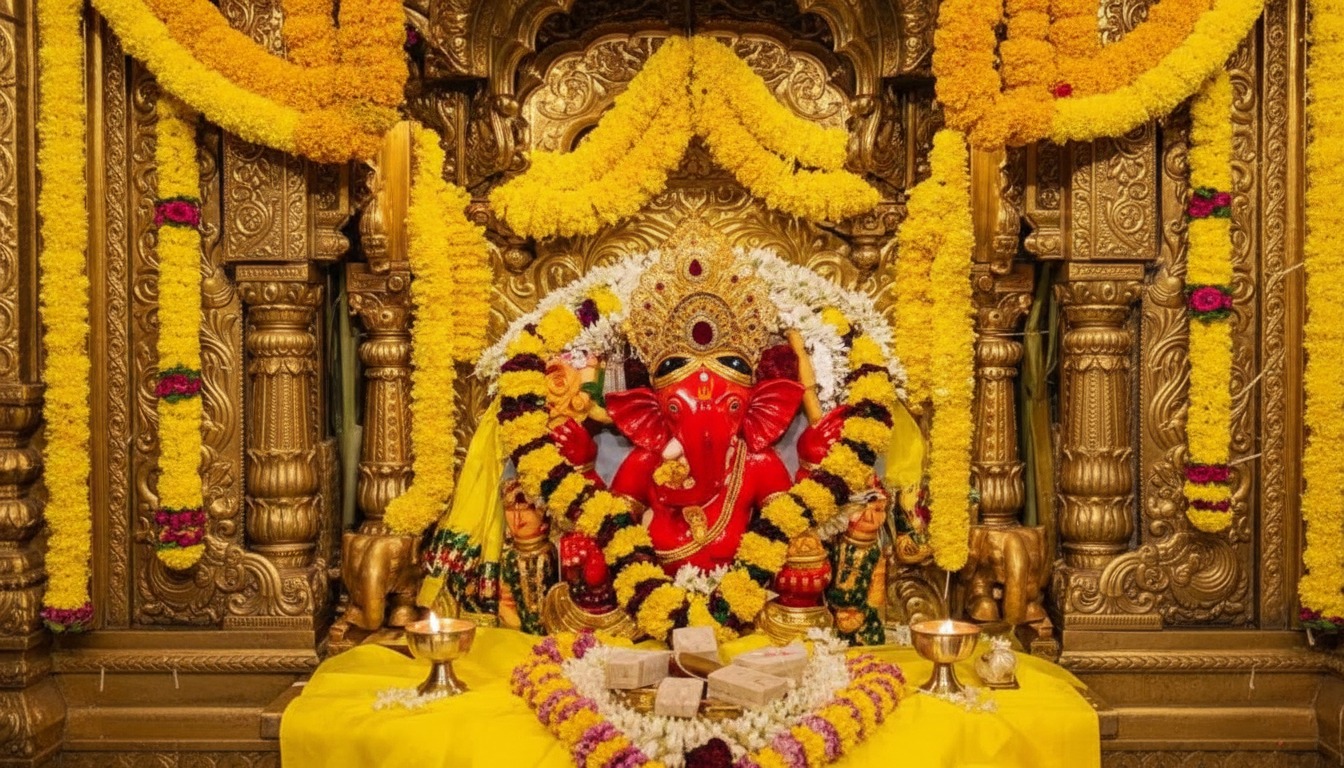
Siddhivinayak Temple
Siddhivinayak Temple is dedicated to Lord Ganesha in Prabhadevi, Mumbai. The shrine was first consecrated on 19 November 1801 and grew from a small temple into an important centre of Ganapati worship in the city. The temple is known for its black-stone Siddhivinayak image, whose trunk curves to the right, with Riddhi and Siddhi beside the deity. The present temple complex grew through major reconstruction in the 1990s, while the original deity remained at the centre of worship.
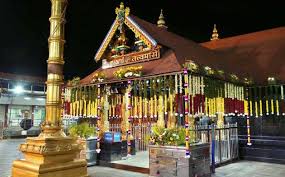
Sabarimala Temple
Sabarimala Temple, also known as Sabarimala Sree Dharma Sastha Temple, is dedicated to Lord Ayyappa and stands on Sabarimala hill in Pathanamthitta district, Kerala. The shrine is surrounded by the forests and hills of the Western Ghats and forms the centre of the Sabarimala pilgrimage tradition. The temple is known for the 41-day Vratham, the Irumudi carried by pilgrims, the sacred Pathinettampadi or 18 steps, Neyyabhishekam and the annual Mandala-Makaravilakku season. The traditions of Ayyappa, Malikappurathamma, Vavar and the sacred places along the route are closely connected with the temple.
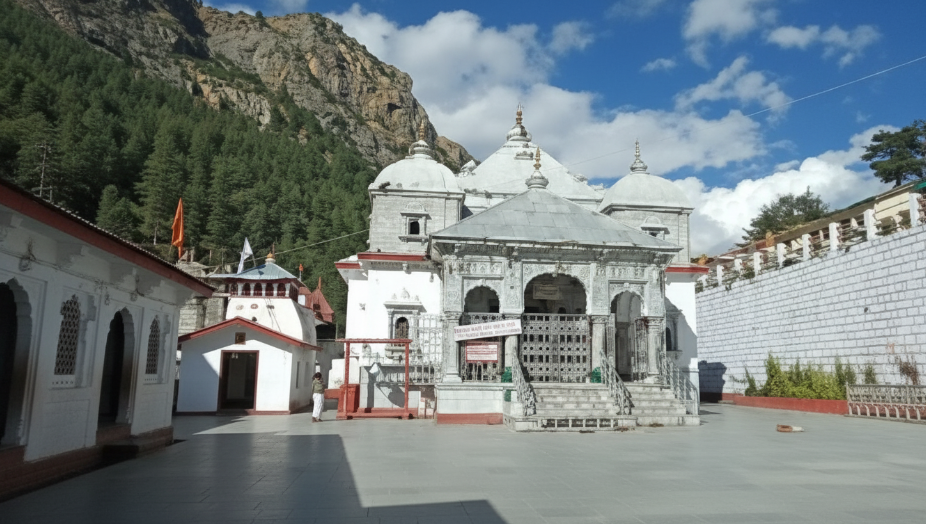
Gangotri Temple
Gangotri Temple is dedicated to Goddess Ganga and is one of the four shrines of the Char Dham pilgrimage in Uttarakhand. The temple stands in Gangotri on the Bhagirathi River, in the high Himalayan valley of Uttarkashi. Gangotri is traditionally associated with the descent of Ganga to earth through the penance of King Bhagirath. The physical source of the Bhagirathi is at Gaumukh, but Gangotri remains the principal sacred centre where Goddess Ganga is worshipped.
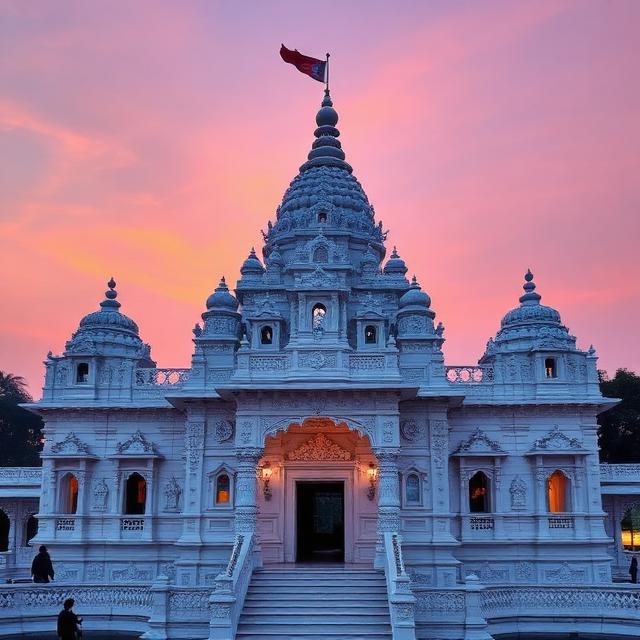
Trinetra Ganesh Temple
Trinetra Ganesh Temple is a historic shrine dedicated to Lord Ganesha in his three-eyed form, located within Ranthambore Fort in Sawai Madhopur, Rajasthan. The temple is known for its distinctive image of Ganesha, his association with Riddhi, Siddhi, Shubh and Labh, and its long-standing connection with the people of the region. The shrine is also known for the tradition of sending the first wedding invitation to Lord Ganesha at Ranthambore. Its annual Ganesh Chaturthi fair brings the temple and the surrounding fort area into a major period of pilgrimage and public activity.
.jpg)
Shree Shantadurga Temple
Shree Shantadurga Temple is a major Hindu shrine at Kavlem in Ponda, Goa, dedicated to Goddess Shantadurga. In the temple's religious tradition, Shantadurga is the form of the goddess who brings peace between Lord Vishnu and Lord Shiva, and she is also known locally as Santeri. The temple has a long association with Goa's Goud Saraswat Brahmin tradition. Its present structure dates to the 18th century and is known for its Goan temple form, Deepastambha, temple tank, spacious courtyard and annual religious processions.
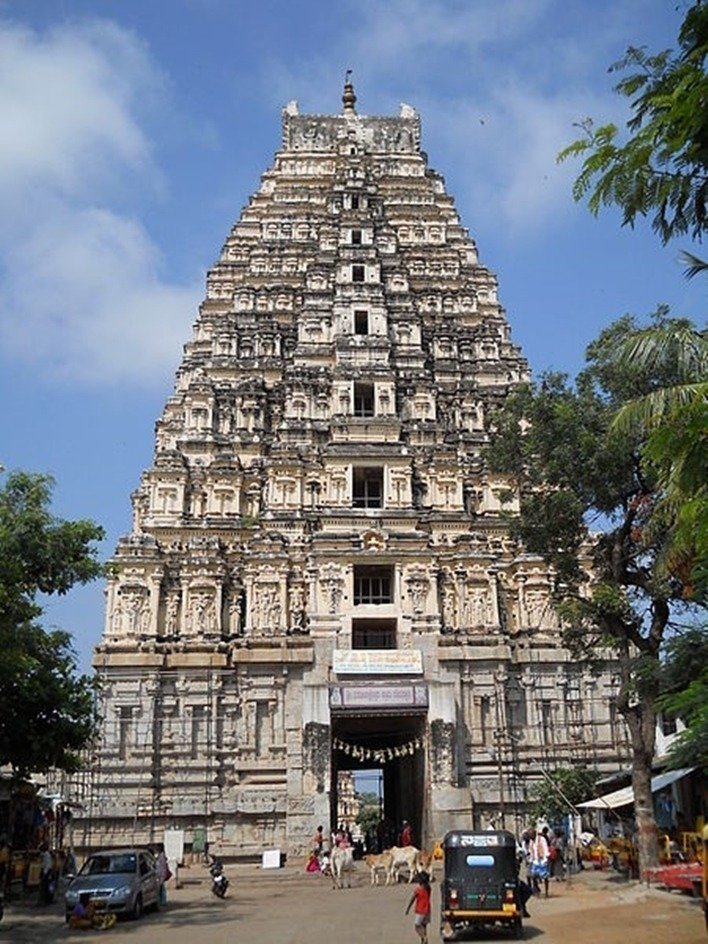
Virupaksha Temple
Virupaksha Temple is a historic Shiva temple in Hampi, dedicated to Lord Virupaksha and associated with Goddess Pampa. It stands on the southern bank of the Tungabhadra and remains a functioning place of worship within the Group of Monuments at Hampi, a UNESCO World Heritage Site. The shrine is known for its long history, the Virupaksha–Pampa tradition, the nine-storey eastern gopuram, the Ranga Mantapa and the painted ceilings of its halls. Unlike many of Hampi's monuments, worship at Virupaksha has continued through the centuries.
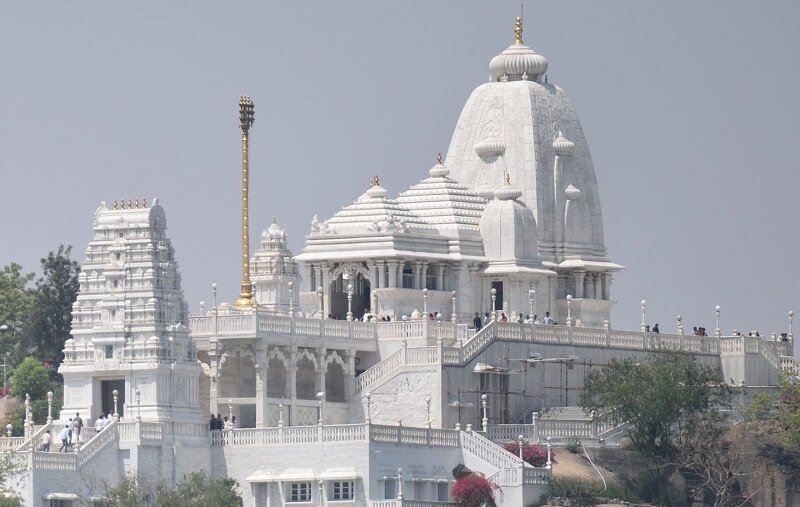
Birla Mandir
Birla Mandir is a Hindu temple dedicated to Lord Venkateswara, a form of Lord Vishnu, on Naubat Pahad in Hyderabad. The temple was built by the Birla Foundation and opened in 1976 after nearly a decade of construction. The shrine is known for its white marble structure, its combination of South Indian, Utkal and Rajasthani architectural features, and the large Venkateswara shrine at the centre of the complex. The hilltop location also places the temple within the wider sacred and urban landscape of Hyderabad.
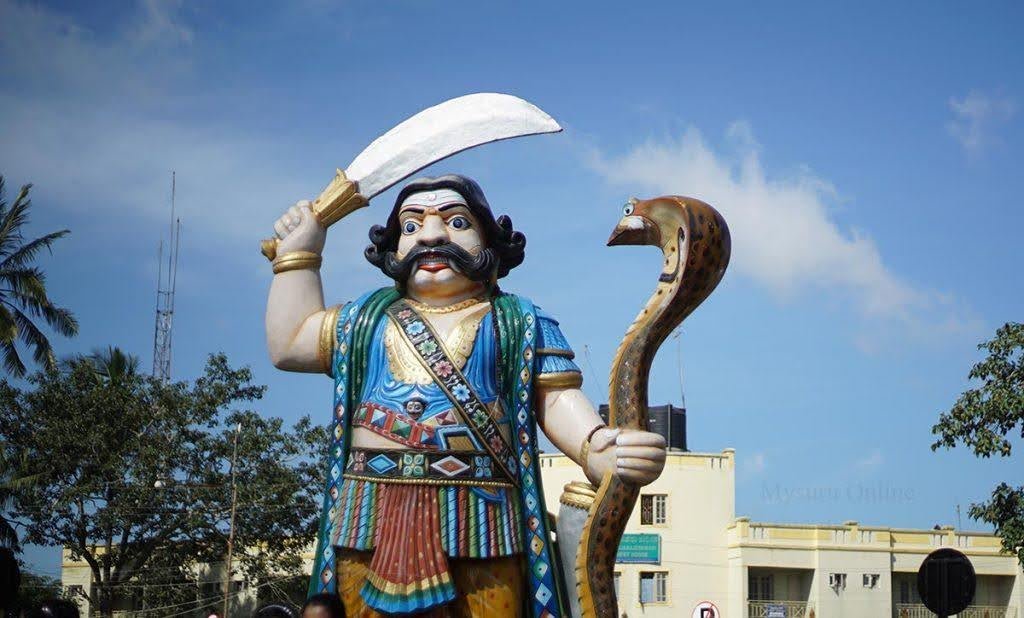
Chamundeshwari Temple
Chamundeshwari Temple stands on Chamundi Hill in Mysuru and is dedicated to Goddess Chamundeshwari, a form of Shakti and the tutelary deity of the Mysuru royal family. The temple is closely associated with the traditional story of the goddess defeating the buffalo demon Mahishasura on the hill, from which the name Mysuru is traditionally derived. The shrine is known for its seven-tiered gopura, the 1,008-step approach to the hill, the large monolithic Nandi and its connection with Mysuru Dasara. For centuries, Chamundeshwari has remained at the centre of the religious and cultural life of Mysuru.
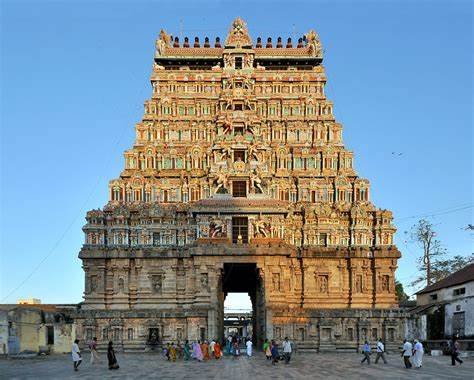
Thillai Nataraja Temple
Thillai Nataraja Temple, also known as Chidambaram Nataraja Temple, is dedicated to Lord Shiva in his form as Nataraja, the Lord of Dance. It is one of the five Pancha Bhuta Sthalams, where Shiva is worshipped as Akasha, or space, and is also one of the important centres of Tamil Shaivism. The temple is known for the Nataraja shrine in the Chit Sabha, the Chidambara Rahasya, the golden-roofed halls, the four Raja Gopurams and its connection with the sacred traditions of dance. The temple's annual worship includes Arudra Darshan and Aani Thirumanjanam, while the wider Chidambaram tradition is closely associated with Bharatanatyam and the offering of dance to Nataraja.
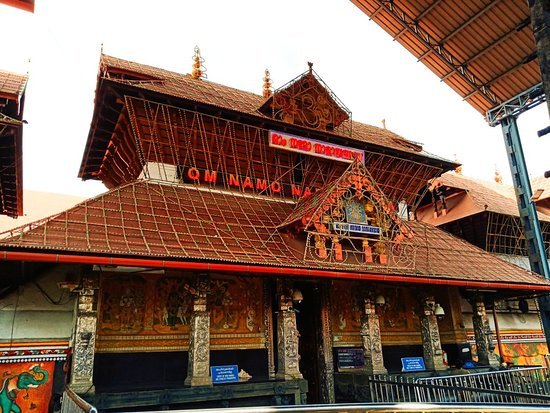
Guruvayur Temple
Guruvayur Temple is dedicated to Lord Guruvayurappan, a form of Lord Vishnu worshipped as Krishna. The temple is one of Kerala’s major Vaishnava pilgrimage centres and is often called Bhuloka Vaikuntham in devotional tradition. The shrine is known for its Kerala temple architecture, the daily worship of Guruvayurappan, Thulabharam, Krishnanattam, Guruvayur Utsavam and Guruvayur Ekadasi. Its history also includes the work of important devotional figures such as Melpathur Narayana Bhattathiri and Poonthanam, the Guruvayur Satyagraha and the rebuilding that followed the 1970 fire.
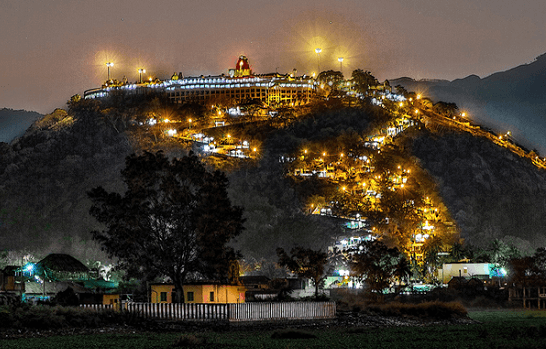
Palani Murugan Temple
Palani Murugan Temple, also known as Arulmigu Dandayudhapani Swami Temple, is dedicated to Lord Murugan in his Dandayudhapani form. The hill shrine at Palani is one of the Arupadai Veedu, the six traditional abodes of Murugan, and stands on Sivagiri Hill above the town. The temple is known for the ascetic form of Palani Andavar, the traditions of Siddhar Bhogar and Idumban, the kavadi pilgrimage, Panchamirtham and festivals such as Thai Poosam and Panguni Uthiram. Together with the older temple at Tiru Avinankudi at the foot of the hill, these traditions form an important part of Palani's religious history.
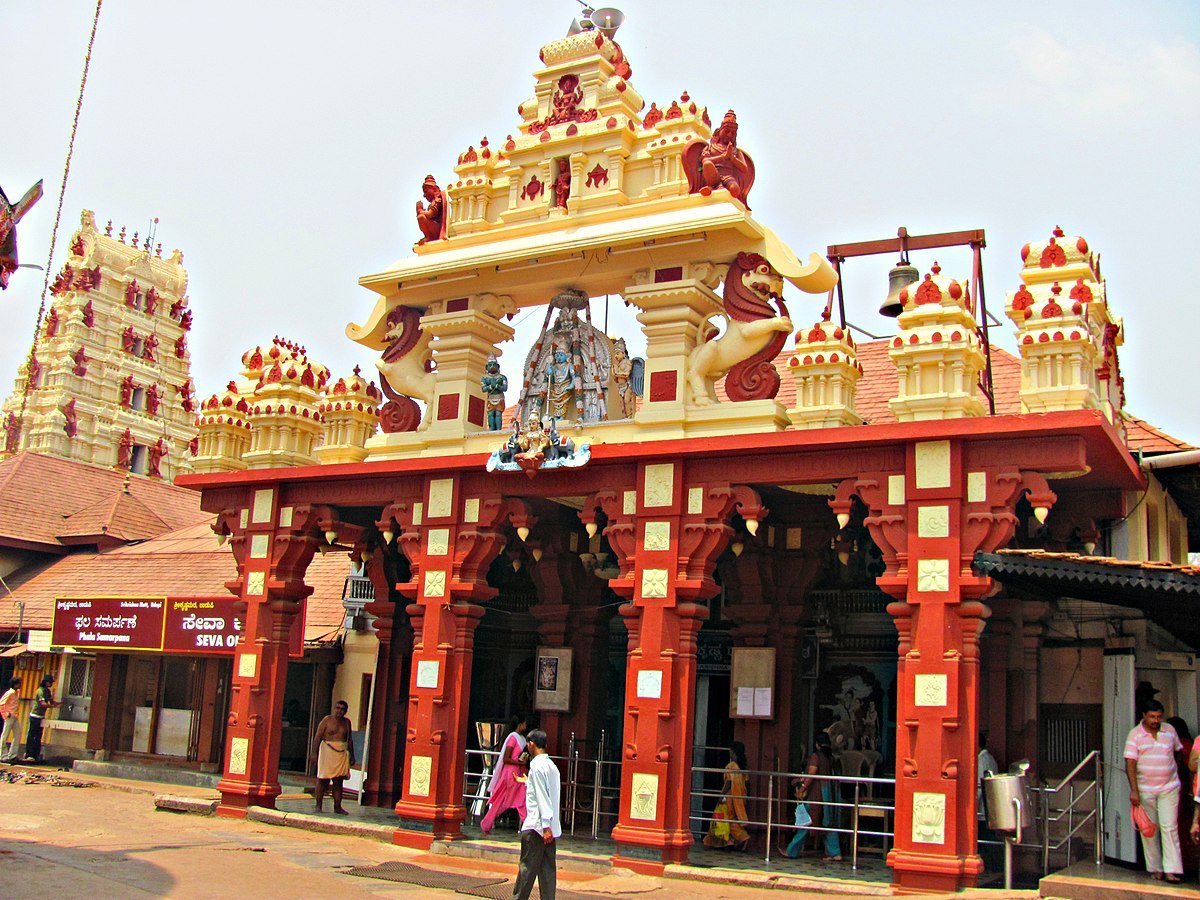
Udupi Sri Krishna Matha
Udupi Sri Krishna Matha is a historic Vaishnava temple dedicated to Lord Krishna in his Bala Krishna form. The temple was established by Sri Madhvacharya in the 13th century and became the centre of the Dvaita tradition and the Ashta Matha system in Udupi. The temple is known for its west-facing Krishna image, darshan through the Navagraha Kindi, the Kanakana Kindi tradition, daily worship and Anna Dasoha. Its religious life is closely connected with the eight Ashta Mathas, which take responsibility for the temple through the biennial Paryaya system.
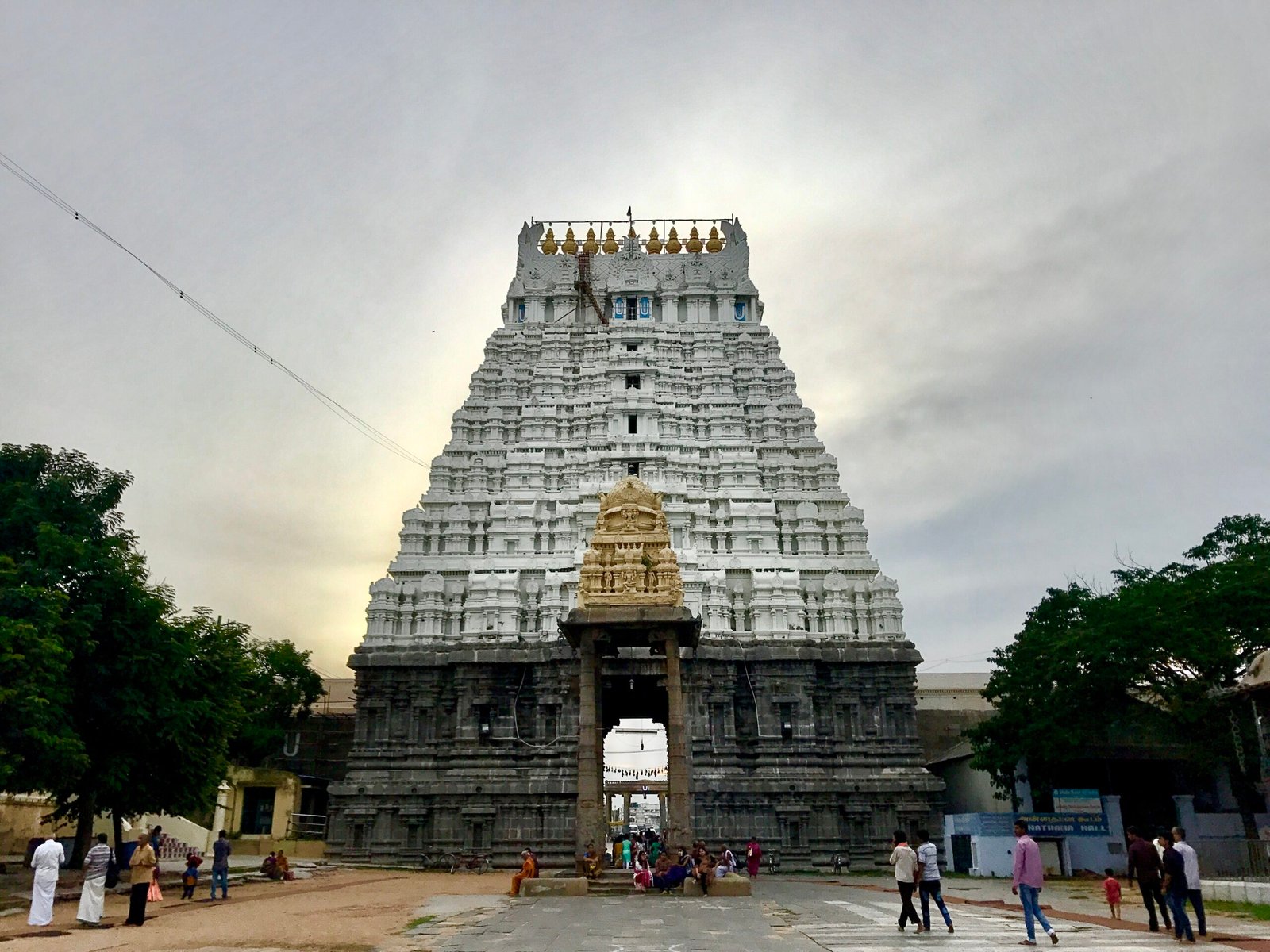
Varadharaja Perumal Temple
Varadharaja Perumal Temple, also known as Devarajaswamy Temple or Perumal Koil, is dedicated to Lord Varadharaja, a form of Lord Vishnu. It is one of the 108 Divya Desams revered in the Sri Vaishnava tradition and stands on Hastigiri in Kanchipuram. The temple is known for its long history in Vishnu worship, the shrine of Perundevi Thayar, its large Dravidian complex and the Athi Varadar tradition. Its daily worship, Vaikasi Brahmotsavam, Vaikunta Ekadasi and other utsavams continue through the year, while the temple's connection with Ramanuja and other Sri Vaishnava acharyas is an important part of its religious history.
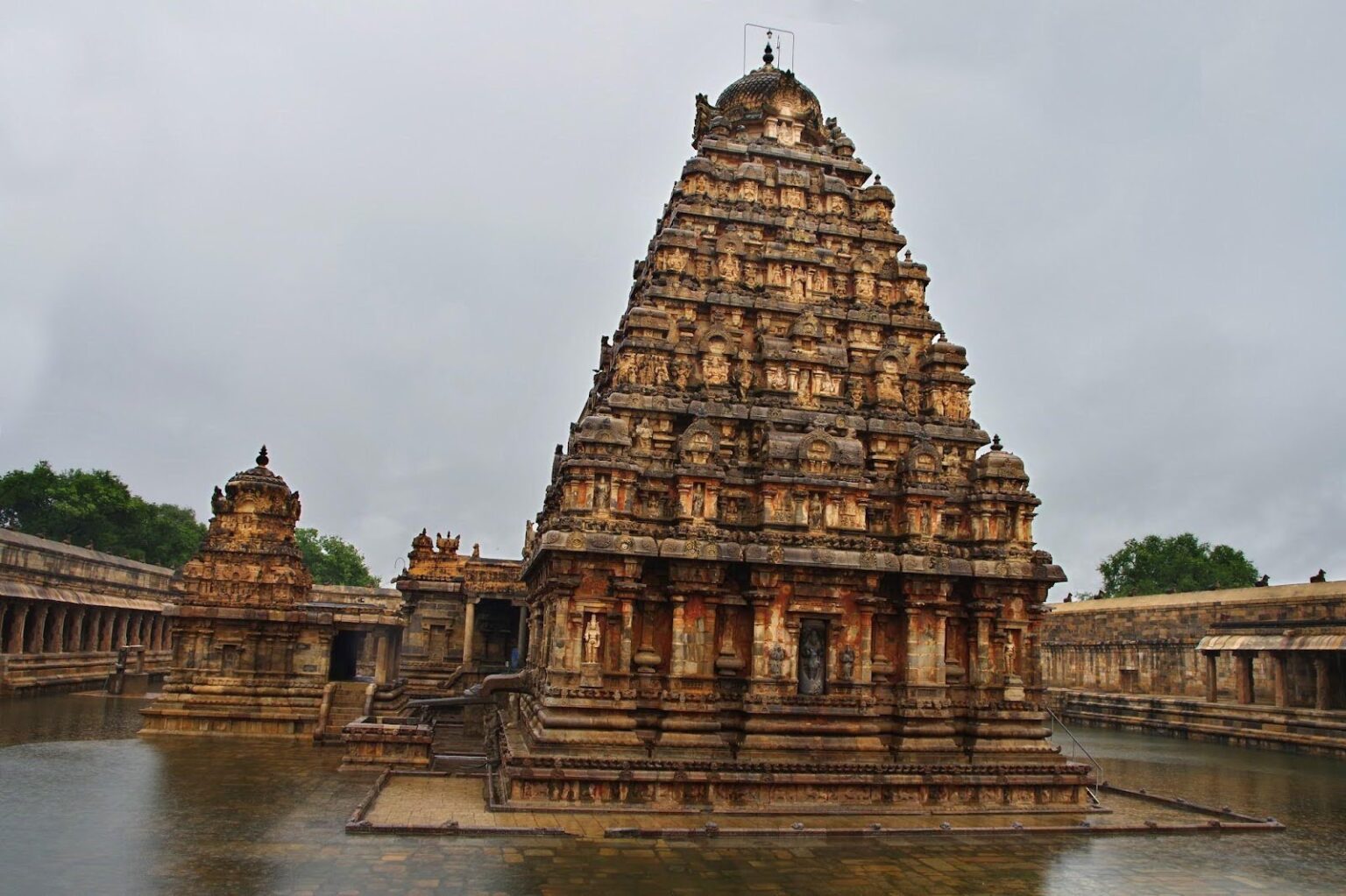
Airavatesvara Temple
Airavatesvara Temple is a 12th-century Shaiva temple at Darasuram near Kumbakonam, built during the reign of Chola king Rajaraja II. It is part of the UNESCO World Heritage property known as the Great Living Chola Temples, together with the Brihadisvara Temple at Thanjavur and the Brihadisvara Temple at Gangaikondacholapuram. The temple is known for its stone chariot-shaped mandapa, finely carved pillars, the 24-metre vimana and the sacred traditions associated with Lord Shiva as Airavatesvara. Its sculptures also preserve stories of Shaiva saints, Hindu deities and temple life, while worship continues at the shrine as part of the living religious tradition of the region.
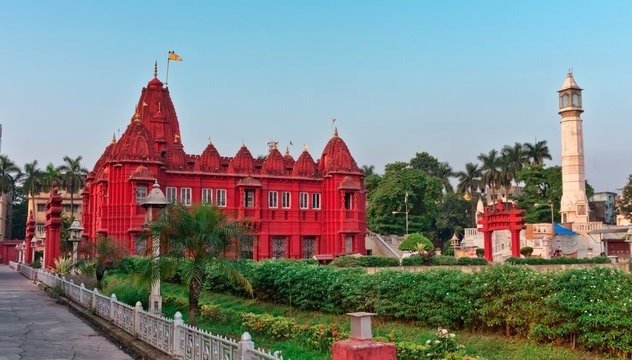
Parasnath Digambar Jain Temple
Parasnath Digambar Jain Temple, also known as Shree Parshvanatha Digambar Jain Upavan Mandir, is a Jain temple in Belgachia, Kolkata. Built in 1914, it belongs to the Digambara tradition and is dedicated to Bhagwan Parshvanatha, the 23rd Tirthankara of Jainism. The temple is known for its red exterior, Nagara-style architecture, landscaped gardens, adjoining tank and white-marble Manastambha. Jain inscriptions on the premises also reflect the temple's connection with ahimsa and other principles of Jain religious life.
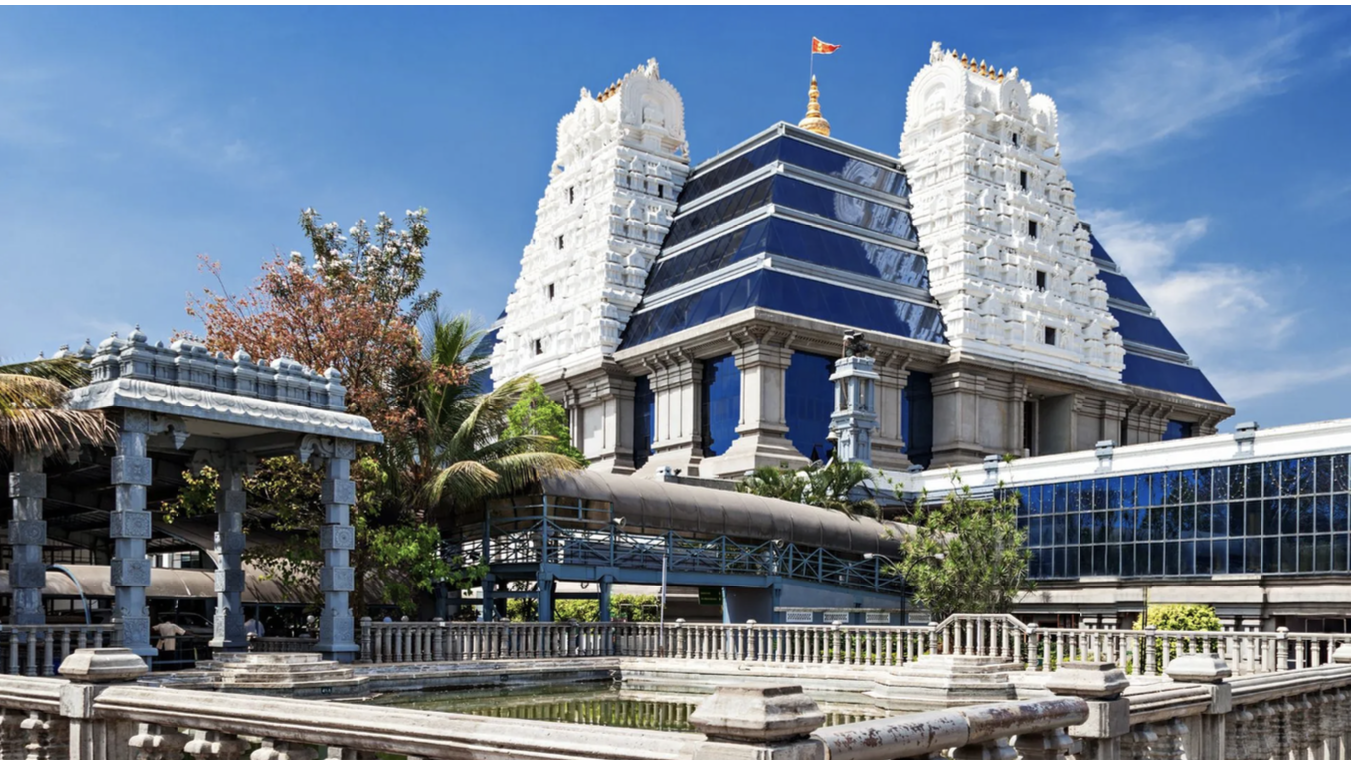
ISKCON Mayapur
ISKCON Mayapur, also known as Sri Mayapur Chandrodaya Mandir, is the principal ISKCON pilgrimage centre in Mayapur, West Bengal, and the headquarters of the International Society for Krishna Consciousness. Mayapur is revered in the Gaudiya Vaishnava tradition as the birthplace of Sri Chaitanya Mahaprabhu. The temple complex is centred on the worship of Sri Sri Radha-Madhava and Their Asta-sakhis, with important shrines and sacred spaces dedicated to Sri Pancha-Tattva, Sri Prahlada-Nrsimhadeva and Srila Prabhupada. Daily arati, kirtan, Bhagavatam classes and festivals such as Gaura Purnima and Janmashtami form an active part of temple life.
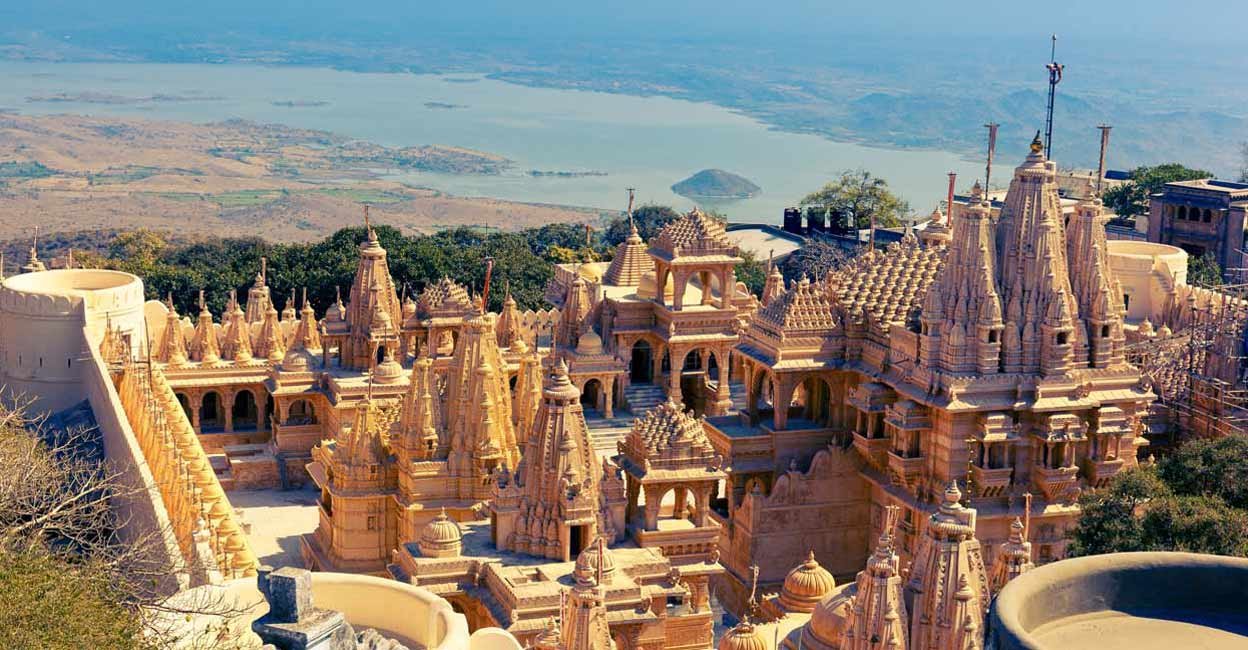
Palitana Jain Tirth Temple
Palitana Jain Tirth Temple refers to the great Jain temple complex on Shatrunjaya Hill near Palitana in Bhavnagar district, Gujarat. The hill is home to hundreds of Jain temples, with Adinath or Rishabhanatha, the first Tirthankara, as the principal deity of the main shrine. The temples are spread across the hill in enclosed groups known as tunks. The pilgrimage involves a long ascent from the foothill, followed by darshan at Adinath and the other shrines across the summit. Shatrunjaya is also known for its association with Jain traditions of Rishabhanatha, Pundarika, pilgrimage, fasting and the repeated construction and restoration of the temple-city over many centuries.
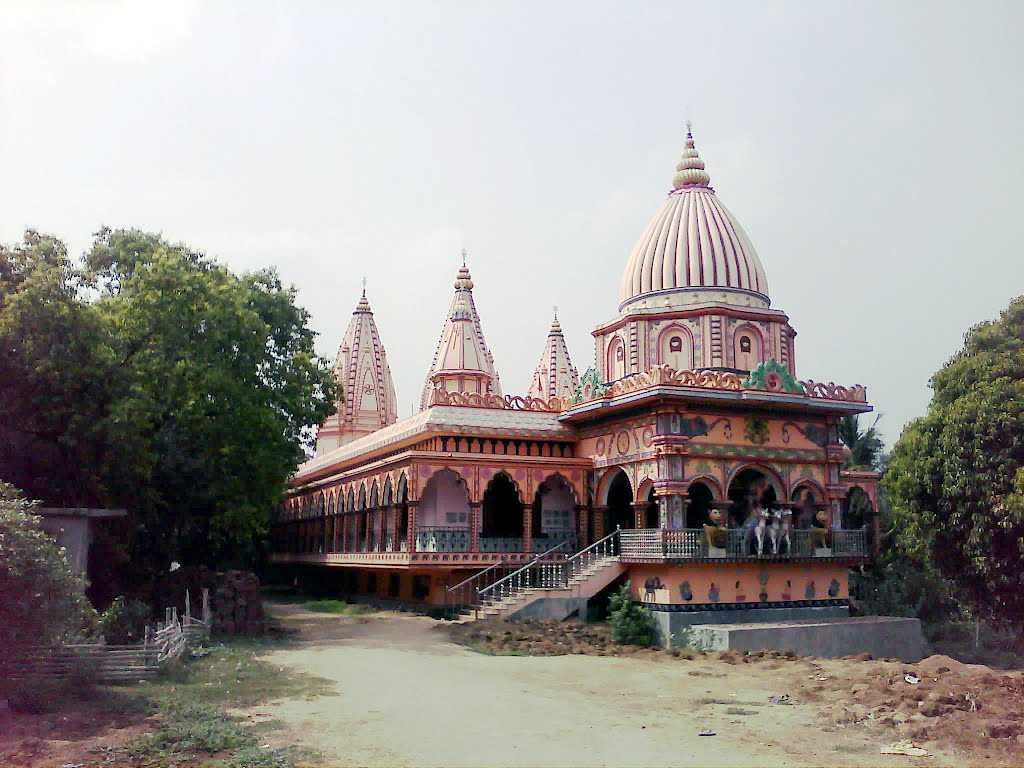
Tara Temple, Tarapith
Tara Temple at Tarapith is dedicated to Goddess Tara, a principal deity of Shakta and Tantric worship in Bengal. The temple stands near the Dwarka River in Birbhum, with the Mahashmashan and several smaller shrines forming part of the sacred landscape around it. The shrine is associated with Tara as the second of the ten Mahavidyas, the traditions of Sage Vashishtha and the 19th-century Tantric saint Bamakhepa. Tarapith is also linked with the Shakti Peetha tradition, although different religious texts and traditions vary in how the site is classified and which part of Sati is associated with it.
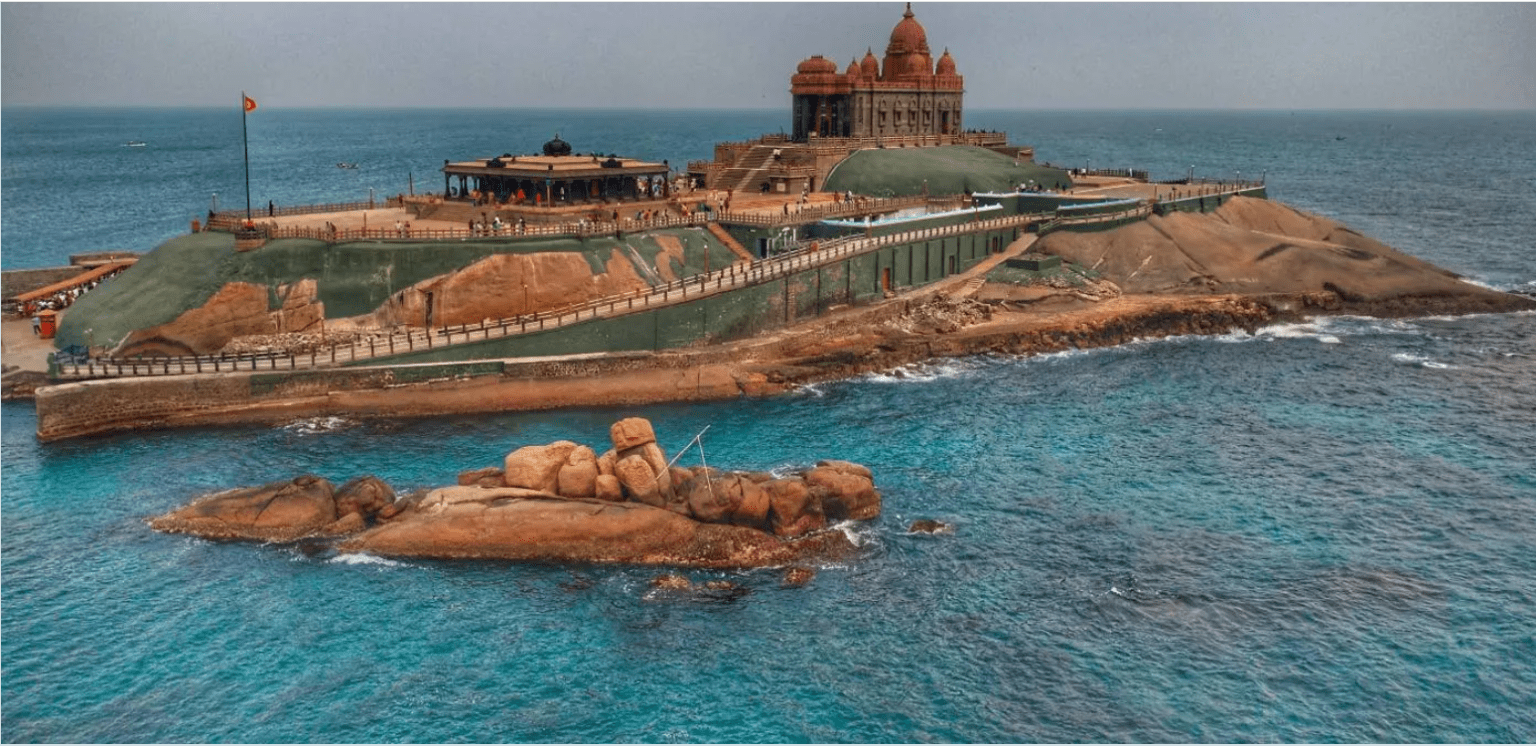
Kanyakumari Bhagavathy Amman Temple
Kanyakumari Bhagavathy Amman Temple, also known as Kumari Amman Temple, is dedicated to Goddess Kanya Kumari, the virgin form of Devi. The shrine stands at the southern tip of mainland India, close to the meeting of the Arabian Sea, the Bay of Bengal and the Indian Ocean. The temple is known for its ancient pilgrimage tradition, the distinctive image of the Goddess with her rosary and nose ornament, the annual Vaikasi festival, Navaratri and the sacred traditions associated with her penance and the defeat of Banasura. The shrine's history also includes important medieval inscriptional evidence, making it both a living centre of worship and an important part of the history of Kanyakumari.
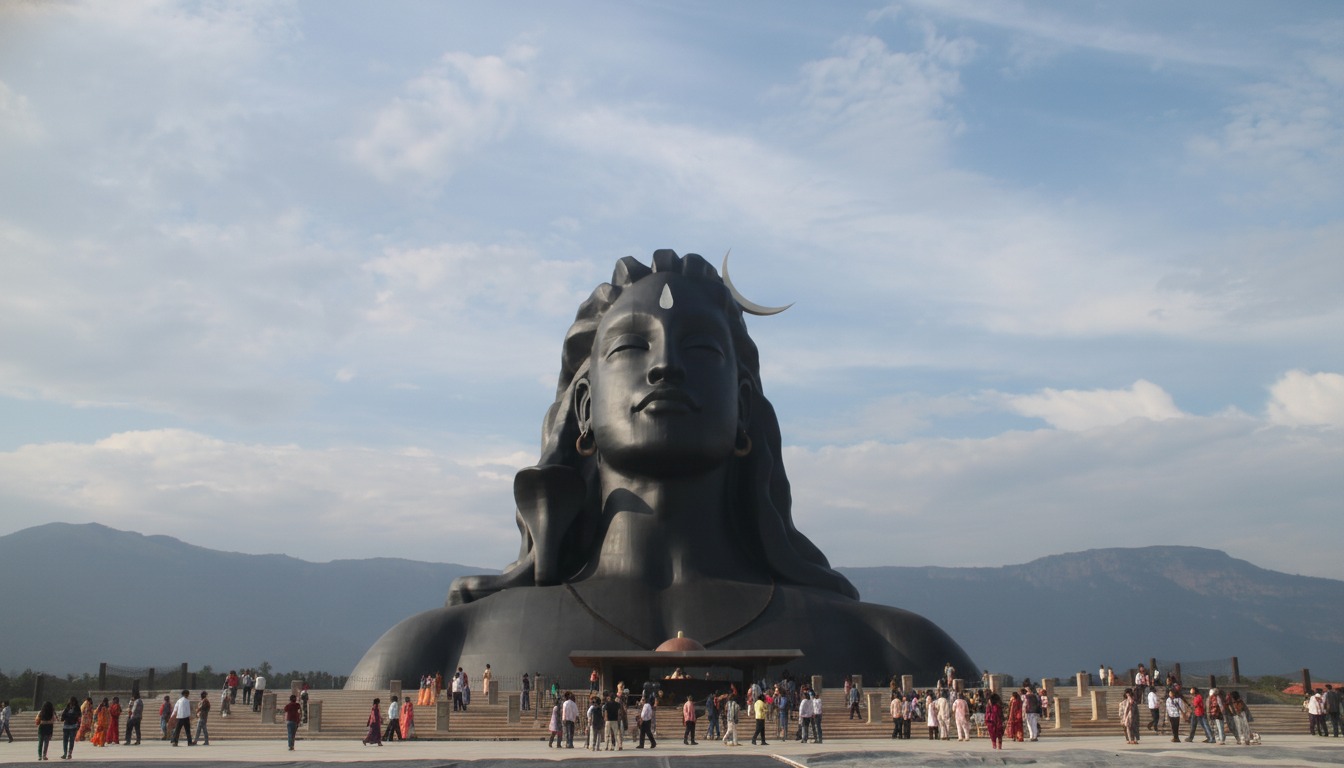
Adiyogi Shiva Temple
Adiyogi Shiva Temple is the Naman Darshan page for the Adiyogi site at the Isha Yoga Center, at the foothills of the Velliangiri Mountains near Coimbatore. The centrepiece is the 112-foot bust of Adiyogi Shiva, created as a representation of Shiva as the first yogi in the yogic tradition. The site is also associated with the Yogeshwara Linga, daily offerings, meditation spaces and Adiyogi Divya Darshanam. Together with Dhyanalinga, Linga Bhairavi, Adiyogi Alayam and the Velliangiri landscape, it forms part of the sacred setting developed around the Isha Yoga Center.
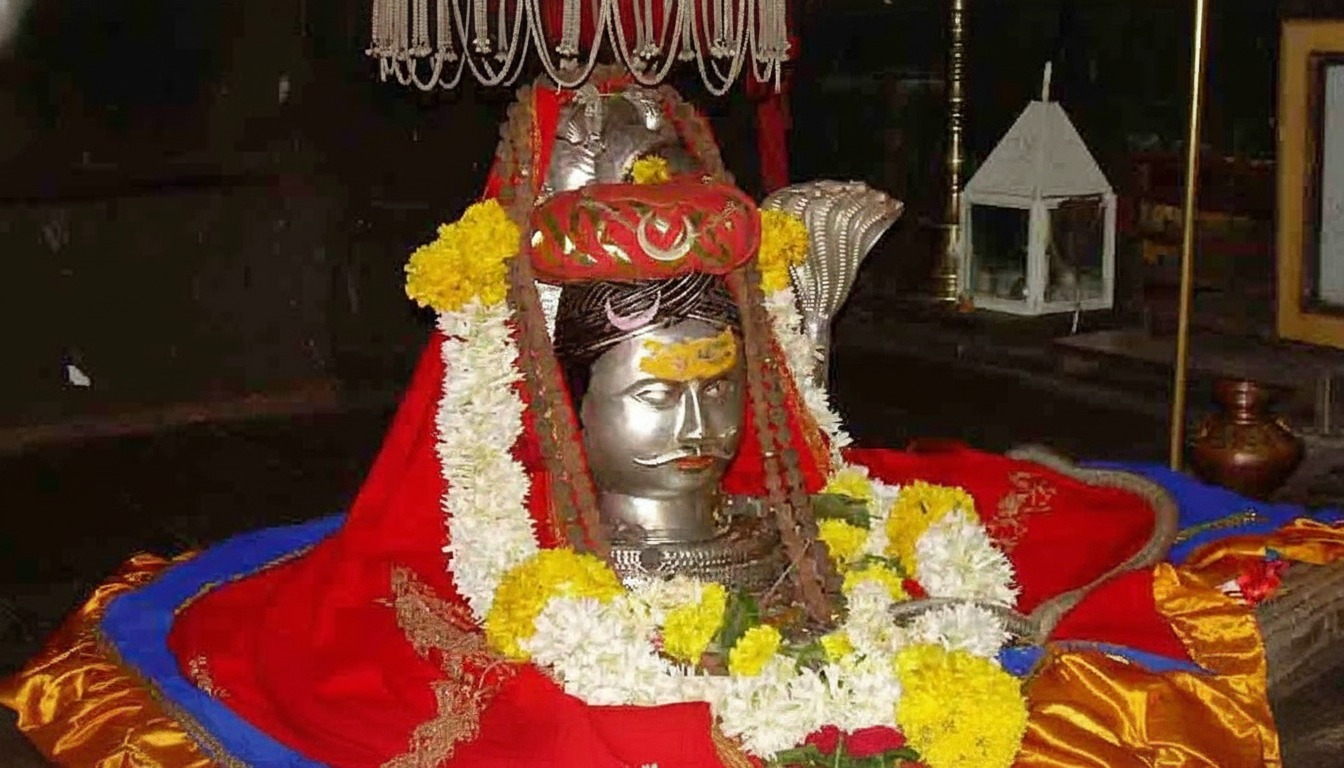
Bhimashankar Jyotirlinga Temple
Bhimashankar Jyotirlinga Temple is one of the twelve Jyotirlingas dedicated to Lord Shiva. The shrine stands in the Sahyadri hills in Pune district, close to the source of the Bhima River and within the landscape of Bhimashankar Wildlife Sanctuary. The temple is known for its swayambhu Jyotirlinga, its Nagara-style stone architecture, its association with the Tripurasura tradition and the nearby shrine of Kamalaja Mata. The temple complex and its surrounding tirthas form an important part of the religious landscape of Bhimashankar.
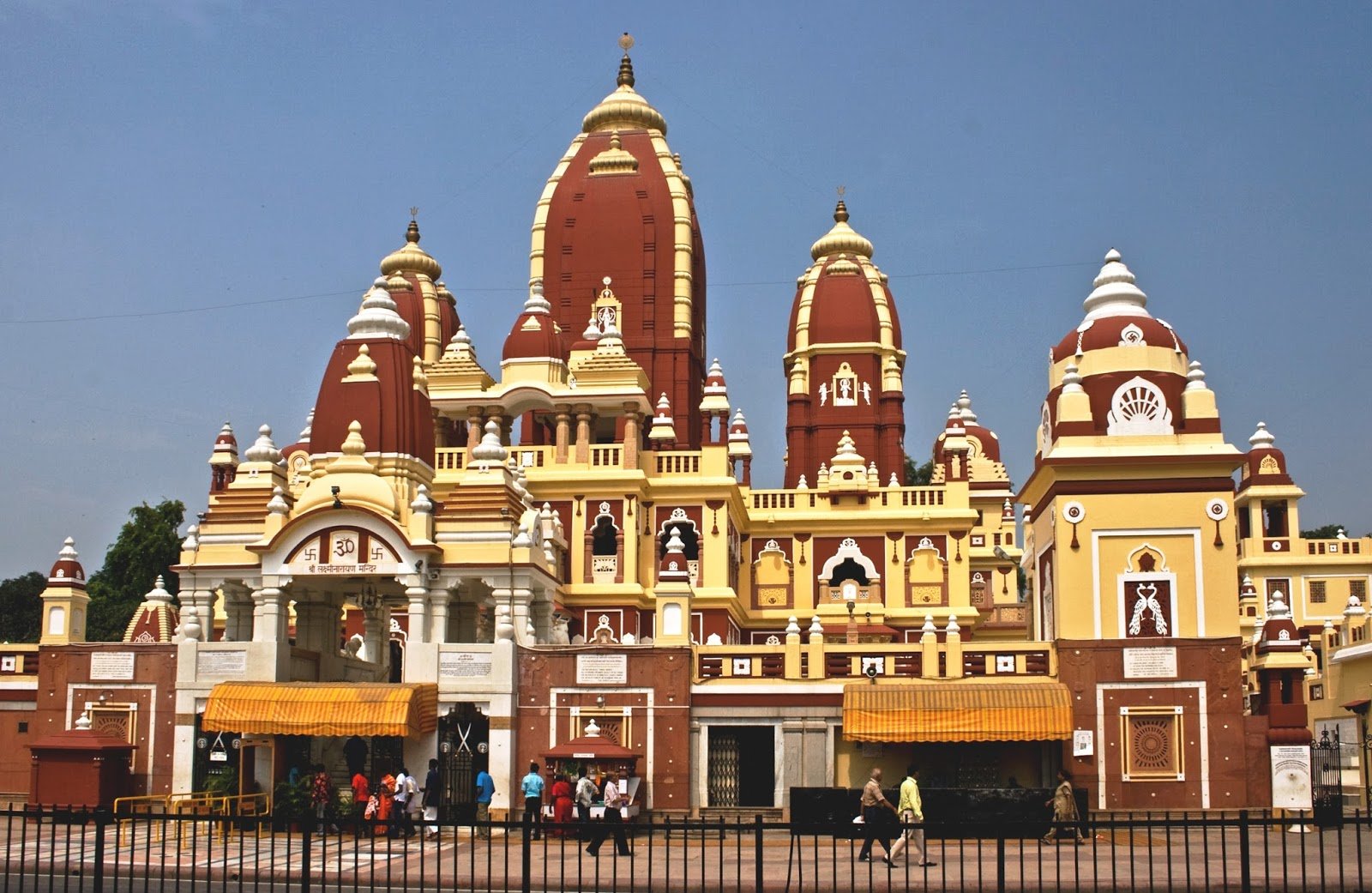
Laxminarayan Temple
Laxminarayan Temple, commonly known as Birla Mandir, is dedicated to Lord Narayan and Goddess Lakshmi. Located on Mandir Marg near Connaught Place, it was built between 1933 and 1939 by the Birla family and became one of the best-known modern Hindu temples in Delhi. The temple is closely associated with Mahatma Gandhi, who inaugurated it in 1939 on the condition that people of all castes would be allowed to enter. The complex is also known for its Nagara-style shikharas, several associated shrines, Geeta Bhawan and the festivals of Janmashtami and Diwali.
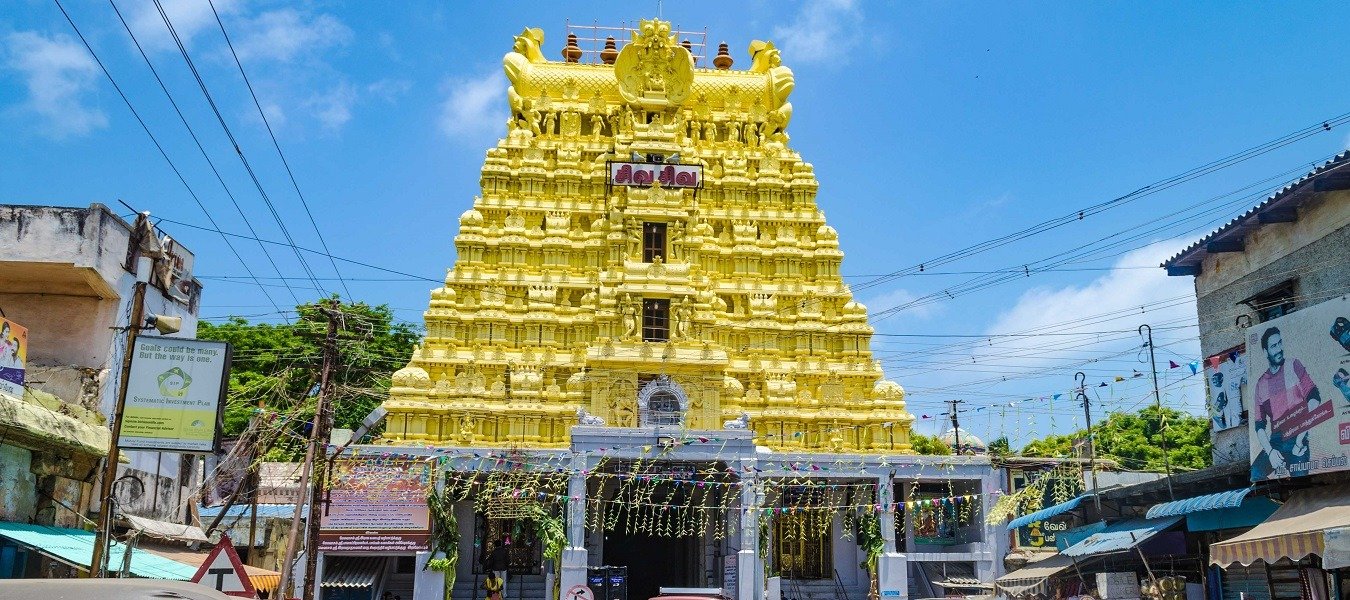
Ramanathaswamy Temple
Ramanathaswamy Temple is dedicated to Lord Shiva in the sacred town of Rameswaram, Tamil Nadu. It is one of the twelve Jyotirlinga temples and one of the four Char Dham pilgrimage sites, giving Rameswaram an important place in both Shaiva and wider Hindu pilgrimage traditions. The temple is known for its two principal lingams, the 22 sacred theerthams and its long pillared corridors. Its present form was built and enlarged over several centuries under different rulers and patrons, while the daily worship and pilgrimage traditions associated with Rama and Shiva continue to define the temple.
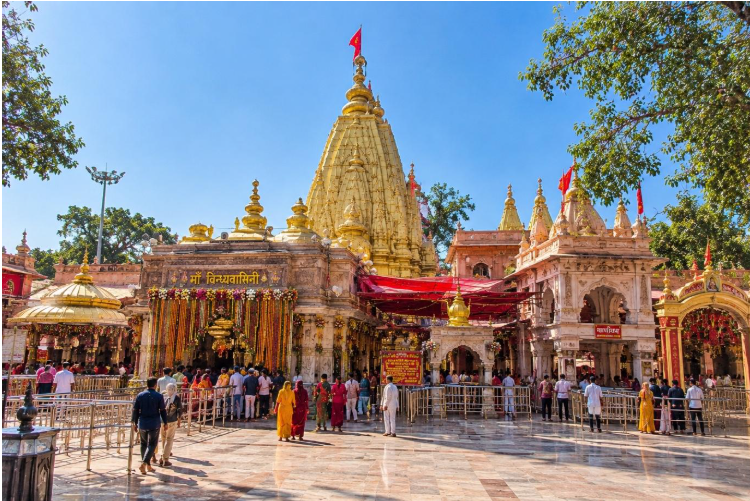
Vindhyachal Temple
Vindhyachal Temple, also known as Maa Vindhyavasini Temple and Vindhyachal Dham, is dedicated to Goddess Vindhyavasini and stands on the banks of the Ganga in Vindhyachal, Mirzapur. The shrine is widely revered in Shakta tradition and is regarded as a Shakti Peetha and sacred Siddha Peetha. Vindhyachal is also known for the Trikona Parikrama, the traditional pilgrimage circuit linking Maa Vindhyavasini, Kali Khoh and Ashtabhuja Devi. The temple's religious importance comes from this wider sacred landscape as much as from the main shrine itself.
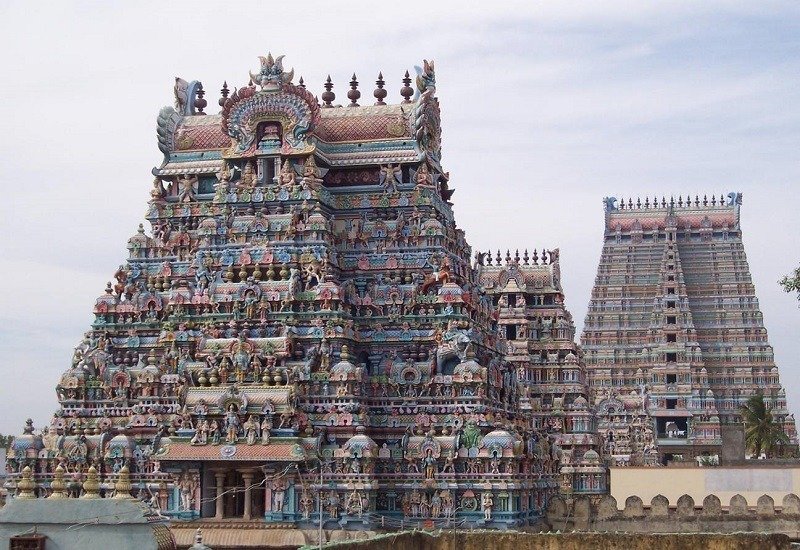
Ranganathaswamy Temple
Ranganathaswamy Temple is a major Sri Vaishnava temple in Srirangam, dedicated to Lord Ranganatha, the reclining form of Lord Vishnu, and Goddess Ranganayaki. It is the foremost among the 108 Divya Desams praised by the Alvar saints and is traditionally known as Bhooloka Vaikuntha. The temple stands on the island of Srirangam between the Kaveri and Kollidam rivers. Its seven concentric prakarams, towering gopurams, historic mandapams and continuing Vaishnava worship make Srirangam a temple-town rather than a single shrine.
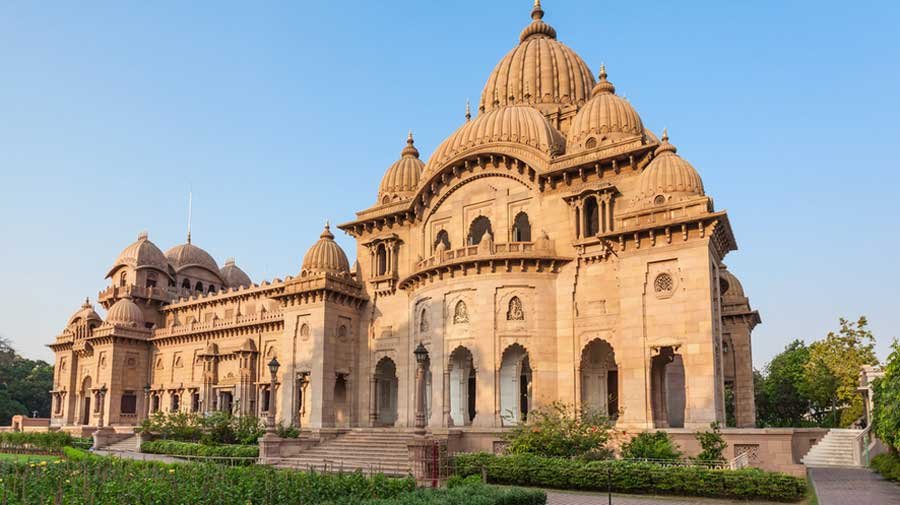
Belur Math
Belur Math is the headquarters of the Ramakrishna Math and Ramakrishna Mission on the western bank of the Hooghly River in Howrah, West Bengal. The campus was established by Swami Vivekananda as the permanent monastery of the Ramakrishna Order and became the centre from which the Ramakrishna movement developed. The main Sri Ramakrishna Temple stands at the heart of the campus, along with temples dedicated to Sri Sarada Devi, Swami Vivekananda and Swami Brahmananda. The Math is also known for its Old Shrine, Swamiji's Room, Ramakrishna Museum, Ganga ghat and the distinctive architecture of the main temple.
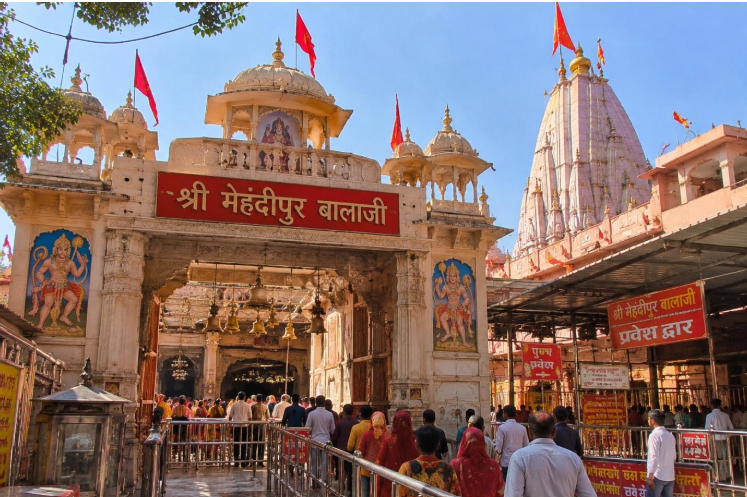
Mehandipur Balaji Temple
Mehandipur Balaji Temple is a famous Hanuman temple at Ghata Mehandipur in Dausa district, Rajasthan. Here Lord Hanuman is worshipped as Shri Balaji Maharaj in his child form. The temple is especially known for the combined worship of Balaji Maharaj, Pret Raj Sarkar and Bhairav Ji. Its identity is closely connected with a long-standing tradition of seeking relief from spirit-related troubles through prayer and prescribed religious practices. The shrine has grown with Mehandipur itself and remains the centre of the town's religious life.
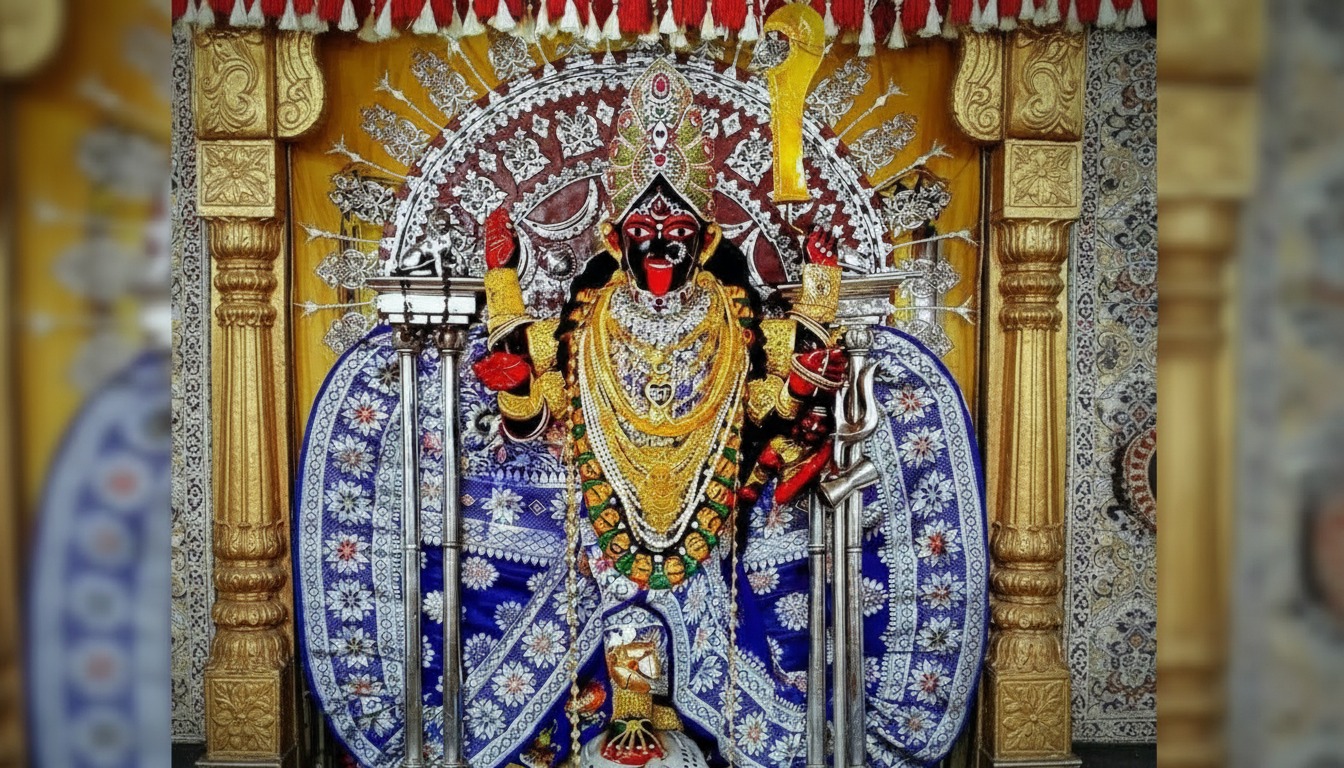
Dakshineswar Kali Temple
Dakshineswar Kali Temple is dedicated to Goddess Kali, worshipped here as Sri Sri Jagadiswari Kalimata Thakurani, also known as Bhavatarini. The temple stands on the eastern bank of the Hooghly River at Dakshineswar and was established by Rani Rashmoni in 1855. The temple is known for its nine-spired Navaratna shrine, twelve Shiva temples, Radha-Kanta Temple and its close association with Sri Ramakrishna Paramahamsa and Sri Sarada Devi. These traditions, together with the temple's daily worship and annual festivals, have made Dakshineswar an important pilgrimage centre in Bengal.
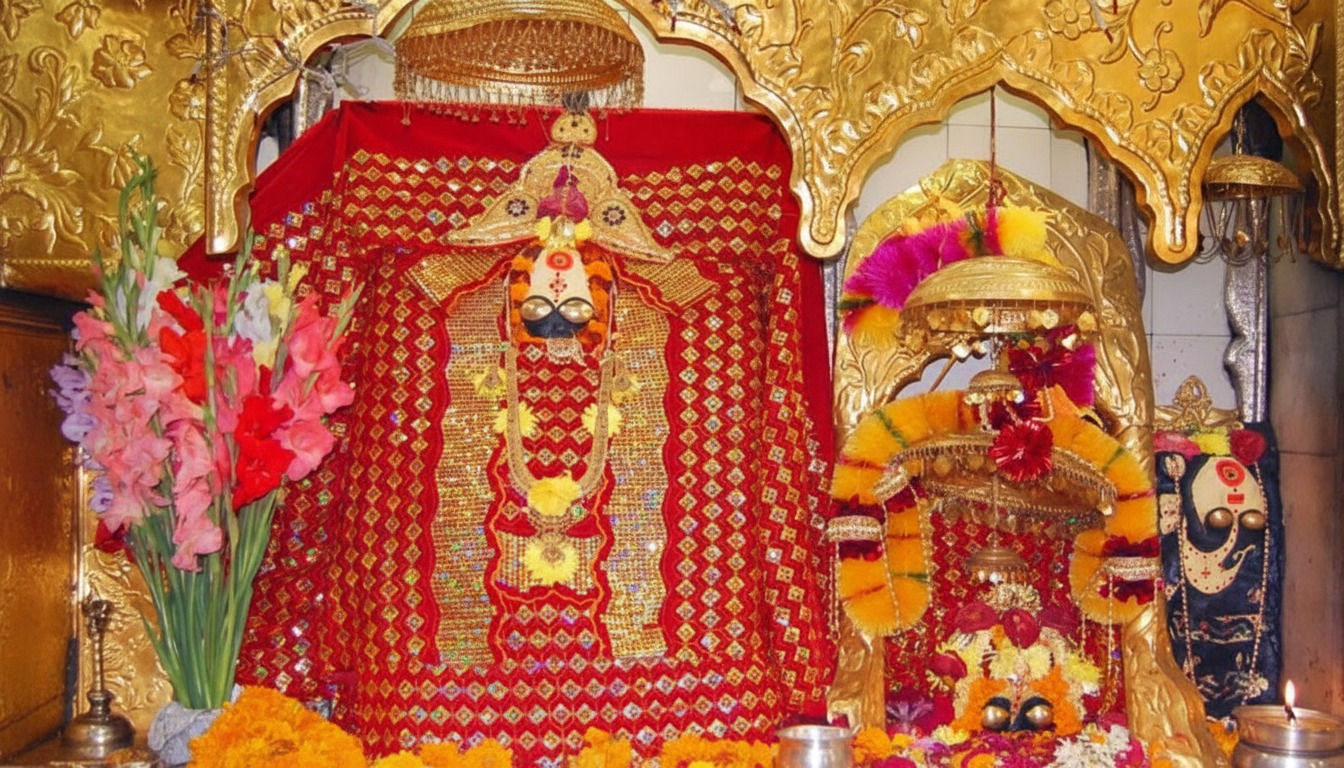
Naina Devi Temple
Naina Devi Temple is a major Shakti shrine in Bilaspur district of Himachal Pradesh, situated on a hill overlooking Gobind Sagar Lake. The temple is traditionally regarded as a Shakti Peetha, where the eyes of Goddess Sati are believed to have fallen. The shrine is known for the worship of Shri Naina Bhagwati in the form of a sacred Pindi, its hilltop temple complex, Navratri fairs and a number of associated shrines and sacred places. The temple’s religious life includes daily aarti, bhog, havan and other forms of Shakta worship.
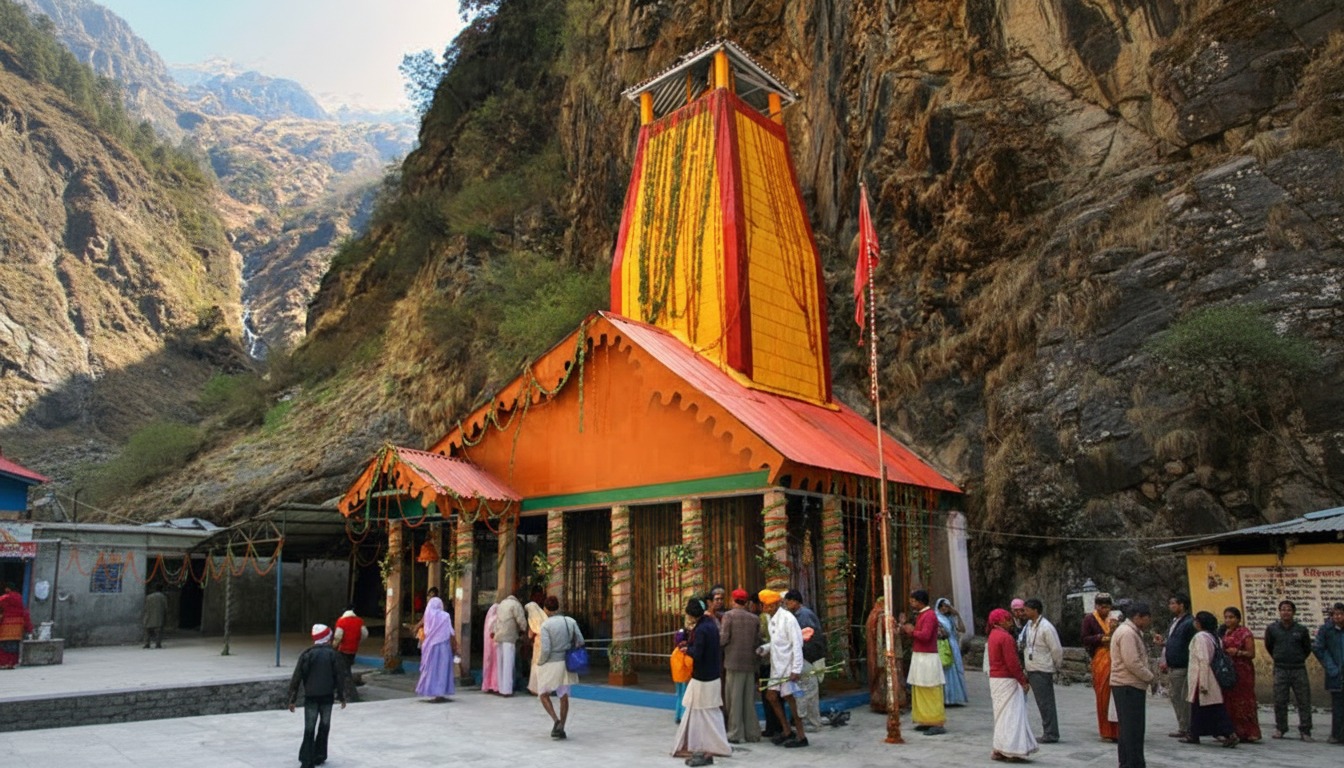
Yamunotri Temple
Yamunotri Temple is dedicated to Goddess Yamuna and is one of the four shrines of Uttarakhand's Chota Char Dham. It stands in the Garhwal Himalayas at about 3,293 metres, beside the source region of the Yamuna River. The shrine is known for the black marble image of Yamuna, the sacred Divya Shila, and the hot waters of Surya Kund, where devotees traditionally prepare rice and potatoes as an offering. Yamunotri also has a distinct seasonal tradition: after the temple closes for winter, the goddess's image is taken to Kharsali, where worship continues until the shrine reopens.
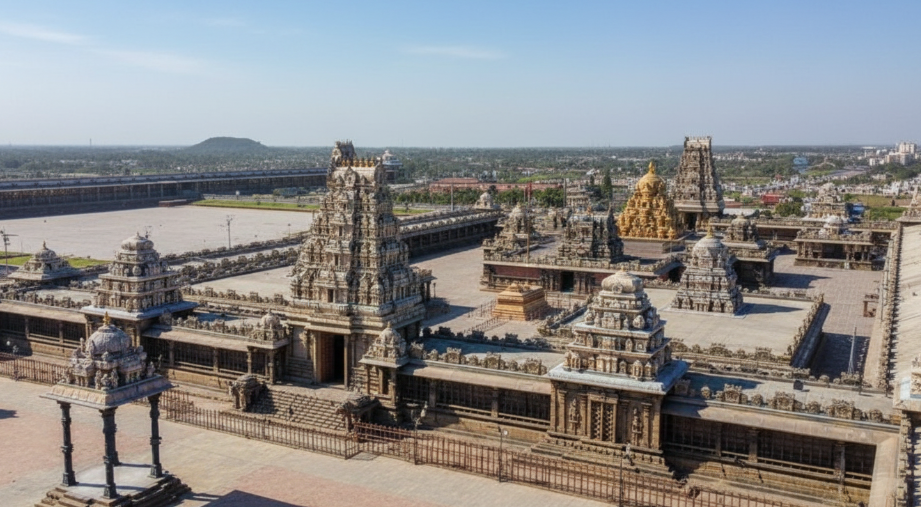
Sri Lakshmi Narasimha Swamy Temple
Sri Lakshmi Narasimha Swamy Temple at Yadagirigutta, also known as Yadadri, is dedicated to Lord Narasimha, the man-lion incarnation of Lord Vishnu. The temple is especially known as a Pancha Narasimha Kshetra, with five forms of Narasimha associated with the sacred cave on the hill. The shrine is known for its ancient cave sanctum, the worship of Lakshmi Narasimha, the golden Sudarshana Chakra above the sanctum and the large stone temple complex rebuilt in recent years. Its religious identity comes from the continuing worship of the cave shrine, the traditions associated with Sage Yadarishi and the daily rituals followed according to Agama tradition.
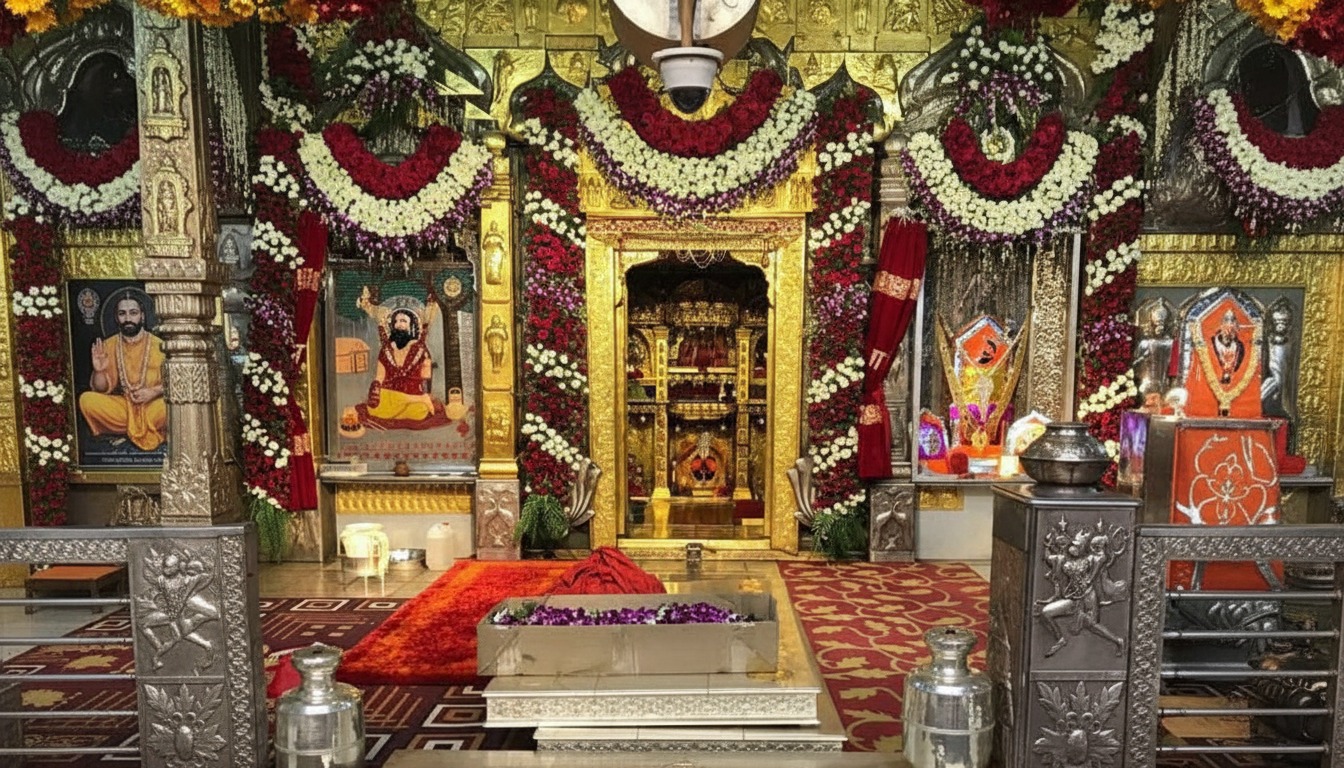
Salasar Dham Temple
Salasar Dham Temple, also known as Salasar Balaji, is a major shrine dedicated to Lord Hanuman in Salasar town of Churu district, Rajasthan. The temple is especially known for its distinctive image of Balaji with a beard and moustache and for the traditions associated with Shri Mohandas Ji Maharaj. The shrine developed from an 18th-century place of worship into a large temple complex. It is known for daily Hanuman worship, Savamani offerings, coconut tying, Ramayana recitation and the large fairs held on Chaitra Purnima and Sharad Purnima.
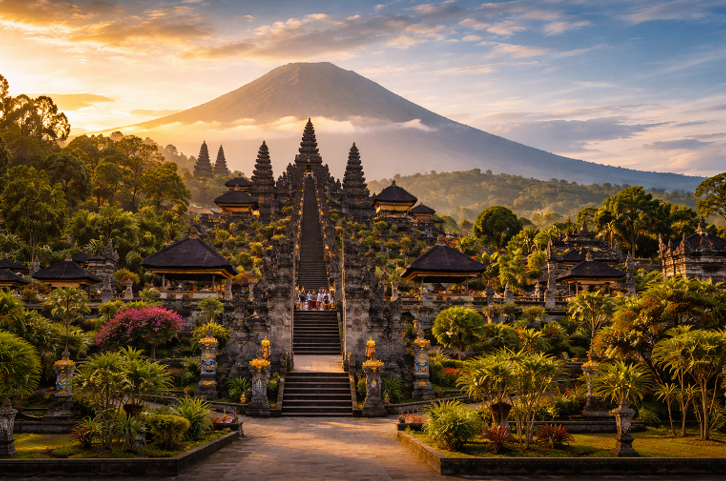
Besakih Great Temple
Besakih Great Temple, known locally as Pura Agung Besakih, is the largest and most important Hindu temple complex in Bali. It stands on the southwestern slopes of Mount Agung, Bali’s highest and most revered mountain, in Besakih Village, Karangasem. Besakih is known as the Mother Temple of Bali because it brings together a large network of temples and shrines that serve the religious life of Balinese Hindus. At its centre is Pura Penataran Agung, while the surrounding temples, rituals and sacred spaces form a larger religious landscape connected with the deities, directions, communities and traditions of Bali.
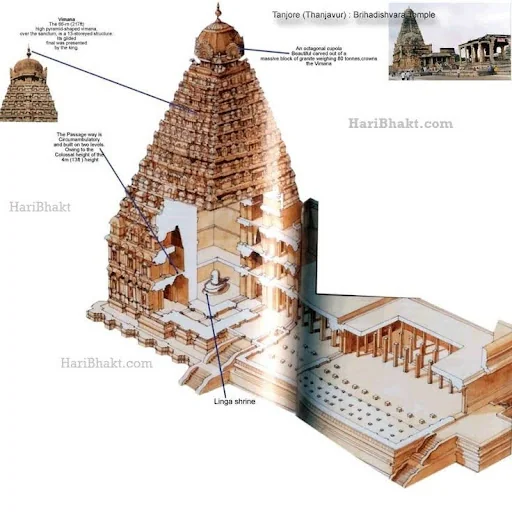
Brihadeeswarar Temple
Brihadeeswarar Temple, also known as Peruvudaiyar Kovil or the Big Temple, is a Shaivite temple in Thanjavur built under Chola emperor Rajaraja Chola I. It is one of the three temples that form the UNESCO-listed Great Living Chola Temples. The temple is dedicated to Lord Shiva, worshipped here as Brihadeeswarar in the form of a large Shiva Linga. Its towering vimana, monolithic Nandi, Chola inscriptions, sculptures and surviving mural paintings are part of the same temple complex where worship continues today.
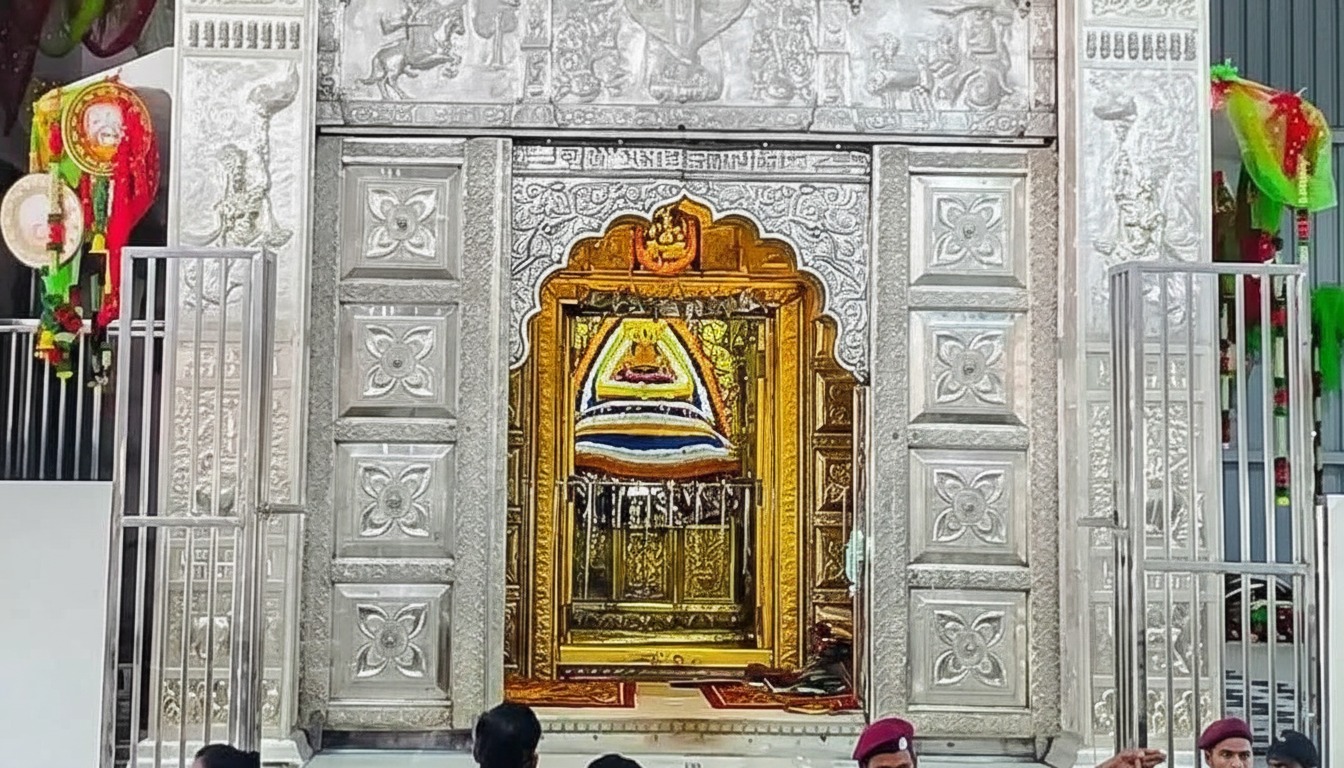
Khatu Shyam Ji Temple
Khatu Shyam Ji Temple is dedicated to Khatu Shyam Ji, worshipped in tradition as Barbarika, the son of Ghatotkacha and grandson of Bhima from the Mahabharata. The shrine is located in Khatu town in Sikar district and is centred on the worship of Baba Shyam in his sacred Sheesh form. The temple is known for its white-marble structure, the sacred Shyam Kund, five daily aartis and the annual Phalgun Mela. For devotees, Khatu is also associated with the name Sheesh Ke Daani and the devotional expression Haare Ka Sahara.
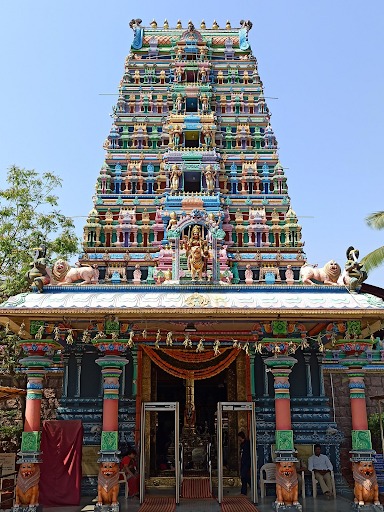
Sri Peddamma Thalli Temple
Sri Peddamma Thalli Temple, also known as Peddamma Gudi, is a well-known shrine of the Mother Goddess in Jubilee Hills, Hyderabad. Peddamma is worshipped in Telangana as a village form of the Divine Mother, and the name is traditionally understood as “Mother of Mothers.” The temple is closely associated with Bonalu, Mahotsavam and Rathotsavam, along with regular puja and devotional observances. Its present form grew from an older local shrine and was substantially developed in the 1990s, giving the temple the large gopuram and temple complex seen today.
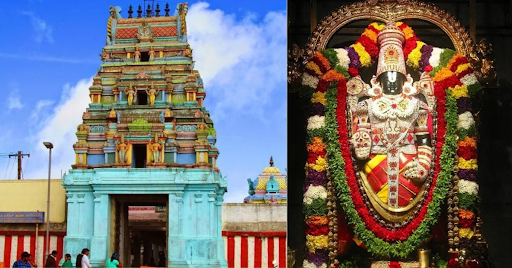
Chilkur Balaji Temple (Visa Balaji)
Chilkur Balaji Temple is an ancient temple dedicated to Lord Venkateswara in Chilkur village of Ranga Reddy district, near Osman Sagar. The temple is one of the older Balaji shrines in the Hyderabad region and is popularly known as Visa Balaji because many devotees pray here for overseas travel, education and career opportunities. The temple is especially known for its 11 and 108 pradakshina tradition. Devotees traditionally make 11 rounds while making a prayer or vow and return to complete 108 rounds after the wish is fulfilled. Chilkur is also known for its simple system of worship, with no conventional hundi and no separate VIP darshan.
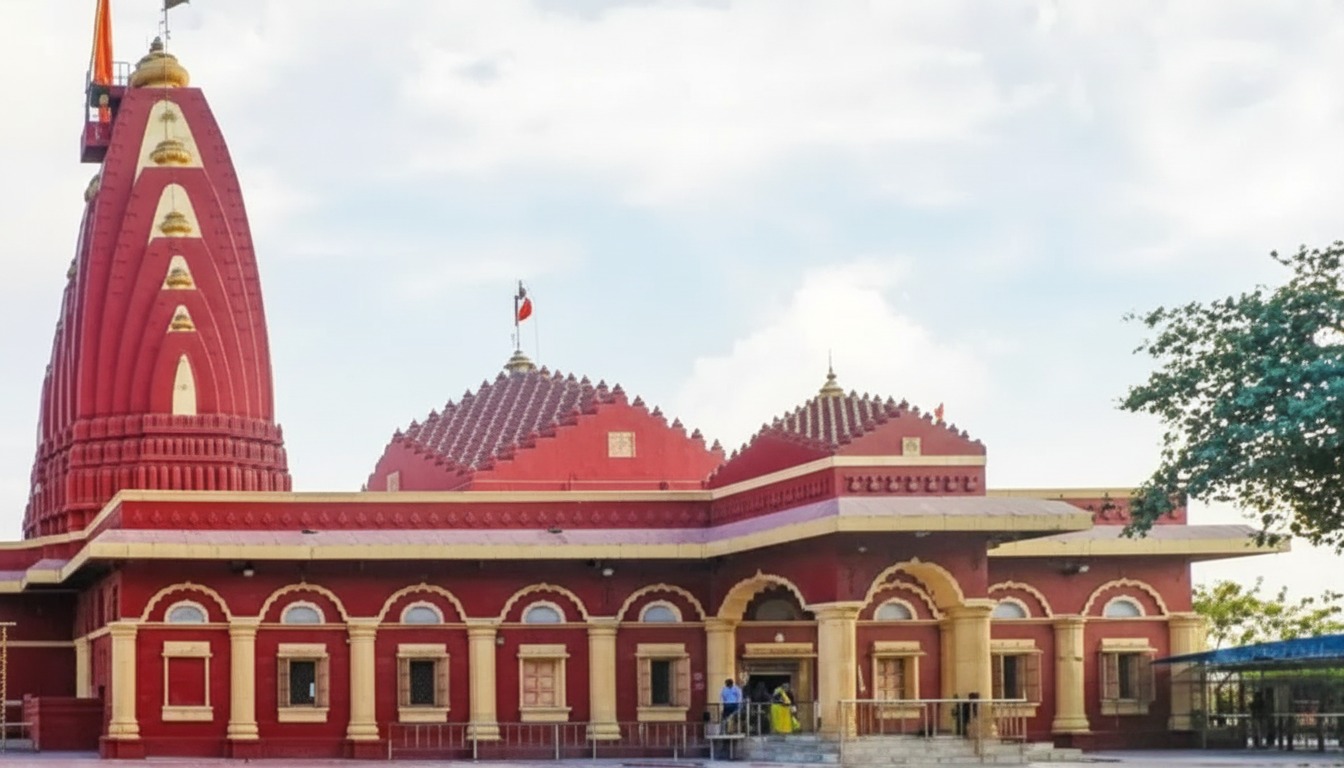
Nageshwar Jyotirlinga Temple
Nageshwar Jyotirlinga Temple is a Shiva temple near Dwarka in Gujarat, traditionally identified with one of the twelve Jyotirlingas. The shrine stands on the route between Dwarka and Bet Dwarka and is associated with the ancient sacred region of Darukavana described in the Shiva Purana. The temple is known for its underground sanctum, Nageshwar Mahadev, the large seated Shiva statue outside the main shrine and the traditions surrounding the Daruka-Supriya legend. Its importance comes from the connection between the Jyotirlinga tradition, the sacred geography of Dwarka and the continuing worship of Shiva at the site.
.png)
Rangji Temple
Rangji Temple, also known as Sri Rangji Mandir, is dedicated to Sri Goda-Rangamannar in Vrindavan. The temple was established in the 19th century in the Sri Vaishnava tradition associated with Sri Rangadeshik Swamiji and is known for bringing the worship of Lord Ranganatha and Goda (Andal) into the Braj pilgrimage landscape. The temple is distinct for its South Indian architectural form, its large Pushkarni, gold-plated Dhwaja Stambha and annual Brahmotsavam, also known as the Rath ka Mela. Its worship combines Sri Vaishnava ritual traditions with the religious setting of Vrindavan.
.png)
Shahji Temple
Shahji Temple is a 19th-century Radha-Krishna temple in Vrindavan, popularly known as Tedhe Khambe Wala Mandir because of its twelve spiral marble columns. The temple is also known by its original name, Lalit Nikunj, and its principal deity is worshipped as Sri Thakur Radha Raman Ji Maharaj, affectionately known as Chhote Radha Raman. The temple was built by the brothers Shah Kundan Lal and Shah Phundan Lal, who came from Lucknow and made Vrindavan their spiritual home. Along with its devotional importance, Shahji Temple is known for its white marble work, painted and inlaid panels, the Basanti Kamra and its distinctive blend of Braj themes with the artistic influences of 19th-century Lucknow.
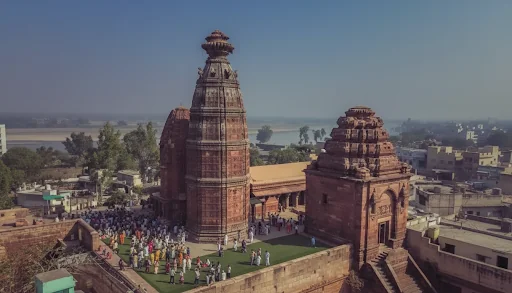
Madan Mohan Temple
Madan Mohan Temple is one of the oldest surviving temples of Vrindavan, situated on Dwadashaditya Tila near Kaliya Ghat and the Yamuna. The temple is dedicated to Lord Krishna, worshipped here as Madan Mohan, with Radha and Lalita. The shrine is closely associated with Sanatana Goswami and the early Gaudiya Vaishnava tradition of Vrindavan. Its red-sandstone temple, the story of the Madan Mohan deity, the adjoining samadhi of Sanatana Goswami and the tradition of Madan Mohan as the deity of sambandha give the temple a distinct place among Vrindavan's historic Goswami shrines.
.png)
Nathdwara Shrinathji Temple
Nathdwara Shrinathji Temple is the principal shrine of Shrinathji, the child form of Lord Krishna worshipped in the Pushtimarg tradition. The temple is in Nathdwara, Rajsamand district, and is traditionally known as Shrinathji ki Haveli. The shrine is known for the distinctive black-stone image of Krishna lifting Govardhan, the eight daily darshans, and a system of seva in which the deity is treated as the Lord of the household. The temple's rituals, food, music, dress and festivals all follow this living Pushtimarg tradition.
Shri Radha Rani Temple
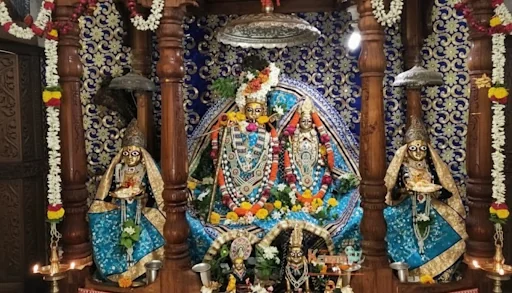
Shri Radha Rani Temple, also known as Shriji Temple or Ladli Ji Temple, is a historic temple in Barsana dedicated to Shri Radha Rani. It stands on the hill traditionally associated with Radha's home in Braj and is an important centre of Radha-Krishna worship. The temple is known for the worship of Radha as Ladli Ji, with Krishna worshipped alongside her as Ladli Lal. Its red sandstone architecture, hilltop setting and festivals such as Radhashtami and Lathmar Holi have made the temple an important part of the religious life of Barsana.
Gokul (Chaurasi Khamba) Temple
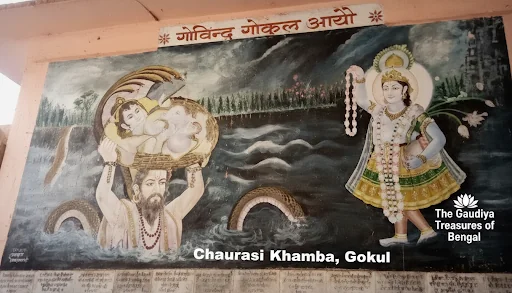
Gokul (Chaurasi Khamba) Temple, also known as Nand Bhavan, is a sacred site in Mahavan, the area traditionally identified with Old Gokul. In Braj tradition, it is regarded as the home of Nanda Maharaj and Yashoda Maiya, where Krishna and Balarama spent their early childhood. The temple is known for its 84 stone pillars, its association with Krishna's childhood lilas, and the shrines connected with Nanda, Yashoda, Balarama and child Krishna. Its importance comes from the way the structure, the stories of Krishna's infancy and the wider sacred landscape of Gokul-Mahavan remain connected in the living Braj tradition.
Nand Bhavan Temple
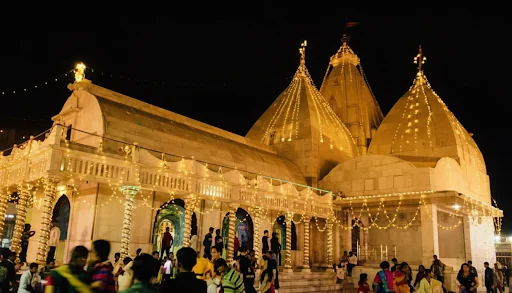
Nand Bhavan is the hilltop temple of Nandgaon associated with Nanda Maharaj and Yashoda Maiya, the foster parents of Lord Krishna. The shrine stands on Nandishwar Hill and is one of the principal sacred places of the Nandgaon pilgrimage circuit in Braj. The temple is known for the worship of Krishna and Balarama with Nanda and Yashoda, the Nandgaon parikrama tradition and the Holi celebrations that connect Nandgaon with neighbouring Barsana. Its importance comes from the combination of Braj tradition, the family-centred form of worship and the living festivals that continue in the town.
Shree Krishna Janmabhoomi Temple
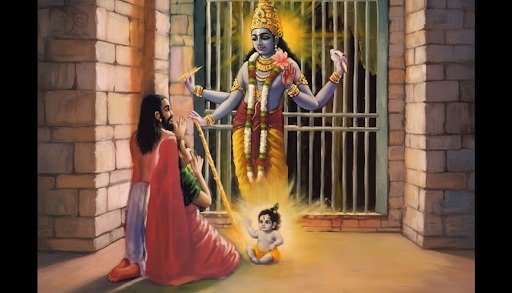
Shree Krishna Janmabhoomi Temple in Mathura is a major pilgrimage centre associated with the birthplace of Lord Krishna. According to Hindu tradition, Krishna manifested here in the prison where his parents Devaki and Vasudeva were held by King Kansa. The present Janmasthan complex includes the Keshavdeva Temple, the Garbha Griha shrine associated with the sacred birthplace and Bhagavata Bhavan. The complex is also known for its festivals, including Krishna Janmashtami, Nandotsav, Holi, Deepavali and other observances of the Braj religious calendar.
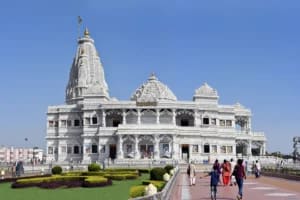
Prem Mandir
Prem Mandir is a Hindu temple in Vrindavan dedicated to Shri Radha Krishna and Shri Sita Ram. Established by Jagadguru Shri Kripalu Ji Maharaj, the temple was inaugurated in February 2012 and is maintained by Jagadguru Kripalu Parishat. The temple is known for its white Italian Carrara marble, carved depictions of Radha Krishna's leelas, the two-level arrangement of Radha Krishna and Sita Ram, and the devotional philosophy of divine love associated with its founder. Its gardens, parikrama path and evening fountain and illumination programme have also become part of the identity of the temple complex.
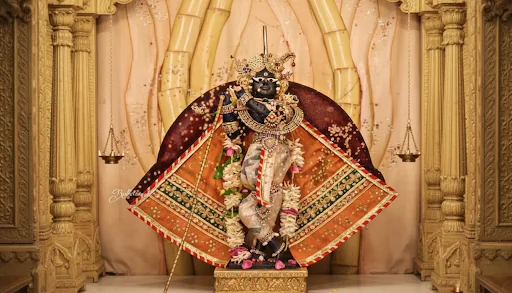
Radha Raman Temple
Radha Raman Temple is one of the historic temples of Vrindavan and an important centre of the Gaudiya Vaishnava tradition. The temple is dedicated to Lord Krishna worshipped as Radha Raman, a name that refers to Krishna as the beloved of Radha. The shrine is especially known for its original Shaligram deity, the appearance tradition associated with Gopala Bhatta Goswami, and the continuing seva of the Goswami lineage. The temple is also counted among Vrindavan's historic group of seven principal temples associated with the Goswamis.
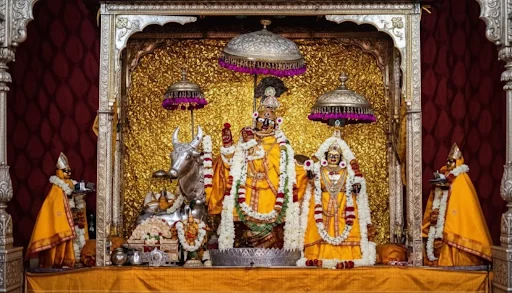
Govind Dev Ji Temple
Govind Dev Ji Temple is dedicated to Lord Krishna, worshipped here as Govind Dev Ji with Radha. The temple stands in Jai Niwas Garden within Jaipur's City Palace complex and has long been associated with the Kachhwaha rulers of Amber and Jaipur. The present Jaipur shrine dates to the 18th century and is generally associated with Maharaja Sawai Jai Singh II. The deity had earlier been worshipped in Vrindavan, and the temple remains known for its seven daily jhankis, bhog offerings, Krishna festivals and close connection with Jaipur's royal and Gaudiya Vaishnava traditions.
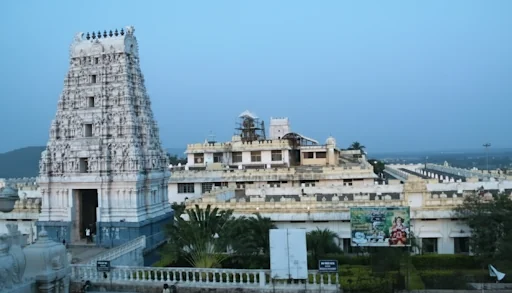
Annavaram Sri Satyanarayana Swamy Temple
Annavaram Sri Veera Venkata Satyanarayana Swamy Temple is dedicated to Lord Satyanarayana Swamy and stands on Ratnagiri Hill beside the Pampa River. The temple is one of the major pilgrimage centres of Andhra Pradesh and is especially known for Sri Satyanarayana Swamy Vratham. The shrine is also distinctive for its chariot-shaped main temple, its two-storey sanctum and the large cylindrical image of the deity associated with the Trimurti. Sri Anantha Lakshmi and Lord Shiva are worshipped alongside the main deity, giving Annavaram a place within both Vaishnava and Shaiva devotional traditions.
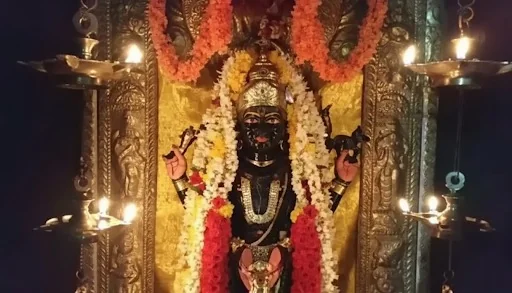
Swarnakarshana Bairavar Temple
Swarnakarshana Bairavar Temple is a shrine dedicated to Sri Swarnakarshana Bairavar in Thaiyur near Kelambakkam, on the southern side of Chennai. The temple is centred on Swarnakarshana Bairavar, a form of Bhairava associated with Lord Shiva. The shrine is especially known for its unusual collection of Bhairava and related images. The temple includes the main Swarnakarshana Bairavar with Vijaya Chitramba, the eight Ashta Bhairavas with their Shakti consorts, 64 Bhairava images, Ashta Dikpalas and several other distinctive shrines within the complex.
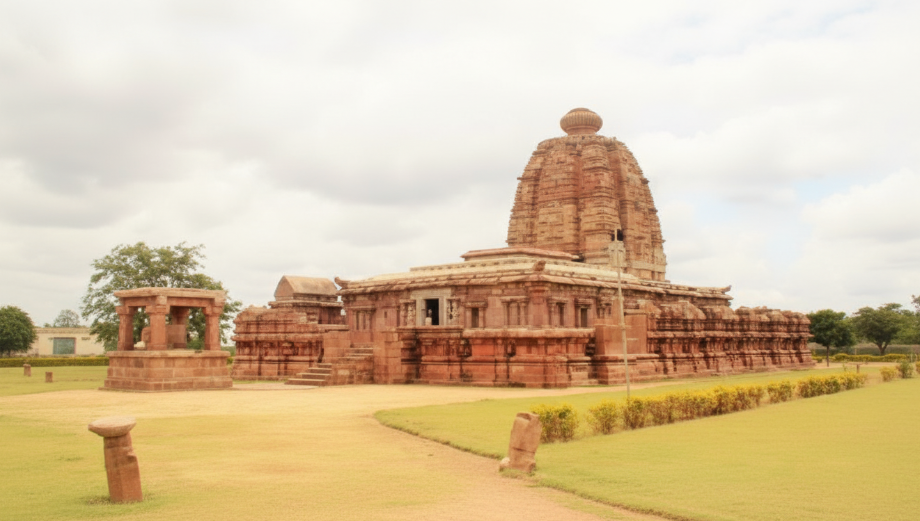
Alampur Jogulamba Temple
Alampur Jogulamba Temple is dedicated to Goddess Jogulamba, a form of Shakti worshipped at Alampur on the banks of the Tungabhadra. The shrine is traditionally counted among the Ashtadasha Shakti Peethas and is closely associated with Bala Brahmeswara, the principal Shiva shrine of the historic Alampur temple complex. Alampur is also known as the western gateway to Srisailam and is traditionally called Dakshina Kailasam. Alongside the Jogulamba shrine stand the ancient Navabrahma temples, making Alampur an important centre of both Shakta and Shaiva worship.
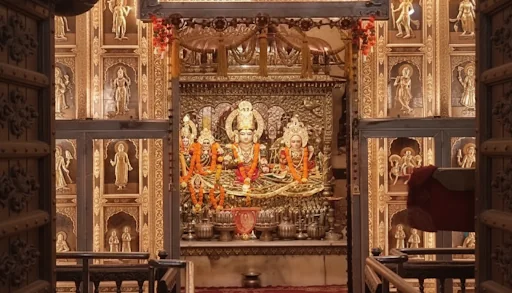
Kanak Bhawan
Kanak Bhawan is a temple in Ayodhya dedicated to Lord Rama and Devi Sita. It stands in the Ramkot area, to the north-east of the Ram Janmabhoomi complex, and is traditionally regarded as the private palace of Sita and Rama. The temple is known for its three pairs of Sita-Rama deities, their gold crowns and ornaments, and the palace-like character of the present structure. The name Kanak Bhawan, meaning “Golden House” or “Golden Palace”, reflects the traditional association of the temple with the royal home of the divine couple.
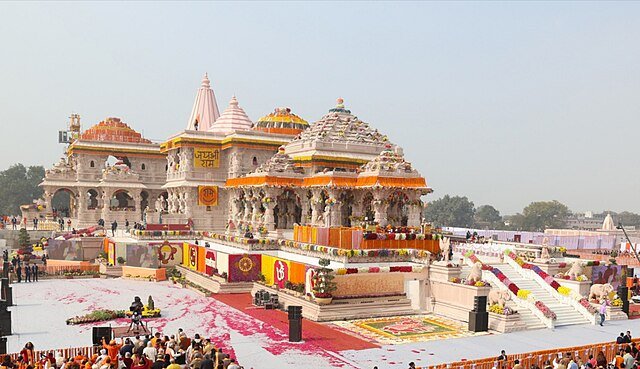
Nageshwarnath Temple Ayodhya
Nageshwarnath Temple is a Shiva temple at Ram Ki Paidi in Ayodhya, on the bank of the Sarayu. The shrine is traditionally associated with Kush, the son of Lord Rama, while the present temple structure dates to 1750. The temple is known for the worship of Lord Shiva in lingam form, its connection with the sacred riverfront of Ayodhya, and its large Mahashivratri celebrations. The annual Shiv Barat procession is one of the best-known traditions associated with the shrine.

Guptar Ghat Ayodhya
Guptar Ghat is a sacred riverside pilgrimage site on the Sarayu in Ayodhya. Traditionally identified with Gopratara Tirtha, it is associated with the belief that Lord Rama completed his earthly life here and departed through the waters of the Sarayu. The ghat is also home to a group of Vaishnava shrines, including the Sita-Ram, Chakrahari, Guptahari and Narasingh temples. The present stone ghats date mainly to the 19th century, while the religious tradition associated with Gopratara is much older.
Hanuman Garhi Temple
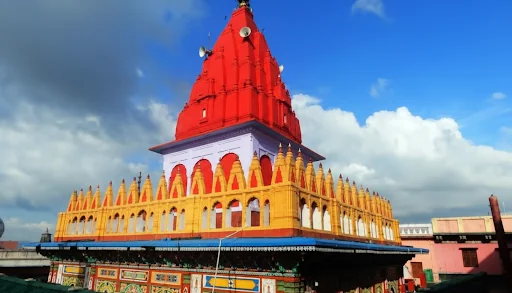
Hanuman Garhi Temple is one of the principal shrines of Ayodhya, dedicated to Lord Hanuman. The temple stands on a raised mound in the old city and is traditionally associated with Hanuman's role as the guardian of Ayodhya. The shrine is especially known for its Bal Hanuman image, the 76 steps leading to the temple and its fort-like structure with rounded bastions. In the traditional order of pilgrimage, devotees first take Hanuman's darshan here before proceeding to Ram Janmabhoomi and the darshan of Ram Lalla.
Ram Mandir Bhubaneswar
Ram Mandir is a modern Hindu temple in Kharavel Nagar on Janpath in Bhubaneswar, dedicated to Lord Rama, Goddess Sita and Lord Lakshmana. The temple is managed by a private trust and is one of the city's better-known shrines dedicated to Rama. The temple is recognised by its tall central spire, saffron-coloured exterior and the group of shrines within its premises. Ram Navami, Vivaha Panchami, Janmashtami, Dussehra, Shivaratri and Pana Sankranti are among the major festivals observed here, with morning and evening aarti forming part of its regular devotional life.
Sita Ramachandraswamy Temple, Bhadrachalam
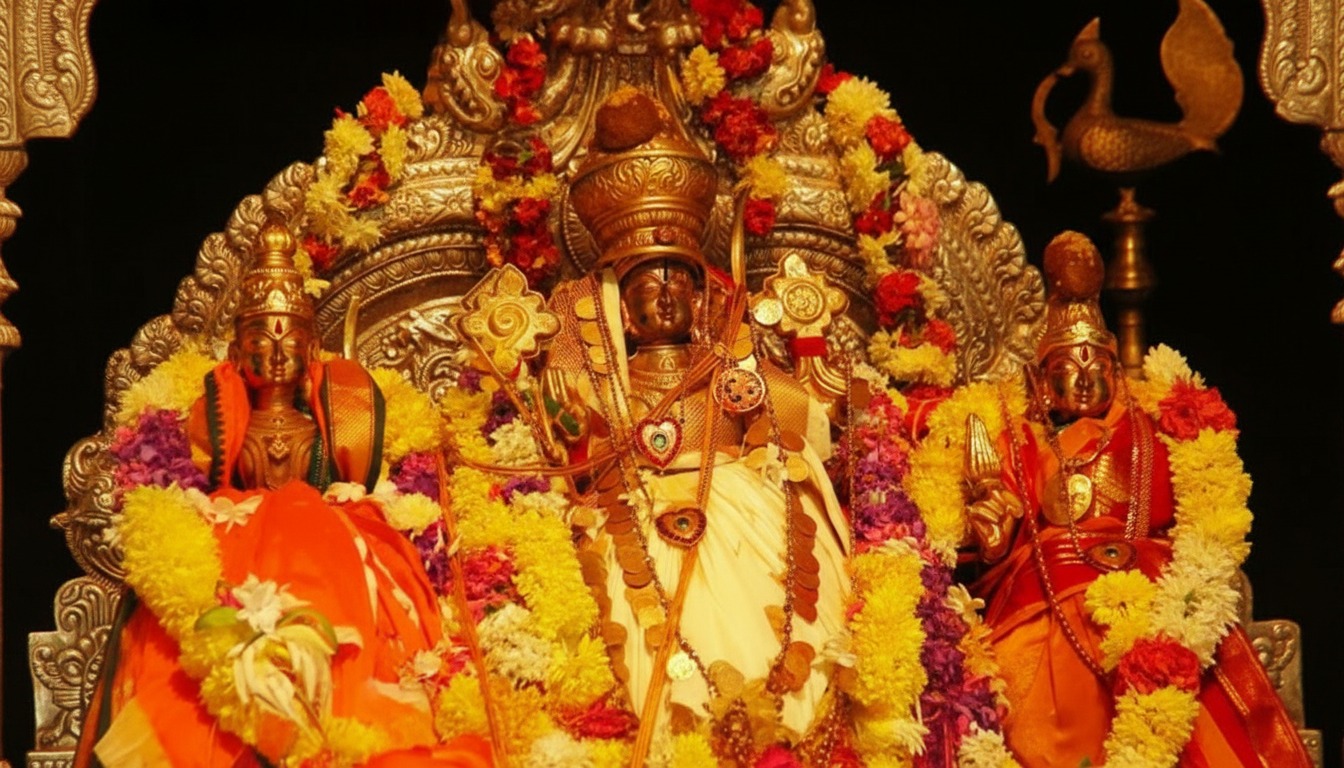
Sita Ramachandraswamy Temple in Bhadrachalam is dedicated to Lord Rama, Goddess Sita and Lakshmana. The temple stands on Bhadragiri beside the Godavari River and is widely known as Bhadrachalam or Dakshina Ayodhya. The shrine is especially known for its distinctive Vaikuntha Rama form, the traditions associated with Bhakta Ramadasu, its Pancharatra Agama worship and the annual Sita Rama Kalyanam held during Sri Rama Navami. The temple and its surrounding shrines together form the religious centre of Bhadrachalam.
Jagannath Temple
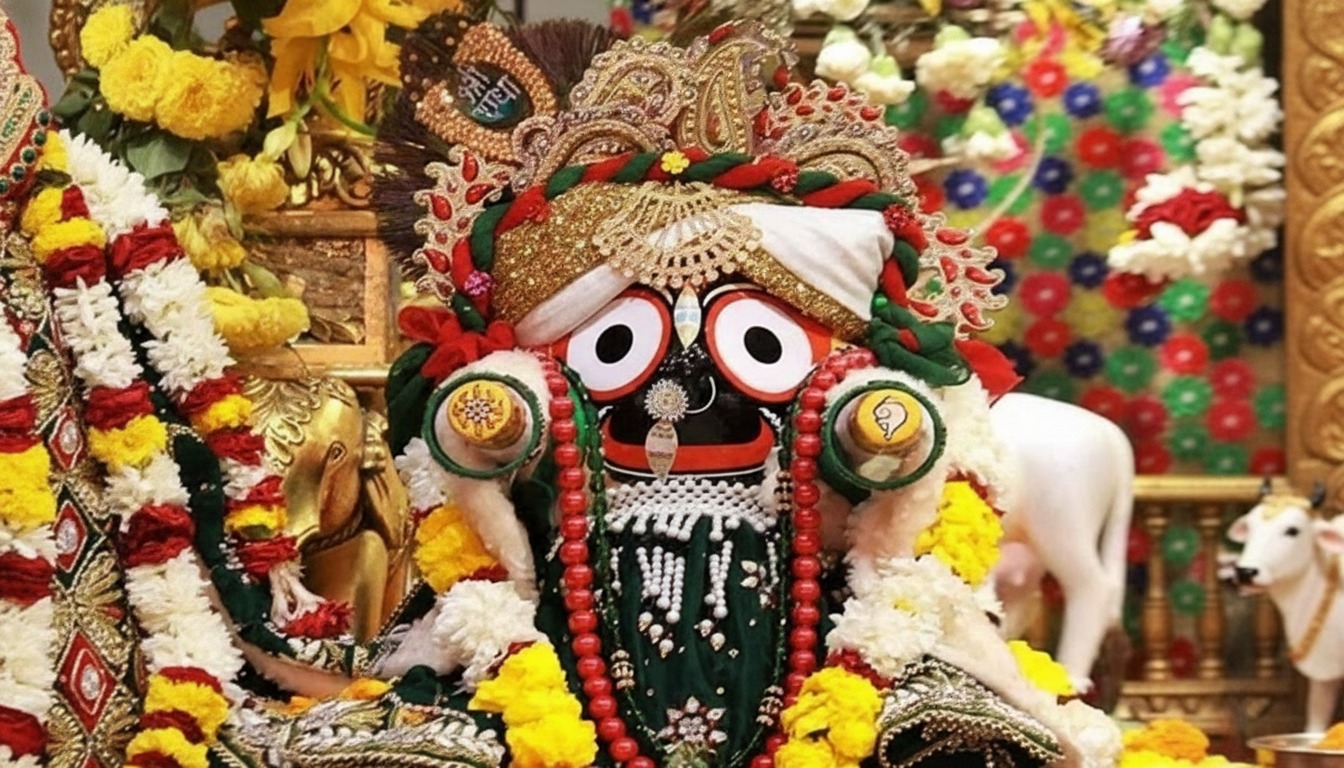
The Shri Jagannath Temple in Puri, Odisha, is dedicated to Lord Jagannath, worshipped with his brother Balabhadra and sister Subhadra. It is one of the four Char Dham pilgrimage sites and one of the most important Vaishnava temples in India. The temple is known for the Rath Yatra, the annual chariot festival, and for Mahaprasad, the food offered to the Lord and shared with devotees. It stands near the Bay of Bengal in the heart of Puri.
Pashupatinath Temple
Pashupatinath Temple stands on the banks of the Bagmati river in Kathmandu, Nepal, and is dedicated to Lord Shiva as Pashupati, the Lord of all living beings. It is the most important Shiva temple in Nepal and a UNESCO World Heritage Site as part of the Kathmandu Valley. The complex includes many temples, ashrams and ghats on both sides of the river. Pilgrims from India and Nepal visit throughout the year, especially on Maha Shivaratri.
Muktinath Temple
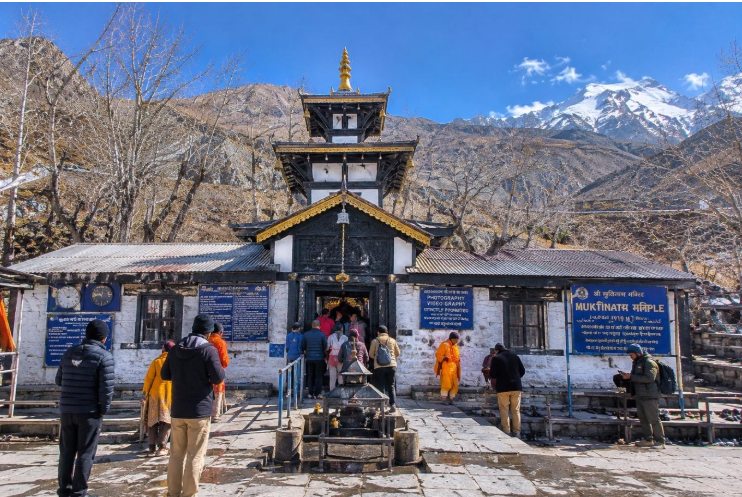
Muktinath Temple stands at about 3,710 metres in the Mustang district of Nepal, in the Himalayas near the Kali Gandaki river. It is sacred to both Hindus and Buddhists and is counted among the holy Vishnu shrines. Pilgrims come to bathe in the 108 water spouts, the Mukti Dhara, and to see the eternal flame at the nearby Jwala Mai shrine.
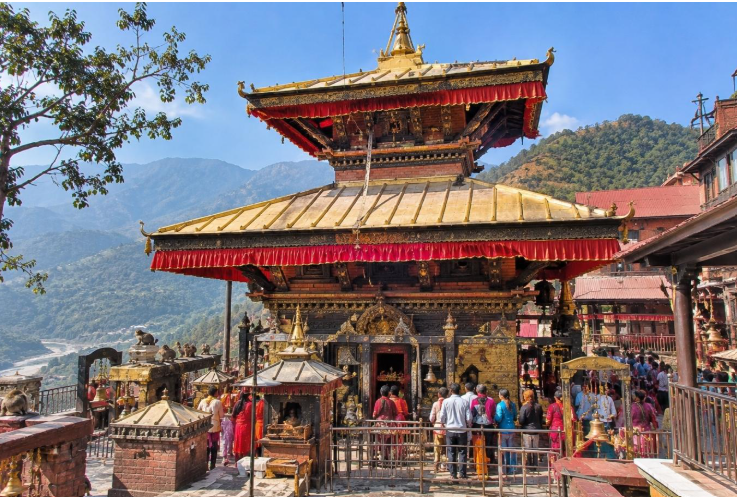
Manakamana Temple
Manakamana Temple stands on a hilltop in the Gorkha district of Nepal and is dedicated to Goddess Bhagwati, an incarnation of Parvati. Devotees believe that the Goddess fulfils the heartfelt wishes of those who pray with faith, and the name Manakamana means wish-fulfilment. The temple is reached by a cable car from Kurintar, which has made the pilgrimage easier and brought visitors from across Nepal and India.
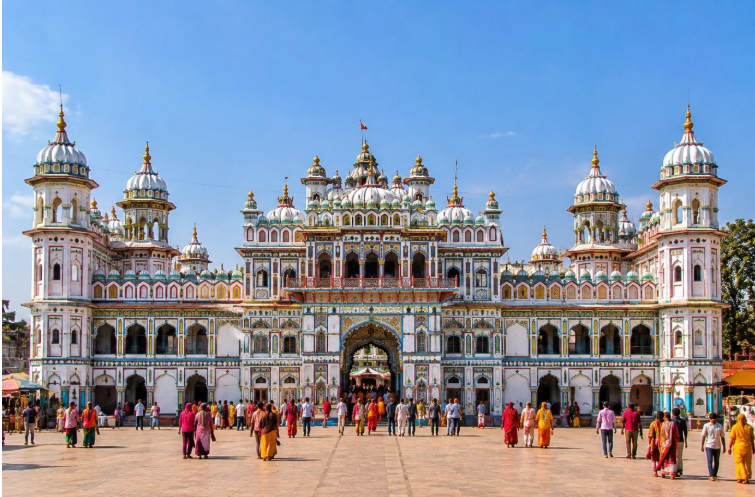
Mata Janaki Temple
The Janaki Mandir in Janakpur, Nepal, is dedicated to Goddess Sita, also known as Janaki, and is one of the most important Hindu temples in Nepal. Janakpur is regarded in tradition as the birthplace of Sita and the capital of her father, King Janaka of Videha. The temple draws pilgrims from India and Nepal, especially at the Vivaha Panchami festival that celebrates the marriage of Rama and Sita.
Swarnakarahana Bairavar Temple
The Swarnakarshana Bhairavar Temple at Kelambakkam, near Chennai in Tamil Nadu, is dedicated to Lord Bhairava in the form that devotees associate with prosperity. It is known for its panakam and urad dal vadai offerings. Devotees visit especially on Ashtami days dedicated to Bhairava and on Fridays and Sundays.
Vontimitta Ram Mandir (Kodandarama Swamy Temple)
The Kodandarama Swamy Temple at Vontimitta, in YSR Kadapa district of Andhra Pradesh, is a historic temple of Lord Rama with Sita and Lakshmana. It is regarded as one of the foremost Rama temples of the state and is often compared with Bhadrachalam. The temple stands beside a large tank and is known for its tall gopuram and finely carved halls.
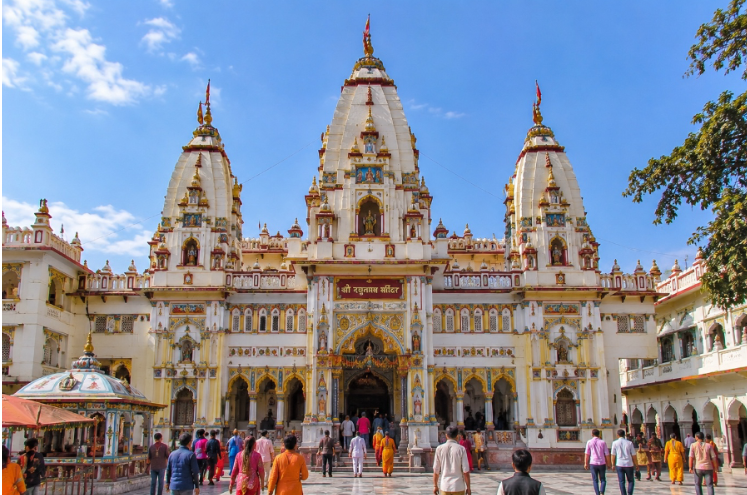
Raghunath Temple
The Raghunath Temple in Jammu is a large temple complex dedicated to Lord Rama and is one of the best-known landmarks of the city. It was built in the nineteenth century by the rulers of the Dogra dynasty and consists of several shrines. The temple stands in the old part of Jammu, in the Raghunath Bazaar area, and is visited by pilgrims travelling to Vaishno Devi.
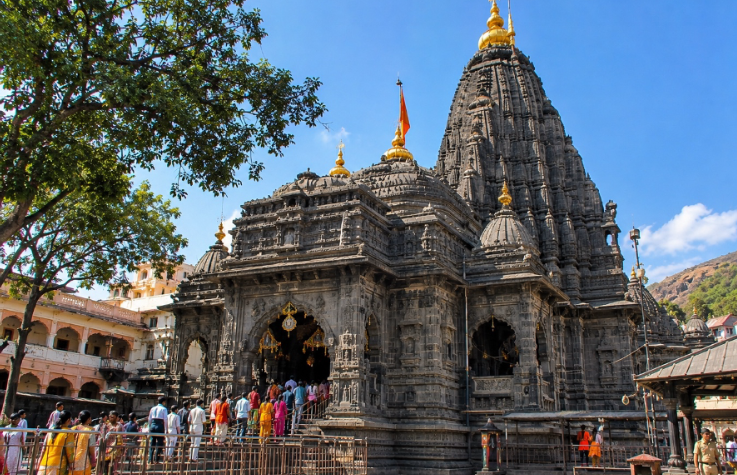
Kalaram Temple
The Kalaram Temple in the Panchavati area of Nashik, Maharashtra, is one of the best-known temples of Lord Rama. It takes its name from the black stone image of Rama, known as Kala Ram, enshrined in the sanctum. Panchavati is the place where, according to the Ramayana, Rama, Sita and Lakshmana lived during their exile, and the temple stands near the banks of the Godavari.
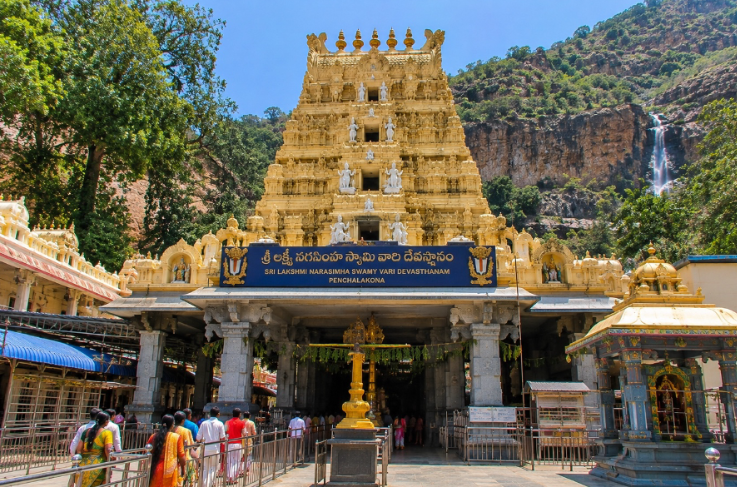
Penchalakona Lakshmi Narasimha Swamy Temple
The Penchalakona Lakshmi Narasimha Swamy Temple in Nellore district, Andhra Pradesh, is set in a forested valley near the Penna river. It is dedicated to Lord Narasimha, the fierce yet protective form of Vishnu, and is also known as the Penusila Lakshmi Narasimha Swamy Temple. Pilgrims from Andhra Pradesh and neighbouring states visit the temple, especially on Saturdays and during the Narasimha Jayanti celebrations.
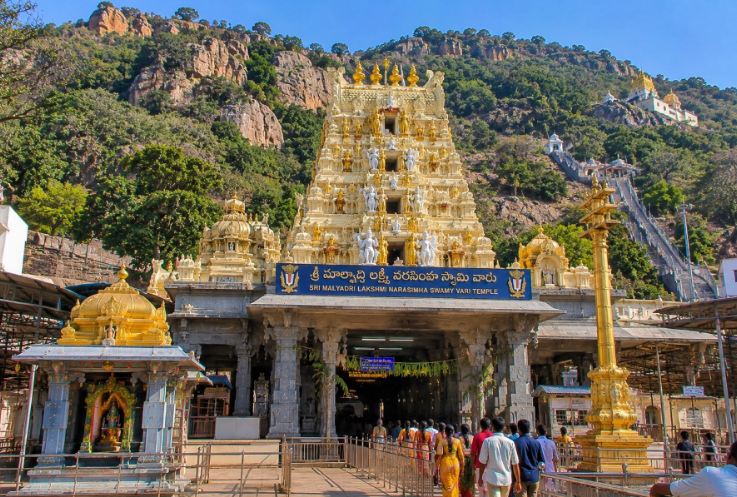
Sri Malyadri Lakshmi Narasimha Swamy Temple
The Sri Malyadri Lakshmi Narasimha Swamy Temple stands on a hill at Malakonda in Prakasam district, Andhra Pradesh. Lord Narasimha is worshipped here with Goddess Mahalakshmi, and the shrine is counted among the Nava Narasimha kshetras. The temple is traditionally visited on Saturdays and is known among devotees who seek the Lord's protection and grace.
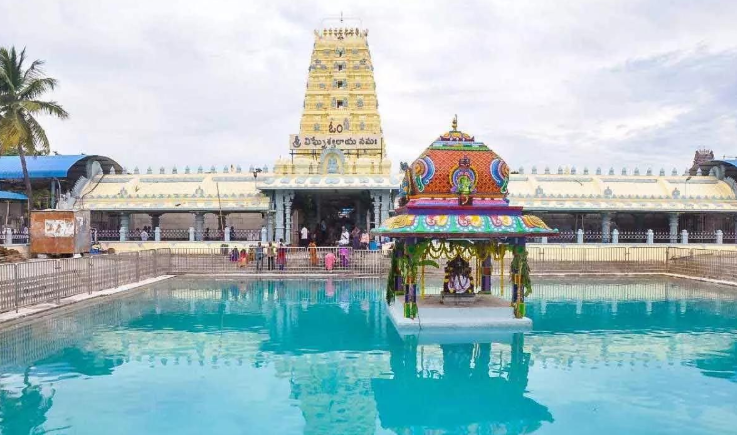
Sri Varasiddhi Vinayaka Swamy Temple
The Sri Varasiddhi Vinayaka Swamy Temple at Kanipakam, in Chittoor district of Andhra Pradesh, is dedicated to Lord Ganesha and is among the best-known Ganesha temples of South India. The idol is believed by devotees to be self-manifested. The temple is known for the tradition of taking oaths of truth before the deity and for its laddu and chakkara pongali prasadam.
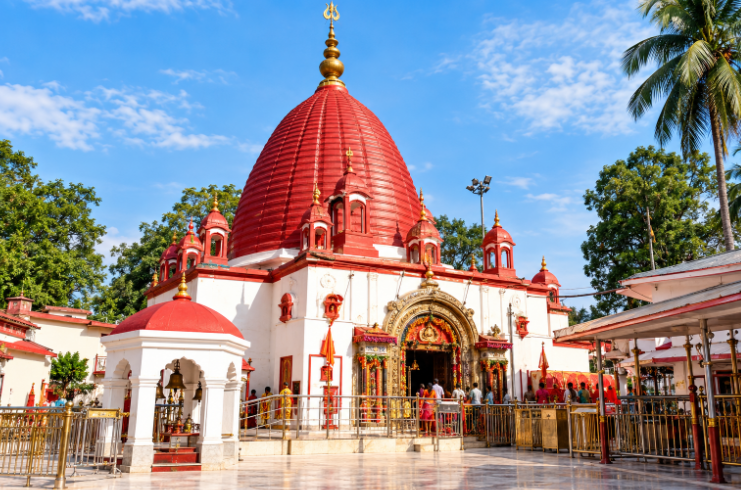
Tripura Sundari Temple (Matabari)
The Tripura Sundari Temple, locally called Matabari, is in Udaipur in the Gomati district of Tripura. It is counted among the 51 Shakti Peethas, where, according to tradition, part of the right foot of Sati fell. The Goddess is worshipped here as Tripura Sundari, also known as Tripureshwari and Shodashi, and the temple is the most important shrine in Tripura.
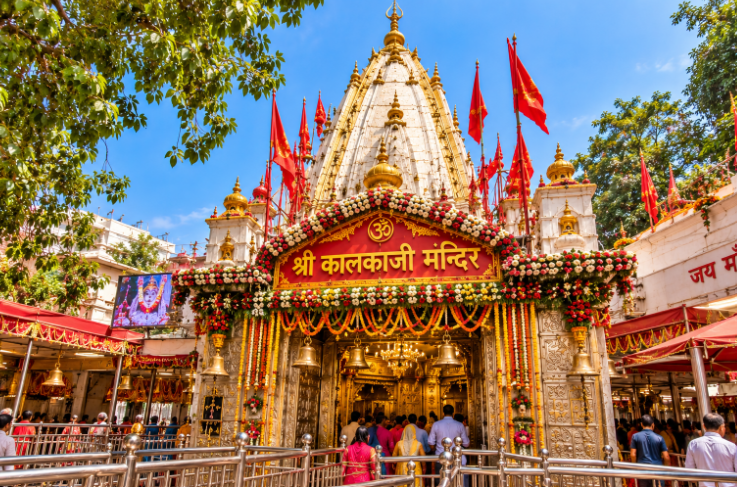
Kalkaji Mandir
Kalkaji Mandir in New Delhi is a well-known shrine of the Goddess in the capital, dedicated to Maa Kalka, a form of Kali worshipped as a protector. It is especially crowded during Navratri and is counted among the Siddha Peethas of Delhi. The temple stands in the Kalkaji area of South Delhi, close to the Nehru Place business district.
Shri Kshetra Dharmasthala
Shri Kshetra Dharmasthala in Dakshina Kannada, Karnataka, is a well-known pilgrimage centre on the bank of the Netravati river. Lord Manjunatha, a form of Shiva, is worshipped in the temple, and the kshetra is known for its tradition of annadana, free meals for pilgrims. It is one of the most visited pilgrimage places in southern India and welcomes devotees of all communities.
Kotilingala Temple
The Kotilingala Temple in Telangana is a Shiva shrine on the bank of the Godavari river, associated with the tradition of installing Shivalingas so that the site holds a very large number of lingas offered by devotees. Koteswara Swamy is the presiding deity. The temple draws pilgrims from across Telangana, especially on Maha Shivaratri and during the month of Karthika.
Sri Punyalingeswara Swamy Kshetram
Sri Punyalingeswara Swamy Kshetram at Choutuppal in Yadadri Bhuvanagiri district, Telangana, is a Shiva temple with sub-shrines for all twelve Jyotirlingas. Devotees can offer prayers at replicas of the twelve shrines in one place. The temple is on the Hyderabad-Vijayawada highway and is visited by families on weekends and festivals.
Sri Trikoteswara Swamy Temple
The Sri Trikoteswara Swamy Temple stands on the Kotappakonda hill in Palnadu district of Andhra Pradesh, near Narasaraopet. It is a Shiva temple on a hill with three peaks that devotees associate with Brahma, Vishnu and Rudra. The hill is a major pilgrimage destination, and the temple is best known for the Maha Shivaratri fair.
Jhandewalan Temple
The Jhandewalan Mata Mandir in New Delhi is a well-known temple of the Mother Goddess near Karol Bagh. Maa Jhandewali is worshipped as Aadi Shakti, the primal form of the Goddess, and the temple is a familiar landmark of the capital. The temple is crowded during Navratri and on Tuesdays and Fridays, when many devotees come to pay their respects.
Amaralingeswara Swamy Temple
The Amaralingeswara Swamy Temple at Amaravati, Andhra Pradesh, is a well-known Shiva temple on the bank of the Krishna river. It is counted among the Pancharama Kshetras, the five ancient Shiva shrines of the region. Amaravati is also known for its Buddhist stupa, and the town is a historic centre for both traditions.
Sri Panakala Lakshmi Narasimha Swamy Temple
The Panakala Lakshmi Narasimha Swamy Temple on Mangalagiri hill in Andhra Pradesh is one of the best-known Narasimha temples in South India. The deity appears as a wide-open mouth, and devotees pour panakam, a drink of jaggery and water, into it. Tradition says that the Lord accepts only half of the panakam poured in, and the rest flows back as prasadam for the devotees.
Ekambareswarar Temple
The Ekambareswarar Temple in Kanchipuram, Tamil Nadu, is one of the largest and most important Shiva temples in South India. Shiva is worshipped here as the Prithvi Lingam, the lingam of earth, and the temple is one of the five Pancha Bhoota Sthalams. The temple is known for its tall gopuram, its hall of many pillars and an ancient mango tree in the courtyard.
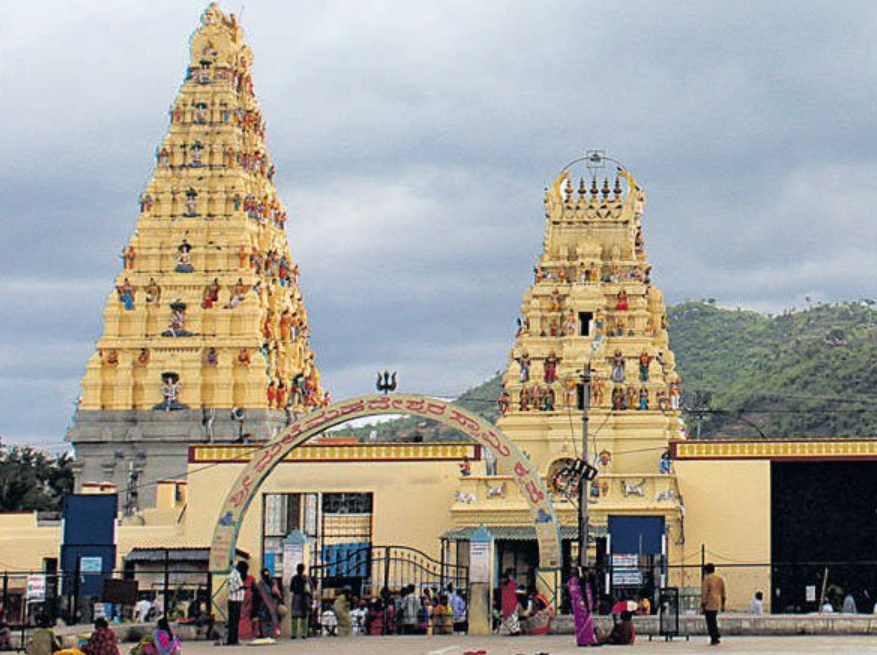
Sri Male Mahadeshwara Swamy Temple
The Sri Male Mahadeshwara Swamy Temple stands on a hill at Male Mahadeshwara Hills (MM Hills) in Chamarajanagar district, Karnataka. Lord Mahadeshwara, a form of Shiva, is revered by devotees across southern Karnataka and the neighbouring states. The temple is known for its large festivals, its daily free meals for visiting devotees and its MM Hills laddu.
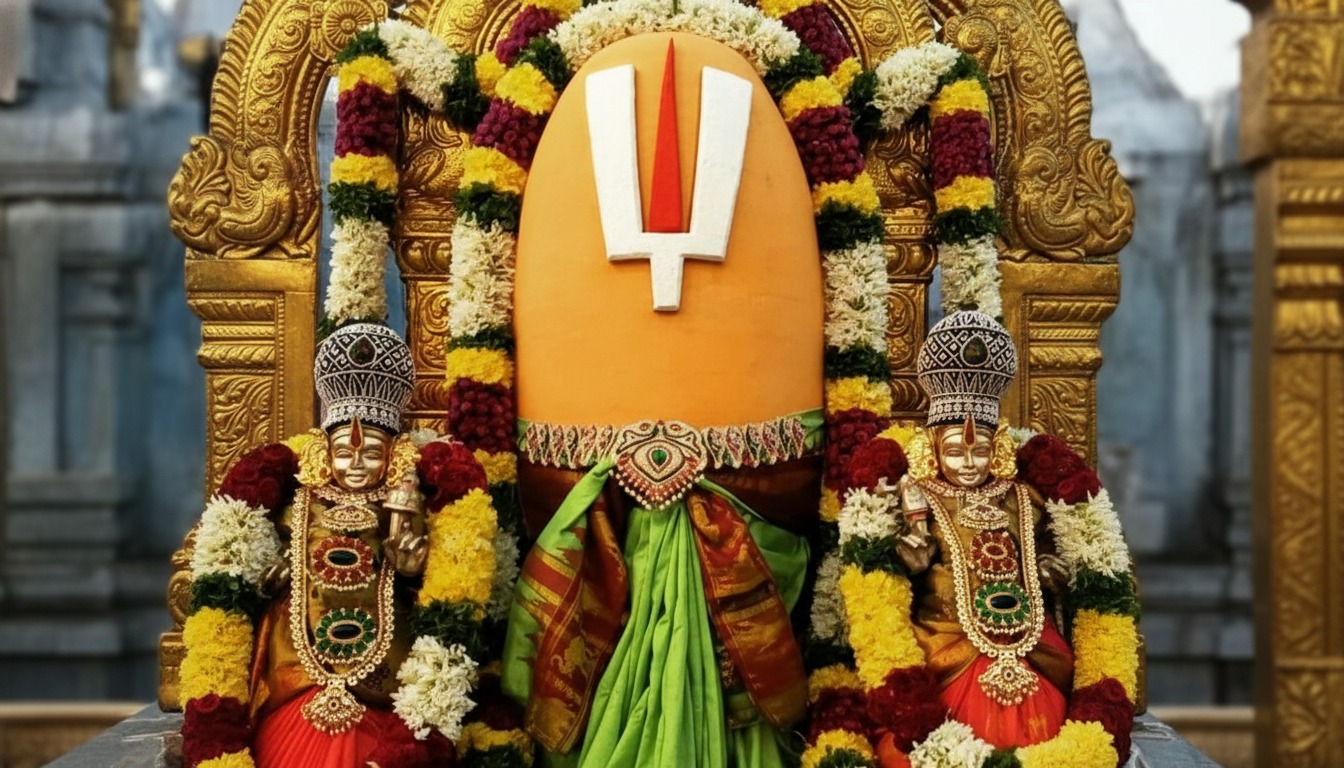
Sri Varaha Lakshmi Narasimha Swamy Temple (Simhachalam)
The Sri Varaha Lakshmi Narasimha Swamy Temple at Simhachalam, near Visakhapatnam, is a major Vaishnava temple on a hill. The deity is worshipped as Varaha Narasimha, a combined form of Vishnu, and is covered in sandalwood paste for most of the year. The temple is known for the Chandanotsavam, when the deity is revealed in its original form once a year.
Linga Bhairavi Temple
The Linga Bhairavi Temple is part of the Isha Yoga Center at the foot of the Velliangiri hills near Coimbatore, Tamil Nadu. Linga Bhairavi is a form of the Goddess consecrated at the centre, and devotees come to offer prayers for strength and well-being. The temple is visited by people of many backgrounds and offers specific offerings and rituals.
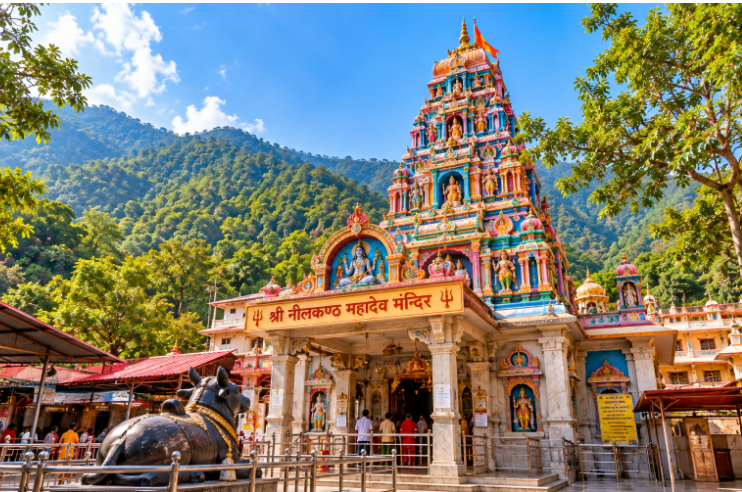
Neelkanth Mahadev Temple
The Neelkanth Mahadev Temple stands in the forested hills above Rishikesh in Uttarakhand, about 32 km from the town. Shiva is worshipped here as Neelkanth, the blue-throated one, who according to tradition drank the poison that arose when the ocean was churned. The temple is one of the most visited Shiva shrines near Rishikesh and is especially crowded during Shravan and Maha Shivaratri.
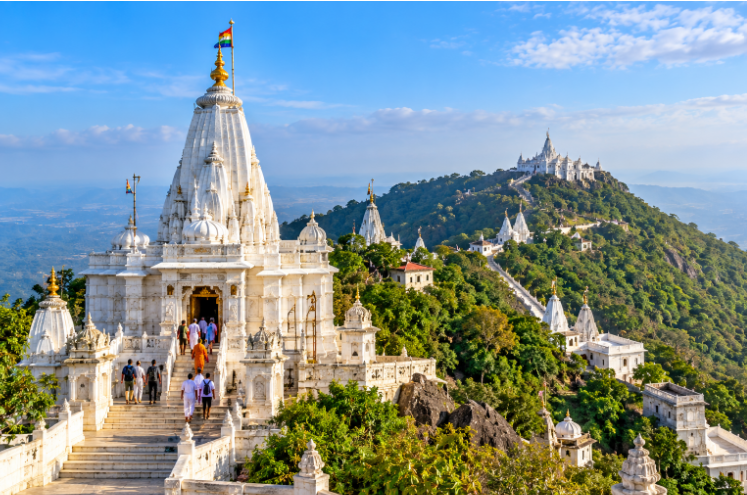
Shri Sammed Shikharji
Shri Sammed Shikharji, on the Parasnath hills in Giridih district of Jharkhand, is among the most sacred Jain pilgrimage sites in India. Twenty of the twenty-four Jain Tirthankaras are believed to have attained moksha here. Pilgrims climb the hills and walk a parikrama of about 27 km, visiting the many shrines on the peaks.
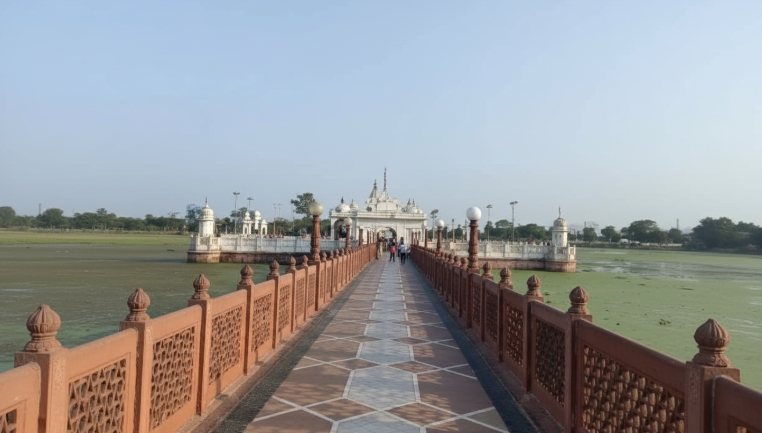
Jal Mandir, Pawapuri
Jal Mandir at Pawapuri, in Nalanda district of Bihar, is a revered Jain temple that stands in the middle of a lotus-filled pond. It marks the place associated with the nirvana of Lord Mahavira, the twenty-fourth Tirthankara. Pawapuri is about 100 km from Patna and about 15 km from Rajgir, and Jal Mandir is its most important shrine.
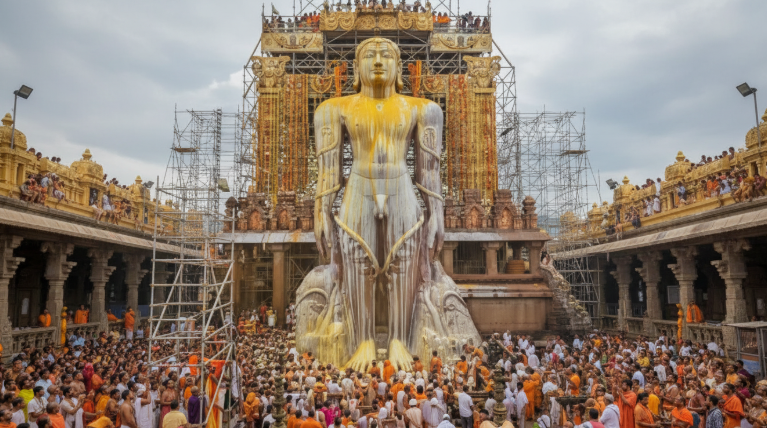
Gomateshwara Temple (Shravanabelagola)
The Gomateshwara Temple at Shravanabelagola in Hassan district, Karnataka, is a revered Jain pilgrimage site dedicated to Lord Bahubali, also called Gomateshwara. A monolithic statue of Bahubali, about 57 feet tall, stands on top of Vindhyagiri hill. The statue symbolises renunciation, forgiveness and victory over worldly attachments.
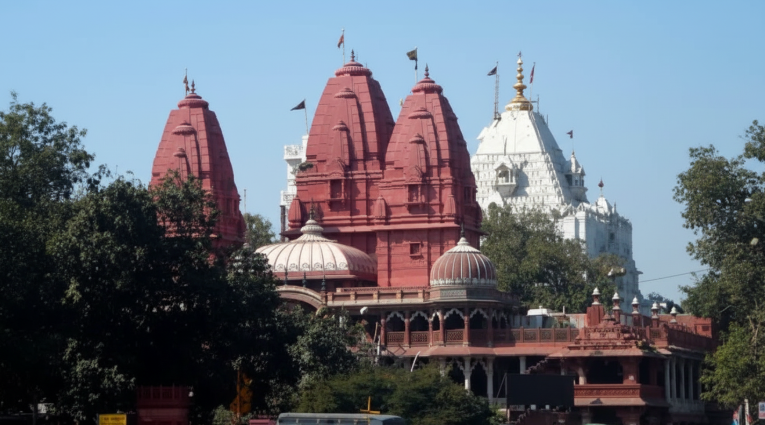
Shri Digambar Jain Lal Mandir
The Shri Digambar Jain Lal Mandir in Chandni Chowk, Old Delhi, is one of the oldest Jain temples in the city. It stands opposite the Red Fort and is a centre of Digambar Jain worship for the city. The temple is also known for the Charity Birds Hospital that is run in its premises.
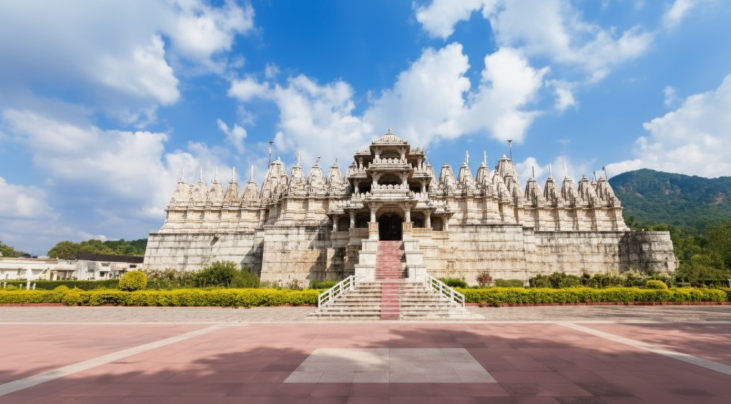
Ranakpur Jain Temple
The Ranakpur Jain Temple in Pali district, Rajasthan, is one of the most celebrated Jain temples in India. Dedicated to Lord Adinath, also called Rishabhanatha, the first Tirthankara, it is a masterpiece of white marble carving set in the Aravalli hills. The temple is famous for its more than 1,400 intricately carved pillars, no two of which are alike in design.
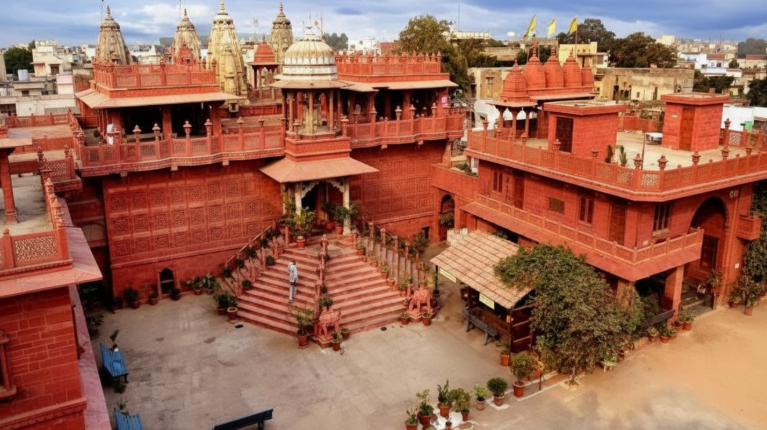
Soniji Ki Nasiyan
Soniji Ki Nasiyan, also known as the Red Temple, is a Digambar Jain temple in Ajmer, Rajasthan, dedicated to Lord Adinath, the first Tirthankara. It is best known for its hall of golden figures, the Swarna Nagari. The temple is a major Jain pilgrimage site in Rajasthan and a popular stop for visitors to Ajmer.
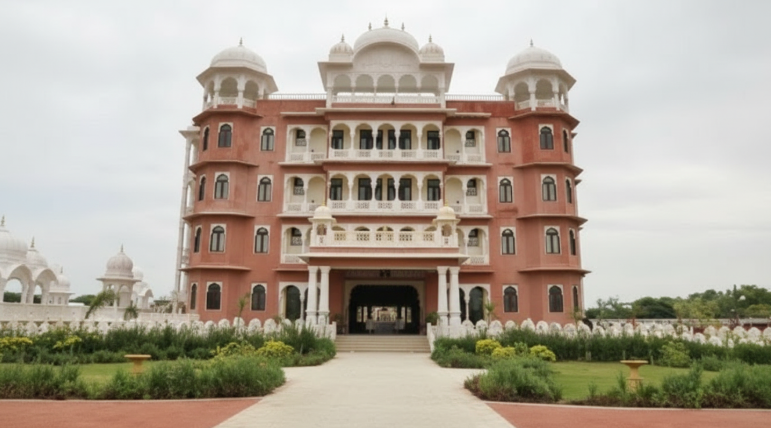
Sanghiji Jain Temple
The Shri Digambar Jain Atishaya Kshetra Sanghiji Temple at Sanganer, near Jaipur, is a revered Digambar Jain pilgrimage site. Its Mulnayak is Lord Adinath, also called Rishabhanatha, the first Tirthankara. The temple is known for its red sandstone architecture and its centuries-old Jain heritage.
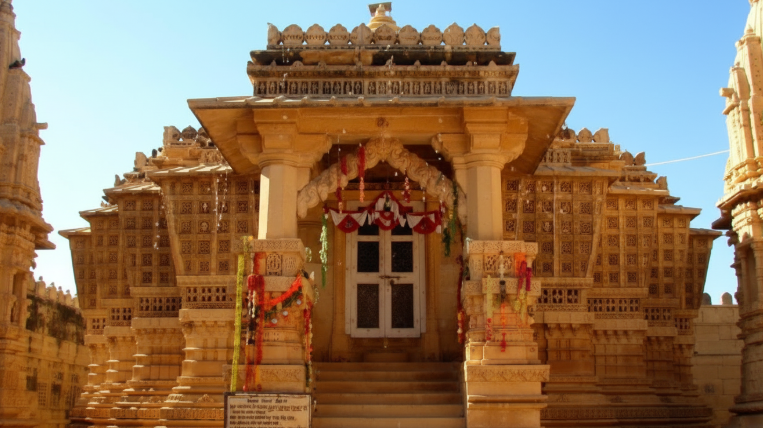
Lodhurva Jain Temple
The Lodhurva Jain Temple at Lodhurva, near Jaisalmer in Rajasthan, is a revered Jain pilgrimage dedicated to Lord Parshvanath, the twenty-third Tirthankara. It is known for its heritage and for beautifully carved architecture in golden sandstone. Lodhurva was once the capital of the Bhati Rajputs before Jaisalmer was founded.
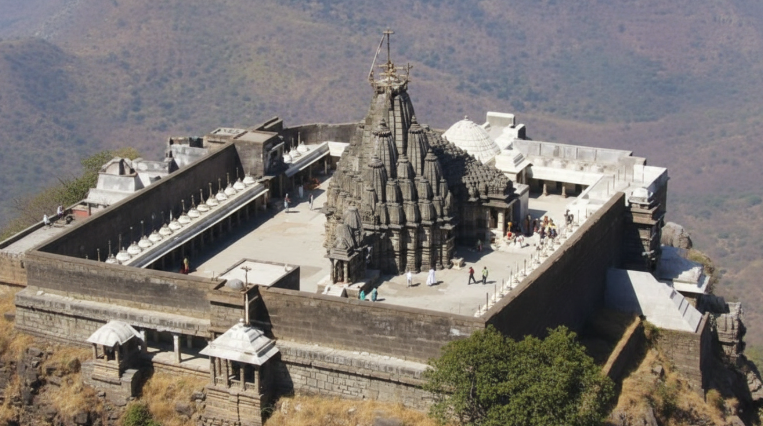
Girnar Jain Temples
The Girnar Jain Temples on Girnar Hills in Junagadh, Gujarat, are among the most sacred Jain pilgrimage sites. The best-known temple is dedicated to Lord Neminath, the twenty-second Tirthankara, who is believed to have attained moksha on this mountain. Girnar is also sacred to Hindus, and the hill has temples of several traditions.
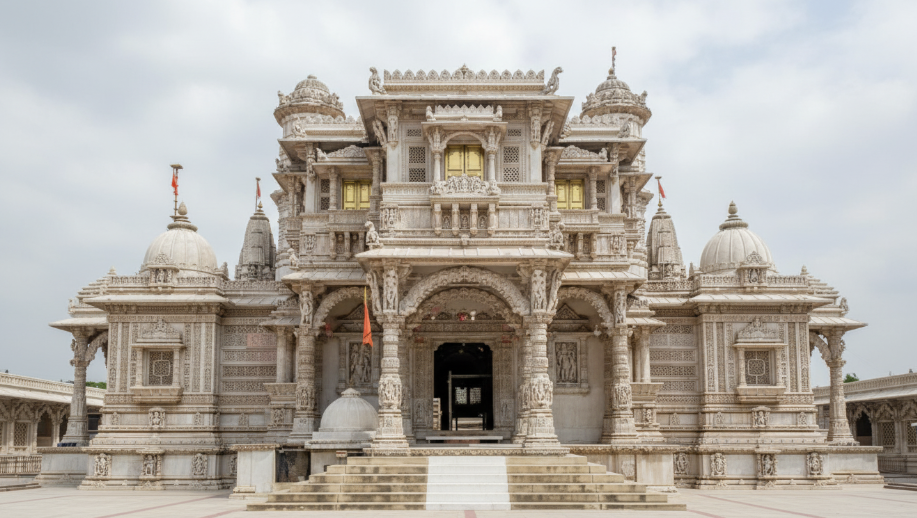
Hatheesing Jain Temple
The Hatheesing Jain Temple in Ahmedabad, Gujarat, is a notable white marble Jain temple dedicated to Lord Dharmanath, the fifteenth Tirthankara. It is a celebrated example of Jain temple architecture in the city. The temple stands near Delhi Darwaza in the Shahibaug area and is visited by pilgrims and tourists.
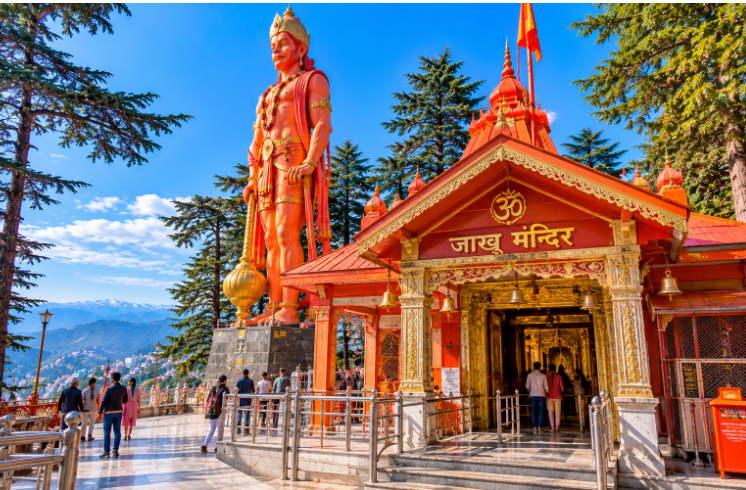
Jakhoo Temple
The Jakhoo Temple on Jakhoo Hill in Shimla, Himachal Pradesh, is a revered temple of Lord Hanuman. It stands on the highest peak in Shimla and is known for the large statue of Hanuman at the hilltop and the many monkeys around it. Devotees offer boondi laddu and other sweets, and the temple offers views of the town and the Himalayas.
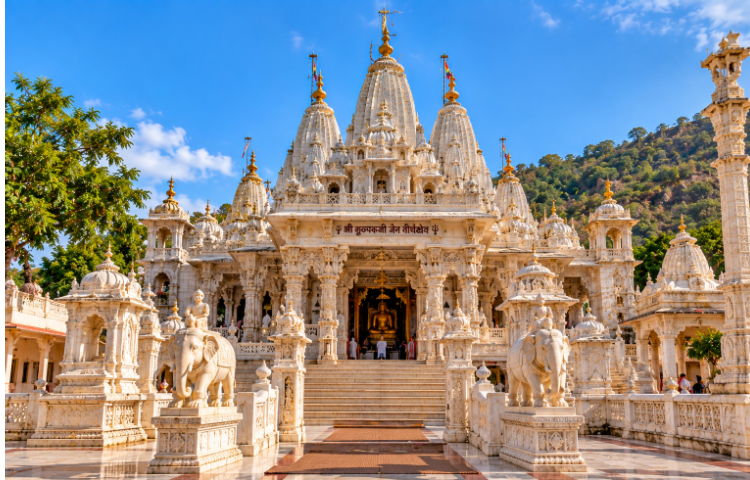
Kulpakji Jain Temple
The Kulpakji Jain Temple at Kolanupaka in Yadadri Bhuvanagiri district, Telangana, is a famous Shwetambar Jain pilgrimage centre about 80 km from Hyderabad. It is known for its idol of Lord Rishabhanatha, called Manikyaswami, made of a green stone. The temple has a long history, with origins attributed to the tenth century and inscriptions from the twelfth century.
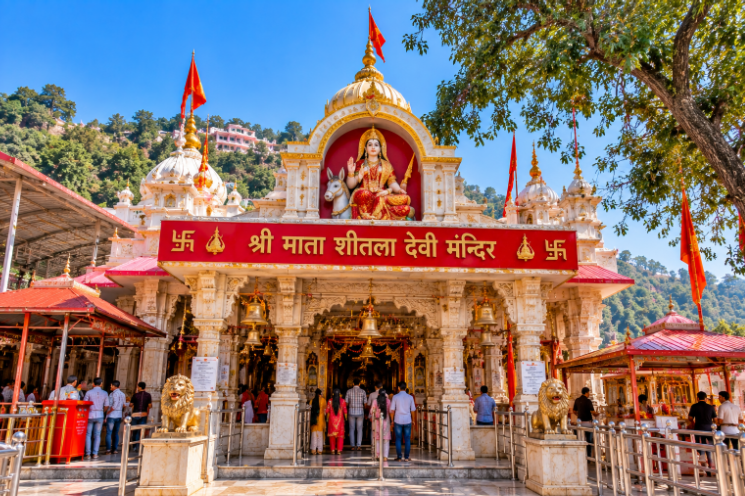
Shri Mata Sheetla Devi Mandir
Shri Mata Sheetla Devi Mandir in Gurugram, Haryana, is an important shrine of Maa Sheetla, revered as the divine mother of cooling, protection and family well-being. It attracts devotees throughout the year, especially during Navratri and its traditional fairs. Families also visit the temple for the Mundan Sanskar, the first hair-cutting ceremony of a child.
Maa Vindhyavasini Temple
The Maa Vindhyavasini Temple at Vindhyachal in Mirzapur, Uttar Pradesh, is one of the most revered Shakti temples in India. Maa Vindhyavasini is worshipped as the presiding Goddess of Vindhyachal Dham, a major centre of Shakti worship near the Ganga. The temple draws large numbers of devotees, especially during Navratri.