
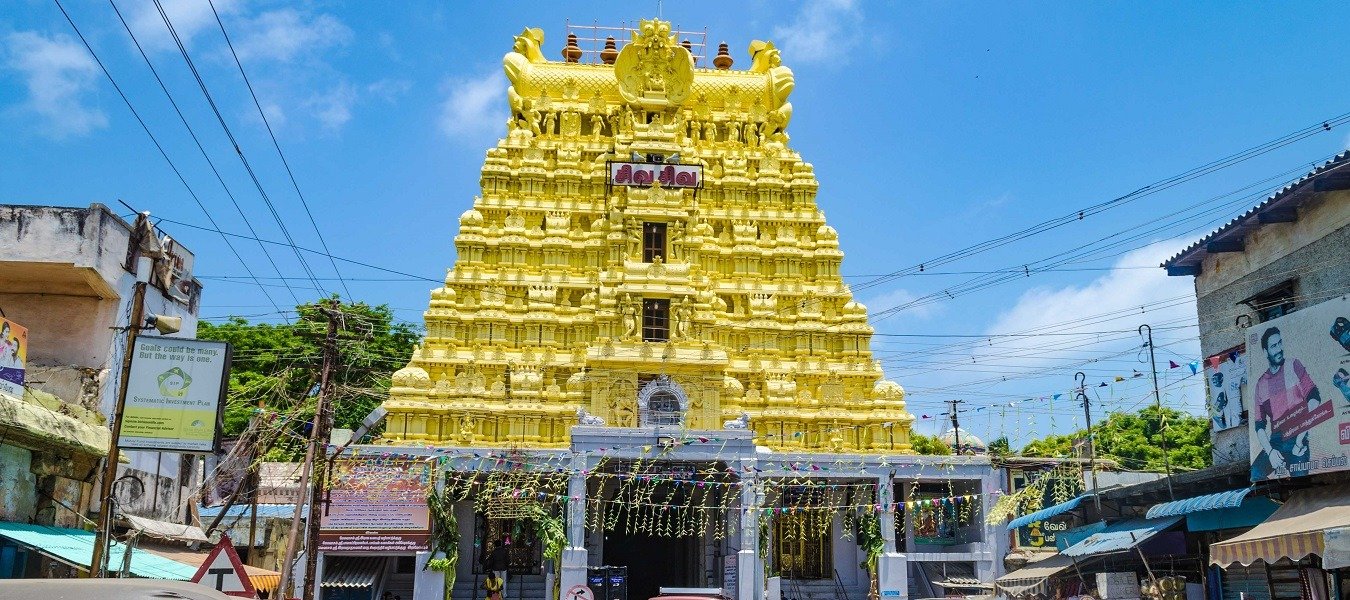
About Ramanathaswamy Temple, Rameswaram, Tamil Nadu
Ramanathaswamy Temple is dedicated to Lord Shiva in the sacred town of Rameswaram, Tamil Nadu. It is one of the twelve Jyotirlinga temples and one of the four Char Dham pilgrimage sites, giving Rameswaram an important place in both Shaiva and wider Hindu pilgrimage traditions.
The temple is known for its two principal lingams, the 22 sacred theerthams and its long pillared corridors. Its present form was built and enlarged over several centuries under different rulers and patrons, while the daily worship and pilgrimage traditions associated with Rama and Shiva continue to define the temple.
Story of Ramanathaswamy Temple
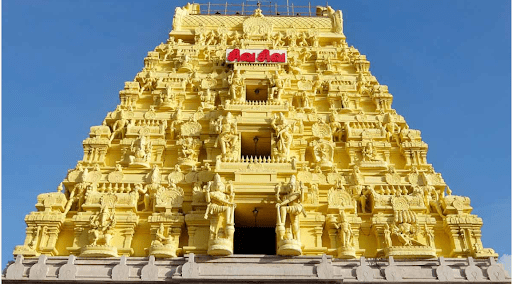
The history of Ramanathaswamy Temple extends across several centuries. The temple's own HR&CE account records that the shrine was under the care of an ascetic until around the 10th century, after which the 12th-century ruler of Lanka, Parakrama Bahu, built the sanctum. In the 15th century, Udaiyan Sethupathi and a merchant from Nagore contributed to the western gopuram and fortification walls, while later patrons added other parts of the complex.
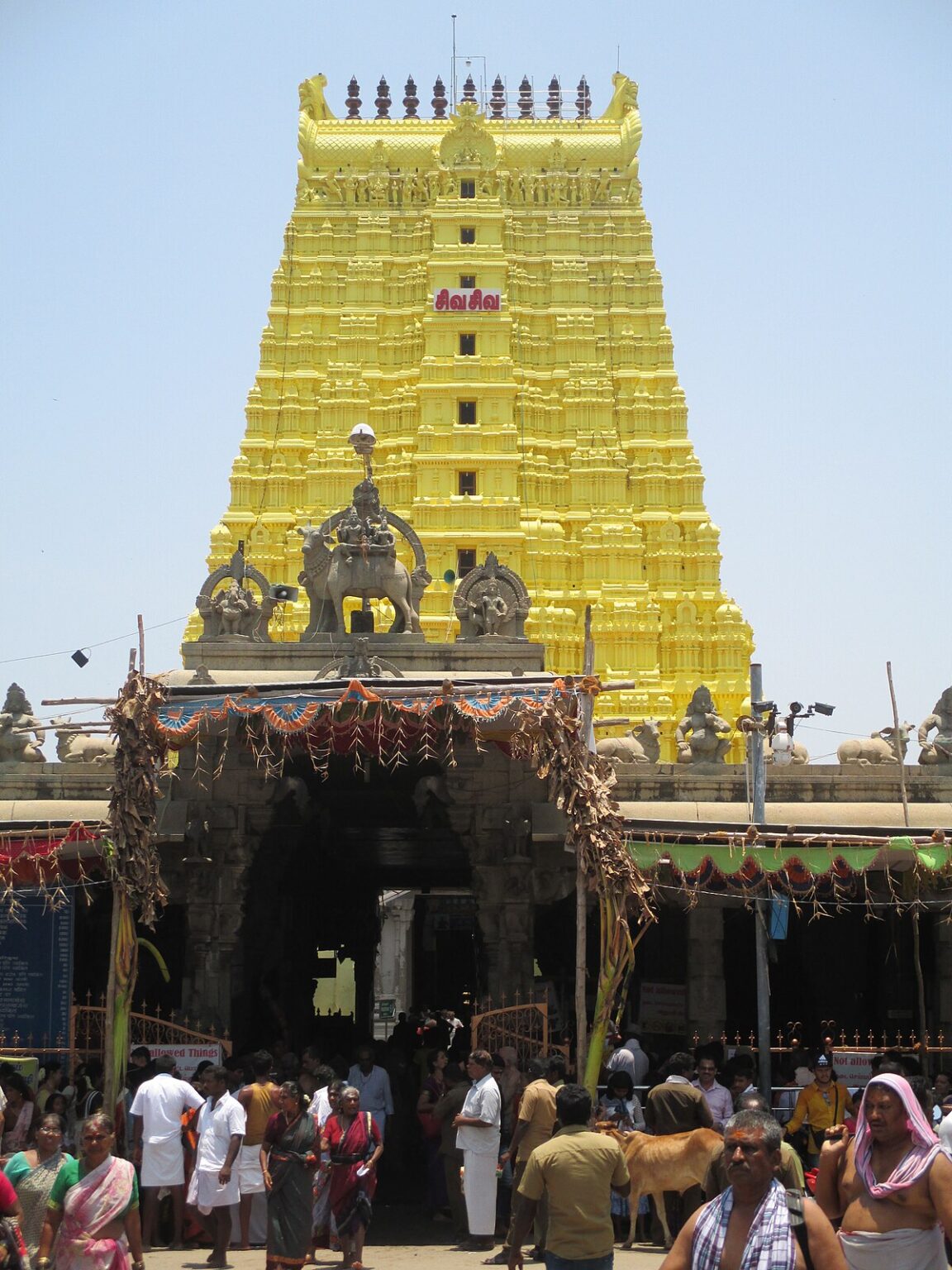
Further construction continued under the rulers of the Ramanathapuram region. Chinna Udaiyan Sethupathi Kattathevar is associated with the Nandi Mandapam, while Dalavai Sethupathi built part of the eastern Rajagopuram in the 17th century. The great outer corridor was developed under the Sethupathi rulers in the 18th century, and the eastern nine-tier Rajagopuram was completed between 1897 and 1904 under the patronage of the A.L.A.R. family of Devakottai.
The principal deity is Lord Ramanathaswamy, worshipped as a Shiva Lingam. According to temple tradition, this is the Ramalingam, the Lingam made from sand by Sita when Hanuman had not yet returned with a Lingam from Kailash. Hanuman's Lingam, known as the Vishvalingam, was later installed beside it. The temple tradition says that Rama instructed that the Vishvalingam should receive worship first, and this order continues in the temple.
The temple follows the South Indian Dravidian tradition, with large gopurams, enclosed prakarams, mandapams and long pillared corridors. Its most distinctive feature is the outer corridor, whose commonly cited dimensions extend to about 400 feet on the east and west and about 640 feet on the north and south, with roughly 1,212 pillars. The complex also contains separate shrines including Parvathavardhini Amman, Vishalakshi, Vinayaka, Subrahmanya, Vishnu and Sethu Madhava.
What Makes Ramanathaswamy Temple Sacred for Devotees
Rama and the Ramanathaswamy Lingam
According to the temple's sthala tradition, Rama came to Rameswaram after the war in Lanka and worshipped Lord Shiva. The tradition says that Rama wished to seek relief from the consequences of killing Ravana, who was a Brahmin and a devotee of Shiva.
Rama asked Hanuman to bring a Lingam from Kailash. When Hanuman's return was delayed, Sita made a Lingam from sand so that the worship could take place at the appointed time. This became the Ramalingam, now worshipped as Ramanathaswamy.
The Vishvalingam and Hanuman
When Hanuman returned with the Lingam from Kailash, he was disappointed that another Lingam had already been installed. The temple tradition says Rama pacified him by installing Hanuman's Lingam beside the Ramalingam and giving it precedence in worship.
This tradition remains important to the identity of the temple because the sanctum therefore carries two closely connected forms of the sacred Lingam.
Rameswaram in the Char Dham tradition
Rameswaram is the southern site in the Char Dham tradition, together with Badrinath, Dwarka and Puri. It is also the only Shaiva site among these four traditionally recognised destinations.
The temple is therefore important not only to Shaiva pilgrims but also to broader Hindu pilgrimage routes that connect the major sacred centres of India.
Kashi–Rameswaram tradition
A longstanding pilgrimage tradition links Kashi and Rameswaram. Devotees traditionally regard the two places as complementary pilgrimage centres, and the Kashi–Rameswaram journey remains part of the religious geography surrounding the temple.
The 22 Theerthams
There are 22 sacred theerthams within the Ramanathaswamy Temple complex. They are mostly wells located within the temple's prakarams, while Agni Theertham, the sea at the eastern side of the temple, forms an important part of the larger Rameswaram pilgrimage.
Devotees traditionally bathe in the theerthams as part of the pilgrimage and regard the ritual as an act of purification. The temple's official schedule gives separate visiting hours for the 22 internal theerthams.
Shaiva and Vaishnava traditions at Rameswaram
The principal worship at Ramanathaswamy Temple is Shaiva, but the presence of the Sethu Madhava shrine and the temple's place in the Char Dham tradition give Rameswaram a wider Vaishnava connection as well.
This combination is one reason Rameswaram occupies an unusual place in India's pilgrimage geography.
Annual Festivals & Rituals at Ramanathaswamy Temple, Rameswaram, Tamil Nadu
Spatika Lingam Darshan Celebrations at the Temple
The temple conducts an early-morning ritual associated with the Spatika Lingam. The official temple schedule places this worship in the early morning before the regular moolasthana darshan period.
22 Theertham Snanam Celebrations at the Temple
Bathing at the 22 sacred wells is one of the best-known pilgrimage practices at Rameswaram. The wells are located within the temple complex, and devotees traditionally proceed through the theerthams before continuing with temple worship.
Maha Shivaratri Celebrations at the Temple
Maha Shivaratri is one of the principal annual festivals of Ramanathaswamy Temple. The celebration extends over several days and includes special worship and processions for the deities.
Vasanthotsavam Celebrations at the Temple
Vasanthotsavam is the temple's spring festival. Special worship, abhishekam and processional observances form part of the festival cycle.
Ramalinga Pratishtha Utsavam Celebrations at the Temple
This festival commemorates the traditional installation of the Ramalingam by Rama. The celebration is associated with special worship and processions.
Thirukalyanam Celebrations at the Temple
Thirukalyanam is the traditional marriage festival of Ramanathaswamy and Parvathavardhini. It is observed over an extended festival period with processions and temple ceremonies.
Thai Amavasai, Aadi Amavasai and Mahalaya Amavasya Celebrations at the Temple
The major Amavasya observances draw devotees to Rameswaram because the island is an important centre for ancestral and theertha-related pilgrimage traditions.
Sethu Karai Theertham Float Festival and Agni Nakshatram Celebrations at the Temple
These observances form part of the wider annual religious calendar of Rameswaram and are associated with the temple's theertham and festival traditions.
Sacred Places to Visit Near Ramanathaswamy Temple
Agni Theertham : Agni Theertham is the seashore directly associated with the Rameswaram pilgrimage. Devotees traditionally bathe here before or as part of their temple pilgrimage.
Gandhamadana Parvatham : Gandhamadana Parvatham is a hillock about 3 km from the temple and is identified by local tradition with the place where Rama stood while searching for Sita. The shrine at the top is associated with the traditional imprint of Rama's feet.
Kothandaramaswamy Temple : Kothandaramaswamy Temple lies near Dhanushkodi and is associated by tradition with Vibhishana's surrender to Rama. It forms part of the Ramayana-related pilgrimage circuit around Rameswaram.
Dhanushkodi : Dhanushkodi is at the southern end of Rameswaram Island. The town was devastated by the 1964 cyclone, while the Kothandaramaswamy Temple survived. The site remains part of the region's religious and historical landscape.
Panchmukhi Hanuman Temple : The Panchmukhi Hanuman Temple is associated with the five-faced form of Hanuman and is commonly included in the Rameswaram pilgrimage circuit.
Pamban Bridge : Pamban Bridge connects Rameswaram Island with the mainland and is one of the defining transport landmarks of the region.
Dr. A.P.J. Abdul Kalam Memorial : The memorial at Pei Karumbu commemorates Dr. A.P.J. Abdul Kalam, who was born and brought up in Rameswaram. It provides a different but important part of the town's modern history.
Plan Ramanathaswamy Temple Darshan
For current darshan planning, queue information, theertham arrangements and Naman Darshan's Guided Darshan Assistance, continue to the dedicated Ramanathaswamy Temple Darshan page.
Common Questions About Visiting Ramanathaswamy Temple
Visitor Information
Darshan Timing
Address
Arulmigu Ramanathaswamy Temple, East Car Street, Rameswaram, Ramanathapuram District, Tamil Nadu – 623526, India
Notable Events
12th century — Sanctum associated with Parakrama Bahu – The temple's official history attributes construction of the sanctum to the Sri Lankan ruler Parakrama Bahu. • 15th century — Western gopuram and walls – Udaiyan Sethupathi and a merchant from Nagore are recorded as patrons of the western gopuram and fortification walls. • 16th century — Nandi Mandapam – Chinna Udaiyan Sethupathi Kattathevar is associated with the construction of the Nandi Mandapam and other temple works. • 17th century — Eastern Rajagopuram development – Dalavai Sethupathi built part of the eastern Rajagopuram. • 18th century — Great outer corridor – The Sethupathi rulers continued the expansion of the temple, including the development of the great outer corridor. Muthuramalinga Sethupathi is particularly associated with the famous third corridor. • 1897–1904 — Eastern Rajagopuram completed – The nine-tier eastern Rajagopuram, approximately 126 feet high, was completed through the patronage of the A.L.A.R. family of Devakottai. • 2016 — Maha Kumbabhishekam – The temple underwent a major Kumbabhishekam on 20 January 2016 after a period of renovation and preparation.
How to Reach the Temple
By Air: Madurai International Airport is the nearest major airport, approximately 175 km from Rameswaram according to Ramanathapuram District administration. Thoothukudi is another airport serving the region.
By Rail: Rameswaram Railway Station is approximately 1.3 km from the temple and connects the town with major destinations in Tamil Nadu and elsewhere in India.
By Road: Rameswaram is connected by road and bus services with Madurai, Ramanathapuram and other cities in Tamil Nadu. The Rameswaram bus stand is about 2 km from the temple.
Within Rameswaram: Auto-rickshaws, taxis and local transport serve the temple area. During major festivals, road movement and vehicle access around the temple may be regulated.
Mirzapur, Uttar Pradesh