
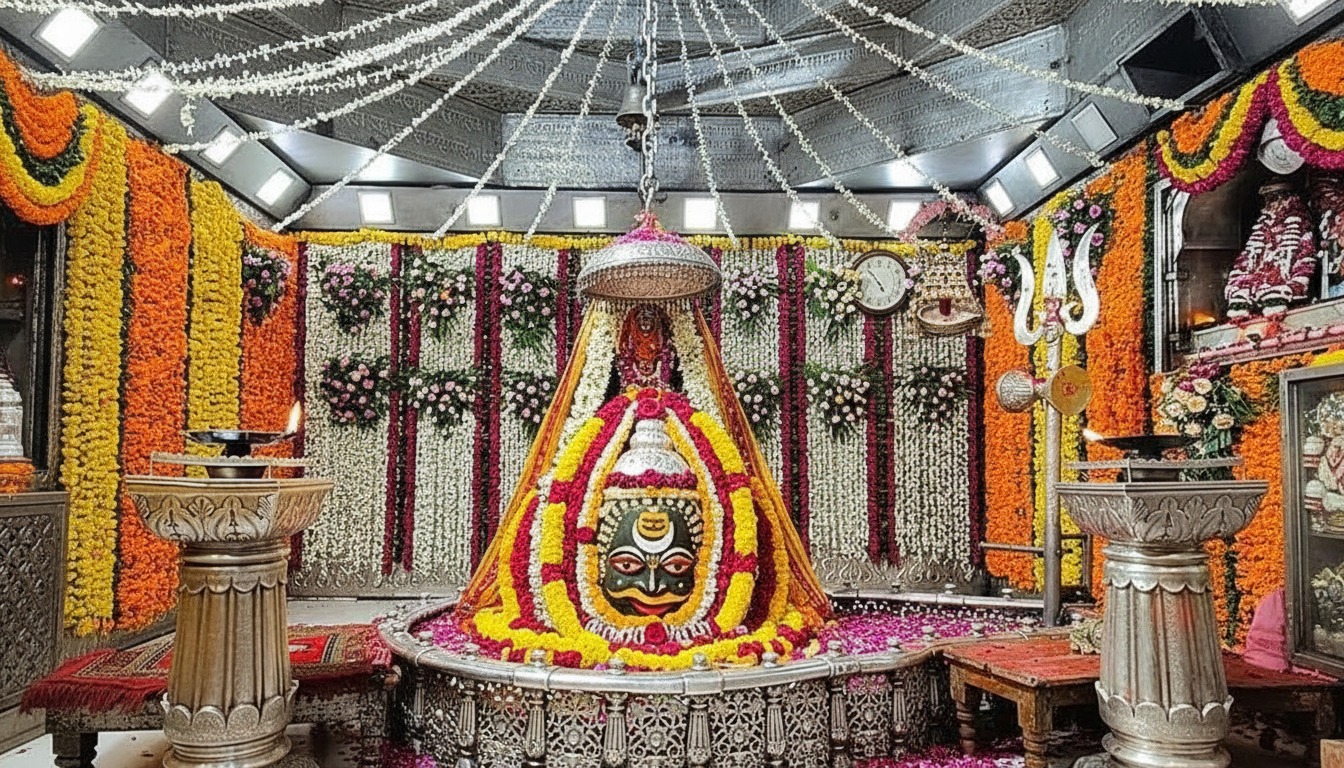
About Omkareshwar Temple, Omkareshwar, Madhya Pradesh
Omkareshwar Temple is one of the twelve Jyotirlinga shrines of Lord Shiva, situated on Mandhata Island in the Narmada River in Madhya Pradesh. The island is also known as Omkar Parvat, and its traditional association with the sacred syllable Om is central to the identity of the pilgrimage site.
The shrine is closely connected with Mamleshwar Temple on the southern bank of the Narmada. Together, Omkareshwar and Mamleshwar form an important Shaiva pilgrimage centre, surrounded by ancient temples, ghats, sacred river crossings and the traditional path around Omkar Parvat.
Story of Omkareshwar Temple
Omkareshwar has been a Shaiva pilgrimage centre for centuries. The sacred landscape developed around Mandhata Island and the Narmada, with the island, river and temples forming a single pilgrimage setting. Historical accounts associate the region with the Paramara period and later with the rulers of Malwa and the Holkar tradition. The present temple complex also reflects successive periods of patronage and rebuilding.
The main Omkareshwar temple stands on the island and follows a North Indian architectural tradition. It is a five-storeyed structure, with different levels associated with Omkareshwar, Mahakaleshwar, Siddhnath and Gupteshwar, while the upper level carries the flag-bearing shrine. The assembly hall is supported by stone pillars, and the temple's position above the Narmada gives the shrine its distinctive relationship with the surrounding river and island landscape.
Across the Narmada, Mamleshwar, also known as Amaleshwar, is another important Shiva shrine. Its ancient stone construction and inscriptions, including one dated to 1063 CE, provide a visible link with the older history of the region. The temple is protected as an ancient monument, and its association with Omkareshwar is an important part of the local pilgrimage tradition.
What Makes Omkareshwar Temple Sacred for Devotees
The Omkareshwar Jyotirlinga Tradition
Omkareshwar is traditionally counted among the twelve Jyotirlingas of Lord Shiva. In the religious understanding of the Jyotirlinga tradition, Shiva manifests as a radiant form of divine light at these sacred places.
The name Omkareshwar is associated with Omkara, the sacred sound Om. The island's traditional resemblance to the form of Om is one of the central beliefs associated with the identity of the pilgrimage site.
The Legend of Vindhya
According to one widely told tradition, Vindhya, the deity associated with the Vindhya mountains, worshipped Lord Shiva with intense austerities. Vindhya created a sacred form from earth and worshipped it with devotion.
Pleased with the worship, Shiva is said to have manifested at the place in the forms of Omkareshwar and Amaleshwar. This story is one of the principal religious explanations for the presence of the two closely associated Shiva shrines.
King Mandhata
Another tradition connects Omkareshwar with King Mandhata of the Ikshvaku lineage. The king is said to have performed severe penance here and worshipped Shiva with great devotion.
The sacred island and surrounding region came to be associated with Mandhata, and the name Mandhata continues to be used for the island and pilgrimage area.
Omkareshwar and Mamleshwar
A distinctive feature of this pilgrimage is the presence of two major Shiva temples on opposite sides of the Narmada. Omkareshwar stands on the island, while Mamleshwar is situated on the southern bank.
Temple tradition regards the two shrines as closely connected manifestations of Shiva. For pilgrims, visiting both forms part of the traditional understanding of the Omkareshwar pilgrimage.
Adi Shankaracharya and Govinda Bhagavatpada
Omkareshwar is also associated with the early life of Adi Shankaracharya. According to tradition, he met his guru Govinda Bhagavatpada in a cave on the banks of the Narmada.
The cave, known as the Govinda Bhagavatpada Cave, remains an important place associated with the Advaita Vedanta tradition and adds another layer to Omkareshwar's religious history beyond its identity as a Jyotirlinga.
Annual Festivals & Rituals at Omkareshwar Temple, Omkareshwar, Madhya Pradesh
Daily Worship Celebrations at the Temple
Daily worship at Omkareshwar follows a defined sequence beginning with Mangala Aarti and Bhog in the early morning. Darshan continues through the day around the temple's Bhog and Shringar periods and concludes with Shayan Aarti and the final darshan. The official temple schedule notes that darshan is interrupted during Aarti and Shringar and that timings can change during festivals and special occasions.
Monday Palki Celebrations at the Temple
Every Monday, the sacred image of Omkareshwar is taken in a traditional Palki or Dola procession. The procession begins with worship near the Narmada and moves through the town accompanied by devotional singing and traditional instruments. The Monday procession becomes particularly important during Shravan, when large numbers of Shiva devotees visit Omkareshwar.
Maha Shivaratri Celebrations at the Temple
Maha Shivaratri is one of the principal festivals at Omkareshwar. Special worship and decoration take place at the temple, and the pilgrimage town sees a substantial increase in devotees during the festival.
Narmada Jayanti Celebrations at the Temple
Narmada Jayanti celebrates the sacred river that defines the landscape of Omkareshwar. Special worship is performed, the island and surrounding temples are decorated with lamps, and an evening Aarti is offered to Maa Narmada.
Kartik Utsav Celebrations at the Temple
Kartik Utsav is one of the distinctive annual observances of Omkareshwar. The festival continues for several days and includes the traditional Panchkroshi Yatra, beginning from Gomukh Ghat and culminating with darshan at Omkareshwar.
Somvati Amavasya Celebrations at the Temple
Somvati Amavasya is an important bathing and worship day at Omkareshwar. Devotees traditionally take a holy bath in the Narmada and offer prayers at the temple.
Shravan Somvar Celebrations at the Temple
Mondays during Shravan hold special importance for Shiva devotees. At Omkareshwar, the Monday Palki becomes a major expression of this tradition, with the procession drawing devotees through the town.
Sacred Places to Visit Near Omkareshwar Temple
Mamleshwar Temple : Mamleshwar, also known as Amaleshwar, stands on the southern bank of the Narmada opposite Omkareshwar. Its ancient stone architecture and historic inscription make it an important part of the pilgrimage.
Koti Tirtha Ghat : Koti Tirtha Ghat lies directly in front of the main temple on the Narmada. It is one of the principal ghats used by pilgrims for bathing and river worship.
Govinda Bhagavatpada Cave : The cave is traditionally associated with the meeting of Adi Shankaracharya and his guru Govinda Bhagavatpada. It is an important site for understanding Omkareshwar's connection with the Advaita Vedanta tradition.
Siddhanath Temple : Siddhanath Temple is an early medieval temple known for its carved stone pillars and sculptures. Its remains provide an important architectural link to the older temple landscape of Omkareshwar.
Gauri Somnath Temple : Gauri Somnath is a Shiva temple known for its large black-stone lingam and Bhumija-style architectural features. The temple is traditionally associated with the Parmara period.
Omkar Parvat Parikrama : The traditional circuit around Omkar Parvat forms an important part of pilgrimage at Omkareshwar. The route passes through the island's temples, ghats and sacred landscape and connects many of the places associated with the religious history of the town.
Narmada–Kaveri Sangam : The meeting point of the Narmada and Kaveri rivers is another important sacred location in Omkareshwar. The confluence forms part of the wider religious geography surrounding the Jyotirlinga.
Ekatma Dham : Ekatma Dham is a modern spiritual centre dedicated to the teachings of Adi Shankaracharya. The complex includes the Statue of Oneness, a major contemporary landmark overlooking the Omkareshwar landscape.
Plan Omkareshwar Temple Darshan
For current darshan timings, entry arrangements, puja options, queue planning and Naman Darshan's guided assistance, continue to the dedicated Omkareshwar Temple Darshan page. CTA: Plan Omkareshwar Temple Darshan
Common Questions About Visiting Omkareshwar Temple
Visitor Information
Darshan Timing
Address
Omkareshwar, Madhya Pradesh, India
Notable Events
Ancient pilgrimage centre – Omkareshwar developed as an important Shaiva centre around the Narmada and Mandhata Island. • 11th century – The wider temple landscape includes important medieval structures, including Mamleshwar, whose temple carries an inscription dated to 1063 CE. • Medieval period – The region passed through different ruling traditions, including the Paramaras and later rulers of Malwa. • 18th century – The Holkar period brought renewed patronage to the temples and pilgrimage infrastructure of the region. • 1959 – The Omkareshwar Temple was declared a public trust under the Madhya Pradesh Public Trust Act. • Modern period – Omkareshwar developed into a major Jyotirlinga pilgrimage destination, with improved roads, bridges, visitor facilities and pilgrimage infrastructure. • 2023 – The Statue of Oneness associated with Ekatma Dham was inaugurated, adding a major modern landmark to Omkareshwar's religious landscape.
How to Reach the Temple
By Air: The nearest major airport is Devi Ahilyabai Holkar Airport in Indore. Omkareshwar is connected to Indore by road.
By Rail: Omkareshwar Road railway station is located outside the main town. Khandwa and Indore are the major railheads used by pilgrims travelling to Omkareshwar.
By Road: Omkareshwar is connected by road with Indore, Khandwa, Ujjain and other cities of Madhya Pradesh. Buses, taxis and private vehicles can be used for the journey.
By local transport: The main temple stands on Mandhata Island. Bridges connect the island with the mainland, and the pilgrimage area is largely explored on foot.
Pilgrimage route: Many visitors combine Omkareshwar Temple with Mamleshwar, the Narmada ghats, Govinda Bhagavatpada Cave and the traditional Omkar Parvat circuit.
Kedarnath, Uttarakhand