
About Chamundeshwari Temple, Mysuru, Karnataka
Chamundeshwari Temple stands on Chamundi Hill in Mysuru and is dedicated to Goddess Chamundeshwari, a form of Shakti and the tutelary deity of the Mysuru royal family. The temple is closely associated with the traditional story of the goddess defeating the buffalo demon Mahishasura on the hill, from which the name Mysuru is traditionally derived.
The shrine is known for its seven-tiered gopura, the 1,008-step approach to the hill, the large monolithic Nandi and its connection with Mysuru Dasara. For centuries, Chamundeshwari has remained at the centre of the religious and cultural life of Mysuru.
Story of Chamundeshwari Temple
The sacred history of Chamundi Hill is older than the present temple. The hill was earlier known as Mahabaladri, after Lord Mahabaleshwara, whose temple on the hill is older than the Chamundeshwari shrine. The Sri Chamundeshwari Development Authority describes the Chamundeshwari temple as having more than a thousand years of background, while the shrine itself is commonly associated with the Hoysala period. The hill continued to develop as a centre of worship under later dynasties and eventually became closely connected with the Mysuru rulers.
When the Wodeyars came to power in Mysuru in 1399, Chamundeshwari became their family deity and received sustained royal patronage. Dodda Devaraja Wodeyar is associated with the construction of the long stone staircase leading up the hill and with the great Nandi on the route. The hill and temple therefore became closely tied to the religious identity of the Mysuru kingdom.
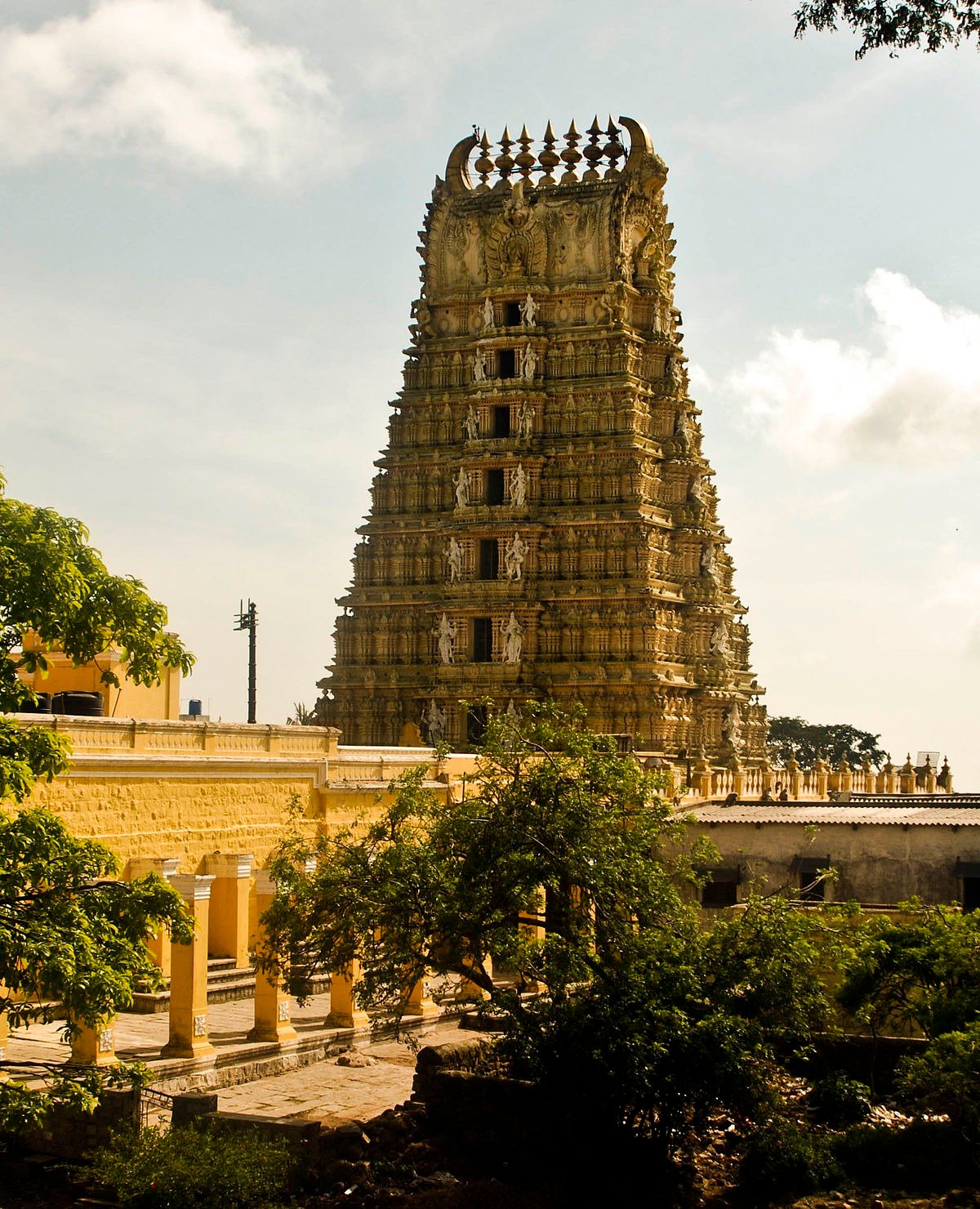
The present temple follows the Dravidian architectural tradition. It has a quadrangular plan with the main doorway, entrance, Navaranga Hall, Antharala Mantapa, sanctum and surrounding prakara. Its most recognisable feature is the seven-tiered gopura with golden finials, while a smaller vimana rises above the sanctum. The entrance is silver-plated and carries images associated with the goddess and the temple's protective deities.
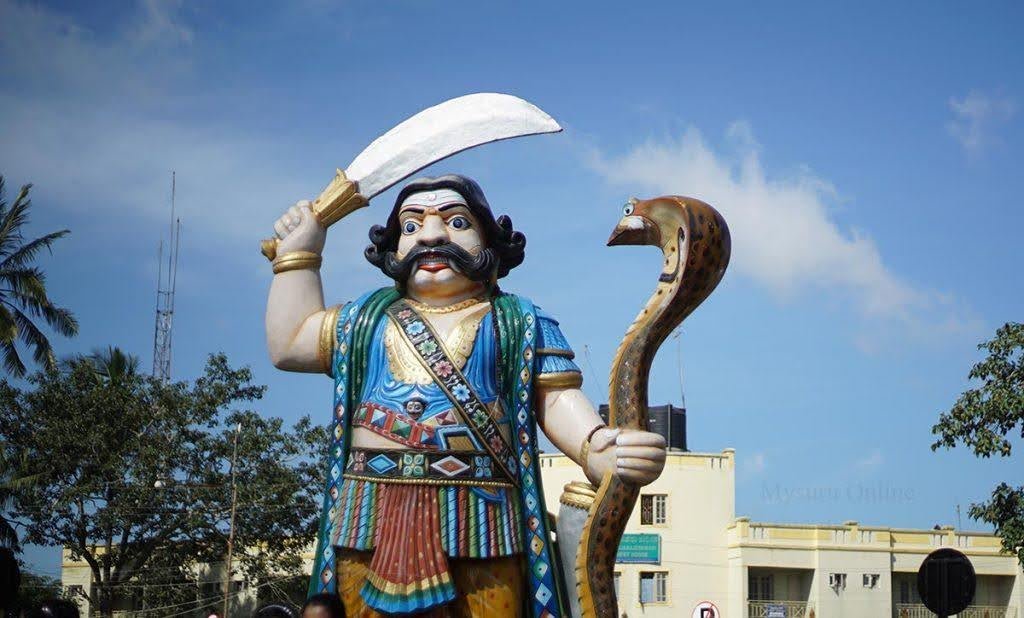
Krishnaraja Wodeyar III repaired the temple in 1827 and built the present entrance gopura. He also presented the temple with the Simha-vahana, other ceremonial vehicles and valuable ornaments, some of which continue to be associated with special religious occasions. The large Nandi lower down the hill and the Mahishasura image near the temple form part of the visual and religious identity of Chamundi Hill.
What Makes Chamundeshwari Temple Sacred for Devotees
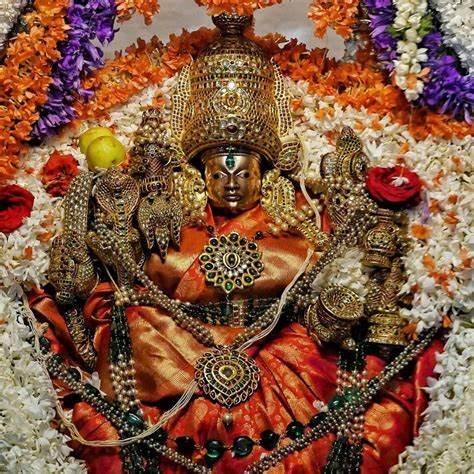
The presiding deity is Sri Chamundeshwari, worshipped as a fierce form of Shakti and as Mahishasura Mardini, the goddess who defeated Mahishasura. The temple's religious tradition also connects the name Chamundi with the demons Chanda and Munda. In Karnataka, the goddess is widely revered as Nada Devi and remains closely associated with the identity of Mysuru.
The sanctum houses the image of Chamundeshwari in her traditional armed form. Sources describing the shrine identify the deity as Ashtabhuja, or eight-armed, and the goddess is richly adorned for worship and special occasions. The form of the deity expresses the Shakta understanding of divine power as both fierce toward evil and protective toward devotees.
Chamundeshwari is also associated with the Shakti Peetha tradition. Some Shakta traditions identify Chamundi Hill as Krouncha Pitha and associate the site with the fall of a part of Sati's body. Because Shakti Peetha lists and the body-part traditions differ across sources, this should be understood as a religious tradition rather than as a single settled historical account.
The Legend of Mahishasura
According to the Devi tradition, Mahishasura was a powerful buffalo demon who troubled the gods and the worlds. The gods turned to the Devi, who took the form of Chamundeshwari and fought Mahishasura. The goddess's victory on the hill is commemorated in the name Mahishasura Mardini, and the story is traditionally linked with the name Mahishuru, from which Mysuru developed.
The legend is central to the religious identity of both the temple and the city. The large statue of Mahishasura near the temple and the worship of Chamundeshwari on the hill keep this tradition visible in the landscape.
Chamundeshwari and the Mysuru Royal Family
Chamundeshwari became the tutelary deity of the Wodeyar rulers and remained closely connected with the royal household. Royal patronage shaped the temple's physical development as well as the religious traditions surrounding Mysuru Dasara.
The relationship continues to be reflected in the annual festival calendar, when worship of Chamundeshwari forms part of the ceremonial life of the city.
Chamundi Hill and Mahabaleshwara
Chamundi Hill was traditionally associated with Mahabaleshwara, and the Mahabaleshwara Temple remains an important shrine on the hill. The Mysuru District administration records Hoysala patronage of that temple in 1128, showing that the hill was already an established sacred centre before its later association with the Chamundeshwari shrine.
This older Shaiva presence is part of the wider sacred geography of Chamundi Hill, where shrines dedicated to Shiva, Vishnu, Devi and other deities developed around the main temple.
Nandi and the Sacred Approach
The traditional climb to the temple consists of 1,008 stone steps. The route passes the great monolithic Nandi, which stands as one of the best-known symbols of Chamundi Hill.
Nandi is the sacred vehicle of Lord Shiva, and its position on the hill connects the Chamundeshwari shrine with the older Shaiva traditions of Chamundi Hill.
The Hill as a Sacred Landscape
The temple is not an isolated structure. Chamundi Hill contains the Chamundeshwari shrine, Mahabaleshwara Temple, Narayanaswamy Temple, Nandi, Mahishasura and other smaller religious sites. The hill therefore functions as a sacred landscape whose different shrines and landmarks are connected through local tradition and pilgrimage.
Annual Festivals & Rituals at Chamundeshwari Temple, Mysuru, Karnataka
Daily Worship Celebrations at the Temple
The temple follows a regular cycle of puja, darshan and abhisheka. The current government temple record lists Abhisheka from 6:00 AM to 7:30 AM, while public opening periods are divided through the day. Ritual timings can change on special occasions.
Ashada Shukravara Celebrations at the Temple
Fridays during the month of Ashadha are among the most important annual observances at Chamundeshwari Temple. Special worship is offered to the goddess and the hill receives very large numbers of devotees during these Fridays.
Chamundeshwari Jayanti / Vardhanti Celebrations at the Temple
The temple observes the goddess's annual birthday or Vardhanti during Ashadha. Chamundi Jayanti is associated with the consecration tradition of the goddess's Utsava Murti, and special processions form part of the observance.
Navaratri and Mysuru Dasara Celebrations at the Temple
Navaratri is the principal annual festival associated with Chamundeshwari. During the nine-day observance, the goddess is worshipped in different forms, while Mysuru Dasara places the deity at the centre of the city's royal and public celebrations. The official 2026 Dasara programme confirms that the festival will be ceremonially inaugurated at Chamundeshwari Temple on 11 October 2026.
Chamundeshwari Rathotsava Celebrations at the Temple
Rathotsava is part of the temple's annual festival cycle. The official 2026 Mysuru Dasara programme lists Chamundeshwari Rathotsava on 24 October 2026 at Chamundi Hill.
Other Annual Utsavas Celebrations at the Temple
The temple authority also records Vasantotsava, Shainotsava, Mudi Utsava, Kritikotsava and Teppotsava among the annual utsavas associated with Chamundeshwari. Their dates follow the traditional Hindu calendar and can vary each year.
Sacred Places to Visit Near Chamundeshwari Temple
Mahabaleshwara Temple : Mahabaleshwara Temple is the older major shrine on Chamundi Hill and is associated with Lord Shiva. The Mysuru District administration records a Hoysala donation to the temple in 1128, making it important to the earlier history of the hill.
Nandi Statue : The large monolithic Nandi stands along the traditional staircase to Chamundeshwari Temple. It is one of the defining landmarks of the hill and was commissioned during the reign of Dodda Devaraja Wodeyar.
Mahishasura Statue : The Mahishasura statue near the temple recalls the principal legend associated with Chamundeshwari — the goddess's victory over the buffalo demon. It forms an important part of the approach to the temple.
Narayanaswamy Temple : Narayanaswamy Temple is another shrine on Chamundi Hill and forms part of the hill's wider sacred landscape. The temple authority lists it among the other religious sites associated with the hill.
Jwalamukhi Tripura Sundari Temple : The Jwalamukhi Tripura Sundari Temple at Uttanahalli, below Chamundi Hill, is connected with the local religious tradition surrounding Chamundeshwari. Tradition describes Tripura Sundari as a sister-form who assisted the goddess in her battle against evil.
Mysuru Palace : Mysuru Palace lies in the city below the hill and is closely connected with the Wodeyar history that also shaped Chamundeshwari worship. The relationship between the palace, the royal family and the goddess forms an important part of Mysuru's cultural landscape.
Plan Chamundeshwari Temple Darshan
For current darshan planning, queue information, available darshan categories, seva details and Naman Darshan's Guided Darshan Assistance, continue to the dedicated Chamundeshwari Temple Darshan page.
Common Questions About Visiting Chamundeshwari Temple
Visitor Information
Darshan Timing
Address
Sri Chamundeshwari Temple, Chamundi Hill, Mysuru – 570010, Karnataka, India
Notable Events
12th century — Early shrine tradition – The original shrine is commonly associated with the Hoysala period, while the temple authority describes the sacred background of the site as more than a thousand years old. The exact date of the earliest Chamundeshwari structure is not stated uniformly across sources. • 1399 — Wodeyar connection begins – The Wodeyar rulers came to power in Mysuru and gradually established Chamundeshwari as their family deity, strengthening the temple's position in the religious life of the kingdom. • 1659 — Stone staircase – A long stone staircase of 1,008 steps was established on the hill during the reign of Dodda Devaraja Wodeyar, creating the traditional pilgrimage route to the summit. • 1664 — Monolithic Nandi – The great granite Nandi on the hill was installed during the reign of Dodda Devaraja Wodeyar. The Mysuru District administration records the statue as approximately 16 feet high at the front and 25 feet long. • 1827 — Krishnaraja Wodeyar III – Krishnaraja Wodeyar III repaired the temple and built the present entrance gopura with its golden finials. He also made arrangements connected with festivals and temple processions. • 1843 — Simha-vahana – Krishnaraja Wodeyar III presented the temple with the Simha-vahana, a lion-shaped ceremonial vehicle, along with other vehicles and valuable objects used in special religious observances.
How to Reach the Temple
By road: Chamundeshwari Temple is about 13 km from Mysuru city and can be reached by the Chamundi Hill road. Taxis, autos and private vehicles are available from the city.
By bus: KSRTC and city bus services connect Mysuru with Chamundi Hill. The temple authority currently lists regular bus facilities from the Mysuru city bus stand.
By steps: The traditional pedestrian route consists of 1,008 stone steps from the foothill to the temple. The large Nandi is located along this route.
By air: Mysuru Airport is the nearest listed airport, while Bengaluru provides a larger regional and national air network. From either airport, the final journey to Chamundi Hill is by road.
By rail: Mysuru Junction is the nearest railway station serving the temple, with the hill reached by road from the city. The Mysuru District administration lists the railway station at approximately 13.2 km from Chamundi Hill.
Chidambaram, Tamil Nadu