
About Shree Krishna Janmabhoomi Temple, Mathura, Uttar Pradesh
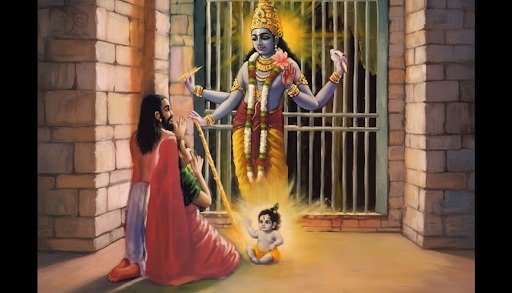
Shree Krishna Janmabhoomi Temple in Mathura is a major pilgrimage centre associated with the birthplace of Lord Krishna. According to Hindu tradition, Krishna manifested here in the prison where his parents Devaki and Vasudeva were held by King Kansa.
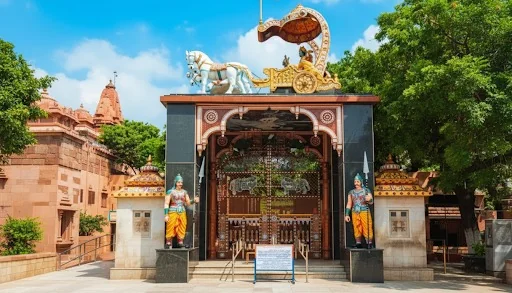
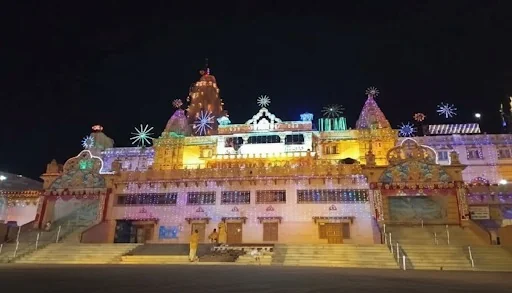
The present Janmasthan complex includes the Keshavdeva Temple, the Garbha Griha shrine associated with the sacred birthplace and Bhagavata Bhavan. The complex is also known for its festivals, including Krishna Janmashtami, Nandotsav, Holi, Deepavali and other observances of the Braj religious calendar.
Story of Shree Krishna Janmabhoomi Temple
The religious history of Krishna Janmabhoomi is much older than the present temple complex. Mathura has been an important sacred and urban centre for centuries, and the Katra Keshavdeva area has produced archaeological remains from ancient periods. Hindu tradition associates the site with Krishna's birth, while historical evidence points to successive religious structures occupying the area over a long period.
The site is traditionally connected with Keshava, a name of Lord Krishna, and the modern complex preserves this association through the Keshavdeva Temple. The principal sacred focus, however, remains the Garbha Griha, where the birthplace is commemorated as the prison cell in which Krishna is believed to have manifested. A shrine dedicated to Ashtabhuja Yogmaya stands nearby and forms part of the birth narrative.
The modern reconstruction began in the 20th century. The Keshavdeva Temple was built through the support of Ramkrishna Dalmia, with construction beginning in 1957 and the temple being inaugurated in 1958. Work on Bhagavata Bhavan began in 1965, and the larger temple complex was brought to completion in 1982.
The architecture of the present complex is therefore modern rather than the surviving form of an ancient temple. Bhagavata Bhavan contains the principal Radha-Krishna shrine along with shrines associated with Balarama, Subhadra and Jagannath, Rama, Lakshmana and Sita, Durga and Shiva. Its walls and ceilings carry religious paintings, while the circumambulatory area contains verses of the Bhagavad Gita. Potra Kund, a large stepped tank near the complex, is also associated by tradition with the bathing of the newborn Krishna.
What Makes Shree Krishna Janmabhoomi Temple Sacred for Devotees
Krishna's birth in the prison of Kansa
According to the Krishna tradition preserved in Hindu sacred literature, Krishna was born to Devaki and Vasudeva in Mathura while they were imprisoned by Devaki's brother, King Kansa. A prophecy had warned Kansa that Devaki's eighth child would be responsible for his downfall.
On the night of Krishna's birth, tradition describes the appearance of the divine child in the prison. Vasudeva then carried the infant across the Yamuna to Gokul, where he was placed in the care of Nanda and Yashoda.
The Garbha Griha at Janmabhoomi commemorates this birth narrative. The sanctum is therefore not simply a shrine dedicated to Krishna but a place specifically associated with the moment of his birth in the religious tradition.
Yogmaya and the birth tradition
The same tradition connects the birth of Krishna with Yogmaya, who appeared in Kansa's prison when he attempted to kill the infant he believed was Devaki's eighth child. The Janmasthan complex includes a shrine dedicated to Ashtabhuja Yogmaya, preserving this part of the wider Krishna birth narrative.
Keshavdeva and Krishna
The name Keshavdeva remains closely associated with the Janmasthan complex. Keshava is one of the traditional names of Krishna and the Keshavdeva Temple continues this form of worship alongside the Garbha Griha.
Potra Kund
Potra Kund is a large stepped water tank near the temple complex. According to local religious tradition, it is associated with the first bathing of the infant Krishna and the washing of his clothes after his birth.
The tradition forms part of the sacred geography of Janmabhoomi and explains why the tank continues to be regarded as an important part of a pilgrimage to the birthplace.
Janmabhoomi and the sacred geography of Mathura
Krishna Janmabhoomi is one part of the wider sacred landscape of Braj. Mathura is associated with Krishna's birth, while nearby Gokul, Vrindavan, Govardhan and other places preserve traditions connected with different stages of his life.
For this reason, the Janmasthan is usually understood not as an isolated monument but as the Mathura centre of a larger Krishna pilgrimage tradition.
Annual Festivals & Rituals at Shree Krishna Janmabhoomi Temple, Mathura, Uttar Pradesh
Daily Worship Celebrations at the Temple
The temple complex follows a daily sequence of worship, aarti and Bhog. The shrine trust publishes separate timings for the principal temples and the Garbha Griha, with seasonal changes in the visiting schedule. Public darshan is organised around the temple's ritual programme, so the hours available to devotees can differ on special days.
Krishna Janmashtami Celebrations at the Temple
Krishna Janmashtami is the principal festival of Janmabhoomi. The central observance takes place at midnight, the traditional time of Krishna's birth. The temple trust describes a programme of worship that includes Mangala Aarti, Abhishek, Ganesh and Navagraha worship, Garbha Stuti, midnight Prakatya Darshan and Janmabhishek with Panchamrit. Because Janmashtami brings exceptionally large crowds, security, traffic, entry routes and darshan arrangements can differ substantially from an ordinary temple day.
Nandotsav Celebrations at the Temple
Nandotsav follows Janmashtami and celebrates the joy in Nanda's household after Krishna's birth. At Janmasthan, the observance includes devotional programmes and Prasad distribution in Bhagavata Bhavan.
Ghata Darshan Celebrations at the Temple
During the month of Shravan, the complex observes Ghata Darshan, when the Keshavdeva Temple is decorated according to Braj tradition. Different themes and colours are used, with the temple trust particularly noting the Shravan Shukla Ekadashi observance.
Lathmaar Holi Celebrations at the Temple
Lathmaar Holi is one of the distinctive Holi traditions of Braj. The Janmasthan complex hosts cultural programmes, devotional music and Holi celebrations as part of the wider Braj festival season.
Govardhan Puja and Annkoot Celebrations at the Temple
On Govardhan Puja, the temple complex observes Annkoot and Chhappan Bhog. Offerings are prepared for the deities and linked with the wider Braj tradition associated with Govardhan and Krishna.
Maha Shivratri Celebrations at the Temple
Maha Shivratri is also observed within the Janmasthan complex at the shrine of Keshveshwar Mahadev. The occasion includes special worship and a traditional Shiva procession through Mathura.
Sacred Places to Visit Near Shree Krishna Janmabhoomi Temple
Vishram Ghat : Vishram Ghat is one of Mathura's principal ghats on the Yamuna and is traditionally associated with Krishna after his victory over Kansa. It is an important part of the city's pilgrimage landscape.
Dwarkadhish Temple : Dwarkadhish Temple is a historic Krishna temple near the Yamuna. Its worship follows a different temple tradition and adds another important Krishna shrine to a Mathura pilgrimage.
Potra Kund : Potra Kund lies close to the Janmasthan complex and is associated by tradition with Krishna's first bath. Its presence helps explain the broader sacred geography surrounding the birthplace.
Bhuteshwar Mahadev Temple : Bhuteshwar Mahadev is a Shiva shrine in Mathura and is traditionally counted among the city's important religious sites. It is closely associated with the older sacred landscape of Mathura.
Gokul : Gokul lies across the Yamuna from Mathura and is associated with Krishna's childhood under Nanda and Yashoda. It complements the Janmabhoomi visit by continuing the story from Krishna's birth to his early years.
Government Museum, Mathura : The Government Museum houses important archaeological and sculptural material from the Mathura region. It provides useful historical context for understanding the city's long religious and artistic history.
Plan Shree Krishna Janmabhoomi Darshan
For current darshan planning, entry preparation and Naman Darshan's date-specific Guided Darshan Assistance, continue to the dedicated Shree Krishna Janmabhoomi Darshan page.
Common Questions About Visiting Shree Krishna Janmabhoomi Temple
Visitor Information
Entry Fee
Visitors should follow the current entry and security procedure of the temple complex. – Special seva or puja arrangements are separate from ordinary entry.
Address
Shri Krishna Janmasthan Seva Sansthan, Katra Keshavdev, Mathura, Uttar Pradesh 281001, India
Notable Events
Ancient period – The Katra Keshavdeva area has produced archaeological remains from ancient periods, while Hindu tradition identifies the site with Krishna's birth. • Around 1150 CE – A Sanskrit inscription associated with the site records the construction of a Vishnu temple by a ruler or patron identified as Jajja. • 1618 – Raja Veer Singh Deva Bundela built a major Keshavdeva temple during the reign of Mughal emperor Jahangir. • 1670 – The Keshavdeva temple of that period was destroyed during the reign of Aurangzeb. • 1815 – Under British rule, the Katra Keshavdeva land was auctioned and purchased by Raja Patnimal of Banaras. • 7 February 1944 – The land was acquired by Madan Mohan Malaviya with financial support from Jugal Kishore Birla. • 21 February 1951 – The Shri Krishna Janmabhoomi Trust was formed to support the reconstruction of the temple at the Janmasthan. • 1953 – Construction of the modern temple complex began. • 6 September 1958 – The modern Keshavdeva Temple was inaugurated. • 1965 – Construction of Bhagavata Bhavan began. • 12 February 1982 – The installation of deities at Bhagavata Bhavan marked a major stage in the completion of the present temple complex.
How to Reach the Temple
By air: The nearest major airport is Kheria Airport in Agra, while Indira Gandhi International Airport in Delhi is another option. The Mathura district administration lists both airports as serving the city.
By rail: Mathura Junction is the principal railway station for the city, with regular trains connecting Mathura to major destinations across India. Mathura Cantt is another railway station serving the city.
By road: Mathura is connected by regular road services with major cities in Uttar Pradesh and neighbouring states. The temple lies in the central Mathura area and is accessible by local taxi, auto-rickshaw and other city transport.
Within Mathura: The Janmasthan is in the old city area. The final approach can become congested during major festivals, so allow additional time for pedestrian movement and security checks.
Vrindavan, Mathura, Uttar Pradesh