
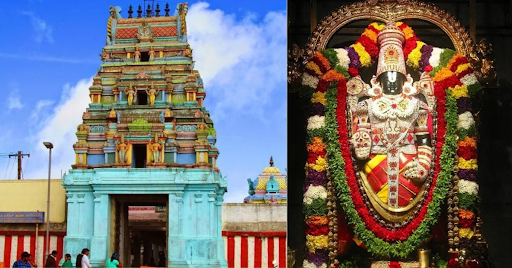
About Chilkur Balaji Temple (Visa Balaji), Hyderabad, Telangana
Chilkur Balaji Temple is an ancient temple dedicated to Lord Venkateswara in Chilkur village of Ranga Reddy district, near Osman Sagar. The temple is one of the older Balaji shrines in the Hyderabad region and is popularly known as Visa Balaji because many devotees pray here for overseas travel, education and career opportunities.
The temple is especially known for its 11 and 108 pradakshina tradition. Devotees traditionally make 11 rounds while making a prayer or vow and return to complete 108 rounds after the wish is fulfilled. Chilkur is also known for its simple system of worship, with no conventional hundi and no separate VIP darshan.
Story of Chilkur Balaji Temple (Visa Balaji)
The history of Chilkur Balaji Temple is older than its present reputation as the Visa Balaji temple. The Ranga Reddy District administration describes the shrine as roughly half a millennium old based on its style, structure and appearance, and associates it with the period of Akkanna and Madanna. Some modern sources place the temple further back in the medieval period, but there is no need to assign a single exact construction date where the available accounts differ.
The traditional history of the shrine begins with a devotee of Lord Venkateswara who could not make his regular pilgrimage to Tirupati because of ill health. According to temple tradition, the Lord appeared to him in a dream and directed him to a nearby place at Chilkur. The devotee then found the sacred image beneath an anthill, and the shrine was subsequently established there.
The principal deity is Lord Venkateswara, worshipped at Chilkur along with Sridevi and Bhoodevi. The three images together are an important feature of the temple's traditional identity. The discovery story describes the main image as swayambhu, or self-manifested, which is why the sacred form is understood by devotees as having been present at the site before the temple itself was built.
The temple is comparatively simple in scale when set beside the larger South Indian Venkateswara temples. Its significance comes less from monumental size and more from the continuing worship of the deity, the circumambulation paths around the shrine and the customs followed equally by devotees. The temple stands in the Chilkur landscape near Osman Sagar, which remains an important part of the setting in which the shrine developed.
What Makes Chilkur Balaji Temple (Visa Balaji) Sacred for Devotees
The Chilkur Balaji discovery tradition
According to local temple tradition, a devotee who could not travel to Tirupati was guided in a dream to an anthill near Chilkur. When the mound was opened, the sacred form of Balaji was discovered beneath it, leading to the establishment of the shrine.
The story explains the religious origin of the temple and its connection with Lord Venkateswara. It belongs to the devotional tradition of Chilkur and should be understood as a sacred account rather than as an archaeological record.
Why Chilkur is called Visa Balaji
The name Visa Balaji became associated with the temple much later. Reporting from the early 2000s traced the custom to students who came to Chilkur while seeking visas for overseas education, especially during the period when international study and employment became major aspirations among young people in Hyderabad and Telangana.
The association later spread to other wishes involving foreign travel, jobs and career opportunities. These are matters of devotee belief; a prayer at the temple does not itself determine the decision of a foreign government or an educational institution.
The 11 and 108 Pradakshinas
The most distinctive tradition at Chilkur is the practice of circumambulating the shrine. A devotee traditionally performs 11 pradakshinas when making a wish or sankalpa and, after the wish is fulfilled, returns to perform 108 pradakshinas as an expression of gratitude.
The practice is now closely connected with the temple's popular identity as Visa Balaji, although devotees also perform the rounds for education, employment, family matters and other personal prayers. The number of rounds is part of the temple's devotional practice and should not be treated as a guaranteed formula for a particular result.
A temple without a conventional hundi
Chilkur is widely known for not maintaining a conventional hundi and for not providing a separate VIP or green-channel darshan. The temple's distinctive worship system became the subject of a long administrative dispute and was formally recognised in the late 2000s.
This practice is an important part of the temple's modern identity. It places the emphasis on darshan, prayer and participation rather than on paid access.
Equality of darshan
The absence of a separate VIP line means devotees ordinarily proceed through the same general system of darshan. This is one of the clearest distinctions between Chilkur Balaji and many larger pilgrimage centres where different categories of paid access may exist.
The arrangement is part of the temple's established worship tradition and should not be confused with a promise of shorter waiting time. Crowds can still be substantial, particularly on weekends and major observances.
Annual Festivals & Rituals at Chilkur Balaji Temple (Visa Balaji), Hyderabad, Telangana
Daily Worship Celebrations at the Temple
The daily temple routine centres on darshan, archana, prayer and circumambulation around the shrine. The schedule of public access can change around rituals and special observances, so detailed timings are best checked before travel.
Brahmotsavam Celebrations at the Temple
Brahmotsavam is one of the principal annual celebrations at Chilkur. The festival includes special worship and traditional utsava observances for Lord Venkateswara and attracts larger numbers of devotees than ordinary days.
Rathotsavam Celebrations at the Temple
Rathotsavam forms part of the temple's annual festival calendar. The chariot-related observance connects the worship of Lord Venkateswara with the wider South Indian temple tradition of public utsava processions.
Vaikunta Ekadashi Celebrations at the Temple
Vaikunta Ekadashi is observed with special significance at this Venkateswara shrine. The day is especially important to Vaishnava devotees and generally brings increased temple activity.
Poolangi Seva Celebrations at the Temple
Poolangi Seva is associated with the floral adornment of the deity. It is one of the special observances that draws additional devotees to Chilkur.
Anakota Celebrations at the Temple
Anakota is another important observance in the temple calendar and is associated with special offerings and worship. Crowd levels can increase considerably during such occasions.
Janmashtami, Ugadi and Diwali Celebrations at the Temple
The temple also observes Janmashtami, Ugadi and Diwali as part of its annual religious calendar. These festivals connect the temple's worship with the wider Vaishnava and Hindu festival cycle.
Sacred Places to Visit Near Chilkur Balaji Temple (Visa Balaji)
Osman Sagar Lake : Osman Sagar lies close to Chilkur and forms an important part of the landscape around the temple. The reservoir was created by damming the Musi River in the early 20th century and remains one of the better-known water bodies around Hyderabad.
Himayat Sagar Lake : Himayat Sagar is another reservoir in the same wider area. Together with Osman Sagar, it helps explain the green and semi-rural setting around Chilkur.
Mrugavani National Park : Mrugavani National Park is located near Chilkur in Moinabad. The park is known for its dry deciduous landscape, deer population and birdlife and can be combined with a visit to the temple.
Golkonda Fort : Golkonda Fort is one of Hyderabad's major historical monuments and lies on the route commonly used by visitors travelling between the city and the Chilkur area.
Birla Mandir, Hyderabad : Birla Mandir is a prominent temple in central Hyderabad dedicated to Lord Venkateswara and associated deities. It provides a useful contrast with the smaller and more traditional setting of Chilkur Balaji.
Charminar : Charminar is one of Hyderabad's best-known historic landmarks in the old city. It can be included as part of a wider Hyderabad itinerary after visiting Chilkur.
Plan Chilkur Balaji Temple Darshan
For current darshan planning, queue guidance, date-specific timings and Naman Darshan's Guided Darshan Assistance, continue to the dedicated Chilkur Balaji Temple Darshan page.
Common Questions About Visiting Chilkur Balaji Temple (Visa Balaji)
Visitor Information
Entry Fee
General darshan is traditionally free – Paid VIP-style entry is not part of the temple's established system.
Darshan Timing
Address
Sri Chilkur Balaji Temple, Chilkur Village, Moinabad Mandal,, Ranga Reddy District, Telangana - 501504, India
Notable Events
Medieval period / traditional antiquity – The temple is regarded as an old shrine of the Hyderabad region. The Ranga Reddy District administration describes it as roughly half a millennium old based on its style and structure, while some secondary sources place it earlier. • Akkanna and Madanna period – Government accounts associate the temple's history with the period of Akkanna and Madanna, who are also remembered in connection with Bhakta Ramdas and the religious history of Telangana. • Early 1990s - Rise of the Visa Balaji association – Contemporary reporting associates the growth of visa-related prayers with students seeking overseas education. The nickname gradually became part of the temple's modern public identity. • 2006 - Temple administration dispute – The temple became involved in a major dispute over proposed government involvement and the continuation of its hereditary and non-commercial worship system. An expert committee was constituted to examine the issue. • 2008 - Recognition of the temple's distinctive system – The Andhra Pradesh government issued an order recognising the temple's unique practice of operating without a hundi, special paid sevas and VIP privileges. • Today - Living pilgrimage tradition – Chilkur continues to be known for Lord Venkateswara worship, the 11 and 108 pradakshina tradition and the equal general-darshan system that has become central to its identity.
How to Reach the Temple
By air: Rajiv Gandhi International Airport is the nearest major airport serving Hyderabad. From the airport, the temple can be reached by road toward the Chilkur-Moinabad area.
By rail: Hyderabad Deccan and Secunderabad Junction are the major railway stations serving the city. From either station, continue by road to Chilkur.
By road: Chilkur is connected to Hyderabad through the Vikarabad Road and the Mehdipatnam side of the city. Buses, taxis and private vehicles are commonly used to reach the temple.
Local transport: Autos, cabs and city bus services are available from areas including Mehdipatnam and Gachibowli. Travel time can increase considerably on weekends and festival days.
Dwarka, Gujarat