
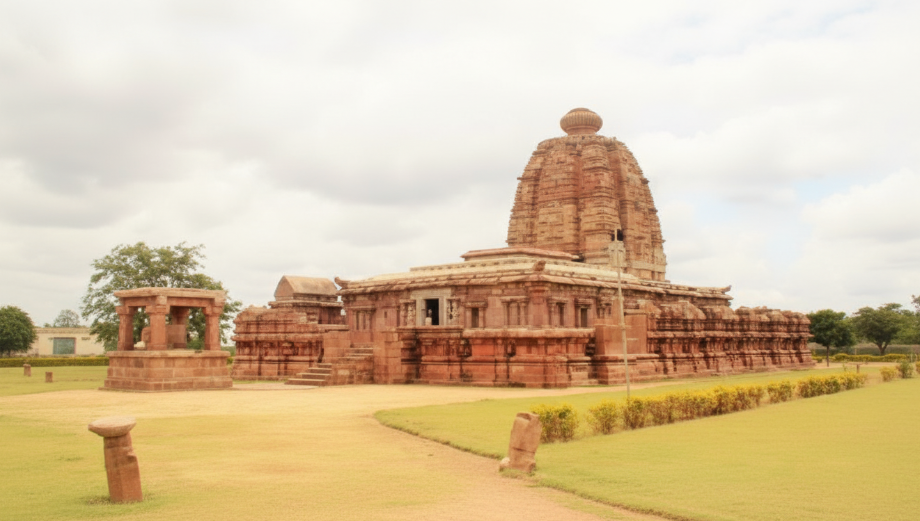
About Alampur Jogulamba Temple, Alampur, Telangana
Alampur Jogulamba Temple is dedicated to Goddess Jogulamba, a form of Shakti worshipped at Alampur on the banks of the Tungabhadra. The shrine is traditionally counted among the Ashtadasha Shakti Peethas and is closely associated with Bala Brahmeswara, the principal Shiva shrine of the historic Alampur temple complex.
Alampur is also known as the western gateway to Srisailam and is traditionally called Dakshina Kailasam. Alongside the Jogulamba shrine stand the ancient Navabrahma temples, making Alampur an important centre of both Shakta and Shaiva worship.
Story of Alampur Jogulamba Temple
The history of Jogulamba is closely tied to the older temple town of Alampur. The surrounding Navabrahma temples belong to the Badami Chalukya period, with the Bala Brahma shrine dated by inscription to 702 CE. Alampur continued to develop under later dynasties, and inscriptions from the site record temple endowments and religious institutions across several centuries.
The earlier Jogulamba temple is traditionally placed in the same early medieval setting. According to historical accounts, the shrine was destroyed during the Bahmani period in 1390. The image of Jogulamba and her associated forms Chandi and Mundi were then protected in the nearby Bala Brahmeswara temple. The deity remained there until the present Jogulamba shrine was rebuilt on the historic site in 2005.
Jogulamba is worshipped in a striking form. She is traditionally depicted seated upon a corpse, with a scorpion, frog and lizard associated with her matted hair. Her tongue extends outward and her fierce form is understood within Shakta worship as the power of the goddess in her intense aspect. The name Jogulamba is commonly explained from Yogula Amma, meaning the Mother of Yogis.
The present Jogulamba shrine is a modern reconstruction, while the nearby Navabrahma temples preserve the early Chalukyan architecture of Alampur. The nine Shiva temples include Bala Brahma, Swarga Brahma, Padma Brahma, Garuda Brahma, Kumara Brahma, Arka Brahma, Vira Brahma, Vishva Brahma and Taraka Brahma. Their plans, towers, stone carvings and sculptural details are important examples of the early architectural traditions that developed in the Deccan.
What Makes Alampur Jogulamba Temple Sacred for Devotees
Jogulamba and the Shakti Peetha tradition
Jogulamba is traditionally worshipped as one of the eighteen Maha Shakti Peethas. According to the Shakti Peetha tradition followed at Alampur, the upper teeth of Sati are associated with this sacred site.
The Shakti Peetha tradition comes from the story of Sati and Shiva. After Sati's self-immolation at Daksha's sacrifice, Shiva carried her body in grief. The sacred sites associated with parts of Sati's body came to be known as Shakti Peethas. Different texts and regional traditions do not always give identical lists or anatomical details, so the Alampur association is best presented as a religious tradition.
Jogulamba, the Mother of Yogis
The name Jogulamba is traditionally linked with Yogula Amma, or Mother of Yogis. Her fierce iconography reflects the goddess as a powerful form of Shakti rather than the gentler forms commonly seen in many other Devi temples.
Local tradition also connects the shrine with yogic and Tantric worship. These associations help explain why Jogulamba is understood not simply as a village goddess but as an important Shakta deity within the larger pilgrimage tradition of Alampur.
Bala Brahmeswara and the sacred pairing of Shiva and Shakti
Bala Brahmeswara is the principal Shiva shrine of the Nava Brahma group and is closely connected with Jogulamba. In the religious understanding of the site, the presence of Shiva alongside the goddess expresses the traditional relationship between Shakti and Shiva.
Alampur's wider temple landscape therefore combines a major Devi shrine with an ancient Shaiva complex. This relationship is one of the defining features of the pilgrimage.
The Rasa Siddha tradition
A local tradition connects the Navabrahma temples with Rasa Siddha, a saint said to have been associated with the Chalukya ruler Pulakeshi II. The story links the nine temples with medicinal and Tantric knowledge and forms part of the traditional explanations for the unusual religious character of Alampur.
This account belongs to local religious tradition and should not be treated as established archaeological history.
Brahma's penance at Alampur
Another tradition says that Brahma performed penance at Alampur and received the power of creation from Lord Shiva. This is one of the explanations associated with the name Brahmeswara and the prominence of the Bala Brahma shrine.
The story forms part of Alampur's sacred geography, where the names of the temples, the river landscape and the worship of Shiva and Shakti are closely connected.
Alampur and Srisailam
Alampur is traditionally regarded as the western gateway to Srisailam. Its position on the Tungabhadra and near the Krishna gives the town an important place in the pilgrimage geography of the region.
For this reason, Alampur is also known as Dakshina Kailasam in local and regional tradition. The name reflects the town's long association with Shaiva worship and its location within a wider sacred landscape.
Annual Festivals & Rituals at Alampur Jogulamba Temple, Alampur, Telangana
Daily Worship Celebrations at the Temple
Daily worship at the shrine includes offerings, archana and other forms of Devi puja. Abhishekam and Kumkuma Archana are among the devotional services associated with Jogulamba worship. The ritual schedule can change on festival days, so broad temple hours should not be treated as a fixed darshan timetable.
Maha Shivaratri Celebrations at the Temple
Maha Shivaratri is especially important at the Bala Brahmeswara shrine and across the wider Nava Brahma complex. The festival brings the Shaiva and Shakta sides of Alampur's religious tradition into the same annual cycle.
Sharan Navaratri and Dasara Celebrations at the Temple
Navaratri is one of the principal festivals of Jogulamba worship. During the nine-day observance, the goddess is traditionally adorned in different alankaras and special rituals are performed. The festival period can include Kalyanotsavam, Rathotsavam and other temple observances. Around Vijayadashami, celebrations have also included Nadi Harati and Teppotsavam on the Tungabhadra.
Karthika Masam Celebrations at the Temple
Karthika Masam is observed across the Alampur temple complex with special worship and lamp offerings. The month is particularly important in the Shaiva tradition and adds to the devotional activity around Bala Brahmeswara and the Navabrahma shrines.
Annual Brahmotsavam Celebrations at the Temple
An annual Brahmotsavam is also associated with the Alampur temple calendar. Local and pilgrimage sources have described a multi-day celebration during the Magha period, although exact dates and the festival programme vary by year.
Sacred Places to Visit Near Alampur Jogulamba Temple
Navabrahma Temples : The nine Navabrahma temples are the most important architectural companions to Jogulamba. Built during the early Chalukyan period, they preserve an important phase of temple architecture and sculpture in the Deccan.
Bala Brahmeswara Swamy Temple : Bala Brahmeswara is the principal Shiva shrine of the Navabrahma group and the temple where the Jogulamba image was traditionally protected after the destruction of the earlier shrine. It remains central to understanding the religious history of Alampur.
Papanasi Temples : The Papanasi group consists of more than twenty historic temples located a short distance from the main Alampur complex. The shrines are known for their early medieval architecture and form another important part of the temple landscape.
Sangameshwara Temple : Sangameshwara is associated with the meeting of the Tungabhadra and Krishna rivers. The present shrine forms part of the heritage landscape connected with Alampur's riverine setting.
Alampur Archaeological Museum : The Archaeological Museum near the temple complex preserves sculptures and inscriptional material from Alampur and the surrounding area. It provides useful context for the many dynasties that shaped the temple town.
Tungabhadra–Krishna Confluence : The meeting of the Tungabhadra and Krishna is an important part of Alampur's sacred geography. The rivers have long been connected with the town's identity as a pilgrimage centre.
Plan Alampur Jogulamba Darshan
For current darshan planning, temple-entry guidance and Naman Darshan's Guided Darshan Assistance, continue to the dedicated darshan experience.
Common Questions About Visiting Alampur Jogulamba Temple
Visitor Information
Darshan Timing
Address
Sri Jogulamba Bala Brahmeswara Swamy Devasthanam, Temple Road, Alampur,, Jogulamba Gadwal District, Telangana – 509152, India
Notable Events
7th century CE — Early Chalukyan temple period – The Navabrahma temple group at Alampur belongs to the early Badami Chalukya period and forms the historical architectural background of the Jogulamba shrine. • 702 CE — Bala Brahma inscription – An inscription associated with Bala Brahma dates the principal Shiva shrine to 702 CE. • 1390 — Destruction of the earlier Jogulamba shrine – Historical accounts record the destruction of the earlier Jogulamba temple during the Bahmani period. • Post-14th century — Deity preserved at Bala Brahmeswara – The sacred image of Jogulamba was protected in the nearby Bala Brahmeswara temple after the destruction of the earlier shrine. • 2005 — Jogulamba shrine reconstructed – A new Jogulamba temple was built at the historic site and the deity was reinstalled there. • 2016 — Formation of Jogulamba Gadwal district – The new Telangana district was established on 11 October 2016 and was named after the Jogulamba shrine. • 2020–21 — PRASHAD project sanctioned – The Government of India sanctioned a pilgrimage-infrastructure project for Jogulamba Devi Temple under the PRASHAD scheme. • February 2026 — PRASHAD project listed as physically completed – The Ministry of Tourism reported the Jogulamba Devi Temple development project as physically completed. • 30 August 2026 — Multimedia Sound & Light Show inaugurated – A new multimedia Sound & Light Show was inaugurated at Jogulamba Temple as part of the development of Alampur's pilgrimage and heritage infrastructure.
How to Reach the Temple
By Air: Rajiv Gandhi International Airport at Hyderabad is the nearest major airport, approximately 200 kilometres from Alampur.
By Rail: Alampur Road Railway Station is the nearest railway station, around 9 kilometres from the temple.
By Road: Alampur is approximately 220 kilometres from Hyderabad and is accessible from the Hyderabad–Bengaluru highway. Kurnool is also a convenient approach from the neighbouring Andhra Pradesh side.
Within Alampur: The Jogulamba shrine, Bala Brahmeswara temple, Navabrahma temples and other heritage sites are located close to one another, making the main temple area suitable for a combined pilgrimage and heritage visit.
Ayodhya, Uttar Pradesh