
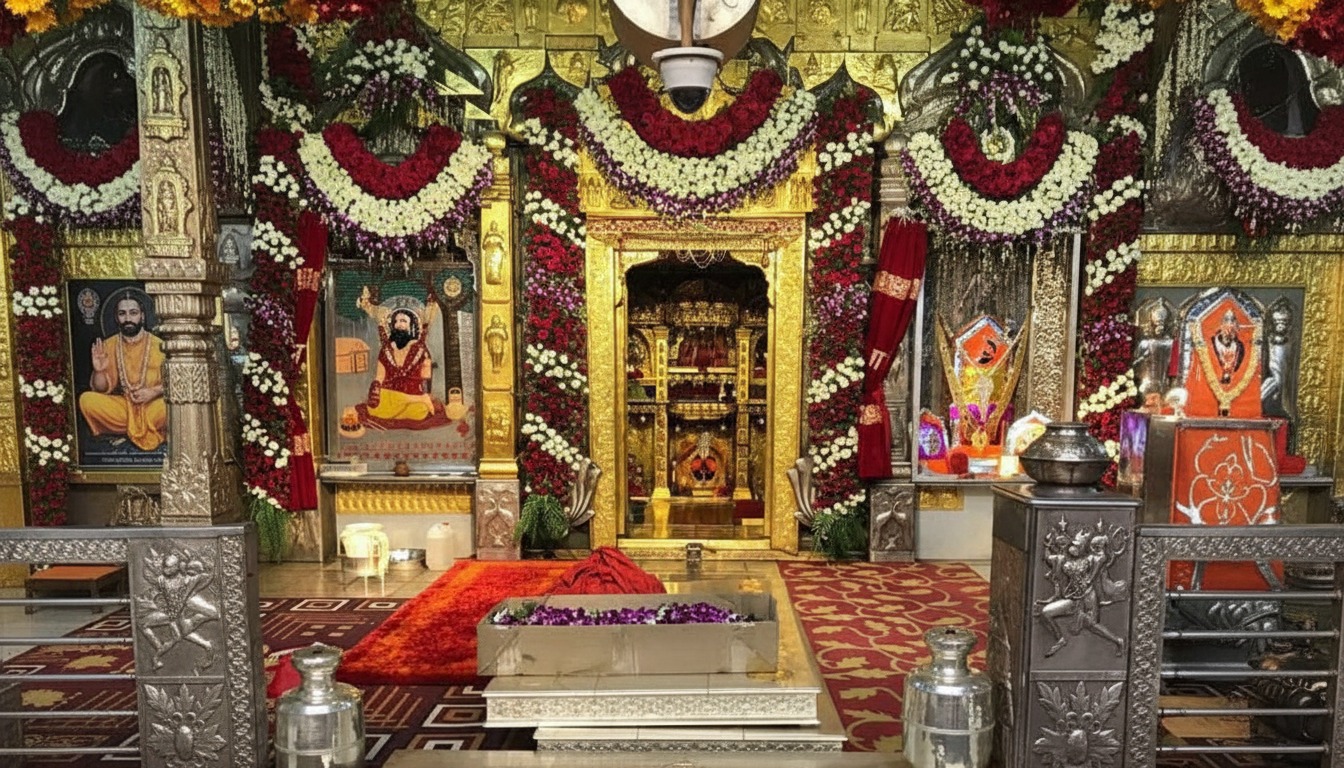
About Salasar Dham Temple, Salasar, Rajasthan
Salasar Dham Temple, also known as Salasar Balaji, is a major shrine dedicated to Lord Hanuman in Salasar town of Churu district, Rajasthan. The temple is especially known for its distinctive image of Balaji with a beard and moustache and for the traditions associated with Shri Mohandas Ji Maharaj.
The shrine developed from an 18th-century place of worship into a large temple complex. It is known for daily Hanuman worship, Savamani offerings, coconut tying, Ramayana recitation and the large fairs held on Chaitra Purnima and Sharad Purnima.
Story of Salasar Dham Temple
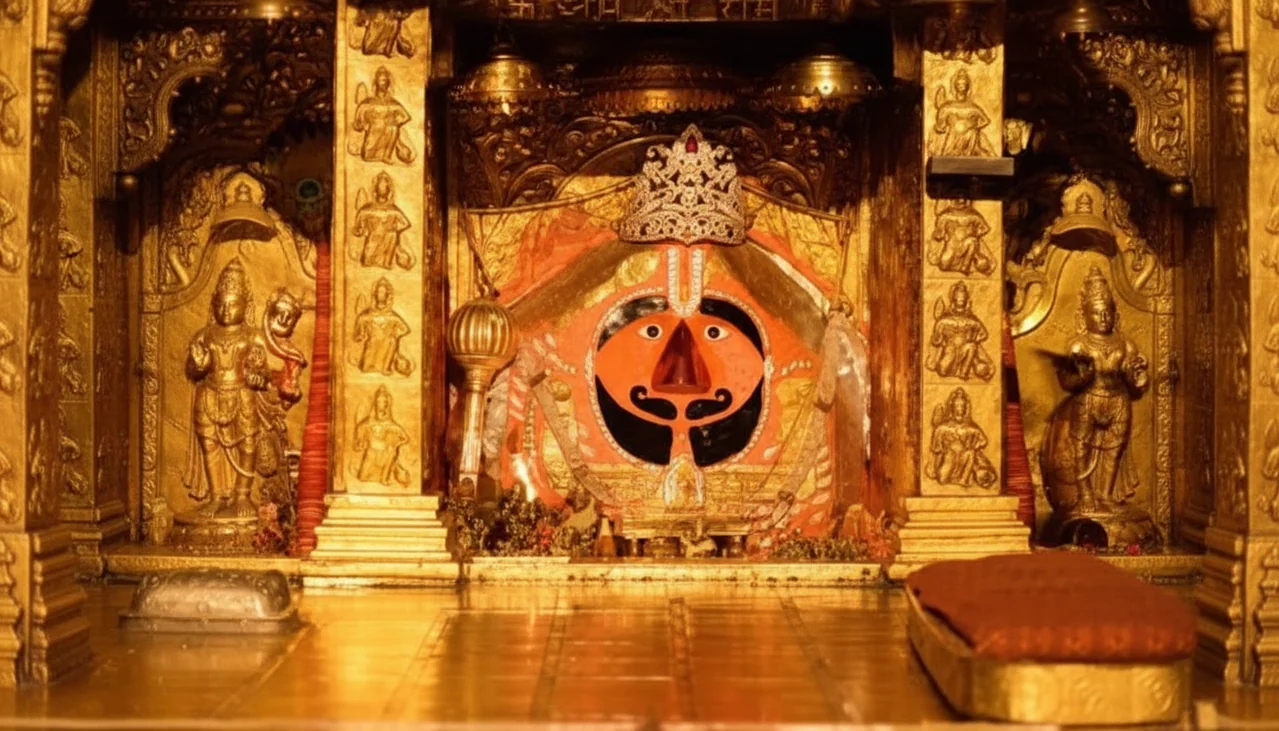
The history of Salasar Dham is closely connected with an idol discovered at Asota village. According to the local temple tradition, a farmer found the image while ploughing his field. The news reached the Thakur of Asota, who is said to have received a dream instructing him to send the idol to Salasar. On the same night, Shri Mohandas Ji Maharaj, a Hanuman devotee living in Salasar, is also said to have received the same divine instruction.
The idol was brought to Salasar and installed at the place where the temple now stands. Rajasthan Tourism dates the establishment tradition to 1754, corresponding to Vikram Samvat 1811. Mohandas Ji first built a small mud-and-stone shrine with the help of craftsmen Noora and Dau of Fatehpur Shekhawati. The settlement around the shrine gradually grew as traders and villagers began building homes near the temple.
The temple was later enlarged and developed by successive generations associated with Mohandas Ji. The present complex uses brick, stone, lime mortar, cement and white marble. Rajasthan Tourism records extensive silver work on the doors, entrance and ritual utensils, while the sanctum, Sabha Mandap and circumambulatory path contain mosaic and floral decoration in gold and silver.
The temple's architecture therefore reflects several stages of growth rather than a single construction period. From the original small shrine to the larger marble complex, its development has remained closely tied to the growth of Salasar as a pilgrimage centre. The Rajasthan Devasthan Department also records the later role of Mohandas Ji's descendants and the formation of Hanuman Seva Samiti in 1980 for the development and management of the temple and its surrounding facilities.
What Makes Salasar Dham Temple Sacred for Devotees
The Asota to Salasar tradition
The best-known Salasar tradition begins at Asota. A farmer is said to have uncovered the Balaji image while ploughing his field. After the discovery, the Thakur of Asota and Mohandas Ji of Salasar are both said to have received dreams directing that the image be taken to Salasar.
Another version says that the idol was placed on a bullock cart and the temple would be built at the point where the bulls stopped. These accounts belong to the sacred history of the shrine and are understood as religious tradition rather than as independently established historical events.
The bearded and moustached Balaji
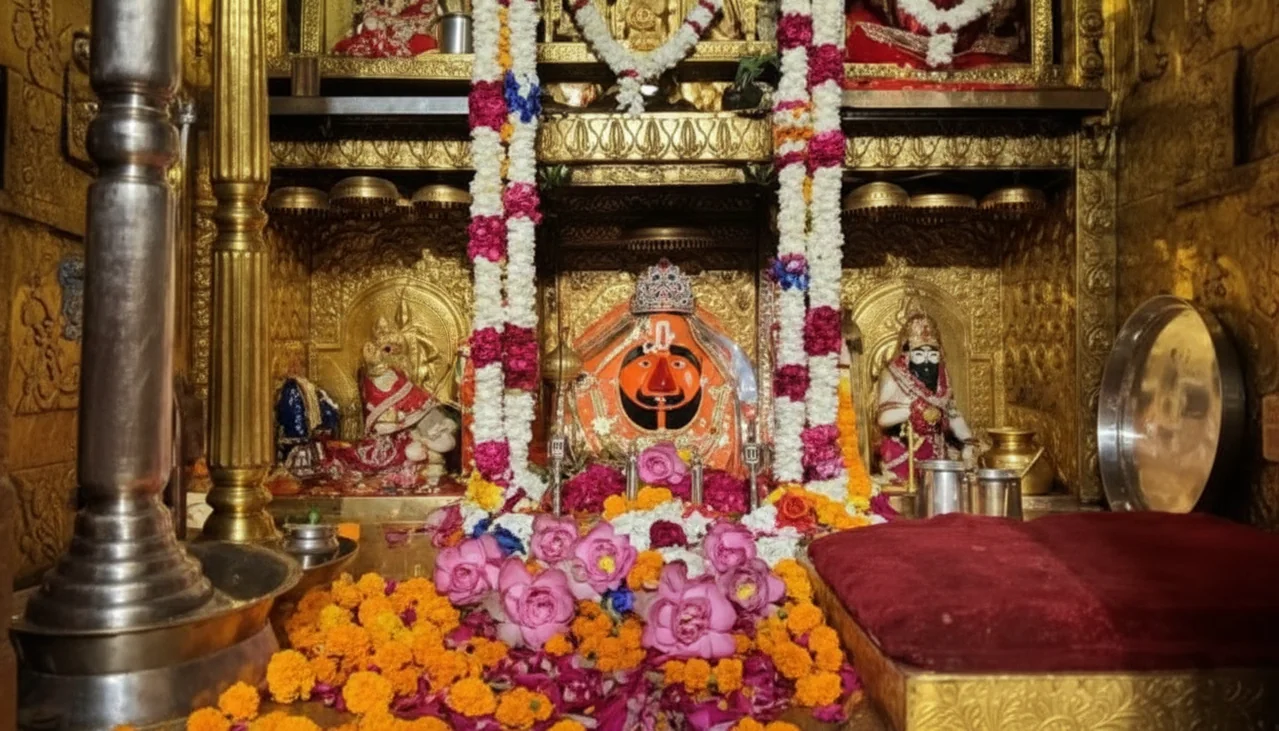
The image at Salasar is recognised by its round face, beard, moustache, large eyes and tilak. The temple's own history connects this unusual appearance with a vision received by Mohandas Ji, in which Lord Hanuman appeared to him in a bearded and moustached form. According to that tradition, this appearance became part of the form worshipped at Salasar.
This distinctive image is central to Salasar's identity. Devotees know the deity as Salasar Balaji, while the underlying deity remains Lord Hanuman.
Swayambhu tradition
Devotees regard the Salasar image as Swayambhu, meaning that it is believed to have manifested rather than been created as an ordinary sculptural image. Rajasthan Tourism also records Salasar as a Swayambhu shrine in the context of local faith and tradition.
Coconut tying
Tying a coconut with moli, the sacred red thread, is one of the best-known traditions at Salasar. Temple history connects the practice with Rao Raja Devi Singh, who is said to have followed the custom after seeking Mohandas Ji's guidance. The practice continued and became part of the devotional life of the shrine.
Savamani at Salasar
Savamani is a food offering made to Balaji and is traditionally associated with approximately 50 kilograms of food. Dishes such as dal, baati, churma, boondi, peda and laddus may form part of the offering. After the bhog, the food is distributed according to the customary practice of the shrine.
Mohandas Ji Maharaj
Mohandas Ji remains an important figure in Salasar tradition. Temple history records that he entrusted the worship of Balaji to his disciple and successor line and later took Samadhi in 1794, corresponding to Vikram Samvat 1850. His memory continues to form part of the temple's annual religious observances.
Annual Festivals & Rituals at Salasar Dham Temple, Salasar, Rajasthan
Daily Worship and Aarti Celebrations at the Temple
Daily worship at Salasar centres on Balaji, with a sequence of Aarti and offerings through the day. The temple's official website currently lists Mangala Aarti, Sandhya Aarti and Shayan Aarti, while darshan and ritual timings can change with the temple calendar.
Savamani Celebrations at the Temple
Savamani is a traditional food offering made to Balaji. It is one of the most recognisable devotional practices at Salasar and is associated with offering food before it is distributed as prasad.
Coconut Tying Celebrations at the Temple
Devotees tie coconuts with moli as an expression of prayer and faith. The practice is closely associated with the history of Salasar and remains part of the pilgrimage tradition.
Hanuman Janmotsav and Chaitra Purnima Celebrations at the Temple
Chaitra Purnima is one of the two major annual fair occasions at Salasar. It is associated with Hanuman Janmotsav and brings a much larger gathering of devotees to the town and temple.
Sharad Purnima Celebrations at the Temple
Sharad Purnima is the second major fair occasion identified by the temple and Rajasthan Tourism. The religious calendar around this period brings large numbers of pilgrims to Salasar.
Salasar Balaji Prakatya Diwas Celebrations at the Temple
The temple also observes Balaji Prakatya Diwas on Shravan Shukla Navami in remembrance of the traditional manifestation and establishment of Salasar Balaji.
Mohandas Ji Maharaj Samadhi Day Celebrations at the Temple
An annual observance is held in memory of Mohandas Ji Maharaj. The temple's history identifies his Samadhi day as an important event in the religious calendar of Salasar.
Sacred Places to Visit Near Salasar Dham Temple
Khatu Shyamji Temple : Khatu Shyamji is one of the major pilgrimage centres commonly associated with the Salasar religious circuit. Many pilgrims combine the two shrines in the same Rajasthan yatra.
Rani Sati Temple, Jhunjhunu : Rani Sati Temple is another important pilgrimage centre linked with the wider religious circuit around Salasar. Its inclusion reflects the strong network of regional pilgrimage sites across the Shekhawati area.
Jeen Mata Temple : Jeen Mata is another major shrine traditionally visited alongside Salasar and forms part of the religious circuit identified by Rajasthan Tourism.
Tal Chhapar Sanctuary : Tal Chhapar is known for its grassland landscape, blackbuck population and migratory birds. It offers a very different setting from the temple and can be included when exploring the wider Churu region.
Churu Heritage Area : Churu is known for its painted havelis, old mansions and historic architecture. The town adds a cultural and architectural dimension to a pilgrimage trip centred on Salasar.
Plan Salasar Dham Temple Darshan
For current darshan planning, entry arrangements and Naman Darshan's Guided Darshan Assistance, continue to the dedicated Salasar Dham Darshan page.
Common Questions About Visiting Salasar Dham Temple
Visitor Information
Entry Fee
General temple entry is available to devotees – Queue arrangements may change during fairs and high-footfall days.
Darshan Timing
Address
Shree Salasar Balaji Mandir, Salasar, Churu District, Rajasthan 331506, India
Notable Events
1754 — Traditional establishment of the shrine – Rajasthan Tourism associates the establishment of Salasar Balaji with Shravan Shukla Navami of Vikram Samvat 1811, corresponding to 1754. • 1755 — Temple tradition records the beginning of the continuous sacred flame – The temple's own historical account states that the flame was lit in 1755 and has been maintained since then as an Akhand Jyoti. • 1794 — Mohandas Ji Maharaj takes Samadhi – The temple history records Mohandas Ji's Samadhi on Baisakh Shukla Trayodashi, corresponding to Vikram Samvat 1850. • Later generations — Expansion of the temple complex – The descendants of Mohandas Ji continued the worship and developed the temple from its early small structure into the larger complex seen today. • 1980 — Hanuman Seva Samiti formed – The Rajasthan Devasthan Department's development plan records the formation of Hanuman Seva Samiti in 1980 for the development and management of the temple and its surrounding facilities.
How to Reach the Temple
By road: Salasar is located on the Jaipur-Bikaner highway in Churu district and is connected by road with Jaipur, Sikar, Sujangarh and other towns in Rajasthan. Rajasthan government sources place Salasar about 25 km from Sujangarh and about 170 km from Jaipur.
By rail: Sujangarh Railway Station is the nearest major rail connection commonly used for reaching Salasar. It is approximately 25 km from the temple.
By air: Jaipur International Airport is the nearest major airport generally cited for Salasar, approximately 170 km away by road.
From Sujangarh: Local buses, taxis and private vehicles connect Sujangarh with Salasar. The final approach becomes busier during the major fairs and festival periods.
Karangasem, Bali, Indonesia