
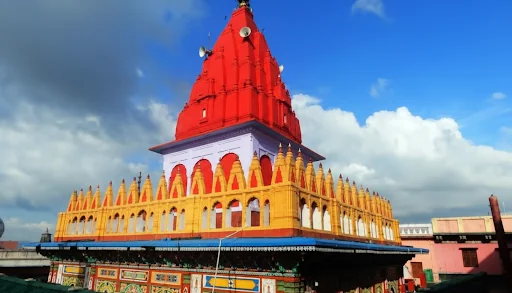
About Hanuman Garhi Temple, Ayodhya, Uttar Pradesh
Hanuman Garhi Temple is one of the principal shrines of Ayodhya, dedicated to Lord Hanuman. The temple stands on a raised mound in the old city and is traditionally associated with Hanuman's role as the guardian of Ayodhya.
The shrine is especially known for its Bal Hanuman image, the 76 steps leading to the temple and its fort-like structure with rounded bastions. In the traditional order of pilgrimage, devotees first take Hanuman's darshan here before proceeding to Ram Janmabhoomi and the darshan of Ram Lalla.
Story of Hanuman Garhi Temple
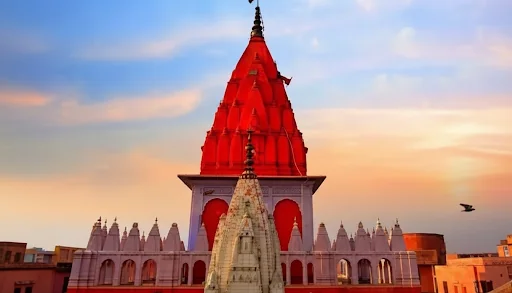
The sacred history of Hanuman Garhi is older than the structure seen today. The District Ayodhya administration records the tradition that King Vikramaditya had a temple built here, while the shrine is also associated in local tradition with Hanuman residing in a cave and watching over Ayodhya and Ramkot.
The present Hanuman Garhi developed during the period of the Nawabs of Awadh. Historical accounts trace land and revenue support for the Ramanandi bairagis to the 18th century, with later patronage under rulers including Safdarjung and Shuja-ud-Daula. Many accounts place the completion of the present temple complex in 1799 during the period of Asaf-ud-Daula, under the supervision of Diwan Tikait Rai.
The temple gets its name from its fortified appearance. It is built like a four-sided garhi, or stronghold, with circular bastions at the corners. A flight of 76 steps leads from the street to the temple, and the inner shrine is reached through a series of decorated entrances.
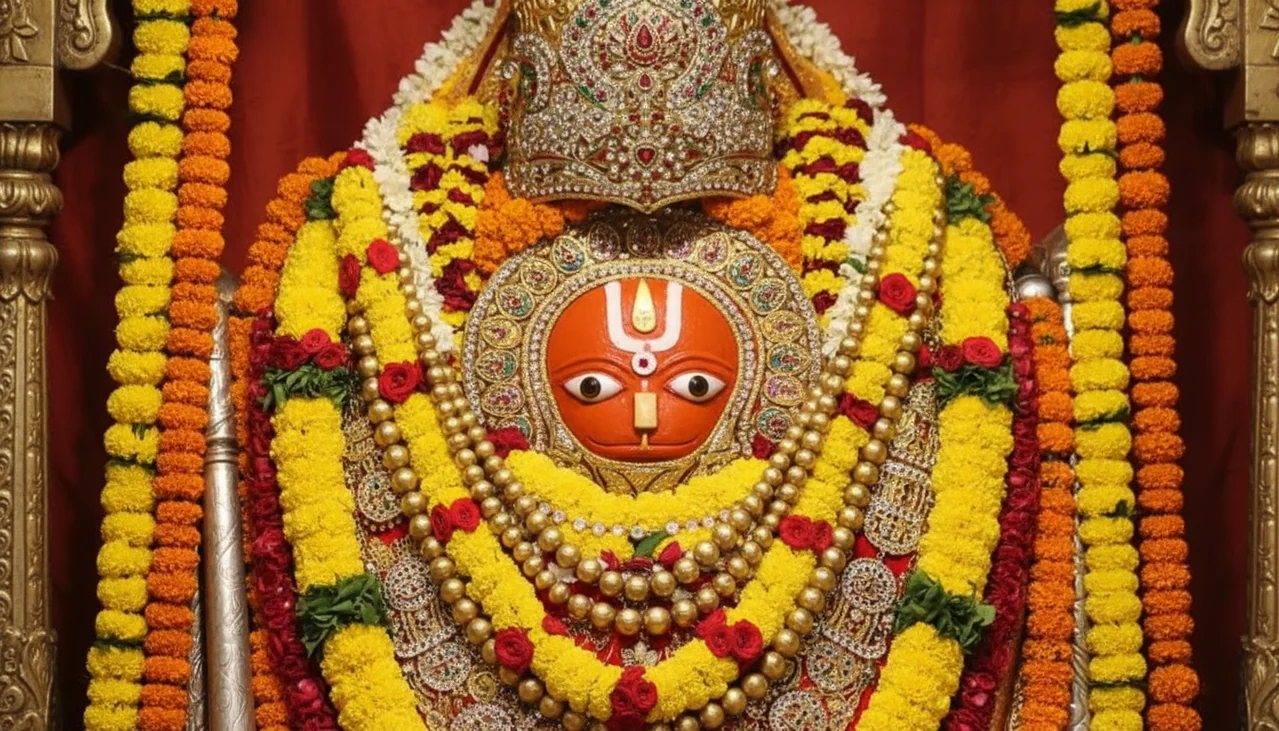
The presiding image is a small form of Bal Hanuman seated on the lap of his mother, Maa Anjani. The sanctum is decorated with silver work, while verses associated with the Hanuman Chalisa are inscribed within the complex. The temple also contains the Vijay Stambh, which is associated with the shrine's traditions of Hanuman's victory and service to Lord Rama.
What Makes Hanuman Garhi Temple Sacred for Devotees
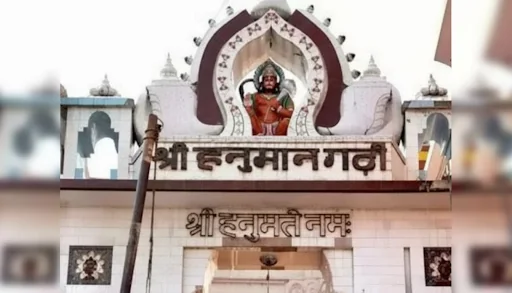
Hanuman, the Guardian of Ayodhya
A longstanding Ayodhya tradition regards Hanuman as the protector or Kotwal of the city. According to the devotional tradition, Hanuman remained in Ayodhya to guard Ramkot and the sacred city after the time of Lord Rama.
This belief gives Hanuman Garhi a particular place in the Ayodhya pilgrimage. Devotees traditionally take Hanuman's darshan first and then proceed towards Ram Janmabhoomi, seeking the blessings of the guardian before approaching Lord Rama.
The Cave Tradition
Local tradition identifies the hillock at Hanuman Garhi with a cave where Hanuman is believed to have remained while protecting Ayodhya. The present temple developed around this sacred association.
The cave tradition is part of the religious history of the shrine and should be understood as a devotional belief rather than as an archaeological account.
Bal Hanuman and Maa Anjani
The form of Hanuman worshipped at Hanuman Garhi is especially distinctive because the deity is represented as a child seated in the lap of Maa Anjani.
This tender form differs from the more familiar warrior or mountain-bearing images of Hanuman found elsewhere. At Hanuman Garhi, the image places emphasis on Hanuman's identity as the devoted son and servant of Lord Rama.
The First Darshan Tradition
In Ayodhya, it is customary for many devotees to visit Hanuman Garhi before Ram Janmabhoomi. The practice comes from the belief that Hanuman is the guardian of Rama's city and that his permission and blessings should be sought before proceeding to Ram.
This is a religious custom rather than a general government entry requirement. The exact movement of pilgrims can still change according to crowd-management arrangements and temple conditions on a particular day.
Annual Festivals & Rituals at Hanuman Garhi Temple, Ayodhya, Uttar Pradesh
Daily Worship Celebrations at the Temple
Daily worship at Hanuman Garhi includes puja, aarti and offerings made to Lord Hanuman. Devotees commonly offer sindoor, chola and laddoo prasad and recite the Hanuman Chalisa as part of their worship.
Hanuman Jayanti Celebrations at the Temple
Hanuman Jayanti marks the birth of Lord Hanuman and is one of the major annual observances at Hanuman Garhi. The temple receives large numbers of devotees and the regular worship schedule takes on a more festive character.
Bada Mangal Celebrations at the Temple
Bada Mangal is associated with special Hanuman worship during the Jyeshtha month. Hanuman Garhi is among the Ayodhya shrines where this period brings increased devotional activity.
Ram Navami Celebrations at the Temple
Ram Navami is closely connected with Hanuman's devotion to Lord Rama. Special worship and large gatherings take place in Ayodhya during the festival, and Hanuman Garhi forms part of the city's wider Ram Navami pilgrimage.
Dussehra Celebrations at the Temple
Dussehra marks the victory of Lord Rama over Ravana in the Ramayana tradition. At Hanuman Garhi, the festival carries particular meaning because Hanuman is remembered as one of Rama's foremost devotees and companions.
Deepawali Celebrations at the Temple
Deepawali is an important festival across Ayodhya and Hanuman Garhi participates in the city's annual celebration of Lord Rama's return to Ayodhya. The temple attracts additional devotees during the festive period.
Sacred Places to Visit Near Hanuman Garhi Temple
Ram Janmabhoomi : Ram Janmabhoomi is the principal pilgrimage destination associated with Lord Rama in Ayodhya. The traditional pilgrimage sequence places Hanuman Garhi before the darshan of Ram Lalla.
Kanak Bhawan : Kanak Bhawan is dedicated to Lord Rama and Mata Sita and is known for its ornate shrine and richly decorated images. It is one of the important temples traditionally included in an Ayodhya pilgrimage.
Nageshwarnath Temple : Nageshwarnath Temple is dedicated to Lord Shiva and forms part of Ayodhya's older sacred landscape. It is traditionally associated with Kush, the son of Lord Rama.
Ram Ki Paidi and Saryu Ghats : Ram Ki Paidi comprises the ghats along the Sarayu and is one of the main ritual spaces of Ayodhya. Devotees visit the river for bathing, prayers and the evening Saryu Aarti.
Dashrath Bhavan : Dashrath Bhavan is traditionally associated with King Dashrath, the father of Lord Rama. The shrine remains part of the central pilgrimage area of old Ayodhya.
Mani Parvat : Mani Parvat is one of Ayodhya's traditional sacred mounds and is connected with the city's older religious landscape. It can be included in a wider visit to Ayodhya's historic temples and sacred sites.
Plan Hanuman Garhi Temple Darshan
For current darshan planning, queue information and Naman Darshan's date-specific Guided Darshan Assistance, continue to the dedicated Hanuman Garhi Darshan page.
Common Questions About Visiting Hanuman Garhi Temple
Visitor Information
Entry Fee
General darshan is ordinarily free – Temple conditions can change on major festival days.
Darshan Timing
Address
Shri Hanuman Garhi Mandir, Sai Nagar, Ayodhya, Uttar Pradesh 224123, India
Notable Events
Older temple tradition – The District Ayodhya administration records the tradition that Vikramaditya constructed a temple at the site. • 18th century — Nawabi-era development – Historical accounts trace revenue and land support for the shrine to the period of the Nawabs of Awadh and the Ramanandi bairagis. The present temple-fort developed during this period. • 1799 — Completion of the present complex – Several historical accounts associate the completion of the present Hanuman Garhi structure with the period of Asaf-ud-Daula and Diwan Tikait Rai. • 1855 — Hanuman Garhi dispute – Hanuman Garhi became the centre of a major confrontation in Ayodhya. An inquiry ordered by the Nawab's government examined a claim about an earlier mosque at the site. • Modern period — Nirvani Akhara tradition continues – Hanuman Garhi remains closely associated with the Ramanandi Sampradaya and Nirvani Akhara, continuing its role as a major Hanuman shrine in Ayodhya.
How to Reach the Temple
By Air: Maharishi Valmiki International Airport Ayodhyadham is the main airport serving Ayodhya. The airport is approximately 8 km south of Ayodhya Junction Railway Station, with taxis and other local transport available for the onward journey.
By Rail: Ayodhya Dham Junction and Ayodhya Cantt are the main railway stations serving the city. Hanuman Garhi is located in the central pilgrimage area of Ayodhya and can be reached from the railway stations by local taxi, e-rickshaw or auto.
By Road: Ayodhya is connected by road with Lucknow, Varanasi, Prayagraj, Gorakhpur and other major cities of Uttar Pradesh. UPSRTC buses and private vehicles serve the city.
Within Ayodhya: The temple lies in the old central pilgrimage area. Local e-rickshaws, autos and other permitted vehicles can be used to reach the approach area, after which visitors continue on foot to the staircase and temple.
Bhubaneswar, Odisha