
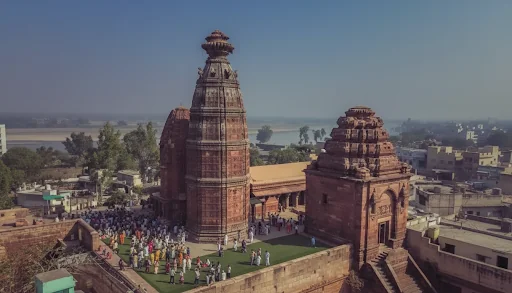
About Madan Mohan Temple, Vrindavan, Uttar Pradesh
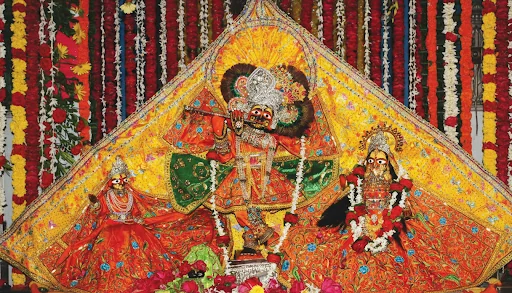
Madan Mohan Temple is one of the oldest surviving temples of Vrindavan, situated on Dwadashaditya Tila near Kaliya Ghat and the Yamuna. The temple is dedicated to Lord Krishna, worshipped here as Madan Mohan, with Radha and Lalita.
The shrine is closely associated with Sanatana Goswami and the early Gaudiya Vaishnava tradition of Vrindavan. Its red-sandstone temple, the story of the Madan Mohan deity, the adjoining samadhi of Sanatana Goswami and the tradition of Madan Mohan as the deity of sambandha give the temple a distinct place among Vrindavan's historic Goswami shrines.
Story of Madan Mohan Temple
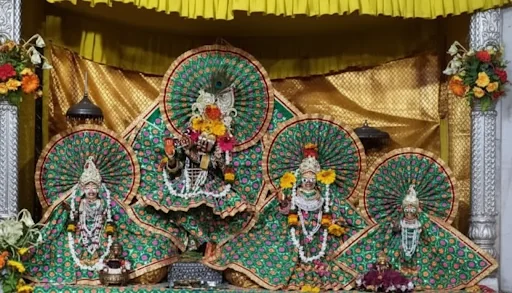
The history of Madan Mohan Temple is closely connected with the revival of Vrindavan as a major centre of Krishna worship in the 16th century. Sanatana Goswami, one of the principal followers of Chaitanya Mahaprabhu, established the worship of Madan Mohan at Dwadashaditya Tila. Historical accounts associate the construction of the major 16th-century temple with the Multan merchant Kapur Ram Das, under the guidance of Sanatana Goswami, around 1580.
A well-known tradition explains the merchant's role through the story of a boat carrying salt that became stranded on the Yamuna. After seeking Sanatana Goswami's guidance and praying to Madan Mohan, the boat was freed, and Kapur Ram Das is said to have used the proceeds of his trade to build the temple. This account belongs to the devotional history of the shrine and is traditionally used to explain the temple's foundation.
The temple that stands on the hill today reflects later changes to the site. During the upheavals of the late 17th century, the original Madan Mohan deity was moved out of Vrindavan for protection and eventually became established at Karauli in Rajasthan. Later accounts associate a representative image with Vrindavan and the rebuilding of the temple with Nanda Kumar Basu in the early 19th century.
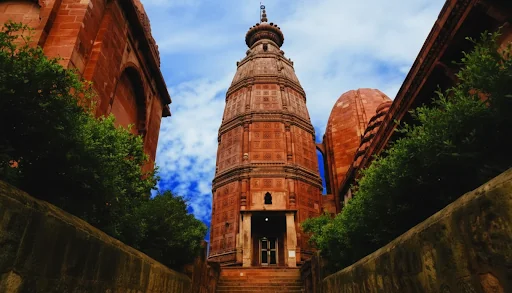
The surviving structure is built in the Nagara style and uses red sandstone. Its tall central shikhara rises above the older Vrindavan skyline, while the surrounding structures include the bhajan kutir and samadhi of Sanatana Goswami. The hilltop setting above the Yamuna, the stone staircase and the simple red-sandstone form make the temple one of the most recognisable monuments of old Vrindavan.
What Makes Madan Mohan Temple Sacred for Devotees
Madan Mohan and the Gaudiya Vaishnava Tradition
In Gaudiya Vaishnava theology, Madan Mohan is associated with sambandha, the foundation of the devotee's relationship with Krishna. Govind Dev is traditionally associated with abhidheya, or the practice of devotional service, while Gopinath is associated with prayojana, the spiritual goal. This understanding gives the three historic deity traditions of Vrindavan a connected theological structure.
Madan Mohan is therefore not worshipped only as an image of Krishna; the deity has a particular place in the devotional teaching associated with the Goswamis of Vrindavan.
The Rediscovery of Madan Mohan
According to Vaishnava tradition, the deity of Madan Mohan was rediscovered by Advaita Acharya and later came into the care of Sanatana Goswami. Traditions surrounding this discovery connect the deity with the restoration of Krishna's sacred places in Vrindavan during the period of Chaitanya Mahaprabhu and his followers.
The story also includes the period when Sanatana Goswami lived a life of great simplicity while maintaining the worship of Madan Mohan. The deity's early service is therefore remembered together with the austere devotional practices of the saint.
The Original Deity and Karauli
The original Madan Mohan deity was moved away from Vrindavan during the period of Mughal attacks on the temples of the region. It eventually reached Karauli in Rajasthan, where the original deity continues to be worshipped.
The Vrindavan shrine consequently has a distinctive history in which the sacred tradition of the deity continued even after the original image had left the city. The present worship at Vrindavan belongs to that continuing tradition.
Dwadashaditya Tila and Kaliya Ghat
The temple stands on Dwadashaditya Tila near Kaliya Ghat. A Braj tradition connects the hill with the episode of Krishna after his subduing of the serpent Kaliya. According to this tradition, the twelve Adityas appeared to warm Krishna after the encounter, giving the hill its name.
This is a sacred place tradition of Braj rather than an independently established historical event.
Sanatana Goswami's Bhajan Kutir and Samadhi
Sanatana Goswami's association with the temple continues through the bhajan kutir and samadhi located beside the shrine. These spaces are important to devotees because they preserve the memory of the saint whose life and writings formed part of the early Gaudiya Vaishnava presence in Vrindavan.
Anga Kadi Tradition
A local devotional tradition remembers Sanatana Goswami's simple offerings to Madan Mohan. Anga Kadi, a preparation made from flour and gram, is associated with the austere food offerings of the saint and continues to be remembered in connection with the temple's devotional tradition.
Annual Festivals & Rituals at Madan Mohan Temple, Vrindavan, Uttar Pradesh
Daily Worship and Aarti Celebrations at the Temple
Daily worship follows the traditional Vaishnava seva of the deity, including offerings, adornment and aarti. Public darshan takes place around these services, so timings can change with the ritual schedule and season.
Janmashtami Celebrations at the Temple
Janmashtami marks the appearance of Lord Krishna and is observed with special worship, decoration and devotional singing. The midnight observance is an important part of the festival.
Radhashtami Celebrations at the Temple
Radhashtami celebrates the appearance of Shri Radha. Special decoration, devotional offerings and worship form part of the day's observances.
Holi Celebrations at the Temple
Holi is closely connected with the devotional culture of Braj. At Madan Mohan Temple, the festival is observed through traditional offerings, colours, flowers and devotional singing.
Sanatana Goswami Tirobhava Celebrations at the Temple
The disappearance day of Sanatana Goswami is an important observance for devotees connected with the temple. Special remembrance and devotional activities honour the saint's life and service to Madan Mohan.
Sacred Places to Visit Near Madan Mohan Temple
Kaliya Ghat : Kaliya Ghat is closely connected with the Braj tradition surrounding Krishna and the serpent Kaliya. Its location near the temple forms part of the sacred geography of old Vrindavan.
Sanatana Goswami Samadhi : The samadhi of Sanatana Goswami stands beside the temple and commemorates the saint whose devotional service became closely linked with Madan Mohan.
Banke Bihari Temple : Banke Bihari Temple is one of Vrindavan's principal Krishna shrines and lies within the historic temple area. It can be included with Madan Mohan as part of a visit to the older sacred quarter of the town.
Nidhivan : Nidhivan is one of the best-known sacred places of Vrindavan and is associated with local traditions of Radha and Krishna's pastimes. Its religious traditions are part of Braj devotional culture and should be understood as sacred belief.
Plan Madan Mohan Temple Darshan
For current darshan timings, daily schedule, entry planning and Naman Darshan's Guided Darshan Assistance, continue to the dedicated Madan Mohan Temple Darshan page.
Common Questions About Visiting Madan Mohan Temple
Visitor Information
Entry Fee
General temple visit is not normally presented as a ticketed tourist attraction – Specific seva or offering arrangements are separate.
Darshan Timing
Address
Shri Radha Madan Mohan Temple, Kaliya Ghat, Vrindavan, Mathura, Uttar Pradesh 281121, India
Notable Events
16th century — Worship established at Dwadashaditya Tila – Sanatana Goswami became closely associated with the worship of Madan Mohan in Vrindavan. • Around 1580 — Major temple construction – Historical accounts associate the major red-sandstone temple with Kapur Ram Das of Multan under Sanatana Goswami's guidance. • Late 17th century — Original deity moved from Vrindavan – The original Madan Mohan deity was taken away for protection during the period of Mughal attacks on Vrindavan's temples and eventually reached Rajasthan. • 18th century — Vrindavan worship continues – A representative image was established for continued worship at Vrindavan, commonly dated to 1748 in later historical accounts. • 1819 — Later rebuilding associated with Nanda Kumar Basu – Sources commonly associate the early-19th-century rebuilding of the temple with Nanda Kumar Basu of Bengal. • 2023–24 — ASI conservation and maintenance works – The Archaeological Survey of India issued works relating to structural repair and annual maintenance of Madan Mohan Temple at Vrindavan.
How to Reach the Temple
By Train: Mathura Junction is the major railway station for Vrindavan and is about 12–13 kilometres from the temple area. Vrindavan railway station is closer to the old town and can also be used for the final local journey.
By Air: Agra Airport is the closest major airport commonly used for travel to Vrindavan, approximately 70 kilometres away. Indira Gandhi International Airport in Delhi provides broader domestic and international connectivity.
By Road: Vrindavan is connected by road with Mathura, Agra and Delhi, including access through the Yamuna Expressway from Delhi. From Mathura or other parts of Vrindavan, taxis, autos and e-rickshaws can be used for the local journey.
Within Vrindavan: The old temple area has narrow lanes, and the final approach to Madan Mohan Temple is completed on foot through the historic part of the town. The temple itself stands above street level and requires a climb by steps.
SEO Title Shrinathji Temple Nathdwara: History, Rituals & Guide
Meta Description Learn about Shrinathji Temple Nathdwara, its history, Shrinathji deity, Pushtimarg tradition, Haveli architecture, rituals, festivals and visitor information.
Nathdwara, Rajasthan