
About Trimbakeshwar Jyotirlinga Temple, Trimbak, Maharashtra
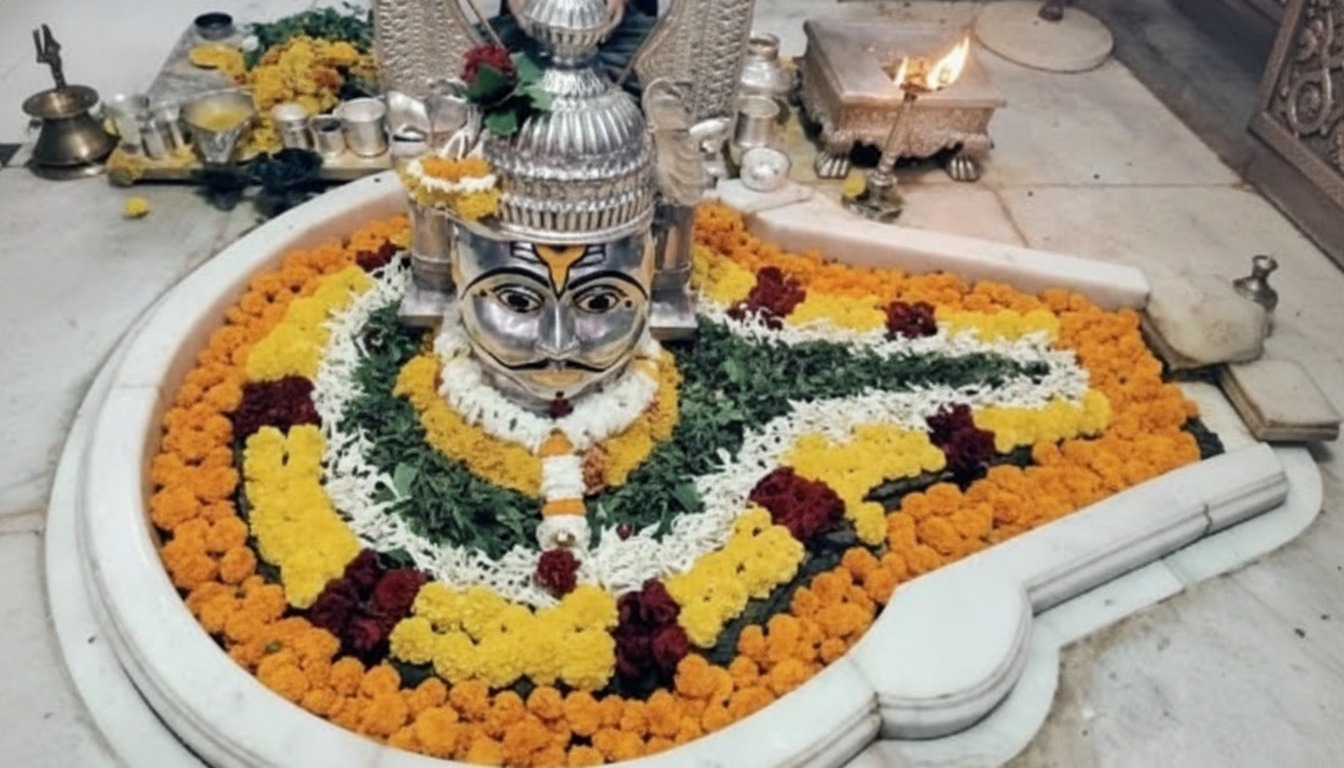
Trimbakeshwar Jyotirlinga Temple is one of the twelve Jyotirlingas of Lord Shiva. It stands at Trimbak, near the Brahmagiri Hills, about 28 kilometres from Nashik, in the sacred landscape associated with the origin of the Godavari River.
The shrine is known for its distinctive three-faced Jyotirlinga, its association with Gautama Rishi and the Godavari, the sacred Kushavarta Kund, and its long connection with Shaiva and Nath traditions. The present temple dates to the Peshwa period, while the pilgrimage tradition around Trimbakeshwar is much older.
Story of Trimbakeshwar Jyotirlinga Temple
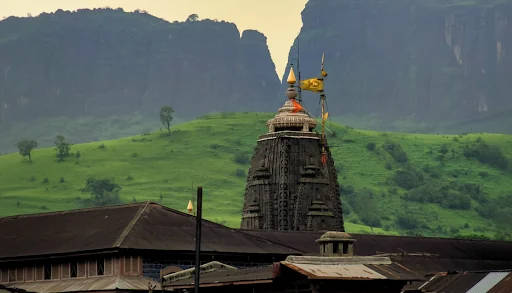
The present Trimbakeshwar Temple was built by the third Peshwa, Balaji Bajirao, on the site of an older shrine. The Trust records its formal inauguration on 16 February 1756. The temple is built in black stone and is associated with the Hemadpanthi tradition, with the Brahmagiri, Nilagiri and Kalagiri hills forming the landscape around the shrine.
The temple has entrances on all four sides, while the sanctum contains the unusual three-faced Jyotirlinga. The temple's architecture is therefore closely tied to its religious identity: the stone structure belongs to the Peshwa period, while the sacred form within it represents Brahma, Vishnu and Shiva according to temple tradition.
The Three-Faced Jyotirlinga of Trimbakeshwar
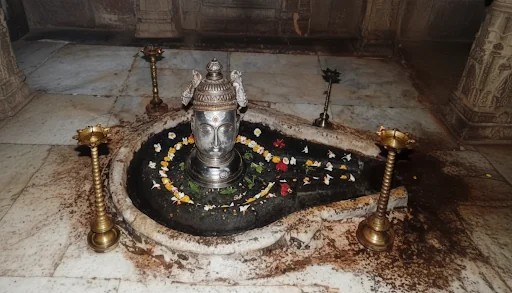
The principal deity is Lord Shiva in the form of the Trimbakeshwar Jyotirlinga. Unlike most Shiva lingas, the sacred form here is described as having three faces or aspects associated with Brahma, Vishnu and Mahesh (Shiva).
The linga is located in a recessed sanctum and is kept under regular ritual worship. The three-faced form is the defining feature of Trimbakeshwar and is central to the way the temple is understood in its religious tradition.
The temple is also associated with the sacred golden crown, which is brought out on special occasions, particularly during the Monday Palkhi tradition.
What Makes Trimbakeshwar Jyotirlinga Temple Sacred for Devotees
Gautama Rishi and the Origin of the Godavari
One of the principal traditions associated with Trimbakeshwar concerns Gautama Rishi and his wife Ahalya, who are said to have lived in the Brahmagiri region. According to the legend, a dispute involving Gautama and a cow led the sage to undertake penance to Lord Shiva.
Pleased with Gautama's devotion, Shiva is said to have brought the sacred Ganga to the region. In the Trimbakeshwar tradition, this river became the Godavari, which is why the town is closely associated with both Shiva worship and the river's sacred origin.
Brahmagiri and the Sacred Source of the Godavari
Brahmagiri Hill is an important part of Trimbakeshwar's sacred geography. The river tradition connects the hill with the emergence of the Godavari, while Gangadwar is regarded in the pilgrimage tradition as the place where the river becomes visible on Brahmagiri.
Within the temple town, Kushavarta Kund is regarded as the visible and ritual source of the Godavari. The kund has an important place in pilgrimage and in the bathing traditions associated with Trimbakeshwar.
Why the Jyotirlinga Has Three Faces
The three-faced form of the linga is traditionally understood as representing Brahma, Vishnu and Shiva. The temple's name, Trimbakeshwar, is also connected with the idea of the three aspects of the divine.
This is a religious interpretation of the sacred form and should be understood as part of the temple tradition.
Trimbakeshwar and the Nath Tradition
Trimbakeshwar is also associated with Sant Nivruttinath, the elder brother and guru of Sant Dnyaneshwar. Nivruttinath is traditionally connected with the Nath Sampradaya and is believed to have taken samadhi at Trimbakeshwar.
The Nivruttinath Samadhi temple remains an important pilgrimage site in the town and adds another layer to Trimbakeshwar's religious history beyond its Jyotirlinga identity.
Ritual Traditions at Trimbakeshwar
Trimbakeshwar is known not only for ordinary Shiva worship but also for traditional rites performed in the wider sacred area, including Narayan Nagbali and Tripindi Shraddha. These are distinct ritual traditions and should not be treated as part of ordinary temple darshan.
Annual Festivals & Rituals at Trimbakeshwar Jyotirlinga Temple, Trimbak, Maharashtra
Daily Puja Celebrations at the Temple
The temple's daily worship follows a traditional sequence of puja, offerings and aarti under the management of the Trimbakeshwar Devasthan Trust. Public darshan operates around these rituals and can change during special observances.
Palkhi Sohala Celebrations at the Temple
The Monday Palkhi Sohala is one of Trimbakeshwar's distinctive recurring traditions. The deity's decorated representation is taken in procession toward Kushavarta Tirtha, where worship is performed before the procession returns to the temple.
Maha Shivaratri Celebrations at the Temple
Maha Shivaratri is one of the major annual festivals at Trimbakeshwar. Special worship, night-long observances, kirtan and a palanquin procession form part of the festival tradition.
Simhastha Kumbh Celebrations at the Temple
Trimbakeshwar is one of the two main centres of the Nashik-Trimbakeshwar Simhastha Kumbh. The gathering takes place in the wider sacred landscape of the Godavari and is closely associated with ritual bathing by Shaiva ascetics and other pilgrims. The next Simhastha Kumbh is being planned for 2027, with the Maharashtra government currently coordinating infrastructure, mobility and pilgrim-management works.
Shravan and Other Annual Observances Celebrations at the Temple
The month of Shravan, along with observances such as Nag Panchami, Kartik rituals, Dussehra, Diwali, Ganesh Chaturthi and Rang Panchami, forms part of the temple's annual religious calendar. The exact ritual programme can vary according to the traditional calendar.
Sacred Places to Visit Near Trimbakeshwar Jyotirlinga Temple
Kushavarta Kund : Kushavarta Kund is the sacred tank within the temple town traditionally regarded as the ritual source of the Godavari. It is closely associated with Trimbakeshwar's bathing and pilgrimage traditions.
Brahmagiri Hill : Brahmagiri is the hill associated with the origin tradition of the Godavari and with Gautama Rishi's penance. It is one of the central landmarks of the Trimbakeshwar pilgrimage landscape.
Gangadwar : Gangadwar on Brahmagiri is associated with the first visible emergence of the Godavari in local pilgrimage tradition. It is an important stop for devotees exploring the river's sacred origin.
Nivruttinath Samadhi Temple : The samadhi of Sant Nivruttinath gives Trimbakeshwar an important connection with the Nath and Varkari traditions. The shrine is especially significant during the annual Nivruttinath pilgrimage.
Panchavati and Ram Kund, Nashik : Panchavati and Ram Kund form another major sacred area in Nashik. The Godavari flows through the city, and the area is associated with traditions from the Ramayana.
Anjaneri : Anjaneri is a historic hill region near Nashik associated in local religious tradition with Hanuman. Its temples and landscape can be visited as part of a wider Trimbakeshwar and Nashik pilgrimage circuit.
Plan Trimbakeshwar Jyotirlinga Darshan
For current darshan planning, entry preparation, date-specific timings and Naman Darshan's Guided Darshan Assistance, continue to the dedicated Trimbakeshwar Jyotirlinga Darshan page.
Common Questions About Visiting Trimbakeshwar Jyotirlinga Temple
Visitor Information
Entry Fee
The Trust currently states that free Darshan Entry Passes are mandatory – Follow the current official procedure before travel.
Darshan Timing
Address
Shri Trimbakeshwar Devasthan Trust, Trimbak, Nashik District, Maharashtra – 422212, India
Notable Events
18th century — Present temple constructed – The present shrine was built under Peshwa Balaji Bajirao on the site of an older temple. • 16 February 1756 — Formal inauguration – The Trimbakeshwar Trust records the formal opening of the present temple on the occasion of Maha Shivaratri. • 1954 — Sansthan registered as a public trust – The Trimbakeshwar Sansthan was formally registered under the public trust framework. • 1995 — Board of trustees established – The Trust moved to a board-based administrative structure. • 2027 — Simhastha Kumbh preparations – The Nashik-Trimbakeshwar region is undergoing extensive preparation for the next Simhastha Kumbh, including pilgrim infrastructure, transport and heritage-conservation works.
How to Reach the Temple
By air: Nashik Airport at Ozar is the closest local airport serving the region. Mumbai's airport network provides a wider range of flight connections.
By rail: Nashik Road Railway Station is the nearest major railway station and is about 40 kilometres from Trimbakeshwar.
By road: Trimbakeshwar is approximately 28 kilometres from Nashik city and is connected by state transport buses, taxis and private vehicles.
From Nashik: Regular road transport connects Nashik with Trimbakeshwar. On festival days and during major religious gatherings, local traffic and access routes can change.
Within Trimbakeshwar: The temple, Kushavarta and other nearby sacred sites are located within the town. Some parts of the pilgrimage route are best completed on foot.
SEO Title Somnath Temple: History, Jyotirlinga, Architecture & Guide
Meta Description Explore Somnath Temple in Gujarat, one of the twelve Jyotirlingas, with its history, Jyotirlinga significance, architecture, legends, rituals, festivals and sacred places near Prabhas Patan.
Prabhas Patan, Veraval, Gujarat