
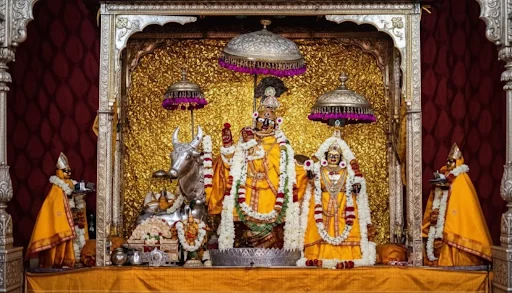
About Govind Dev Ji Temple, Jaipur, Rajasthan
Govind Dev Ji Temple is dedicated to Lord Krishna, worshipped here as Govind Dev Ji with Radha. The temple stands in Jai Niwas Garden within Jaipur's City Palace complex and has long been associated with the Kachhwaha rulers of Amber and Jaipur.
The present Jaipur shrine dates to the 18th century and is generally associated with Maharaja Sawai Jai Singh II. The deity had earlier been worshipped in Vrindavan, and the temple remains known for its seven daily jhankis, bhog offerings, Krishna festivals and close connection with Jaipur's royal and Gaudiya Vaishnava traditions.
Story of Govind Dev Ji Temple
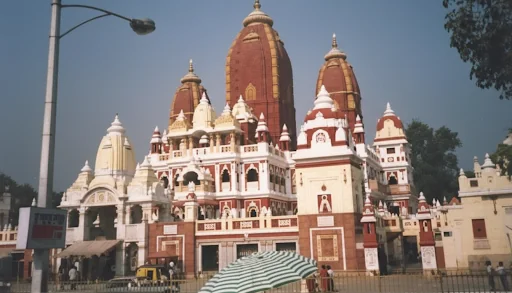
The history of Govind Dev Ji in Jaipur begins with the deity's earlier association with Vrindavan. According to Vaishnava tradition, the image was rediscovered at Goma Tila by Rupa Goswami in 1525. A major temple for Govind Dev Ji was later established in Vrindavan under Raja Man Singh I of Amber, linking the deity with the devotional traditions that grew around the sacred town.
During the Mughal period, the image was moved from Vrindavan for protection. The exact route and dates of the transfer are described differently in later accounts, but the deity eventually came into the care of the Kachhwaha rulers and was brought to the Jaipur region. When Sawai Jai Singh II established Jaipur in 1727, Govind Dev Ji became closely connected with the new capital.
The present temple in Jaipur was built in 1735 under Sawai Jai Singh II. Govind Dev Ji was regarded as the patron deity of the Jaipur rulers, and the shrine was placed within Jai Niwas Garden in a position connected directly with the royal palace. Heritage documentation records that the arrangement allowed the ruler to have a direct view of the deity from Chandra Mahal.
The temple is a rare spireless shrine in Jaipur. IGNCA describes it as an east-facing, one-storey structure with an open courtyard, side pavilions and painted decorative work, using an Indo-Persian arcuated construction system. The interiors are known for painted surfaces, chandeliers and a gold-finished ceiling. The temple complex also includes the Satsang Hall, whose 119-foot reinforced-concrete flat-roof span was recognised by Guinness World Records in 2009.
What Makes Govind Dev Ji Temple Sacred for Devotees
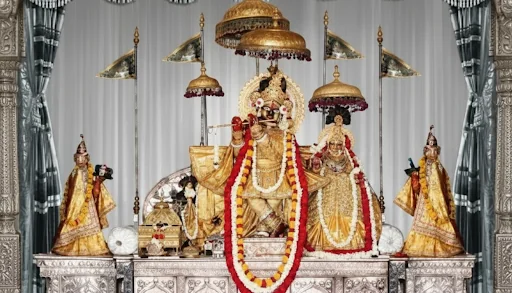
The tradition of Bajrakrit
One of the best-known traditions associates the Govind Dev Ji image with Bajranabh, the great-grandson of Lord Krishna. According to the legend, Bajranabh tried to recreate Krishna's form from the description given by his grandmother, who had seen Krishna during his earthly life.
The tradition says that he created three images reflecting different aspects of Krishna's appearance. The image later identified as Govind Dev Ji is associated with Krishna's face and is known in this tradition as Bajrakrit. This is a religious tradition and should not be treated as an archaeological account of the image's origin.
Govind Dev Ji and the Jaipur rulers
Govind Dev Ji held a special position in the Kachhwaha court. Rather than being treated only as a royal family deity, the image was regarded as the patron deity of Jaipur, with the ruler understood in the devotional tradition as serving the Lord.
This relationship is reflected in the location of the temple within the royal complex and in the orientation between the shrine and Chandra Mahal. The temple therefore forms part of both Jaipur's religious history and the history of its ruling house.
Govind Dev Ji and Gaudiya Vaishnavism
The deity's earlier history in Vrindavan connects the Jaipur shrine with the Gaudiya Vaishnava tradition associated with Chaitanya Mahaprabhu and the Goswamis of Vrindavan. Rupa Goswami's association with Govind Dev Ji is especially important in this history.
The temple is also remembered in Gaudiya tradition in connection with Baladeva Vidyabhushana and the composition of the Govinda-bhashya, his commentary on the Vedanta Sutra. Accounts of the episode describe Govind Dev Ji as the deity before whom Baladeva sought sanction before completing the work.
Seven daily jhankis
Govind Dev Ji is worshipped through seven principal daily jhankis rather than one uninterrupted public darshan. These are Mangla, Dhoop, Shringar, Rajbhog, Gwal, Sandhya and Shayan.
The deity is dressed and adorned differently during the day, and bhog is offered at the appropriate stages. The changing jhankis are therefore part of the temple's worship tradition, not simply different visiting hours.
Annual Festivals & Rituals at Govind Dev Ji Temple, Jaipur, Rajasthan
Daily Jhankis and Bhog Celebrations at the Temple
The temple follows a daily sequence of seven jhankis, with worship, bhog and changes in the deity's dress and adornment. Darshan takes place around this ritual cycle, so the temple does not function like a site with one continuous public viewing period.
Janmashtami Celebrations at the Temple
Janmashtami is the principal annual celebration at Govind Dev Ji Temple. Special jhankis, devotional singing and midnight observances mark the birth of Lord Krishna, and the temple follows a special schedule on the occasion.
Radhashtami Celebrations at the Temple
Radhashtami celebrates the appearance of Radha and is an important Vaishnava observance at the temple. Special worship and adornment are associated with the festival.
Holi Celebrations at the Temple
Holi is celebrated in the Krishna tradition with devotional music, colour and festive worship. Govind Dev Ji's connection with Vrindavan gives the festival a particular place in the temple calendar.
Gopashtami Celebrations at the Temple
Gopashtami is associated with Krishna's relationship with cows and the pastoral life of Braj. The festival forms part of the temple's annual Vaishnava observances.
Govardhan Puja and Annakut Celebrations at the Temple
Govardhan Puja follows Diwali and commemorates Krishna's association with Govardhan. Worship is accompanied by special bhog and Annakut offerings.
Sharad and Kartik observances Celebrations at the Temple
Sharad Purnima and Kartik Purnima are also observed at the temple as part of the wider Krishna devotional calendar.
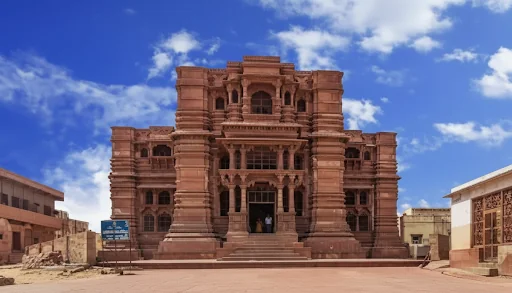
Sacred Places to Visit Near Govind Dev Ji Temple
City Palace Jaipur : Govind Dev Ji Temple stands within the historic City Palace complex. Chandra Mahal and the surrounding palace courtyards provide the royal setting in which the shrine developed.
Jantar Mantar : Jantar Mantar was built by Sawai Jai Singh II near the City Palace and reflects another side of the same ruler's legacy. The observatory is one of Jaipur's major historic landmarks.
Hawa Mahal : Hawa Mahal is one of Jaipur's best-known monuments and forms part of the historic walled-city landscape around the temple.
Moti Dungri Ganesh Temple : Moti Dungri Ganesh Temple is one of Jaipur's prominent Hindu shrines and is traditionally associated with the city's religious life.
Galtaji : Galtaji is an older pilgrimage centre in the hills outside the walled city, known for its temples, kunds and association with the sage Galav.
Gopinath Ji Temple : Gopinath Ji Temple is another important Krishna shrine in Jaipur and forms part of the city's historic Vaishnava temple network.
Plan Govind Dev Ji Temple Darshan
For current darshan timings, the seven jhanki schedule, entry preparation, date-specific crowd guidance and Naman Darshan's Guided Darshan Assistance, continue to the dedicated Govind Dev Ji Darshan page.
Common Questions About Visiting Govind Dev Ji Temple
Visitor Information
Darshan Timing
Address
Shri Govind Dev Ji Temple, Jai Niwas Garden, Jalebi Chowk, City Palace Complex, Jaipur, Rajasthan, India
Notable Events
1525 — Rediscovery tradition in Vrindavan – Rupa Goswami is associated with the rediscovery of the Govind Dev Ji image at Goma Tila in Vrindavan. • 1590 — Major Govind Dev temple established at Vrindavan – Raja Man Singh I of Amber is associated with the construction of the historic Govind Dev temple in Vrindavan. • Mughal period — Deity moved from Vrindavan – The image was taken away from Vrindavan during a period of pressure on the temples of Braj. Later accounts differ on the precise route and dates of the transfer. • 1727 — Jaipur founded – Sawai Jai Singh II established Jaipur as the new capital, creating the royal setting in which Govind Dev Ji would later be permanently installed. • 1735 — Present Jaipur temple – The present Govind Dev Ji Temple in Jai Niwas Garden is dated to 1735 and associated with Sawai Jai Singh II. • 2009 — Satsang Hall receives Guinness recognition – The temple complex's Satsang Hall was dedicated to the public in July 2009 and received Guinness World Records recognition for its 119-foot reinforced-concrete flat-roof span.
How to Reach the Temple
By air: Jaipur International Airport is the city's main airport. From the airport, continue by taxi or other local road transport toward the old city and City Palace area.
By rail: Jaipur Junction is the principal railway station serving the city. The temple is in the central Jaipur/City Palace area and can be reached from the station by taxi, auto-rickshaw or local transport.
By road: Govind Dev Ji Temple is located in the historic walled city, with road connections from the major parts of Jaipur. Traffic can be restricted or diverted around major festivals.
Within Jaipur: The temple is in Jai Niwas Garden at Jalebi Chowk, within the City Palace complex. The final approach may involve walking through the busy old-city precinct, especially when festival crowd management is in place.
Annavaram, Kakinada District, Andhra Pradesh