
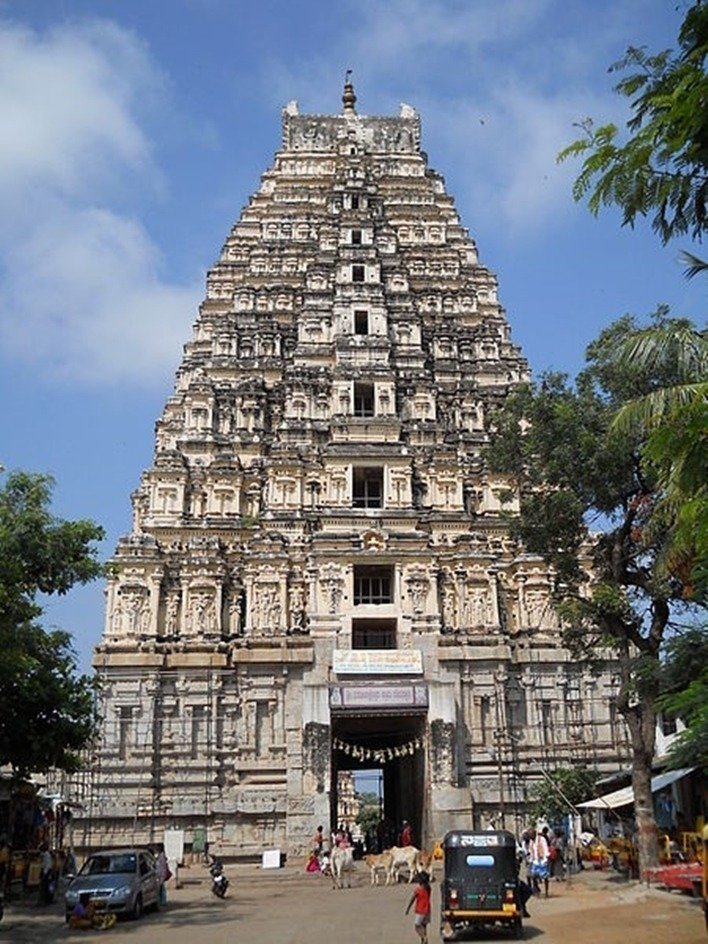
About Virupaksha Temple, Hampi, Karnataka
Virupaksha Temple is a historic Shiva temple in Hampi, dedicated to Lord Virupaksha and associated with Goddess Pampa. It stands on the southern bank of the Tungabhadra and remains a functioning place of worship within the Group of Monuments at Hampi, a UNESCO World Heritage Site.
The shrine is known for its long history, the Virupaksha–Pampa tradition, the nine-storey eastern gopuram, the Ranga Mantapa and the painted ceilings of its halls. Unlike many of Hampi's monuments, worship at Virupaksha has continued through the centuries.
Story of Virupaksha Temple
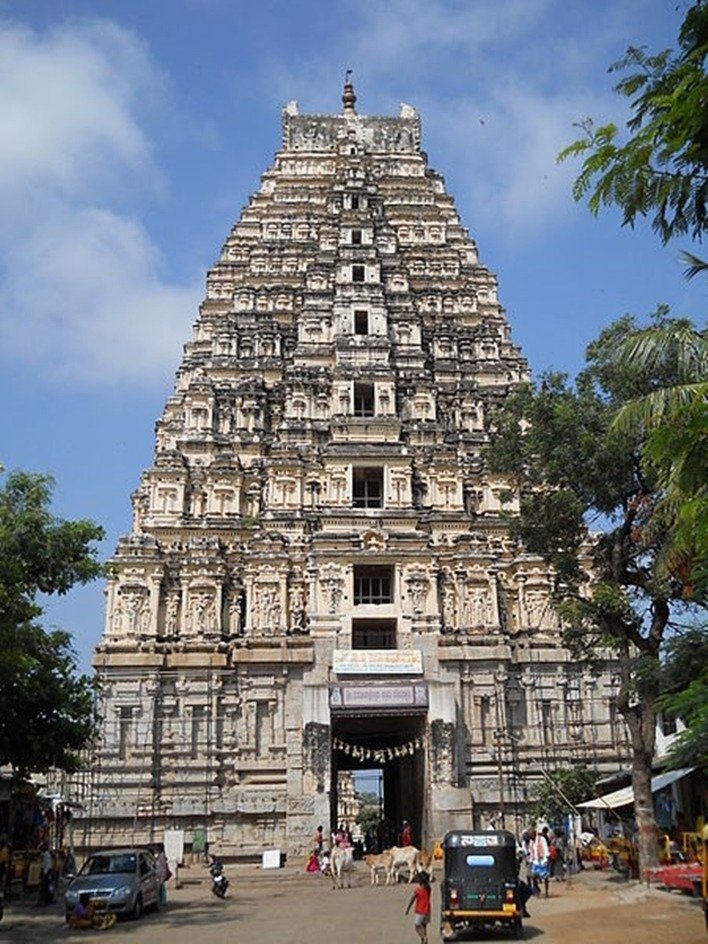
Virupaksha Temple at Hampi is dedicated to Lord Virupaksha, a form of Shiva, and is closely associated with Pampadevi. Worship at the site goes back centuries before Hampi became the capital of the Vijayanagara Empire; Karnataka Tourism places the shrine's origins in the 7th century, while archaeological and epigraphic evidence also points to an older Virupaksha-Pampa sacred centre. The temple therefore predates the grand city that later grew around it.
The temple was enlarged as Vijayanagara developed into a major imperial capital between the 14th and 16th centuries. Important additions were made under the Vijayanagara rulers, including the large eastern gateway and the pillared Ranga Mandapa associated with Krishnadevaraya. An inscription records Krishnadevaraya's contribution to the temple in 1510 CE. Even after the destruction of Vijayanagara in 1565, worship at Virupaksha continued, making it one of the clearest examples at Hampi of a living temple within the UNESCO-listed monumental landscape.
The present complex follows the Dravidian and Vijayanagara architectural traditions, with the sanctum, pillared halls, courtyards and subsidiary shrines arranged within a large enclosure. Its most recognisable feature is the eastern gopuram, a nine-storeyed tower rising to about 50 metres, which leads into the outer court; a smaller gateway opens towards the inner court and main shrine. The Ranga Mandapa is known for its carved pillars and painted ceilings depicting scenes from the epics and Puranas, while the temple's position beside the Tungabhadra and below Hemakuta Hill remains an important part of its sacred setting
What Makes Virupaksha Temple Sacred for Devotees
Virupaksha and Pampa
According to the local religious tradition of Hampi, Pampa performed severe penance on Hemakuta Hill to win Lord Shiva. Shiva accepted her devotion and married her in the form of Virupaksha. The story explains why Virupaksha and Pampa remain closely linked in the worship and festivals of the temple.
Pampa is also associated with the sacred identity of Hampi, often described in traditional accounts as Pampakshetra or the land of Pampa. The marriage of Virupaksha and Pampa became an important part of the temple's annual ritual calendar.
Hemakuta Hill and the Sacred Landscape
The temple does not stand apart from the sacred landscape around it. Hemakuta Hill to the south, the Tungabhadra to the north and the older shrines around the temple formed part of a wider pilgrimage centre before Hampi became the imperial capital.
This relationship between temple, river and hill is still visible today. The Virupaksha complex and the shrines on Hemakuta Hill together preserve the older religious geography of Hampi.
Virupaksha as a Living Shrine
Virupaksha continued to function as a place of worship even after the political centre of Vijayanagara declined. That continuity is significant because Hampi is otherwise known largely through its ruined royal and religious monuments.
The temple therefore represents both the history of Vijayanagara and the continuation of an older Shaiva tradition. Daily worship, festivals and pilgrimage remain part of the life of the shrine.
Virupaksha is worshipped as a form of Lord Shiva and as the consort of Pampa. The temple's importance comes not only from its architecture but from the continuity of worship at a shrine whose sacred history predates the Vijayanagara Empire.
The annual observances connected with Virupaksha and Pampa, together with regular Shaiva worship, keep the temple connected to the religious traditions of Hampi rather than leaving it only as a monument of the past.
Annual Festivals & Rituals at Virupaksha Temple, Hampi, Karnataka
Daily Worship Celebrations at the Temple
The temple follows traditional Shaiva worship with regular puja and offerings through the day. The present temple record describes daily worship and naivedya as part of the established religious practice of the shrine.
Phalapuja and the Marriage of Virupaksha and Pampa Celebrations at the Temple
The betrothal of Virupaksha and Pampa is observed through Phalapuja, followed by the annual marriage celebrations of the divine couple. These observances connect the temple's living ritual calendar with the Pampa–Virupaksha tradition of Hampi.
Virupaksha Car Festival Celebrations at the Temple
The annual chariot festival is one of the major public festivals of the temple. The processional tradition is connected with the marriage of Virupaksha and Pampa and uses the historic chariot street in front of the temple.
Maha Shivaratri Celebrations at the Temple
Maha Shivaratri is observed as an important Shiva festival at Virupaksha Temple. Worship continues through the night as devotees mark the festival with prayers and offerings.
Sacred Places to Visit Near Virupaksha Temple
Hampi Bazaar : The long street in front of Virupaksha Temple was the historic temple bazaar and chariot street. It forms part of the temple's original urban setting and remains one of the clearest ways to understand how pilgrimage and commerce were connected in Hampi.
Hemakuta Hill : Hemakuta Hill rises directly south of the temple and contains a group of early shrines. It is closely associated with the Pampa tradition and forms an important part of Hampi's older sacred landscape.
Achyutaraya Temple : Achyutaraya Temple stands beyond the old market area and represents another phase of Vijayanagara temple building. Its pillared halls and enclosed courts form part of the wider sacred centre of Hampi.
Krishna Temple : The Krishna Temple was built during the reign of Krishnadevaraya and is associated with the Vijayanagara period's expansion of Hampi's temple landscape. Its remains help place the Virupaksha complex within the larger religious and political setting of the capital.
Vijaya Vittala Temple : The Vijaya Vittala Temple is one of Hampi's best-known Vijayanagara monuments, recognised for its monumental halls and stone chariot. It provides a useful contrast with Virupaksha, where continuous worship still takes place.
Tungabhadra River : The Tungabhadra forms the northern edge of Hampi's sacred centre. Its relationship with the temple, Hemakuta Hill and the surrounding shrines is an important part of the traditional geography of the site.
Plan Virupaksha Temple Darshan
For current darshan planning, queue information and Naman Darshan's Guided Darshan Assistance, continue to the dedicated Virupaksha Temple Darshan page.
Common Questions About Visiting Virupaksha Temple
Visitor Information
Darshan Timing
Address
Sri Virupaksheshwara Swamy Temple, Main Road, Theru Beedi, Hampi, Vijayanagara, Karnataka 583239, India
Notable Events
c. 689–690 CE — Early evidence of the Pampa sacred landscape – An early inscription refers to the Pampa tirtha, showing that the Hampi area was already recognised as a sacred landscape centuries before the Vijayanagara Empire. • 14th century — Hampi becomes the capital of Vijayanagara – The older Virupaksha-Pampa shrine became part of the expanding sacred and political centre of the Vijayanagara capital. • 15th century — Major expansion of the temple complex – The temple developed into the large complex associated with the growing importance of Hampi and its royal patronage. • 1510 CE — Krishnadevaraya's additions – The inner eastern gopura and the ornate Ranga Mantapa are associated with Krishnadevaraya's building activity at the temple. • 1565 — Fall of Vijayanagara – Hampi was attacked and extensively damaged after the Battle of Talikota. The surrounding city declined, but worship at Virupaksha continued. • 1986 — UNESCO World Heritage designation – Virupaksha Temple became part of the Group of Monuments at Hampi when Hampi was inscribed on the UNESCO World Heritage List.
How to Reach the Temple
By air: Jindal Vijayanagar Airport is the nearest airport listed by the Vijayanagara district administration, at about 38 km from Hampi. Hubballi Airport is about 150 km away.
By rail: Hosapete is the nearest railway station, approximately 12 km from Hampi. Local buses, taxis and other road transport connect Hosapete with Hampi.
By road: Hampi is connected by road with Hosapete, Ballari and other parts of Karnataka. Local buses and taxis serve the Hampi area.
Within Hampi: Virupaksha Temple stands at the western end of the historic Hampi Bazaar. The final approach is closely connected with the pedestrian temple and bazaar area, and vehicle movement may change during festivals or heritage-management measures.
SEO Title: Birla Mandir Hyderabad: History, Venkateswara & Guide
Meta Description: Explore Birla Mandir Hyderabad, its Lord Venkateswara shrine, white marble architecture, religious traditions, festivals, timings, visitor information and nearby places.
Hyderabad, Telangana