
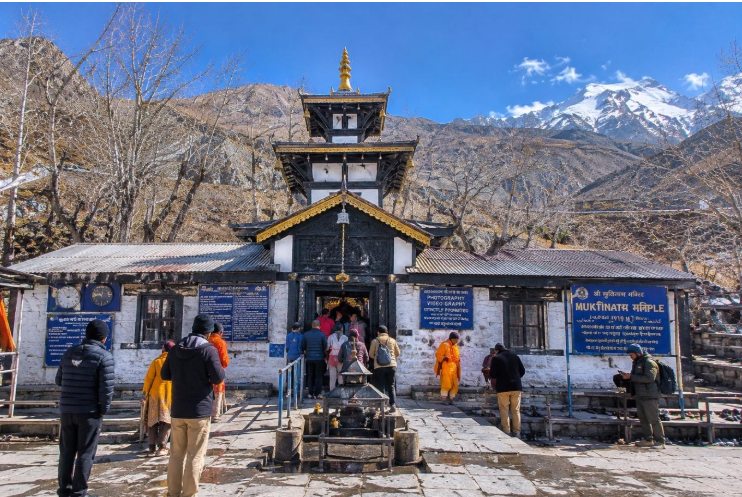
Muktinath Temple
    Mustang District, Nepal (Near Jomsom)

    Muktinath Temple

    Gateway to Liberation

    Experience the divine presence of Muktinath Temple, one of the most spiritually liberating

    pilgrimage destinations in the Himalayas. Revered by both Hindus and Buddhists, Muktinath is

    known as the place of moksha (liberation) — where the soul is believed to be freed from the

    cycle of birth and rebirth.

    A darshan at Muktinath is not just spiritual — it is transformative. Surrounded by snow-capped

    peaks and the powerful winds of Mustang, the journey itself feels like purification.

    With Naman Darshan’s Muktinath-specific assistance, devotees can focus on devotion while

    navigating altitude, weather, and travel logistics smoothly.

    Plan Your Muktinath Darshan Journey

    The Divine Meaning of Muktinath – Temple of Liberation

    Muktinath is dedicated to Lord Vishnu, worshipped here as Sri Mukti Narayana.

    One of the 108 Divya Desams in Vaishnav tradition.

    Sacred to both Hindus and Tibetan Buddhists.

    Home to the legendary 108 Mukti Dhara water spouts.

    Features the eternal natural flame at Jwala Mai Temple.

    Believed to dissolve past karmas and grant spiritual freedom.

    "The word “Mukti” means liberation — and devotees believe that bathing under the 108 waters and offering prayers here cleanses lifetimes of karmic burdens."

    Darshan & Visiting Information – Muktinath Temple

    Muktinath is generally accessible March to November, depending on weather conditions.

    1

    Morning:

    6:00 AM – 12:00 PM

    2

    Afternoon:

    1:00 PM – 5:00 PM

    Unique Spiritual Experiences at Muktinath

    • 108 Sacred Water Spouts (Mukti Dhara)
    • Devotees bathe under 108 icy water streams believed to purify the soul.
    • Jwala Mai Temple
    • A miraculous eternal flame that burns naturally from underground gas — symbolizing the unity of
    • earth, fire, and divine energy.
    • Shaligram Stones
    • The nearby Kali Gandaki River is famous for sacred Shaligram stones, representing Lord Vishnu.
    • Hindu–Buddhist Harmony
    • Muktinath reflects spiritual unity, where monks and priests coexist peacefully.
    • Assisted Muktinath Darshan with Naman
    • Pilgrimage to Muktinath involves mountain travel and altitude awareness. Naman Darshan
    • provides structured assistance for a peaceful experience.
    • High-Altitude Planning
    • Guidance on acclimatization and safe darshan timing.
    • Travel Coordination Support
    • Advice on route options via Pokhara–Jomsom–Muktinath.
    • Senior & Family Guidance
    • Support for elderly devotees managing high altitude.
    • Darshan Flow Assistance
    • Helping you complete rituals calmly without rush.

    Muktinath Temple stands as a bridge between devotion and modern life.

    Visiting Muktinath Temple – What to Know

    • Important Guidelines for Pilgrims: Dress warmly; weather changes quickly. Avoid heavy exertion upon arrival. Respect both Hindu and Buddhist practices. Carry minimal electronics and essentials only.

    A visit to Muktinath Temple is more than darshan — it is surrender to nature, silence, and the eternal presence of Lord Vishnu. Let your journey be calm, safe, and spiritually awakening.

    Common Questions