
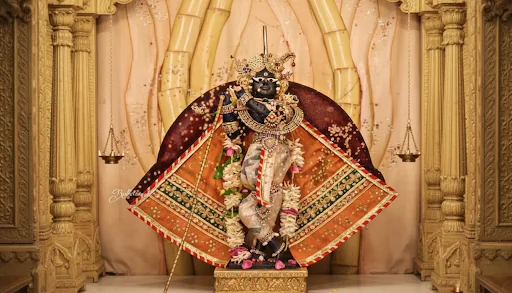
About Radha Raman Temple, Vrindavan, Uttar Pradesh
Radha Raman Temple is one of the historic temples of Vrindavan and an important centre of the Gaudiya Vaishnava tradition. The temple is dedicated to Lord Krishna worshipped as Radha Raman, a name that refers to Krishna as the beloved of Radha.
The shrine is especially known for its original Shaligram deity, the appearance tradition associated with Gopala Bhatta Goswami, and the continuing seva of the Goswami lineage. The temple is also counted among Vrindavan's historic group of seven principal temples associated with the Goswamis.
Story of Radha Raman Temple
The history of Radha Raman Temple begins in the 16th century with Gopala Bhatta Goswami, one of the Six Goswamis associated with Sri Chaitanya Mahaprabhu and the early development of Gaudiya Vaishnavism in Vrindavan. According to temple tradition, Gopala Bhatta Goswami received twelve Shaligram Shilas from the Gandaki River in Nepal and brought them to Vrindavan for worship.
The appearance of Radha Raman is traditionally dated to 1542. The sacred account says that one of Gopala Bhatta Goswami's Shaligram Shilas revealed itself as the form of Krishna now worshipped as Radha Raman. The original Shaligram worship therefore remains central to the identity of the temple. The temple tradition also holds that Radha Raman remained in Vrindavan when several other historic deities of the town were moved elsewhere during periods of political unrest.
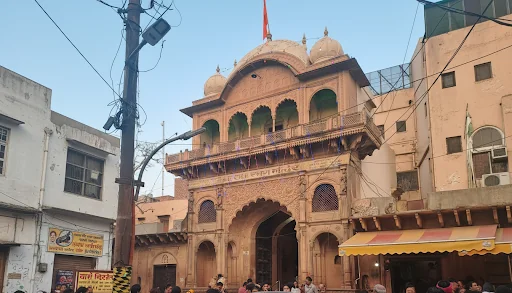
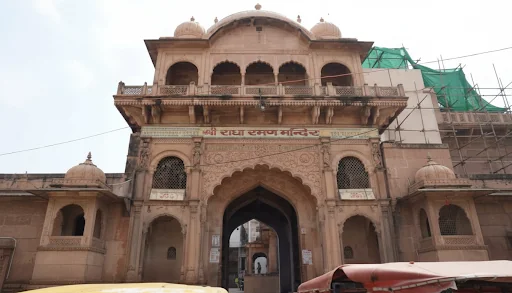
The present temple building belongs to a later period. Sources commonly associate the current structure with 1826, when Shah Behari Lalji of Lucknow sponsored its construction or rebuilding. Its entrance and stonework reflect the architectural influences found in historic Vrindavan, while the compact scale of the temple keeps the sanctum and deity at the centre of the complex.
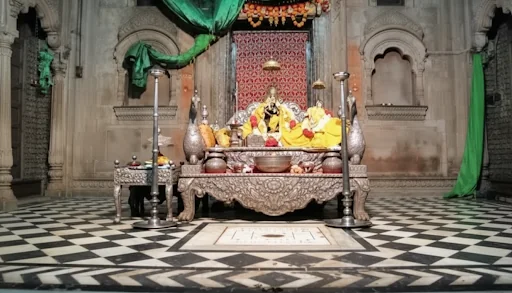
Inside the temple, the small black stone form of Radha Raman is the principal object of worship. There is no separate main murti of Radha; according to the temple's devotional tradition, her presence is understood in union with Radha Raman. The complex also contains the samadhi of Gopala Bhatta Goswami, linking the place of worship directly with the saint who established its seva tradition.
What Makes Radha Raman Temple Sacred for Devotees
The Appearance of Radha Raman
The central tradition of the temple tells of Gopala Bhatta Goswami's worship of the Shaligram Shilas he had received from the Gandaki River.
A wealthy devotee later offered clothes and ornaments for the Shilas, but their rounded forms made it difficult to dress them in the usual way. Gopala Bhatta Goswami is said to have wished that he could serve the Lord in a form with visible hands, feet and other limbs so that he could personally adorn Him.
On the following morning, according to the tradition, he found that one Shaligram Shila had appeared as the three-fold bending form of Krishna. This form came to be known as Radha Raman.
The account is a sacred Vaishnava tradition and explains why the temple regards the deity as self-manifest rather than as an image created by a human sculptor.
Why there is no separate Radha idol
Radha Raman is worshipped as Krishna in intimate association with Radha. The temple does not place a separate principal murti of Radha beside Him. Instead, Radha's presence is represented within the devotional arrangement of the shrine.
This is one of the features that gives Radha Raman its distinctive identity among the historic temples of Vrindavan.
Gopala Bhatta Goswami and the Seva Tradition
Gopala Bhatta Goswami was one of the Six Goswamis who helped establish the religious and devotional foundations of Gaudiya Vaishnavism in Vrindavan. Radha Raman Temple continues to be associated with his lineage, with seva traditionally carried forward through the Goswami families.
The temple's worship therefore represents more than a historic connection with a saint. The lineage remains part of the living daily organisation of seva, worship and festivals.
The Kitchen and Sacred Fire
The temple kitchen has long been associated with an unbroken fire used in preparing offerings for Radha Raman. Temple tradition connects this fire with the earliest days of the deity's worship.
Food prepared for the deity forms part of the daily seva, and the kitchen remains an important working space within the temple's religious life.
Radha Raman among the historic temples of Vrindavan
Radha Raman is counted among the historic group of seven principal temples associated with the Goswami tradition of Vrindavan. Together, these temples represent the period in which the sacred geography of Braj was being re-established and organised around places connected with Krishna's worship and pastimes.
Radha Raman's particular place within this group comes from the continuity of its original deity and the long-running Goswami seva tradition.
Annual Festivals & Rituals at Radha Raman Temple, Vrindavan, Uttar Pradesh
Daily Seva and Aarti Celebrations at the Temple
Worship at Radha Raman follows a structured daily seva in which the deity is awakened, dressed, offered food, worshipped and finally put to rest. Darshan therefore takes place around the temple's ritual cycle and is not simply a continuous opening of the sanctum. The exact timings can change with the season and with special observances.
Radha Raman Appearance Day Celebrations at the Temple
Vaishakha Purnima marks the appearance day of Radha Raman. The festival commemorates the manifestation of the deity from the Shaligram Shila and includes a special abhishek with milk and other sacred offerings. It is the temple's own principal festival and has a distinctive place in its annual calendar.
Janmashtami Celebrations at the Temple
Janmashtami marks the appearance of Lord Krishna and is observed with special worship, devotional singing and a midnight celebration. The temple follows the wider Braj and Gaudiya Vaishnava traditions associated with Krishna's birth.
Radhashtami Celebrations at the Temple
Radhashtami celebrates the appearance of Srimati Radharani. The observance is especially meaningful at Radha Raman because the temple's name and worship are inseparably connected with Radha.
Jhulan Yatra Celebrations at the Temple
During the monsoon Jhulan Yatra, Radha Raman is placed on a decorated swing as part of the seasonal Braj tradition. The temple courtyard and worship spaces take on special festive decoration during the celebration.
Holi Celebrations at the Temple
Holi is celebrated at Radha Raman as part of the wider Holi tradition of Braj. Devotional songs, colours and special seva connect the festival with the Radha-Krishna pastimes remembered throughout Vrindavan.
Chandan Yatra and Sharad Purnima Celebrations at the Temple
Chandan Yatra is observed during the warmer part of the year with sandalwood used as part of the deity's seasonal seva. Sharad Purnima is another important Vaishnava observance in the temple's annual calendar.
Sacred Places to Visit Near Radha Raman Temple
Keshi Ghat : Keshi Ghat is one of Vrindavan's historic ghats on the Yamuna and is closely connected with the Krishna traditions of the town.
Nidhivan : Nidhivan is one of the best-known sacred groves of Vrindavan and is traditionally associated with the private pastimes of Radha and Krishna.
Radha Damodar Temple : Radha Damodar Temple is another historic Goswami temple of Vrindavan. It is closely associated with Jiva Goswami and the devotional scholarship of the Gaudiya tradition.
Radha Gokulananda Temple : Radha Gokulananda is another old Vrindavan shrine associated with the Goswami tradition. The temple stands between the Keshi Ghat area and Radha Raman and forms part of the historic temple landscape of the town.
Govind Dev Ji Temple : Govind Dev Ji is one of Vrindavan's great historic temples and is associated with Rupa Goswami and the early Gaudiya Vaishnava period.
Banke Bihari Temple : Banke Bihari Temple is a major Krishna shrine of Vrindavan belonging to the devotional tradition associated with Swami Haridas. It provides a useful contrast with the older Goswami temples when exploring Vrindavan's different Krishna traditions.
Plan Radha Raman Temple Darshan
For current darshan planning, date-specific timings, queue guidance and Naman Darshan's Guided Darshan Assistance, continue to the dedicated Radha Raman Temple Darshan page.
Common Questions About Visiting Radha Raman Temple
Visitor Information
Entry Fee
General darshan is free – Separate seva arrangements are not the same as temple entry.
Darshan Timing
Address
Shri Radha Raman Temple, Radha Raman Road, Vrindavan,, Mathura District, Uttar Pradesh – 281121, India
Notable Events
1542 — Appearance of Radha Raman – Temple tradition places the appearance of Radha Raman from a Shaligram Shila in this period, establishing the central worship tradition of the shrine. • 16th century — Gopala Bhatta Goswami establishes the seva tradition – The temple becomes part of the early Gaudiya Vaishnava religious landscape created by the Goswamis of Vrindavan. • 17th century — Continuity of the original deity – During the period when several historic Vrindavan deities were moved for protection, the Radha Raman tradition holds that the original deity remained in Vrindavan. • 1826 — Later temple structure – The present temple building is commonly associated with the construction or rebuilding sponsored by Shah Behari Lalji. • Modern period — Continuing Goswami seva – The descendants of Gopala Bhatta Goswami continue to be associated with the deity's hereditary seva and the temple's daily worship tradition.
How to Reach the Temple
By rail: Vrindavan Railway Station is the nearest local station, while Mathura Junction is the principal railway station serving the area. From either station, continue toward the old Vrindavan temple quarter by local transport.
By air: Agra Airport is the nearest major airport by road. Indira Gandhi International Airport in Delhi provides another option for travellers arriving from farther destinations.
By road: Vrindavan is connected by road with Mathura, Agra and Delhi. Taxis, buses and local auto-rickshaws operate toward the town.
Within Vrindavan: Radha Raman Temple lies in the older part of Vrindavan, where lanes around the historic temples are narrow. Vehicles may not reach the temple entrance directly, particularly during busy periods, so the final approach may need to be completed on foot.
Jaipur, Rajasthan