
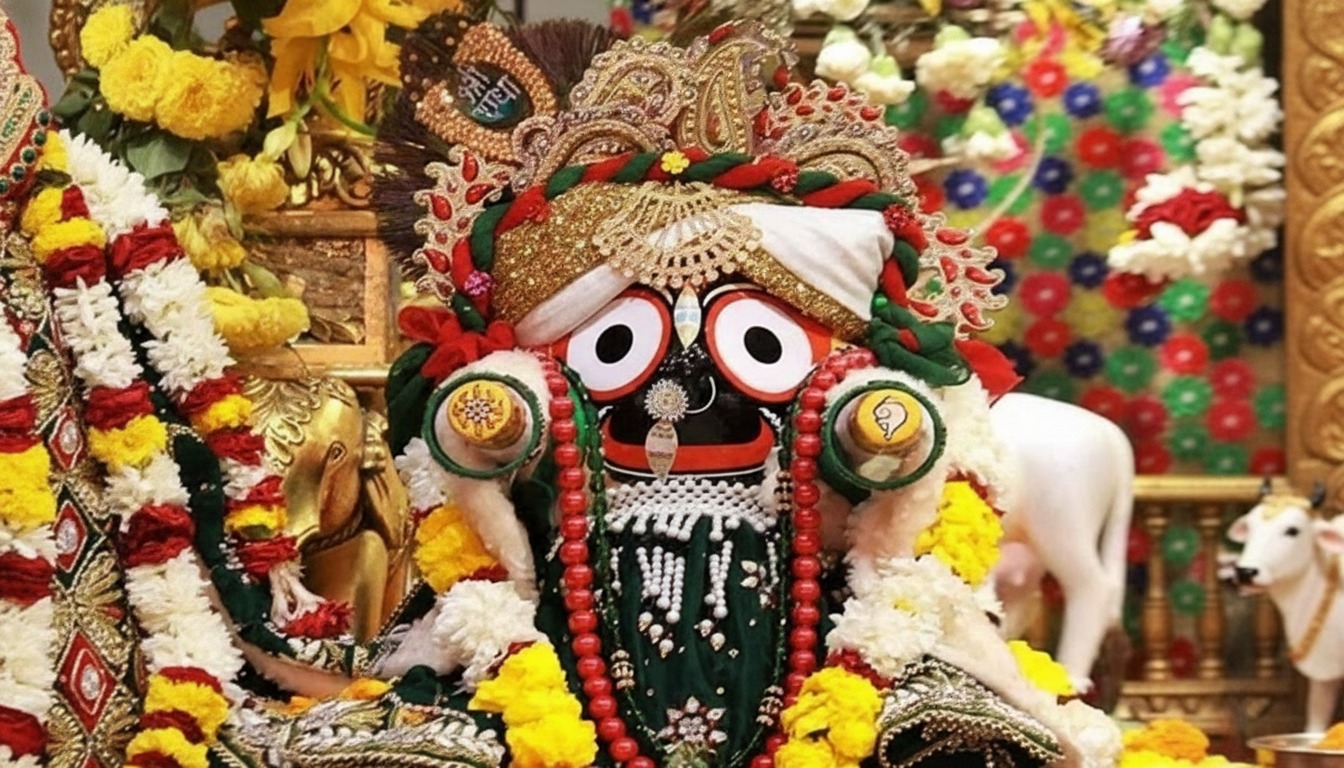
About Jagannath Temple Puri, Puri, Odisha
The present temple is traditionally associated with King Anantavarman Chodaganga Deva and dates to the 12th century. Built in the distinctive Kalinga style of temple architecture, its towering spire, monumental gates and intricate architectural details make it one of Odisha's most important heritage landmarks.
For devotees, however, Jagannath Temple is much more than an architectural marvel. Its rituals, Mahaprasad tradition, annual Rath Yatra and unique wooden deities have made Puri a major pilgrimage destination for generations.
Story of Jagannath Temple Puri
King Indradyumna of Avanti dreamed of a form of Vishnu worshipped by the sea. A log of sacred neem wood eventually washed up on Puri's shore — said to be from the very wood Krishna's body was cremated with at Dwarka.
The king asked the celestial architect Vishwakarma to carve the deities, on one condition: he wasn't to be disturbed until he finished. The queen grew impatient and opened the door too soon. Vishwakarma vanished — leaving the idols with stumps for hands and no feet, exactly as they're still worshipped today.
From royal patronage to modern administration:
The temple's own chronicle, the Madala Panji, records centuries of royal endowments and an unbroken daily worship tradition going back to the Ganga and Gajapati dynasties. It also survived repeated invasions — the reason behind its strict entry rule today. The temple is currently run by the Shree Jagannath Temple Administration, under the Odisha government.
Nabakalebara — the "new body" ritual
Every 12–19 years, the wooden deities are ceremonially replaced. A sacred neem tree is identified in complete secrecy, new idols are carved, and the divine essence is transferred from old to new by blindfolded priests at night, in a ritual called Brahma Parivartan. It's one of the most closely guarded rites in Indian temple tradition.
What Makes Jagannath Temple Puri Sacred for Devotees
What devotees connect with most:
Mahaprasad — food cooked in the temple's own kitchen and shared at Ananda Bazar without any caste distinction, one of Indian temple worship's most enduring egalitarian traditions
Rath Yatra — the one day Jagannath comes out to the streets, seen by everyone, Hindu or not
Nabakalebara — the idea that the divine isn't tied to one physical form; the wood changes, what it holds doesn't
A living, present deity — reflected in the daily ritual cycle and in enduring beliefs like the flag flying against the wind or the Sudarshan Chakra appearing to face every viewer.
Annual Festivals & Rituals at Jagannath Temple Puri, Puri, Odisha
Rath Yatra Celebrations at the Temple
Jagannath, Balabhadra, and Subhadra travel by chariot to Gundicha Temple along the Grand Road — visible to all, Hindu or not
Snana Yatra Celebrations at the Temple
Deities are ceremonially bathed on the full moon of Jyeshtha
Anasara Celebrations at the Temple
~2-week closure (usually early-mid July) right after Snana Yatra, while the deities "recover" — check exact dates before you travel
Bahuda Yatra Celebrations at the Temple
The chariots' return journey from Gundicha back to the main temple
Nabakalebara Celebrations at the Temple
Replacement of the wooden deities, every 12–19 years
Daily worship cycle
Mangala Arati — pre-dawn waking ritual
Mailam & Abakasha — bathing and dressing
Gopala Ballava Bhoga — light morning offering
Sakala Dhupa (Raj Bhoga) — main morning meal
Madhyahna Dhupa — midday meal
Sandhya Arati & Sandhya Dhupa — evening worship
Badasinghara Besha — night adornment
Ratri Pahuda (~11 PM) — deities put to rest
Darshan is available at intervals between these rituals; the sanctum closes briefly during each offering.
For Darshan Timings, Rituals & Important Details → Click Here
Sacred Places to Visit Near Jagannath Temple Puri
Gundicha Temple (~3–4 km) — Jagannath's "garden house," destination of the Rath Yatra.
Puri Beach / Swargadwar (~2 km) — the sacred shoreline, also lively in the evenings.
Narendra Tank & Lokanath Temple — tied to the temple's Chandan Yatra rituals.
Alarnath Temple, Brahmagiri — where devotees seek darshan during Anasara, when the main temple is shut.
Konark Sun Temple (~35 km, ~1 hr) — UNESCO World Heritage Site.
Chilika Lake / Satapada (~50–60 km) — Asia's largest brackish-water lagoon, known for dolphin sightings.
Raghurajpur Heritage Village (~12–14 km) — the village behind Odisha's Pattachitra art.
A full day at the temple and Swargadwar, plus a half-day each for Konark and Chilika, makes for a well-rounded trip.
Need Guidance Planning Your Jagannath Temple Darshan? We’re Here to Help 💬
Common Questions About Visiting Jagannath Temple Puri
Visitor Information
Entry Fee
No Fee
Darshan Timing
Address
The temple is situated in Puri, Odisha, about 60 km from Bhubaneswar.
Notable Events
Rath Yatra:The annual Rath Yatra, or Chariot Festival, is one of the most famous events associated with the Jagannath Temple. Nabakalebara:The last Nabakalebara took place in 2015, a sacred ceremony associated with changing the wooden images of the deities in the temple.
How to Reach the Temple
By Air: The nearest airport is Bhubaneswar Airport (about 60 km from Puri), with regular flights from major Indian cities.
By Rail: Puri Railway Station is well-connected with trains from Kolkata, Delhi, Mumbai, Chennai, and other major destinations.
By Road: Puri is connected via national highways to Bhubaneswar, Cuttack, and other nearby cities, with frequent buses and taxis.
Local Transport: Auto-rickshaws, taxis, and cycle-rickshaws make traveling within Puri and reaching the temple convenient for pilgrims and tourists."