
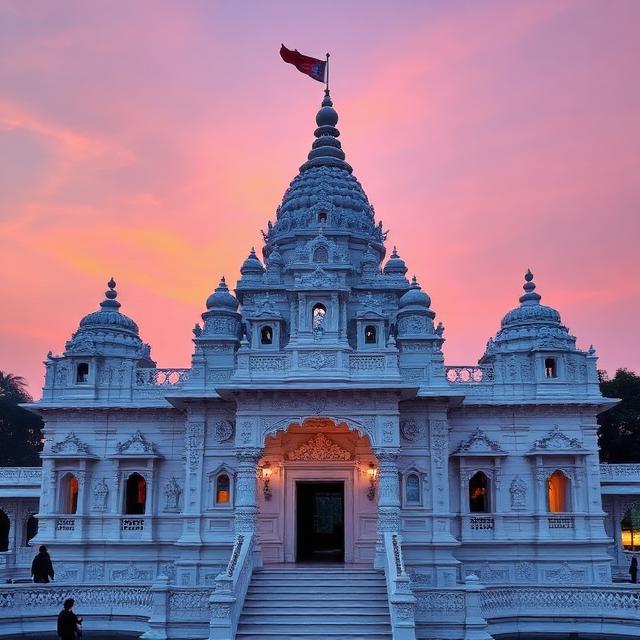
About Amaralingeswara Swamy Temple, Amaravati, Andhra Pradesh
Amaralingeswara Swamy Temple, also known as Amareswara Temple or Amararama, is dedicated to Lord Shiva. It stands on the southern bank of the Krishna River at Amaravathi in Andhra Pradesh and is one of the five Pancharama Kshetras, a group of important Shiva shrines in the region.
The temple is known for its tall white Shivalinga, the worship of Amareswara Swamy with Goddess Bala Chamundika, and the traditions connecting the shrine with the story of Tarakasura. Its history also reflects the development of the wider Amaravati region, where Hindu and Buddhist heritage can be found within the same historic landscape.
Story of Amaralingeswara Swamy Temple
Amaravathi is an old religious centre on the banks of the Krishna River. The history of the present Amareswara temple is generally placed in the medieval period, based on inscriptional and architectural evidence. Although the wider region has a much older history, that antiquity alone does not establish the construction date of the current temple. Inscriptions associated with the shrine record religious activity and patronage by the medieval period.
The temple received support from different ruling families over the centuries. Temple histories associate it with the Kota chiefs and later Vijayanagara patronage, including work attributed to King Krishnadevaraya. A further phase of renovation and expansion is associated with Vasireddy Venkatadri Naidu in the late 18th century. These successive contributions helped shape the temple complex seen today.
The presiding deity is Lord Amareswara, also called Amaralingeswara, worshipped as a tall white Shivalinga measuring about 15 feet. Andhra Pradesh Tourism describes the Lingam as being made from Palnadu stone. Its height means that priests perform Abhisheka from an elevated platform within the sanctum. Goddess Bala Chamundika is worshipped as the consort of Amareswara Swamy and has an important place in the temple’s religious tradition.
The temple follows the Dravidian architectural tradition, with four gopurams surrounding the complex and a central vimana above the main shrine. The sanctum stands on a raised level and is approached by steps. Within the surrounding enclosures are subsidiary shrines associated with forms of Shiva and other Hindu deities, including Veerabhadra, Vinayaka and Kala Bhairava. The complex brings the main Shivalinga, the goddess shrine and the other forms of worship together within one sacred precinct.
What Makes Amaralingeswara Swamy Temple Sacred for Devotees
The Pancharama Kshetra Tradition
Amaralingeswara Swamy Temple is also known as Amararama, one of the five Pancharama Kshetras. According to the traditional account, the demon Tarakasura possessed a powerful Shivalinga that protected him in battle. When Kartikeya defeated him, the Lingam broke into five pieces. These fragments were enshrined at five locations, which became the Pancharama shrines.
At Amararama, the fragment is traditionally said to have been installed by Lord Indra. The other four shrines are Draksharama at Draksharamam, Kumararama at Samalkota, Somarama at Bhimavaram and Ksheerarama at Palakollu. Together, the five temples form an important Shaiva pilgrimage tradition in Andhra Pradesh.
The Legend of the Growing Shivalinga
A local legend explains the red mark traditionally associated with the upper part of the Shivalinga. According to the story, the Lingam continued to grow, making it difficult to perform its worship. A nail was driven into its top to stop the growth, and the mark that followed is said to have appeared as blood.
This story belongs to the temple’s sacred tradition; it is not a documented explanation of the physical formation of the Lingam. The height of the deity and the elevated platform used for Abhisheka are observable features of worship at the temple.
Amareswara and the Sacred Krishna River
The temple’s location beside the Krishna River is an important part of its identity. Amaravathi has long been a centre of pilgrimage, and the river forms part of the setting in which the shrine developed. The nearby Amaravati Mahachaitya and archaeological remains also reflect the area’s long history as a place of religious activity.
Annual Festivals & Rituals at Amaralingeswara Swamy Temple, Amaravati, Andhra Pradesh
Daily Worship and Abhisheka
Daily worship is centred on Lord Amareswara. Abhisheka is an important form of service to the Shivalinga, performed by priests from the elevated platform within the sanctum. Darshan and ritual access may vary according to the temple’s schedule.
Maha Shivaratri
Maha Shivaratri is the principal annual festival at Amaralingeswara Swamy Temple. Devotees gather for special worship and Abhisheka, and the temple receives larger crowds than on an ordinary day.
Karthika Masam and Kartika Purnima
The month of Kartika is important in Shiva worship. Devotees visit the temple for prayers and lamp offerings during this period, with arrangements depending on the temple calendar.
Navaratri
Navaratri is observed in honour of the Goddess. At Amaravathi, the festival also has a connection with the worship of Bala Chamundika Devi.
Kalyanotsavam
Kalyanotsavam is the ceremonial wedding of the presiding deity and Goddess Bala Chamundika. It is part of the temple’s festival tradition and is observed according to the temple’s ritual calendar.
Sacred Places to Visit Near Amaralingeswara Swamy Temple
Amaravati Mahachaitya
The Amaravati Mahachaitya is an important Buddhist archaeological site known for its sculptural remains and historic association with Buddhist learning and pilgrimage. It provides a different but closely connected view of Amaravathi’s religious past.
Amaravati Archaeological Museum
The museum houses antiquities and sculptural material associated with the archaeological sites of the region. It is useful for understanding the history of ancient Amaravathi and the art associated with its Buddhist heritage.
Dhyana Buddha Statue
The Dhyana Buddha Statue is a prominent landmark in the Amaravati area. It is a modern Buddhist monument and can be visited alongside the Mahachaitya and museum.
Krishna River
The Krishna River runs beside the temple and shapes the location of the shrine. Visitors who go to the riverbank should follow local safety instructions and any restrictions in force.
Plan Your Visit to Amaralingeswara Swamy Temple
NamanDarshan is a technology platform that arranges darshan and related services on your behalf through independent service providers.
Common Questions About Visiting Amaralingeswara Swamy Temple
The main deity is Lord Amareswara, also known as Amaralingeswara, worshipped in the form of a tall white Shivalinga. Goddess Bala Chamundika is revered as his consort.
Amararama is the name associated with this shrine in the Pancharama tradition. According to the sacred legend, a fragment of the Lingam associated with Tarakasura was enshrined here by Lord Indra.
The five shrines are Amararama at Amaravathi, Draksharama at Draksharamam, Kumararama at Samalkota, Somarama at Bhimavaram and Ksheerarama at Palakollu. They are connected through the traditional story of the five fragments of a Shivalinga.
Public tourism sources describe the Shivalinga as approximately 15 feet tall. Its height is why priests perform Abhisheka from an elevated platform in the sanctum.
NamanDarshan is a technology platform that arranges darshan and related services on your behalf through independent service providers. We are not the temple or its management, and the temple's rules always apply.
Visitor Information
Darshan Timing
Address
Sri Amareswara Swamy Vari Devasthanam Amaravathi, Palnadu District Andhra Pradesh 522020, India
Notable Events
Medieval period — Development of the present shrine
The temple is generally placed in the medieval period on the basis of inscriptional and architectural evidence. The precise foundation date of the current structure is not firmly established.
1129 CE — An early inscriptional date reported
Some published temple histories cite 1129 CE as the date of an early inscription associated with the shrine. Such dates document the temple’s recorded history; they do not necessarily establish the exact year construction began.
1155 CE — Temple-related inscription
Published archaeological material records an inscription dated to 1155 CE concerning a gift associated with the Amareswara temple.
Vijayanagara period — Royal patronage
Temple histories associate the shrine with later royal patronage, including contributions attributed to Vijayanagara ruler Krishnadevaraya.
Late 18th century — Renovation and expansion
Vasireddy Venkatadri Naidu is associated with a major phase of renovation and expansion, commonly dated to around 1796.
How to Reach the Temple
By air: Vijayawada International Airport at Gannavaram is the main airport serving the region. Continue to Amaravathi by road.
By rail: Vijayawada Junction and Guntur Junction are the main railway hubs for the temple area. Road transport is required for the onward journey.
By road: Amaravathi is connected by road with Guntur, Vijayawada and nearby towns. Buses and taxis operate in the region; routes and journey times depend on the starting point.
Within Amaravathi: The temple is near the Krishna River and the town’s other historic sites. If visiting the Buddhist Mahachaitya or archaeological museum as well, check their opening hours and plan local transport accordingly.