
.png)
About Rangji Temple, Vrindavan, Uttar Pradesh
Rangji Temple, also known as Sri Rangji Mandir, is dedicated to Sri Goda-Rangamannar in Vrindavan. The temple was established in the 19th century in the Sri Vaishnava tradition associated with Sri Rangadeshik Swamiji and is known for bringing the worship of Lord Ranganatha and Goda (Andal) into the Braj pilgrimage landscape.
The temple is distinct for its South Indian architectural form, its large Pushkarni, gold-plated Dhwaja Stambha and annual Brahmotsavam, also known as the Rath ka Mela. Its worship combines Sri Vaishnava ritual traditions with the religious setting of Vrindavan.
Story of Rangji Temple
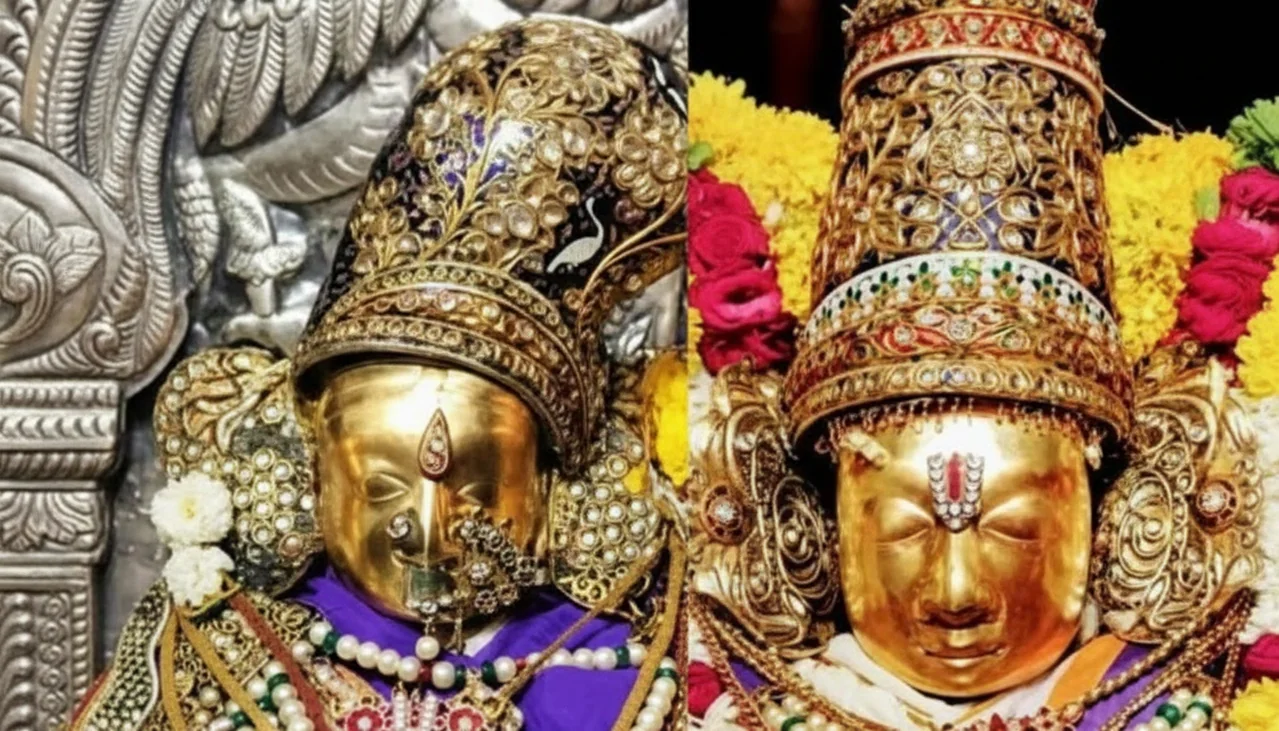
The present Rangji Temple was built between 1845 and 1851 under the guidance of Sri Rangadeshik Swamiji, with the support of the Mathura brothers Seth Radhakrishnaji and Seth Govind Das. Skilled craftsmen were brought from Srirangam, and the temple was modelled on the Sri Ranganatha Swami temple there. The temple was completed in 1851.
The temple was built to establish Sri Goda-Rangamannar at Vrindavan. In the temple's own tradition, this also fulfilled the wish of Goda or Andal to live in Vrindavan, the land associated with Krishna. The temple thus brought a distinctly South Indian Sri Vaishnava form of worship into one of North India's best-known Krishna pilgrimage towns.
Its plan follows the South Indian temple tradition, with five concentric rectangular enclosures around the central shrine. At the eastern and western sides are carved stone gateways in Jaipur style. The western entrance leads toward a seven-storey gopuram, while the eastern side has a five-storey gopuram. A large Pushkarni and garden occupy the outer enclosure.
Inside the complex are the 50-foot gold-plated Dhwaja Stambha, Vaikuntha Dwar, Vahan Ghar and several subsidiary sannidhis. These include Sri Sudarshanji, Sri Narasimhaji, Lord Venkateshwara, Sri Venugopalji and shrines associated with the Alvars and Sri Ramanujacharya. The main shrine houses Sri Goda-Rangamannar, with Goda Devi and Garuda, while the temple also has an utsava-vigraha used during processions and festivals.
What Makes Rangji Temple Sacred for Devotees
The tradition of Goda and Ranganatha
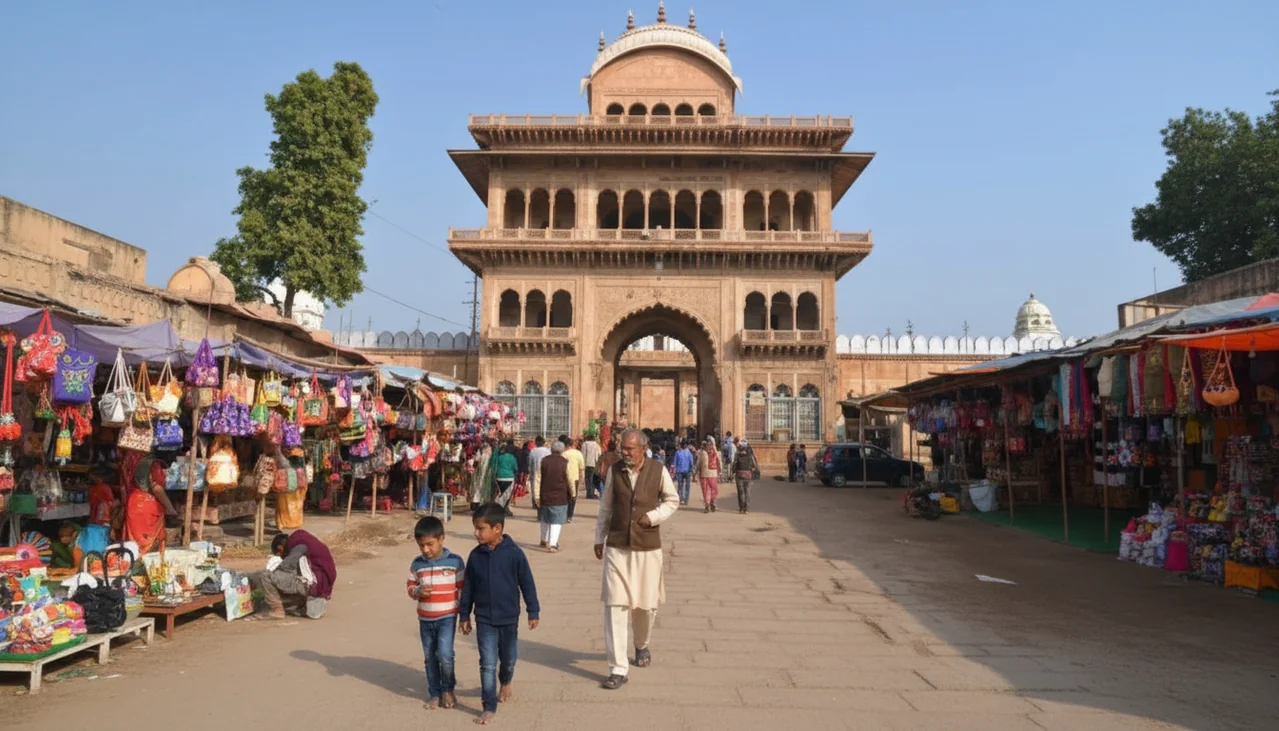
The central tradition of Rangji Temple comes from Goda, also known as Andal, the Tamil Vaishnava saint-poet. According to the temple's tradition, Goda was deeply devoted to Krishna and wished to unite with the Lord as his bride.
The tradition connects this devotion with Lord Ranganatha. At Rangji, the principal form is worshipped as Goda-Rangamannar, with the Lord standing as the bridegroom, a walking stick in his hand in keeping with the South Indian marriage tradition. Goda stands to his right and Garuda to his left.
Andal's connection with Vrindavan
The temple's own account describes three wishes associated with Goda's devotional tradition: to live in Vrindavan, to be accepted by the Lord as his bride, and to offer Ksheeranna in a hundred pots. Rangadeshik Swamiji's establishment of the Rangji Temple is traditionally understood as fulfilling the first of these wishes in the land of Krishna.
This story is a religious tradition rather than a historical account of the temple's construction. It explains why a Sri Vaishnava shrine centred on Goda and Ranganatha stands in Vrindavan.
Sri Vaishnava tradition in Braj
Rangji Temple follows the Sri Vaishnava tradition associated with Ramanuja and Rangadeshik Swamiji. Its worship, subsidiary shrines, recitation traditions and festival calendar reflect this South Indian Vaishnava lineage while remaining rooted in Vrindavan.
The temple therefore has a distinct place in Braj: its principal deity is Ranganatha, its central devotional figure is Goda, and its ritual tradition comes from the Sri Vaishnava sampradaya.
Vaikuntha Dwar
The temple has a Vaikuntha Dwar, which is opened once a year during Vaikuntha Ekadashi. The observance is part of the temple's Sri Vaishnava festival tradition and draws devotees to the shrine for the special opening.
The religious significance of passing through the Vaikuntha Dwar belongs to the Vaishnava belief surrounding the festival and should not be presented as a guaranteed worldly or spiritual outcome.
Dhanurmasam and Tiruppavai
During Dhanurmasam, the temple follows the South Indian tradition associated with Goda's Tiruppavai. One pasuram from the thirty-verse hymn is recited each day, traditionally in the early morning.
This observance connects the temple directly with Andal's Tamil devotional poetry and is one of the clearest expressions of its Sri Vaishnava identity.
Annual Festivals & Rituals at Rangji Temple, Vrindavan, Uttar Pradesh
Daily Worship Celebrations at the Temple
The temple's daily worship follows a sequence of Mangala Aarti, Vishwaroop Darshan, Divya Aradhan, Bhog and other services, followed by evening and night rituals. Public darshan is organised around this ritual cycle and may change when special utsavas are being conducted.
Brahmotsavam and Rath ka Mela Celebrations at the Temple
The ten-day Brahmotsavam is the temple's best-known annual festival and is popularly called the Rath ka Mela. Sri Goda-Rangamannar is taken out in processions on different vahanas during the festival, culminating in the appearance of the large wooden chariot. The festival is traditionally observed in the Chaitra period, generally falling in March or April. Exact dates and procession timings change from year to year.
Vaikuntha Ekadashi Celebrations at the Temple
Vaikuntha Ekadashi is marked by the opening of the temple's Vaikuntha Dwar. It is an important Sri Vaishnava observance and one of the main annual occasions for special darshan at Rangji.
Dhanurmasam Celebrations at the Temple
Dhanurmasam is observed from around 16 December to 14 January. The period is marked by early-morning worship and recitation of Andal's thirty Tiruppavai pasurams.
Pavitrotsavam Celebrations at the Temple
Pavitrotsavam is a purification festival held according to the temple's annual religious calendar, generally around August or September. Special worship is conducted in the Yagashala and associated festival spaces.
Holi and other Braj festivals Celebrations at the Temple
Rangji also observes festivals that are closely connected with Vrindavan and the wider Vaishnava calendar, including Holi, Janmashtami and other annual utsavas. During major festival periods, procession routes and darshan arrangements may differ from ordinary days.
Sacred Places to Visit Near Rangji Temple
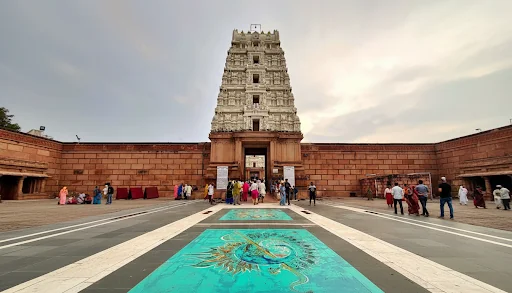
Shahji Temple : Shahji Temple is known for its ornate interiors, marble work and distinctive architectural style. It is one of the well-known historic temples in Vrindavan.
Govind Dev Ji Temple : Govind Dev Ji Temple is one of Vrindavan's important historic Vaishnava shrines. Its surviving red sandstone structure reflects the older architectural history of the town.
Nidhivan : Nidhivan is a sacred grove associated with Vrindavan's Krishna traditions. It is an important pilgrimage stop within the old town.
Keshi Ghat : Keshi Ghat lies on the Yamuna and is associated with the Krishna tradition of Vrindavan. The ghat forms part of the older sacred landscape around the town's historic temples.
Plan Rangji Temple Darshan
For current darshan planning, seasonal timings and Naman Darshan's Guided Darshan Assistance, continue to the dedicated Rangji Temple Darshan page.
Common Questions About Visiting Rangji Temple
Visitor Information
Entry Fee
Free entry – Seva or other voluntary contributions are separate from general temple entry.
Darshan Timing
Address
Sri Rangji Mandir, Goda Vihar, Vrindavan, Mathura District, Uttar Pradesh – 281121, India
Notable Events
1845 — Construction begins – Construction of the temple began under the guidance of Sri Rangadeshik Swamiji, with craftsmen brought from Srirangam. • 1851 — Temple completed – The Goda-Rangamannar temple was completed and established as a Sri Vaishnava shrine in Vrindavan. • 1873 — Rangji Temple Trust Board – The temple's present trust tradition is associated with the Sri Rangji Temple Trust Board, registered in 1873. • 19th century onward — Sri Vaishnava centre in Braj – The temple continued the Sri Vaishnava ritual and devotional tradition in Vrindavan and developed its annual cycle of utsavas, including Brahmotsavam and Dhanurmasam.
How to Reach the Temple
By air: Agra Airport is approximately 60 km from Vrindavan. Delhi is the other major airport option, approximately 150 km away.
By rail: Mathura Junction is the nearest major railway station, about 14 km from the temple. Vrindavan is also connected by local rail services.
By road: Vrindavan is well connected with Mathura, Agra and Delhi by road. The temple is located in the central Vrindavan area, close to the Mathura–Vrindavan road.
Within Vrindavan: Auto-rickshaws and e-rickshaws are commonly used for local travel. Vehicle movement can be restricted around busy temple areas and during major festivals.
Vrindavan, Uttar Pradesh