
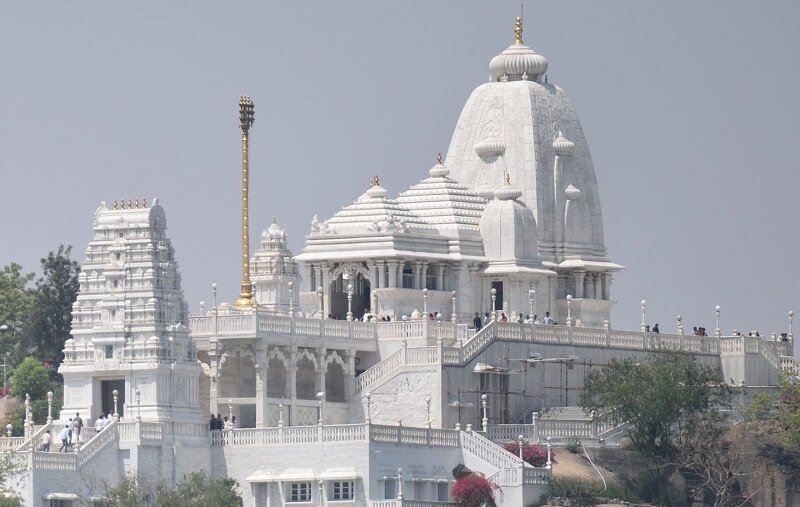
About Birla Mandir, Hyderabad, Telangana
Birla Mandir is a Hindu temple dedicated to Lord Venkateswara, a form of Lord Vishnu, on Naubat Pahad in Hyderabad. The temple was built by the Birla Foundation and opened in 1976 after nearly a decade of construction.
The shrine is known for its white marble structure, its combination of South Indian, Utkal and Rajasthani architectural features, and the large Venkateswara shrine at the centre of the complex. The hilltop location also places the temple within the wider sacred and urban landscape of Hyderabad.
Story of Birla Mandir
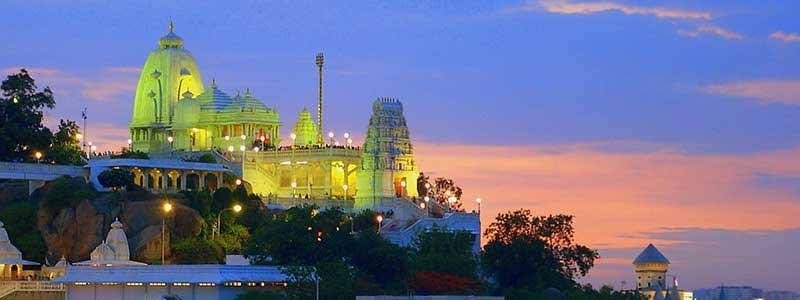
The Birla Mandir at Hyderabad was built by the Birla Foundation in the 1960s and completed in 1976. Construction took around ten years, and the temple was consecrated by Swami Ranganathananda of the Ramakrishna Mission. It became one of the Birla family's major temple projects in India.
The temple stands on the 280-foot Naubat Pahad, also known as Kala Pahad, above the southern side of Hussain Sagar. The elevated site gives the complex a distinct presence in the Hyderabad skyline and connects the temple with one of the city's best-known historic landscapes.
The architecture brings together several regional traditions. The Rajagopuram reflects South Indian temple design, while the Jagadananda Vimanam above the main shrine follows the Utkal tradition. The temple is built largely in white marble, with carved pillars, sculptures and reliefs depicting themes from the Ramayana, Mahabharata and other Hindu traditions.
The main shrine houses Lord Venkateswara in granite, with adjoining shrines for Goddess Padmavati and Goddess Andal. A 42-foot flagstaff stands within the complex, while other shrines are dedicated to deities including Shiva, Ganesha, Hanuman, Saraswati, Brahma and Lakshmi. The complex also includes a separate Buddha shrine, reflecting the broader cultural character incorporated into the temple's design.
What Makes Birla Mandir Sacred for Devotees
Lord Venkateswara at Birla Mandir
The presiding deity is Lord Venkateswara, the form of Vishnu widely worshipped as Balaji. The main shrine follows the Venkateswara tradition associated with Tirumala, while the adjoining shrines of Padmavati and Andal reflect other important figures in Vaishnava worship.
The temple's religious importance comes from its active worship rather than from an ancient origin story. Although the building is modern, daily puja follows established Hindu temple traditions.
Why Birla Mandir Has No Temple Bells
One of the unusual features of Birla Mandir is the absence of traditional temple bells. The temple is associated with the wish of Swami Ranganathananda that the atmosphere should remain suitable for meditation and quiet reflection.
The absence of bells is therefore a deliberate feature of the temple rather than an omission in its construction. It has become one of the most recognisable characteristics of the Hyderabad shrine.
Shrines Within the Complex
Birla Mandir is centred on Venkateswara, but the wider complex contains several other shrines. Padmavati and Andal are worshipped in adjoining temples, while separate shrines honour Shiva, Shakti, Ganesha, Hanuman, Brahma, Saraswati and Lakshmi.
The presence of these shrines gives the complex a broader devotional character while keeping Lord Venkateswara as the principal deity.
Annual Festivals & Rituals at Birla Mandir, Hyderabad, Telangana
Daily Worship and Aarti Celebrations at the Temple
The temple follows regular worship throughout the day, with puja, offerings and aarti forming part of its daily religious life. Worship follows traditional Agama-based practice, with the Pancharatra tradition associated with Vaishnava temple worship.
Vaikunta Ekadashi Celebrations at the Temple
Vaikunta Ekadashi is an important Vaishnava observance and has special significance at a temple dedicated to Lord Venkateswara.
Sri Rama Navami Celebrations at the Temple
Sri Rama Navami marks the birth of Lord Rama and is observed with special worship as part of the temple's annual religious calendar.
Janmashtami Celebrations at the Temple
Janmashtami, celebrating the birth of Lord Krishna, is observed with devotional programmes and special worship.
Navaratri Celebrations at the Temple
Navaratri is celebrated through worship of the divine feminine during the nine-day festival period.
Diwali Celebrations at the Temple
Diwali brings special worship and devotional activity to the temple and is one of the major annual festival periods.
Kartik Purnima Celebrations at the Temple
Kartik Purnima is observed according to the Hindu lunar calendar and forms part of the temple's annual cycle of religious observances.
Hanuman Jayanti Celebrations at the Temple
Hanuman Jayanti marks the birth of Lord Hanuman and is observed with worship at the shrine dedicated to Hanuman within the temple complex.
Sacred Places to Visit Near Birla Mandir
Hussain Sagar : Hussain Sagar is the large historic lake beside the temple and forms an important part of the view from Naubat Pahad. The lake also connects the Hyderabad and Secunderabad sides of the city.
Lumbini Park : Lumbini Park lies near Hussain Sagar and is known for its gardens, lake access and boating facilities. It can be visited along with Birla Mandir as part of the same central Hyderabad circuit.
Birla Science Museum : The Birla Science Museum is located near the temple complex and presents exhibits related to science, technology and natural history. It is a useful companion visit for families and visitors exploring the wider Birla cultural precinct.
Birla Planetarium : The Birla Planetarium is adjacent to the science museum and is dedicated to astronomy and public science education.
Ravindra Bharathi : Ravindra Bharathi is a major cultural auditorium near the temple area and hosts performances, cultural programmes and public events.
Charminar : Charminar is one of Hyderabad's best-known historic monuments in the Old City. A visit combines the modern temple landscape around Birla Mandir with the city's earlier architectural and cultural history.
Plan Birla Mandir Darshan
For current darshan planning, detailed timings, queue guidance and Naman Darshan's Guided Darshan Assistance, continue to the dedicated Birla Mandir Darshan page.
Common Questions About Visiting Birla Mandir
Visitor Information
Entry Fee
General entry is free – Any separate service or assistance should not be treated as temple entry fee.
Darshan Timing
Address
Birla Mandir, Birla Mandir Road, Hill Fort, Hyderabad, Telangana 500004, India
Notable Events
1960s — Construction begins – The Birla Foundation begins development of the Hyderabad temple on Naubat Pahad. • 1976 — Temple completed and opened – After about a decade of construction, the temple is consecrated and opened for worship, with Lord Venkateswara as the presiding deity. • 1976 onward — Birla Mandir becomes a major Hyderabad landmark – The hilltop temple develops as both an active place of worship and an important part of Hyderabad's central city landscape. • 2025–2026 — Restoration and access improvements – Marble cleaning and restoration work is undertaken across the complex ahead of the temple's 50th anniversary, along with improvements to visitor facilities and accessibility. • 2026 — Golden Jubilee – Birla Mandir completes 50 years of its religious life. Special religious and cultural programmes are organised as part of the Golden Jubilee celebrations.
How to Reach the Temple
By Metro: Birla Mandir is centrally located near the Lakdi-ka-Pul and Assembly areas. Metro is one of the practical ways to reach the temple area, followed by a short local transfer toward Naubat Pahad.
By rail: Lakdi-ka-Pul is the nearest MMTS railway station commonly associated with the temple. Hyderabad Deccan and Secunderabad railway stations also provide wider rail connectivity to the city.
By air: Rajiv Gandhi International Airport is the main airport serving Hyderabad. The temple is reached from the airport by road.
By road: Buses, taxis, autos and app-based cabs connect the temple with other parts of Hyderabad. During busy periods, road traffic and parking near the hill can be more difficult.
Within the temple approach: The shrine stands on Naubat Pahad, so visitors should allow for the uphill approach and follow the current access arrangements, including the available lift facilities where applicable.
Mysuru, Karnataka