
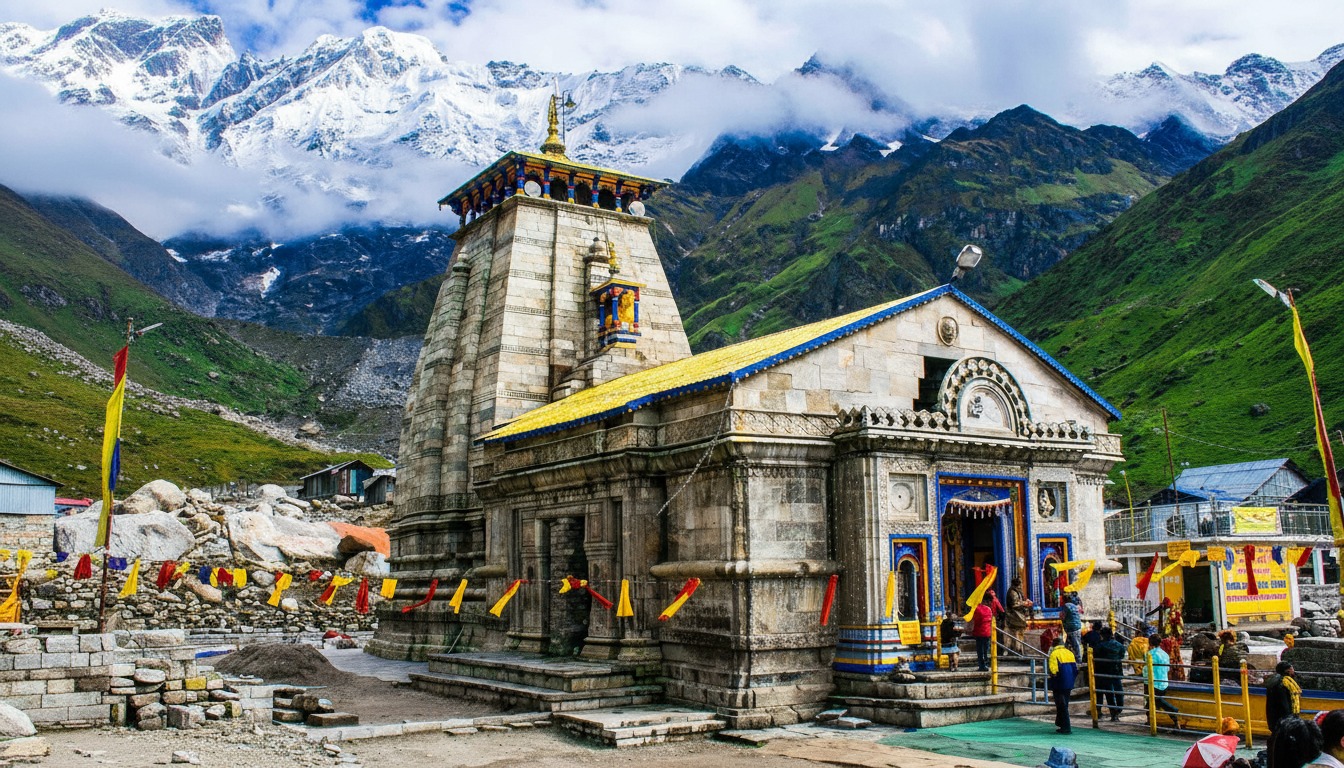
About Kedarnath Temple, Kedarnath, Uttarakhand
Kedarnath Temple is dedicated to Lord Shiva and is one of the twelve Jyotirlingas. It stands at about 3,580 metres in Rudraprayag district, near the source region of the Mandakini River, and forms part of Uttarakhand's Chota Char Dham and Panch Kedar traditions.
The shrine is known for its large stone structure, the natural rock form worshipped as Shiva, the traditional story of the Pandavas and the annual movement of the deity's winter worship to Ukhimath. Its importance comes from the combination of an old Himalayan pilgrimage tradition, living Shaiva worship and the sacred geography surrounding Kedarnath.
Story of Kedarnath Temple
The history of Kedarnath is older than the present temple building, although the exact date and original builder of the existing structure are not firmly established. Religious tradition attributes the shrine's earlier establishment to the Pandavas and its later revival to Adi Shankaracharya. References to Kedara appear in older religious literature, while the temple had become an established pilgrimage centre by the medieval period.
The present shrine is built largely from massive stone slabs set on a rectangular platform. The complex has a garbha-griha and a mandap, with Nandi placed before the entrance. Inside, the walls contain traditional images and sculptural details, while the sanctum houses the conical rock form worshipped as Lord Shiva. The temple's heavy stone construction and setting against the Kedarnath range are defining features of its architecture.
What Makes Kedarnath Temple Sacred for Devotees
The Pandavas and Lord Shiva
According to a long-standing tradition, the Pandavas came to the Himalayan region seeking Lord Shiva after the Kurukshetra war. They wished to receive his forgiveness for the deaths caused during the conflict.
Shiva is said to have avoided them by taking the form of a bull. When the Pandavas recognised him, the bull disappeared into the ground, leaving its hump visible at Kedarnath. The remaining parts of the bull are traditionally associated with the other four temples of Panch Kedar.
This account belongs to Kedarnath's religious tradition. It should not be presented as a historical record of the temple's construction.
Kedarnath and the Panch Kedar
The Pandava story forms the traditional basis of the Panch Kedar pilgrimage. Kedarnath is associated with the hump of Shiva, while Tungnath is linked with the arms, Rudranath with the face, Madmaheshwar with the navel or stomach and Kalpeshwar with the matted hair or head.
Together, the five shrines form an important Shaiva pilgrimage tradition in Uttarakhand.
Kedarnath as a Jyotirlinga
Kedarnath is revered as one of the twelve Jyotirlingas of Lord Shiva. In Shaiva tradition, a Jyotirlinga represents Shiva in a self-manifested or intensely sacred form.
At Kedarnath, the object of worship is a naturally formed conical rock rather than a conventionally carved image. The form is worshipped as Shiva and is central to the identity of the shrine.
Adi Shankaracharya and Kedarnath
Kedarnath is traditionally associated with Adi Shankaracharya, who is credited in religious accounts with restoring the shrine and strengthening pilgrimage to the Himalayan temple.
His samadhi is traditionally located behind the temple. The exact historical details of Shankaracharya's life and death are debated in different sources, so his association with Kedarnath is best presented as a longstanding religious tradition.
Winter worship at Ukhimath
Kedarnath cannot remain open through the winter because of the severe conditions at the high-altitude shrine. When the temple closes for the season, the utsava murti of Kedarnath is ceremonially taken to Ukhimath, where worship continues during the winter months.
The return of the deity to Kedarnath in spring forms part of the annual cycle through which the shrine reopens for pilgrims.
Annual Festivals & Rituals at Kedarnath Temple, Kedarnath, Uttarakhand
Daily Worship Celebrations at the Temple
Daily worship at Kedarnath includes abhishek, offerings, prayers and aarti. The temple's worship cycle is organised around traditional Shaiva rituals, and public darshan takes place around these rites. Exact ritual and darshan timings can change and are better checked through the current Darshan information before travel.
Kapat Udghatan Celebrations at the Temple
Kapat Udghatan marks the ceremonial opening of Kedarnath Temple for the pilgrimage season. The opening follows the traditional calendar and is accompanied by the return of the deity from the winter seat at Ukhimath. The shrine then remains open through the pilgrimage season, subject to weather and administrative conditions.
Maha Shivratri at Ukhimath Celebrations at the Temple
Because Kedarnath remains closed during winter, Maha Shivratri is observed at the winter seat of the deity in Ukhimath. The festival therefore remains part of the annual Kedarnath worship cycle even when the main temple is closed.
Samadhi Puja Celebrations at the Temple
Samadhi Puja forms part of the end-of-season religious observances at Kedarnath. It is associated with the final phase of worship before the temple closes for winter.
Kapat Band Celebrations at the Temple
Kapat Band marks the annual closing of the temple before the winter season. Following the closing rituals, the utsava murti is taken to Ukhimath, where worship continues until the shrine reopens the following season.
Sacred Places to Visit Near Kedarnath Temple
Bhairavnath Temple : Bhairavnath Temple is located above Kedarnath and is traditionally associated with Bhairava, a fierce form of Lord Shiva. The shrine is part of the wider sacred landscape of Kedarnath.
Adi Shankaracharya Samadhi : The samadhi associated with Adi Shankaracharya is located behind Kedarnath Temple. It is traditionally linked with the Acharya's association with the shrine and the wider revival of pilgrimage in the Himalayan region.
Gaurikund : Gaurikund is the traditional starting point of the road-and-trek approach to Kedarnath. It is associated with Goddess Gauri and forms an important point in the pilgrimage route.
Chorabari Tal : Chorabari Tal, also known as Gandhi Sarovar, lies above Kedarnath and is associated with the upper Mandakini valley. The lake and surrounding area also form part of the geography of the 2013 disaster.
Vasuki Tal : Vasuki Tal is a high-altitude lake in the Kedarnath region and is traditionally included among the important natural sites around the shrine.
Triyuginarayan Temple : Triyuginarayan Temple is associated in Hindu tradition with the wedding of Lord Shiva and Goddess Parvati. The sacred fire at the temple is traditionally believed to have remained burning through the ages.
Plan Kedarnath Temple Darshan
For current darshan timings, entry planning, queue information and Naman Darshan's Guided Darshan Assistance, continue to the dedicated Kedarnath Temple Darshan page.
Common Questions About Visiting Kedarnath Temple
Visitor Information
Entry Fee
No separate general temple-entry fee is stated in the official visitor information reviewed. – Paid puja or seva arrangements are a separate matter.
Darshan Timing
Address
Kedarnath Temple, Kedarnath, Rudraprayag District, Uttarakhand 246445, India
Notable Events
8th–9th century — Adi Shankaracharya tradition – Kedarnath is traditionally associated with Adi Shankaracharya, whose pilgrimage tradition helped strengthen the temple’s place among the major Shaiva shrines. • 12th–13th century — Early temple history – The stone temple is generally dated to the medieval period, with local traditions linking the site to the Pandavas and earlier forms of worship. • 18th century — Temple restoration – The shrine underwent restoration and continued to develop as an important centre of Shiva worship in the Garhwal Himalayas. • 2013 — Kedarnath floods – Severe floods affected Kedarnath and the surrounding area, causing extensive damage while the main temple structure remained standing. • 2013 onwards — Reconstruction and pilgrimage infrastructure – The temple area has since seen major reconstruction, restoration and improvements to pilgrim facilities and access. • Present day — One of the Jyotirlingas and Char Dham – Kedarnath remains one of the twelve Jyotirlingas and a major pilgrimage destination in the Himalayan Char Dham tradition.
How to Reach the Temple
By air: The nearest major airport is Jolly Grant Airport near Dehradun. From the airport, continue by road towards the Kedarnath route. Helicopter services may operate from Guptkashi, Phata, Sirsi and other designated locations, subject to current availability and weather.
By rail: The main railheads used for the Kedarnath journey include Rishikesh, Haridwar and Dehradun. From the railway station, continue by road towards Sonprayag and Gaurikund.
By road: Road travel continues towards Sonprayag/Gaurikund, after which the remaining journey is by the designated mountain route to Kedarnath.
Within the pilgrimage route: The final approach is a high-altitude trek. Pilgrims should plan for changing weather, altitude and route conditions rather than treating the journey as a normal short-distance road transfer.
Vrindavan, Mathura, Uttar Pradesh