
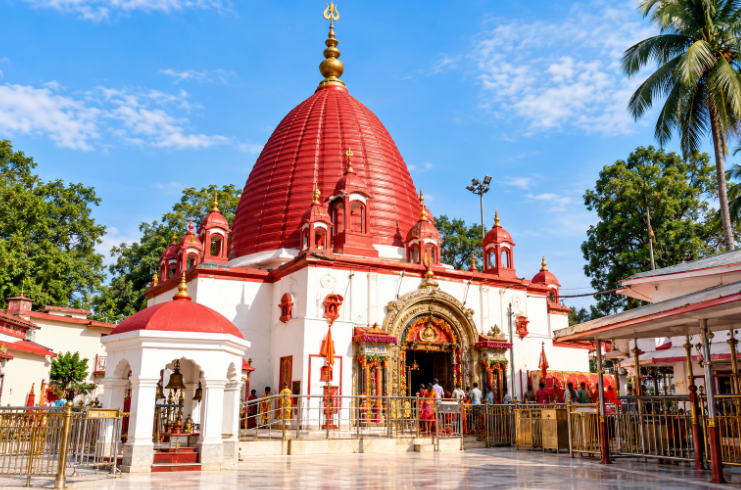
About Tripura Sundari Temple (Matabari), Udaipur, Tripura
Tripura Sundari Temple, popularly known as Matabari or Tripureshwari Temple, is dedicated to Goddess Tripura Sundari in Udaipur, Tripura. It is traditionally counted among the 51 Shakti Peethas, with local tradition associating the site with the right foot of Goddess Sati.
The temple is known for its two sacred images, its distinctive Bengali-style structure and the hillock called Kurma Peetha. Kalyan Sagar lies beside the shrine, while the annual Diwali Mela brings pilgrims and visitors to Matabari from across Tripura and neighbouring regions.
Story of Tripura Sundari Temple (Matabari)
The temple’s foundation is dated to 1501 CE, during the reign of Maharaja Dhanya Manikya of the Manikya dynasty. Udaipur was then the capital of the kingdom of Tripura. Historical accounts also record later repairs, so the foundation date should not be taken to mean that every part of the structure visible today remains exactly as it was in the sixteenth century.
According to temple tradition, Dhanya Manikya first intended to establish a shrine to Lord Vishnu. He then dreamt that Goddess Tripura Sundari wished to be installed at the site, and the image was brought from Chittagong, in present-day Bangladesh. The story remains an important explanation of the temple’s origin. Temple tradition also records the worship of a Narayan Shila alongside the Goddess, reflecting the shrine’s association with both Vaishnava and Shakta traditions.
The sanctum contains two dark-stone images. The larger image is Goddess Tripura Sundari, while the smaller is known as Chhoto-Ma, or “Little Mother,” and is associated with Goddess Chandi. A local tradition says that Tripura’s kings carried Chhoto-Ma with them on hunting expeditions and into battle. This account is part of the temple’s religious history rather than a claim about a documented military practice.
The temple stands on a raised hillock whose shape is compared to a tortoise’s back, giving the site its name Kurma Peetha. Its square sanctum, hut-inspired roof and conical upper structure reflect a local style shaped by Bengali architectural influences. The temple’s main entrance faces west, with a smaller entrance on the north. Kalyan Sagar lies on the eastern side of the complex; the lake is associated with the reign of Maharaja Kalyan Manikya and is treated as a sacred part of the temple precinct.
What Makes Tripura Sundari Temple (Matabari) Sacred for Devotees
Tripura Sundari as a Shakti Peetha
Matabari is traditionally regarded as one of the 51 Shakti Peethas associated with the story of Goddess Sati. According to a local account linked with the Pithamala tradition, Sati’s right foot fell at this site during Shiva’s tandava. The precise body-part description varies across published retellings of Shakti Peetha traditions, so it is best understood as a sacred belief rather than a historical event established through archaeology.
Goddess Tripura Sundari is also known locally as Tripureshwari. The name “Tripura Sundari” is commonly understood as the beauty of the three worlds, and the Goddess is worshipped within the Shakta tradition as a form of the Divine Mother.
Why Matabari is called Kurma Peetha
The raised ground on which the temple stands is compared to the back of a tortoise, or kurma. This association gives the shrine the name Kurma Peetha. The hillock is therefore part of the site’s religious identity, not simply a feature of its landscape.
A Tradition Shared Across Communities
The temple’s local history describes Matabari as a place of worship for people from different communities. It recounts a tradition that the eighteenth-century ruler Samser Gazi offered worship at the shrine and records customs among some Muslim families in Udaipur of offering the first crop and milk to the Goddess. The temple is also important to tribal communities in Tripura. These accounts form part of the local religious memory surrounding the shrine.
Kalyan Sagar and the Sacred Precinct
Kalyan Sagar, beside the temple, is treated as part of the sacred landscape of Matabari. Fish and tortoises in the lake are revered by devotees. Visitors should follow the lake’s posted rules and respect the animals and the water body as part of the temple precinct.
Annual Festivals & Rituals at Tripura Sundari Temple (Matabari), Udaipur, Tripura
Daily Puja and Sandhya Arati
Daily puja forms the centre of worship at Matabari, and an evening arati is held according to the temple’s seasonal schedule. The temple publishes different arati times for different parts of the Bengali calendar, so visitors should confirm current timings before planning their visit.
Anna Bhog
Anna Bhog is part of the temple’s offering tradition. The temple publishes separate arrangements for Bhog and Prasad, which may include advance coupon or booking procedures. Visitors should check the latest instructions with the temple management rather than relying on older online details.
Diwali Mela
The Diwali Mela is Matabari’s best-known annual public festival. The temple complex is illuminated, and the fair includes cultural programmes alongside the religious observances. The festival draws especially large numbers of devotees, making it one of the busiest times to visit.
Navaratri and Ashtami Puja
Navaratri is observed through special worship of the Goddess. Ashtami Puja is also listed among the temple’s special observances. These occasions bring the Shakta character of the shrine into focus and can affect ordinary visitor arrangements.
Mahalaya and Monthly Amavasya
Mahalaya and the new-moon day, or Amavasya, are also listed among the temple’s special puja occasions. Since observances follow the religious calendar, details and visitor conditions may differ from an ordinary day.
Sacred Places to Visit Near Tripura Sundari Temple (Matabari)
Kalyan Sagar
Kalyan Sagar lies beside the temple on its eastern side. The lake is part of Matabari’s sacred precinct and is known for the fish and tortoises revered by devotees.
Bhubaneswari Temple
Bhubaneswari Temple stands near the Gomati River in the Udaipur area. It is another important religious site in the region and is associated with Rabindranath Tagore’s play Rajarshi.
Neermahal
Neermahal is a former royal palace situated in Rudrasagar Lake near Melaghar. It offers a different view of Tripura’s heritage and can be included in a broader visit to the region.
Plan Your Visit to Tripura Sundari Temple (Matabari)
NamanDarshan is a technology platform that arranges darshan and related services on your behalf through independent service providers.
Common Questions About Visiting Tripura Sundari Temple (Matabari)
Yes. Matabari is traditionally counted among the 51 Shakti Peethas. Local tradition associates the site with the right foot of Goddess Sati, although published descriptions of the precise body part are not uniform.
The temple’s foundation is dated to 1501 CE and is associated with Maharaja Dhanya Manikya of Tripura. Later repair and development work took place over the following centuries.
Kurma Peetha refers to the tortoise-like shape associated with the raised ground beneath the temple. The comparison is part of the shrine’s religious identity and explains one of its traditional names.
The fair is held around Diwali, usually in October or November, according to the lunar calendar. Dates vary each year, and festival crowds can affect access and visitor arrangements.
Naman Darshan offers independent Guided Darshan Assistance through local service providers. This does not confer authority over temple rules, ritual timings or queue arrangements; all visitors remain subject to the temple’s current instructions.
Visitor Information
Darshan Timing
Address
Tripura Sundari Temple (Matabari) Matabari, Udaipur, Gomati district, Tripura, India
Notable Events
1501 — Foundation of the temple: Maharaja Dhanya Manikya established the shrine during the Manikya period.
1681 — Repair recorded: Historical writing on Tripura’s temple inscriptions records repair work under Rama Manikya.
1903 — Annual fair documented: Government festival material records the annual Diwali fair from this year onward, while noting that the earlier history of the fair is uncertain.
2003 — Commemorative stamp: A postage stamp featuring Tripureshwari Temple was released in September.
2025 — Temple-complex development: Development work under the PRASHAD scheme was inaugurated on 22 September, with improvements planned and made to the wider complex and visitor facilities.
How to Reach the Temple
By air: Maharaja Bir Bikram Airport in Agartala is the nearest major airport, approximately 65–70 kilometres from the temple by road.
By rail: Udaipur in Tripura has rail access for onward travel to Matabari. Confirm the current train schedule and last-mile transport before departure, as station and local transport arrangements may change.
By road: The temple is around 60 kilometres from Agartala by road. Buses, taxis and private vehicles connect Agartala and Udaipur, from where local transport can be used to reach Matabari.
Within Udaipur: Matabari is a short journey from the town. The final approach can be busier during the Diwali Mela and other major observances, so allow additional time on festival days.