
.png)
About Nathdwara Shrinathji Temple, Nathdwara, Rajasthan
Nathdwara Shrinathji Temple is the principal shrine of Shrinathji, the child form of Lord Krishna worshipped in the Pushtimarg tradition. The temple is in Nathdwara, Rajsamand district, and is traditionally known as Shrinathji ki Haveli.
The shrine is known for the distinctive black-stone image of Krishna lifting Govardhan, the eight daily darshans, and a system of seva in which the deity is treated as the Lord of the household. The temple's rituals, food, music, dress and festivals all follow this living Pushtimarg tradition.
Story of Nathdwara Shrinathji Temple
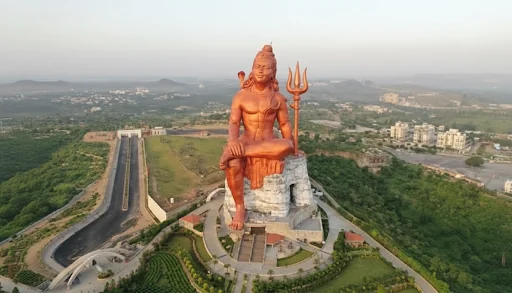
Shrinathji is the principal form of Lord Krishna worshipped at Nathdwara. In the Pushtimarg tradition associated with Vallabhacharya and his lineage, Shrinathji is worshipped as the seven-year-old Krishna lifting Govardhan Hill with his raised left arm. The sacred image was brought from Govardhan in the 17th century and, according to the established Nathdwara tradition, the chariot carrying the deity stopped at Sihad when its wheels became stuck in the mud. Maharana Raj Singh of Mewar took this as a sign that the Lord wished to remain there, and the shrine was established at the site in 1672.
The deity at Nathdwara is carved in a distinctive black stone form, with the left arm raised and the right hand resting near the waist. This image is worshipped not simply as a representation of Krishna but as Shrinathji himself, with the daily routine organised around seva. The temple follows the Pushtimarg tradition, and the eight daily darshans mark different parts of the Lord’s day, from Mangala in the morning to Shayan at night.
The shrine is popularly known as Shrinathji ki Haveli because its layout resembles a traditional Rajasthani mansion more than a conventional temple built around a single soaring shikhara. The complex is organised through courtyards, gateways and service spaces, reflecting the idea that the deity lives within the haveli and is cared for through daily household-like seva. The innermost areas include the Ratan Chowk and the Nij Mandir, while spaces such as Govardhan Chowk and Kamal Chowk form part of the larger ritual setting.
This way of worship also shaped the visual culture of Nathdwara. Shrinathji is dressed, offered food, accompanied by music and shown in changing seasonal settings, while Pichhwai paintings are traditionally placed behind the deity as part of the temple’s devotional setting. The temple, therefore, is closely connected not only with Pushtimarg worship but also with the distinctive painting and craft traditions that developed around Shrinathji’s seva.
What Makes Nathdwara Shrinathji Temple Sacred for Devotees
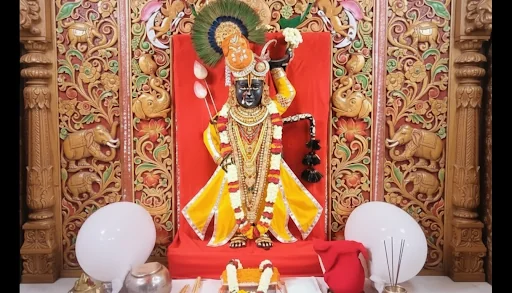
The cart that stopped at Sihad
The best-known Nathdwara tradition concerns the journey of Shrinathji from Govardhan to Mewar. When the cart carrying the deity reached Sihad, its wheels became stuck in the ground and could not be moved further.
According to Pushtimarg tradition, the incident was taken as a sign that Shrinathji had chosen the place for his permanent residence. Maharana Raj Singh provided protection and patronage, and the shrine was established there in 1672.
This is a central religious tradition of Nathdwara. The choice of location should therefore be described as a sacred account rather than as an independently verifiable historical event.
Shrinathji and the Pushtimarg tradition
Shrinathji is the central deity of the Pushtimarg, or “Path of Grace,” associated with Shri Vallabhacharya. In this tradition, devotion is expressed through seva, meaning personal service to the deity.
The worshipper's relationship with Shrinathji is therefore shaped by affection and care. The deity is bathed, dressed, fed, offered music and allowed to rest according to a daily routine. This understanding is the reason the temple is organised like a Haveli.
The Lord as the child of the household
The child form of Krishna gives the Nathdwara tradition its distinctive character. The daily routine follows the rhythm of a household: waking, dressing, taking food, going out for the day, returning, taking refreshments and finally retiring at night.
The eight darshans are part of this cycle. Each one corresponds to a different moment in the day's seva and offers devotees a particular glimpse, or jhanki, of Shrinathji.
Seva, food, music and adornment
Seva at Nathdwara includes much more than formal prayer. Food preparation, clothing, jewellery, flowers, music and seasonal decoration are all part of the service offered to Shrinathji.
This is also reflected in the cultural traditions that developed around the temple. Pichwai painting, for example, became closely associated with Nathdwara and depicts Shrinathji through seasonal scenes, festivals and episodes from Krishna's life.
Annual Festivals & Rituals at Nathdwara Shrinathji Temple, Nathdwara, Rajasthan
Eight Daily Darshans Celebrations at the Temple
The daily ritual cycle is organised around eight principal darshans: Mangala, Shringar, Gwal, Rajbhog, Uthapan, Bhog, Sandhya Aarti and Shayan. Mangala marks the beginning of the day. Shringar follows with the dressing and adornment of the deity. Gwal is associated with Krishna's cowherd life, while Rajbhog is the principal meal offering. Uthapan marks the Lord's rising after rest, followed by Bhog, Sandhya Aarti and Shayan, the final darshan of the day. The exact timings are prepared according to the temple's daily schedule and can change with the calendar, season and special observances.
Krishna Janmashtami and Nand Mahotsav Celebrations at the Temple
Janmashtami celebrates the birth of Lord Krishna. At Nathdwara, the festival is followed by Nand Mahotsav, which reflects the joy associated with Krishna's birth in the household of Nanda. The festival changes the ordinary rhythm of the temple and attracts large numbers of devotees. Special darshan arrangements may be introduced for the occasion.
Annakuta Celebrations at the Temple
Annakuta is closely associated with the Govardhan tradition of Shrinathji. Large quantities of food are arranged as an offering to the Lord, recalling Krishna's association with Govardhan and the community of Vraja. The festival is one of the major annual observances at Nathdwara and is also important to the Pushtimarg tradition.
Holi Celebrations at the Temple
Holi is celebrated in the temple through the Braj traditions associated with Krishna. Colour, music and devotional celebration become part of the seasonal seva of Shrinathji.
Diwali Celebrations at the Temple
Diwali is observed with special decoration and worship at the Haveli. The festival forms part of the wider annual cycle of Pushtimarg seva and is accompanied by changes in adornment and offerings.
Sharad Purnima Celebrations at the Temple
Sharad Purnima is connected with Krishna's Braj traditions and the autumn devotional cycle. At Nathdwara, the occasion is reflected through special seva and seasonal adornment of Shrinathji.
Sacred Places to Visit Near Nathdwara Shrinathji Temple
Giriraj Parikrama : Giriraj Parikrama in Nathdwara forms part of the town's sacred landscape and recalls the Govardhan association of Shrinathji. The tradition connects Nathdwara with the Braj identity of the deity.
Shrinathji Gaushala : The Shrinathji Gaushala is part of the temple's wider seva tradition. Cows have a longstanding place in the religious imagination of Krishna worship and in the Pushtimarg understanding of Shrinathji's Braj life.
Dwarikadhish Temple, Kankroli : The Dwarikadhish Temple at Kankroli is another important Pushtimarg shrine in the Rajsamand region. Rajasthan Tourism identifies Kankroli as an important centre of Shuddhadvaita/Pushtimarg tradition.
Eklingji Temple : Eklingji is a major Shaiva temple complex near Udaipur and is traditionally associated with the ruling house of Mewar. It can be combined with Nathdwara as part of the wider pilgrimage circuit of the region. Rajasthan Tourism also includes the temple among the important religious sites around Udaipur.
Haldighati : Haldighati is a historic mountain pass in the Aravalli Range and the site associated with the 1576 Battle of Haldighati. The battlefield lies southwest of Nathdwara and forms part of the historical landscape around the town.
Kumbhalgarh Fort : Kumbhalgarh Fort is one of the major heritage sites of the Rajsamand region. Its location makes it a natural addition to a wider Nathdwara–Mewar itinerary. Rajasthan Tourism lists Kumbhalgarh among the principal attractions of Rajsamand district.
Molela Terracotta Village : Molela is known for its traditional terracotta plaques and religious folk art. The village is part of the cultural landscape around Nathdwara and is especially relevant for visitors interested in Rajasthan's devotional craft traditions.
Plan Nathdwara Shrinathji Darshan
For current Shrinathji darshan timings, daily jhanki schedule, entry arrangements, passes and Naman Darshan's Guided Darshan Assistance, continue to the dedicated Nathdwara Shrinathji Darshan page.
Common Questions About Visiting Nathdwara Shrinathji Temple
Visitor Information
Entry Fee
General temple darshan is available – Any special or registered access arrangement is separate from ordinary temple entry.
Darshan Timing
Address
Shrinathji Temple, Nathdwara, Rajsamand District, Rajasthan 313301, India
Notable Events
16th century — Pushtimarg develops around Shrinathji – Shri Vallabhacharya establishes the theological foundation of Pushtimarg, while Shri Vitthalnathji later develops its organised system of seva and festivals. • Late 17th century — Shrinathji leaves Govardhan – The sacred image is moved from the Braj region during the Mughal period and travels towards Mewar. • 1672 — Shrinathji installed at Sihad – The deity is installed at Sihad, the settlement that develops into Nathdwara. The cart-stopping episode becomes central to the town's sacred origin tradition. • Early 19th century — Temporary movement during the Holkar period – During the Holkar advance on Nathdwara, the deity was temporarily moved for protection. The period also led to the establishment of the Shrinathji shrine at Ghasiyar before the deity returned to Nathdwara. • 1959 — Nathdwara Temple Act – The Rajasthan Legislature enacted the Nathdwara Temple Act, 1959, providing for the administration and governance of the Shrinathji temple through the Nathdwara Temple Board. • Modern period — Nathdwara develops as a major Pushtimarg centre – The town's religious life continues to be closely connected with Shrinathji seva, Pichwai painting, devotional music, temple crafts and the wider Vallabha tradition.
How to Reach the Temple
By air: Maharana Pratap Airport at Udaipur is the nearest major airport. The official Shrinathji Temple FAQ places the airport at about 60 km from Nathdwara, while the Airports Authority of India lists Shrinathji Temple at approximately 58 km from Udaipur Airport.
By rail: Nathdwara is connected by rail, while Mavli Junction and Udaipur City Railway Station provide wider rail connectivity. The official temple FAQ places Mavli about 30 km and Udaipur City about 50 km from Nathdwara.
By road: Nathdwara is well connected by road with Udaipur and other cities of Rajasthan and Gujarat. Rajasthan Tourism and the state tourism corporation also include Nathdwara in regional pilgrimage routes from Udaipur.
Within Nathdwara: The temple is located in the older part of the town, where the approach includes narrow market streets and pedestrian movement. Current traffic restrictions and drop-off arrangements can change during major festivals.
Shri Radha Rani Temple Barsana: History, Timings & Guide
Learn about Shri Radha Rani Temple in Barsana, its history, Shriji deity, sacred traditions, architecture, festivals, timings, nearby places and visitor information.
Barsana, Mathura, Uttar Pradesh