
.png)
About Shahji Temple, Vrindavan, Uttar Pradesh
Shahji Temple is a 19th-century Radha-Krishna temple in Vrindavan, popularly known as Tedhe Khambe Wala Mandir because of its twelve spiral marble columns. The temple is also known by its original name, Lalit Nikunj, and its principal deity is worshipped as Sri Thakur Radha Raman Ji Maharaj, affectionately known as Chhote Radha Raman.
The temple was built by the brothers Shah Kundan Lal and Shah Phundan Lal, who came from Lucknow and made Vrindavan their spiritual home. Along with its devotional importance, Shahji Temple is known for its white marble work, painted and inlaid panels, the Basanti Kamra and its distinctive blend of Braj themes with the artistic influences of 19th-century Lucknow.
Story of Shahji Temple
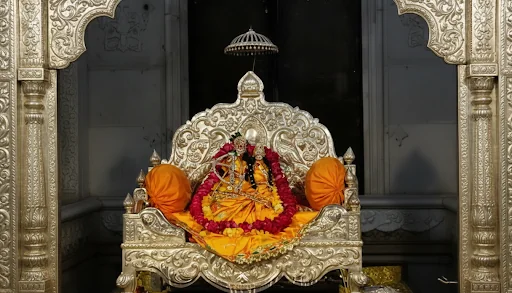
According to the temple’s own account, construction of Shahji Temple began in 1860 and continued for eight years. The temple was built by Shah Kundan Lal and Shah Phundan Lal, brothers from Lucknow who were deeply attached to Vrindavan. The temple site also records a registered waqf made in favour of Sri Thakur Radha Raman Ji Maharaj in 1866.
The temple was given the name Lalit Nikunj, and the shrine became associated with the small Radha-Krishna forms worshipped as Chhote Radha Raman. The name Shahji Temple became common because of its founders. The temple's history is also connected with Shah Kundan Lal's devotional life in Vrindavan and with the literary tradition of his Braj compositions.
Its architecture is unlike the older sandstone temples for which Vrindavan is better known. The building uses white marble extensively and combines detailed stone inlay, painted decoration and elaborate interior ornament. Its most recognisable feature is the twelve spiral columns, each about fifteen feet high, which gave the temple its popular name, Tedhe Khambe Wala Mandir.
The Basanti Kamra, also called the Rituraj Bhawan, is the most elaborate room in the complex. The temple describes its painted walls, mirrors, chandeliers, marble fountains and life-size figures of the gopis. Nine chandeliers hang beneath its high dome, while the central fountains are carved from a single block of white marble. The decorative programme brings together Krishna's Braj pastimes with the courtly artistic traditions associated with the temple's Lucknow background.
What Makes Shahji Temple Sacred for Devotees
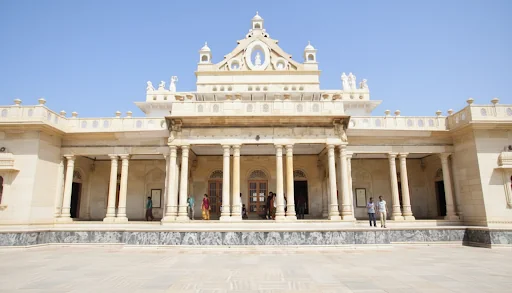
Chhote Radha Raman and Lalit Nikunj
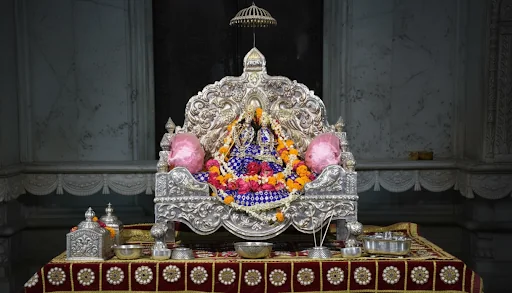
The principal deity at Shahji Temple is worshipped as Sri Thakur Radha Raman Ji Maharaj, in the small Radha-Krishna forms popularly called Chhote Radha Raman. The name reflects the intimate devotional mood associated with Radha and Krishna in Vrindavan rather than the monumental scale of the temple itself.
Shahji Temple is distinct from the nearby historic Radha Raman Temple, although the deity title Radha Raman is shared. The two are separate temples in Vrindavan.
The Founders and Braj Raj
One of the most distinctive traditions of the temple concerns the portraits of the founders and their family. They were carved into the marble floor of the right verandah rather than placed on the walls.
The temple's own account explains this as a deliberate expression of humility and reverence for Braj Raj, the sacred dust of Vrindavan. Devotees traditionally walk barefoot through the temple, so the placement of the portraits on the floor symbolises the founders' wish to remain beneath the feet of those coming for darshan.
Lalit Kishori and the Braj Literary Tradition
Shah Kundan Lal is also remembered by the name Lalit Kishori. The temple and Braj literary sources connect him with poetry on Radha-Krishna's pastimes in Vrindavan. His compositions are collected in Abhilash Madhuri, which continues to be associated with the temple's devotional and cultural tradition.
This literary connection helps explain why Lalit Nikunj is more than an architectural monument. Its identity is also tied to the Braj tradition of singing, poetry and remembrance of Radha-Krishna's leelas.
Annual Festivals & Rituals at Shahji Temple, Vrindavan, Uttar Pradesh
Janmashtami Celebrations at the Temple
Janmashtami marks the birth of Lord Krishna and is observed at Shahji Temple with special decoration and worship. The festival forms part of the wider Krishna devotional calendar of Vrindavan.
Jhulan Yatra Celebrations at the Temple
During Jhulan Yatra, Radha and Krishna are placed on decorated swings as part of the monsoon festival tradition of Braj. The temple's festival tradition also connects this period with the Basanti Kamra.
Basant Panchami Celebrations at the Temple
Basant Panchami has a special connection with Shahji Temple and the Basanti Kamra. The chamber is traditionally opened on special occasions, allowing devotees to see its detailed interior, chandeliers, paintings, mirrors and marble fountains.
Holi Celebrations at the Temple
Holi is an important festival throughout Vrindavan and is celebrated within the Radha-Krishna devotional tradition. Shahji Temple observes the festival as part of its annual Braj calendar.
Radha Ashtami Celebrations at the Temple
Radha Ashtami marks the appearance of Srimati Radharani and is an important Vaishnava observance in Vrindavan. Special worship and decoration form part of the temple's festival cycle.
Diwali and Annakut Celebrations at the Temple
Diwali and Annakut are also included in the temple's annual festival calendar. Annakut is associated with the ceremonial offering of food and the wider Krishna traditions of Braj.
Sacred Places to Visit Near Shahji Temple
Nidhivan : Nidhivan is one of the most closely associated sacred places in old Vrindavan and lies near Shahji Temple. It forms an important part of the Braj pilgrimage landscape connected with Radha and Krishna.
Radha Raman Temple : The historic Radha Raman Temple is one of Vrindavan's principal Gaudiya Vaishnava shrines. It is distinct from Shahji Temple and is known for its Radha Raman deity.
Govind Dev Ji Temple : Govind Dev Ji Temple is one of the important historic temples of Vrindavan. Its surviving red sandstone structure reflects a very different architectural period from the later marble work of Shahji Temple.
Rangji Temple : Rangji Temple is known for its large South Indian-influenced temple complex and worship of Lord Ranganatha. Together with Shahji, it shows the variety of architectural traditions represented in Vrindavan.
Banke Bihari Temple : Banke Bihari Temple is one of the best-known Krishna temples of Vrindavan and is associated with the worship of Krishna in his tribhanga form. It is part of the wider old-town pilgrimage circuit around Shahji Temple.
Keshi Ghat : Keshi Ghat on the Yamuna is one of Vrindavan's historic ghats and is associated with Krishna traditions. It provides a wider context for the sacred geography surrounding the temples of the old town.
Plan Shahji Temple Darshan
For current darshan timings, daily schedule, entry planning and Naman Darshan's Guided Darshan Assistance, continue to the dedicated Shahji Temple Darshan page.
Common Questions About Visiting Shahji Temple
Visitor Information
Entry Fee
No general entry fee is commonly reported – Special events or restricted areas may follow separate arrangements.
Darshan Timing
Address
Shahji Temple, Gotam Nagar, Vrindavan, Mathura, Uttar Pradesh 281121, India
Notable Events
1860 — Construction begins – The temple's own account places the beginning of construction in 1860 under Shah Kundan Lal and Shah Phundan Lal. • 1866 — Registered waqf – The temple site records a registered waqf made in favour of Sri Thakur Radha Raman Ji Maharaj. • 1868 — Temple completed – The temple's account states that construction took eight years. Other secondary travel sources give 1876, but the temple's own chronology supports completion in 1868. • 19th century — Lalit Nikunj develops as a devotional centre – The temple became associated not only with the worship of Radha and Krishna but also with Lalit Kishori's poetry and the cultural traditions of Braj. • Modern period — Basanti Kamra and festival traditions continue – The temple continues to preserve its distinctive marble interiors and celebrates festivals including Janmashtami, Holi, Jhulan Yatra, Basant Panchami and Annakut.
How to Reach the Temple
By Air: Kheria Airport in Agra is the nearest major airport serving the Mathura-Vrindavan region. Indira Gandhi International Airport in Delhi is another major option for travellers arriving by air.
By Rail: Mathura Junction is the nearest major railway station and is connected with major cities across India. Vrindavan also has a local railway station closer to the temple area.
By Road: Vrindavan is connected by road with Mathura, Agra and Delhi. Buses, taxis, autos and e-rickshaws are available for the onward journey.
Within Vrindavan: Shahji Temple is situated in the old Vrindavan area near Nidhivan. The final approach passes through narrow local lanes, and walking may be necessary depending on traffic and festival-day restrictions.
SEO Title: Madan Mohan Temple Vrindavan: History, Deities & Guide
Meta Description: Learn about Madan Mohan Temple in Vrindavan, its history, Radha Madan Mohan deity, Sanatana Goswami, architecture, traditions, festivals and visitor information.
Vrindavan, Uttar Pradesh