
About Khatu Shyam Ji Temple, Khatu, Rajasthan
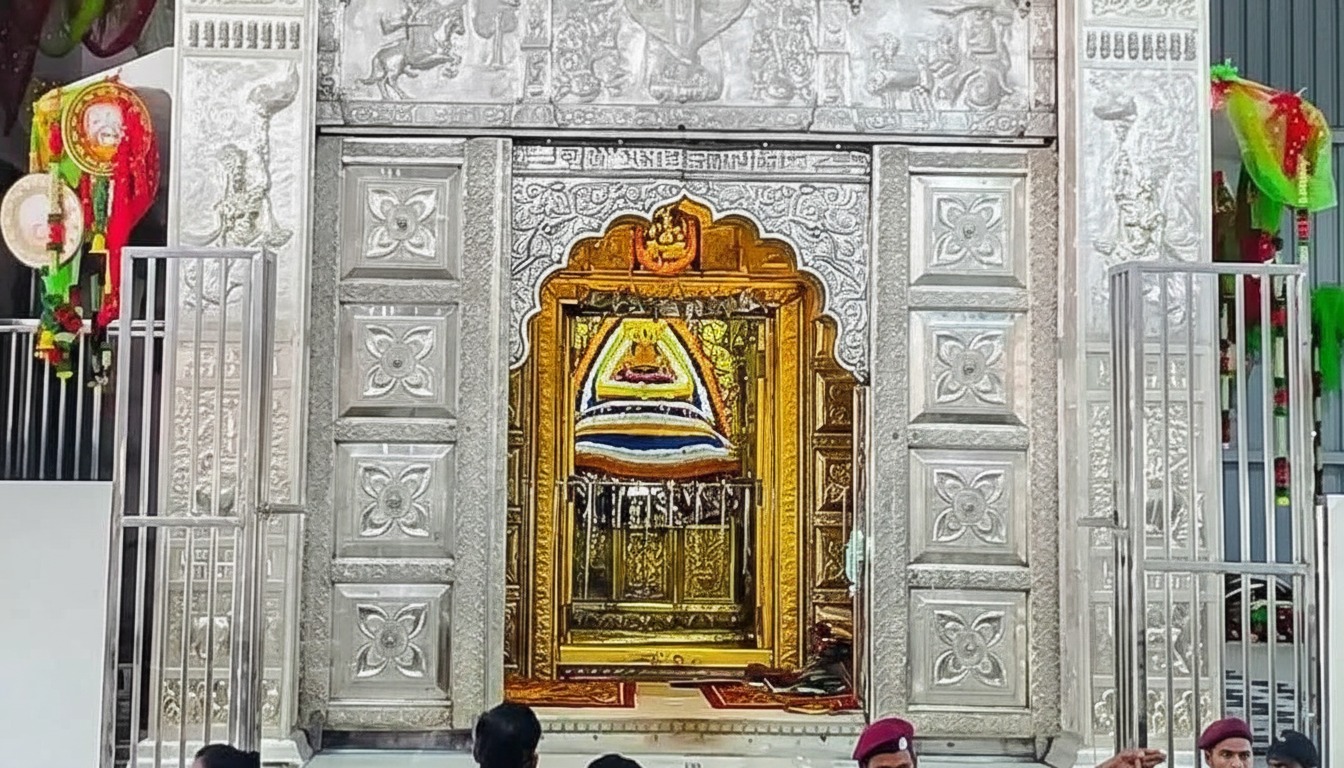
Khatu Shyam Ji Temple is dedicated to Khatu Shyam Ji, worshipped in tradition as Barbarika, the son of Ghatotkacha and grandson of Bhima from the Mahabharata. The shrine is located in Khatu town in Sikar district and is centred on the worship of Baba Shyam in his sacred Sheesh form.
The temple is known for its white-marble structure, the sacred Shyam Kund, five daily aartis and the annual Phalgun Mela. For devotees, Khatu is also associated with the name Sheesh Ke Daani and the devotional expression Haare Ka Sahara.
Story of Khatu Shyam Ji Temple
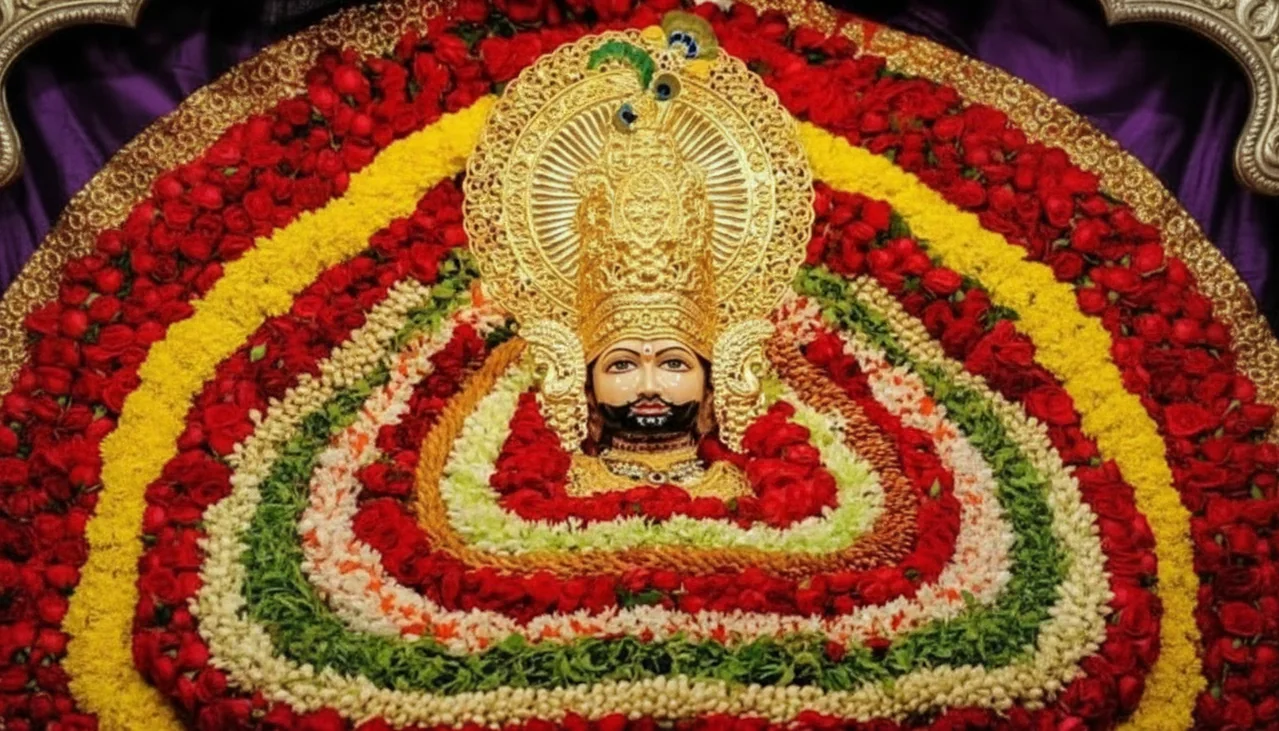
The history of Khatu Shyam Ji Temple begins with the tradition of Barbarika. According to the Mahabharata-linked account, Barbarika was a powerful warrior who had vowed to support the weaker side in the Kurukshetra war. When Krishna understood that Barbarika’s intervention could change the course of the war repeatedly, he asked him for his head. Barbarika offered it willingly, and Krishna granted him the boon that he would be worshipped by the name Shyam in Kaliyuga.
The temple’s own origin tradition connects Khatu with the later discovery of Barbarika’s sacred head. Rajasthan Tourism records the belief that the head was placed in the Rupawati River after the war and was later found buried at Khatu. A cow is said to have begun releasing milk at the spot, leading villagers to uncover the sacred head. The tradition then connects its installation with Roop Singh Chauhan, the ruler of Khatu. Published sources differ on the exact historical date of the temple’s construction, so 1027 CE is best treated as the traditional establishment date rather than a settled archaeological date.
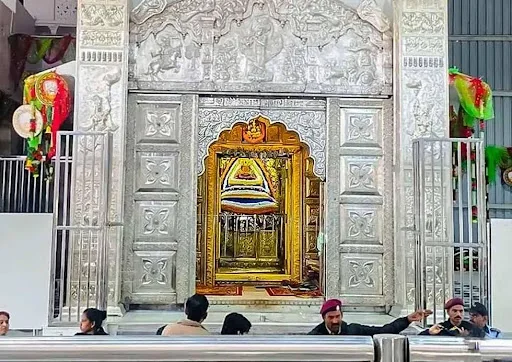
The shrine seen today reflects later development of the temple. Accounts commonly associate a major rebuilding with the 18th century, while the Rajasthan Devasthan Department’s development plan records 1777 as the construction year. The present complex is built largely in marble, with lime mortar and mosaic work. Its Jagmohan, or prayer hall, has painted mythological scenes on the walls, while the marble entrance and exit gates have ornamental floral detailing. The shutters of the sanctum are covered with metal sheeting.
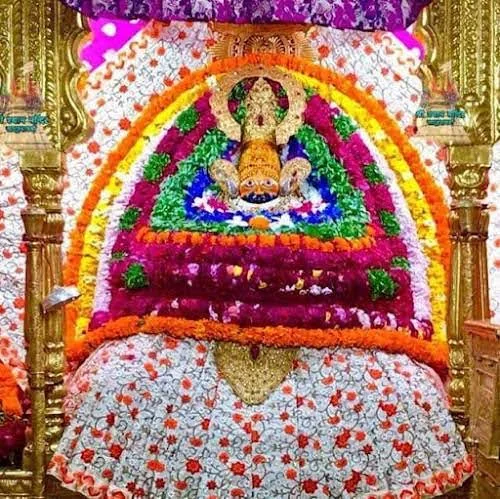
The central form of worship is the Sheesh of Shyam Baba, rather than a conventional full-bodied image. The sacred geography around the shrine is equally important. Shyam Kund is traditionally identified as the place where the head was recovered, while Shyam Bagichi is associated with the flowers offered to the deity. The temple complex also includes the Gopinath Ji and Hanuman Ji shrines recorded in the temple’s administrative documents.
What Makes Khatu Shyam Ji Temple Sacred for Devotees
Barbarika and the Sheesh Daan
The central tradition of Khatu Shyam Ji is the story of Barbarika, who is described as the son of Ghatotkacha and grandson of Bhima. He possessed three powerful arrows and had taken a vow to fight for whichever side was weaker.
According to the tradition, Krishna tested Barbarika before the Mahabharata war and recognised that his vow, combined with his extraordinary power, would make the conflict impossible to resolve. Krishna therefore asked for Barbarika’s head as charity. Barbarika accepted the request, giving rise to the name Sheesh Ke Daani, the giver of his head.
Krishna’s Boon
After Barbarika’s sacrifice, Krishna is traditionally believed to have granted him a special boon: in Kaliyuga he would be worshipped by the name Shyam, Krishna’s own name. This belief forms the religious basis for the present identity of Khatu Shyam Ji.
The widely used expression Haare Ka Sahara refers to Shyam Baba as the support of those who have been defeated or are facing hardship. It is a devotional expression within the tradition, not a promise of a particular worldly outcome.
Shyam Kund
Shyam Kund is one of the most important sacred places associated with Khatu Shyam Ji. Temple tradition identifies it as the place from which the sacred head was recovered.
Devotees also take ritual baths at the kund, particularly during major religious gatherings. Such practices belong to the religious tradition of Khatu and should be understood as acts of devotion rather than as guaranteed cures or medical treatments.
Nishaan Yatra
The Nishaan is a devotional flag offered to Baba Shyam. During the Phalgun Mela, devotees travel towards Khatu carrying these flags, often on foot from the Reengus side.
The procession is one of the clearest expressions of the temple’s living devotional culture. Wikipedia and regional government material both identify the Reengus–Khatu foot pilgrimage as an important part of the tradition.
The Gourishankar Tradition
Gourishankar Temple, located near the main shrine, is another important sacred place in Khatu. A local tradition tells of an attempted attack on the Shiva lingam and the appearance of what devotees interpreted as a miraculous sign.
This story belongs to local religious tradition and is presented as such rather than as a verified historical event.
Annual Festivals & Rituals at Khatu Shyam Ji Temple, Khatu, Rajasthan
Daily Aartis Celebrations at the Temple
Five principal aartis form the daily worship cycle: Mangala Aarti, Shringar Aarti, Bhog Aarti, Sandhya Aarti and Shayan Aarti. Rajasthan Tourism also notes the recitation of the Shri Shyam Aarti and Shri Shyam Vinati during the daily cycle.
Phalgun Mela Celebrations at the Temple
The Phalgun Mela, also called the Lakhi Mela, is the temple’s largest annual gathering. It centres on the bright fortnight of Phalguna, with Ekadashi and the surrounding days being especially important. The fair brings together darshan, Nishaan processions, bhajans, kirtans and large-scale pilgrim movement. Exact dates and crowd-management arrangements change each year and should be checked against the current committee and district instructions. The Shri Shyam Mandir Committee published dedicated route and parking arrangements for the 2026 mela.
Shyam Janmotsav Celebrations at the Temple
Shyam Janmotsav is observed on Kartik Shukla Ekadashi, also known as Dev Uthani Ekadashi, in the Shyam devotee tradition. The observance is distinct from Krishna Janmashtami and has its own place in the annual calendar of Khatu Shyam Ji.
Ekadashi and Dwadashi Celebrations at the Temple
Ekadashi and Dwadashi hold a special place in Khatu Shyam devotion. Devotees visit the temple in larger numbers on these dates, and crowd levels can rise sharply when an Ekadashi coincides with a weekend or another major observance.
Janmashtami Celebrations at the Temple
Janmashtami is also observed at Khatu as a festival associated with Lord Krishna. It should not be confused with Shyam Janmotsav, which the Shyam devotee tradition places on Dev Uthani Ekadashi.
Sacred Places to Visit Near Khatu Shyam Ji Temple
Shyam Kund : Shyam Kund is the sacred pond traditionally associated with the recovery of the Sheesh of Shyam Baba. It is one of the principal places to include when understanding the history of the temple.
Shyam Bagichi : Shyam Bagichi is a garden near the temple whose flowers are traditionally used for the deity’s worship. The samadhi of the devotee Alu Singh is also associated with the garden.
Gopinath Ji Temple : Gopinath Ji is part of the wider temple estate recorded in the Shri Khatu Shyam Ji Temple Board documentation. It forms part of the religious landscape around the main shrine.
Hanuman Ji Singhpole : Hanuman Ji Singhpole is another shrine included within the temple estate described in the state’s temple-board documentation. It is closely connected with the wider Khatu temple precinct.
Gourishankar Temple : Gourishankar Temple is a nearby Shiva shrine associated with local religious traditions. The temple is particularly useful for understanding how the wider Khatu pilgrimage area includes more than one sacred centre.
Jeenmata Temple : Jeenmata Temple is a major Shakti shrine in the wider Sikar region and is often combined with a Khatu Shyam pilgrimage. It provides a second important religious destination when travelling through the Shekhawati area.
Plan Khatu Shyam Ji Temple Darshan
For current darshan planning, queue information, date-specific timings and Naman Darshan’s Guided Darshan Assistance, continue to the dedicated Khatu Shyam Ji Darshan page.
Common Questions About Visiting Khatu Shyam Ji Temple
Visitor Information
Darshan Timing
Address
Shri Khatu Shyam Ji Temple, Khatu, Tehsil Danta Ramgarh, Sikar, Rajasthan, India
Notable Events
c. 1027 CE — Traditional establishment of the shrine – Temple tradition and several published sources associate the first temple with Roop Singh Chauhan and the discovery of the sacred Sheesh at Khatu. This should be treated as a traditional date, as published construction dates differ. • 18th century — Later rebuilding tradition – Later accounts associate a major rebuilding of the shrine with the Marwar period and Diwan Abhay Singh. The precise chronology is not consistent across published sources. • 1779 — Battle of Khatu-Shyamji – Historian Rima Hooja's history of Rajasthan, cited by Wikipedia, records a regional battle at Khatu-Shyamji in which local Shekhawat forces defeated Murtaza Khan Bhadech. This forms part of the historical background of the Khatu region. • 1986 — Shri Shyam Mandir Committee Trust registered – The Rajasthan government’s temple-board document records the registration of the Shri Shyam Mandir Committee Trust under the Rajasthan Public Trusts Act on 4 March 1986. • 2026 — Dedicated Phalgun Mela arrangements – The Shri Shyam Mandir Committee published dedicated 2026 guidance covering pilgrim routes, parking and temple-entry arrangements for the annual Phalgun Mela.
How to Reach the Temple
By rail: Ringas Junction is the nearest major railway station, approximately 17 kilometres from Khatu. Taxis, jeeps and other local transport connect the station with the temple town.
By air: Jaipur International Airport is the nearest major airport. From the airport, the temple is reached by road towards Jaipur-Sikar and the Khatu/Reengus area. Rajasthan Tourism places the airport at about 80 kilometres from the temple.
By road: Khatu is connected by road with Jaipur, Sikar and other towns in Rajasthan. Buses and private vehicles are commonly used for the journey, while local transport serves the final stretch into Khatu.
During Phalgun Mela: Road access, parking and the final pedestrian approach can be different from an ordinary day. The Shri Shyam Mandir Committee publishes specific route and parking arrangements for the annual fair.
Jubilee Hills, Hyderabad, Telangana