
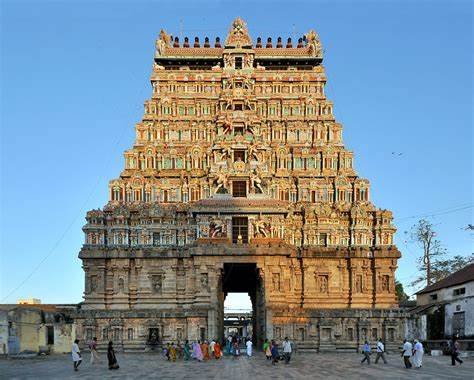
About Thillai Nataraja Temple, Chidambaram, Tamil Nadu
Thillai Nataraja Temple, also known as Chidambaram Nataraja Temple, is dedicated to Lord Shiva in his form as Nataraja, the Lord of Dance. It is one of the five Pancha Bhuta Sthalams, where Shiva is worshipped as Akasha, or space, and is also one of the important centres of Tamil Shaivism.
The temple is known for the Nataraja shrine in the Chit Sabha, the Chidambara Rahasya, the golden-roofed halls, the four Raja Gopurams and its connection with the sacred traditions of dance. The temple's annual worship includes Arudra Darshan and Aani Thirumanjanam, while the wider Chidambaram tradition is closely associated with Bharatanatyam and the offering of dance to Nataraja.
Story of Thillai Nataraja Temple
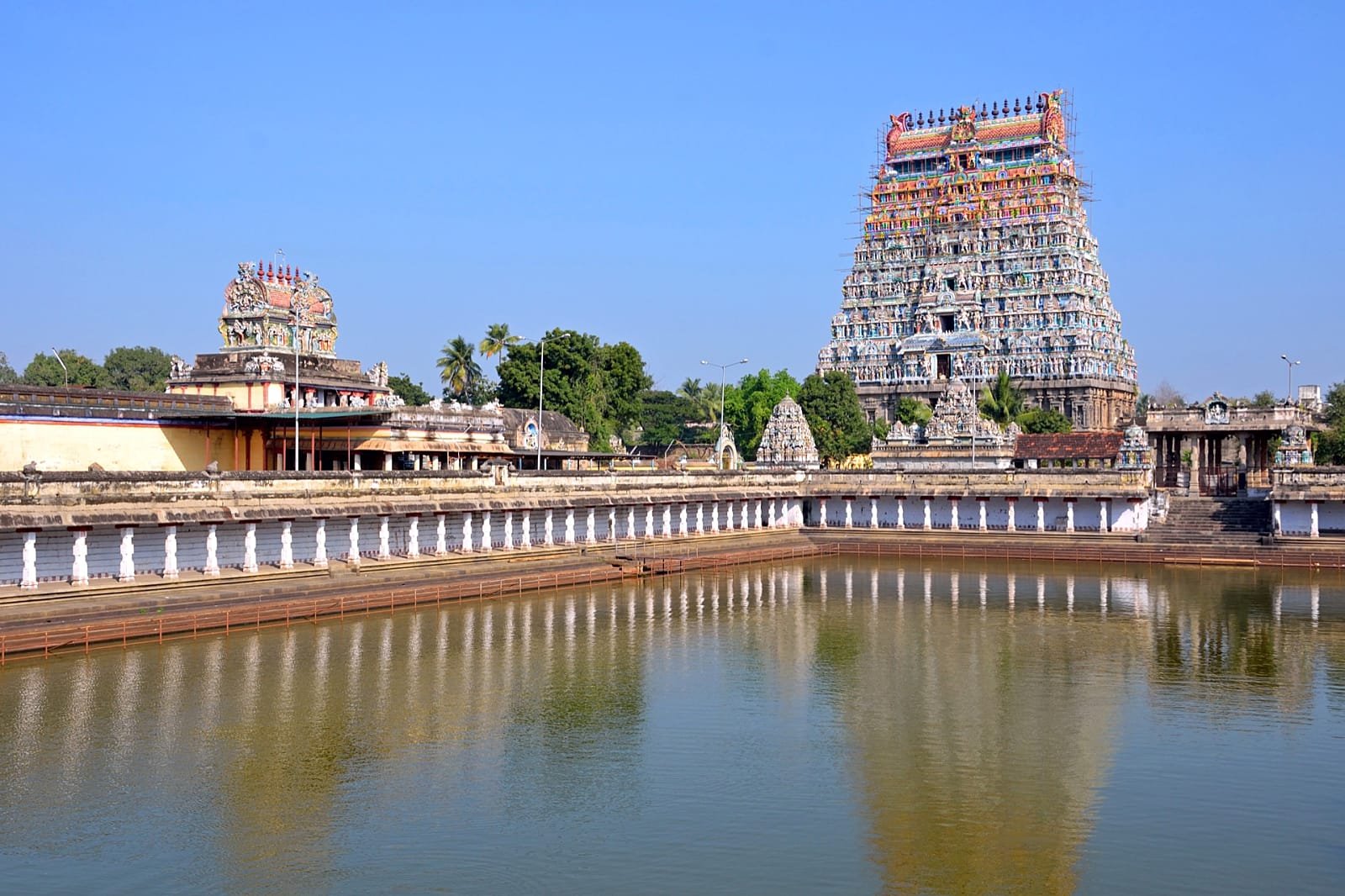
The sacred history of Chidambaram is older than the present temple structure. Tamil Shaiva literature associated with Appar and Sambandar refers to Shiva at this site, when the surrounding region was known as Thillai, after the Thillai trees that once grew in the area. The temple developed into an important Shaiva centre under the Cholas, who regarded Nataraja as an important royal and devotional deity.
The early Chola period was important in shaping the temple that survives today. The reign of Parantaka Chola I is associated with the historic golden roofing of the central shrine, while later Chola rulers expanded the enclosures, halls and subsidiary shrines. The temple continued to receive additions and repairs under the Pandyas, Vijayanagara rulers and later patrons, creating the layered complex seen today.
The temple covers about 40 acres and is organised through a series of concentric enclosures. Four large Raja Gopurams mark the east, south, west and north entrances. The gopurams carry large bodies of sculptural work, and the eastern gateway is particularly known for its representation of the 108 karanas of the Natya Shastra, linking the temple's architecture directly with the tradition of Indian classical dance.
At the centre of the complex are the five traditional Sabhas: Chit Sabha, Kanaka Sabha, Nritta Sabha, Deva Sabha and Raja Sabha. The Chit Sabha is the inner shrine of Nataraja, while the nearby Kanaka Sabha is the golden hall associated with daily worship. The Nritta Sabha is known for its chariot-like form and sculptural treatment, and the Raja Sabha is the great thousand-pillared hall. Together these spaces make the architecture of Chidambaram inseparable from its worship of Shiva as Nataraja, the divine dancer.
What Makes Thillai Nataraja Temple Sacred for Devotees
Nataraja and the Ananda Tandava
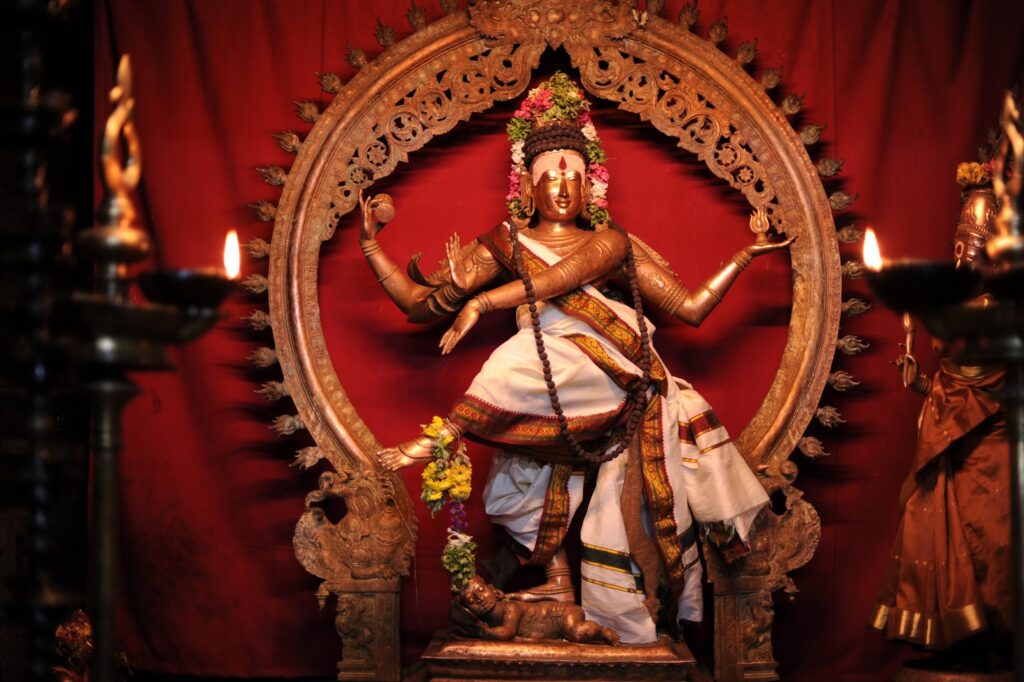
According to the sacred tradition of Chidambaram, Lord Shiva manifested at Thillai as Nataraja and performed the Ananda Tandava, the Dance of Bliss. The dance is understood within Shaiva tradition through the Lord's five cosmic acts: creation, preservation, dissolution, concealment and grace.
The image of Nataraja expresses this idea through movement and symbolism. One foot rests upon Apasmara, associated in the tradition with ignorance, while the raised foot represents release and the lifted hands carry the drum and fire. The form is not presented simply as a sculpture of a dancer; it is the temple's central image of Shiva as the Lord whose dance sustains the cosmic order.
Patanjali and Vyaghrapada
One of the best-known traditions of Chidambaram centres on the sages Patanjali and Vyaghrapada. They are said to have worshipped Shiva in the Thillai forest and to have desired to witness the Lord's divine dance.
According to the temple tradition, Shiva appeared before the two sages and performed the Ananda Tandava in Chidambaram. Their association with the temple remains visible in the sacred and artistic traditions of the shrine. The account belongs to the religious history of Chidambaram and should be understood as a temple legend rather than as archaeological evidence.
Chidambara Rahasya
A distinctive feature of the Chit Sabha is the Chidambara Rahasya, the tradition of worshipping Shiva in a formless aspect. Behind the Nataraja image is a curtained space that represents Akasha, or space.
During specified rituals, the curtain is opened as part of the worship. In the religious understanding of Chidambaram, the absence of a conventional visible image in this space represents the formless nature of the divine. This is the central idea behind the temple's connection with the Akasha element.
Sivakamasundari and the temple's sacred forms
Nataraja is worshipped with Sivakamasundari, the goddess who represents the divine feminine presence beside Shiva. The temple also contains the shrine of Thirumoolanathar and other Shaiva deities, along with shrines representing the wider religious life of Chidambaram.
The complex also contains the shrine of Govindaraja Perumal, a Vishnu shrine associated with the Divya Desam tradition. Its presence is one of the distinctive features of Chidambaram, where Shaiva worship remains central while Vaishnava traditions are also represented within the larger temple complex.
Chidambaram and the tradition of dance
The identity of Chidambaram is closely connected with dance. The 108 karanas represented on the temple's gateways provide one of the clearest architectural links between the sacred image of Nataraja and the classical dance tradition described in the Natya Shastra.
This relationship continues in the annual Natyanjali festival, in which dance is presented as an offering to Nataraja. The festival began at Chidambaram in 1981 and has since become a major annual dance event associated with the temple town.
Annual Festivals & Rituals at Thillai Nataraja Temple, Chidambaram, Tamil Nadu
Daily Worship Celebrations at the Temple
Worship at Thillai Nataraja Temple follows a traditional sequence of daily pujas performed by the Chidambaram Dikshitars. The ritual day includes several worship periods, with the public's darshan taking place around the temple's daily ritual schedule.
Aani Thirumanjanam Celebrations at the Temple
Aani Thirumanjanam, celebrated in the Tamil month of Aani, is one of the two principal annual festivals of the temple. Nataraja is taken in procession and the festival includes the ceremonial abhishekam of the deity. It is one of the most important occasions in the Chidambaram ritual calendar.
Arudra Darshan Celebrations at the Temple
Arudra Darshan, or Margazhi Tiruvadirai, is the other major annual festival associated with Nataraja. Celebrated during the Tamil month of Margazhi, it centres on the worship of Shiva as Nataraja and his cosmic dance.
Maha Shivaratri Celebrations at the Temple
Maha Shivaratri is an important night of worship for Shiva and has a special place in Chidambaram because of the temple's identity as the shrine of Nataraja. It is also the period around which Natyanjali is traditionally organised.
Natyanjali Celebrations at the Temple
Natyanjali began in 1981 as an annual offering of dance to Lord Nataraja. Classical dancers from across India and abroad have taken part in the festival, making Chidambaram an important meeting point of temple worship and Indian classical dance.
Other Annual Observances Celebrations at the Temple
The temple calendar also includes observances connected with festivals such as Thai Poosam, Panguni Uthiram, Chitra Pournami, Aavani and Purattasi. Dates and arrangements vary according to the Tamil calendar and temple practice.
Sacred Places to Visit Near Thillai Nataraja Temple
Thillai Kali Temple : Thillai Kali Temple is located outside the main Nataraja Temple complex and is closely connected with the local tradition of the dance contest between Shiva and Kali. The temple is an important Shakta shrine in Chidambaram.
Govindaraja Perumal Temple : The Govindaraja shrine is located within the wider Nataraja Temple complex and is one of the notable Vishnu shrines of Chidambaram. It is associated with the Divya Desam tradition of Vaishnavism.
Tiruvetkalam Temple : Tiruvetkalam is a Shiva temple near Chidambaram and is associated with the Arjuna worship tradition. It is part of the wider Shaiva pilgrimage geography around the town.
Pichavaram Mangrove Forest : Pichavaram is known for its extensive mangrove ecosystem and waterways. The Thillai tree associated with the traditional name of Chidambaram is also connected with the landscape of the Pichavaram region.
Annamalai University : Annamalai University is located in Chidambaram and is one of the town's major educational and cultural institutions. It adds a different dimension to the town beyond its temple heritage.
Plan Thillai Nataraja Temple Darshan
For current darshan planning, detailed timings, entry preparation and Naman Darshan's Guided Darshan Assistance, continue to the dedicated Thillai Nataraja Temple Darshan page.
Common Questions About Visiting Thillai Nataraja Temple
Visitor Information
Entry Fee
No general admission fee is ordinarily listed – Special services or arrangements, where applicable, are separate from ordinary temple entry.
Darshan Timing
Address
Thillai Nataraja Temple, East Car Street, Chidambaram,, Tamil Nadu 608001, India
Notable Events
6th–7th centuries — Early Tamil Shaiva references – The temple at Thillai is associated with the early Tamil Shaiva devotional tradition through references in the Tevaram hymns of Appar and Sambandar. • 10th century — Chola development – The temple was substantially developed under the Cholas, when Chidambaram was an important royal and Shaiva centre. Parantaka Chola I is associated with the historic golden roofing of the central shrine. • 11th–12th centuries — Major expansion – The reigns of Kulottunga Chola I and Vikrama Chola saw major work on the temple's enclosures, halls, shrines and wider pilgrimage infrastructure. • 13th century — Growth of the gateway architecture – Later medieval rulers contributed to the monumental gopurams and the sculptural program that gives the gateways much of their present character. • 16th century — Vijayanagara patronage – The northern gopuram is associated with the Vijayanagara period and the reign of Krishnadevaraya. • 1981 — Natyanjali begins – The Natyanjali festival was established at Chidambaram as an annual offering of dance to Lord Nataraja. • 2014 — Temple administration restored to Dikshitars – The Supreme Court set aside the earlier state takeover and restored administration to the hereditary priestly community.
How to Reach the Temple
By rail: Chidambaram Railway Station is the nearest railway station and is close to the temple area. Local transport and walking connections are available from the station.
By road: Chidambaram is connected by regular road services to major cities and towns in Tamil Nadu. Bus and taxi services are available for the town and temple area.
By air: Travellers generally use airports at Chennai or Tiruchirappalli and continue to Chidambaram by road or rail. The nearest practical airport can vary depending on the route and available connections, so current transport schedules should be checked before travel.
Within Chidambaram: The temple stands in the centre of the town, and the surrounding streets become increasingly pedestrian-heavy during major festivals. Local auto-rickshaws, taxis and walking routes provide access to the temple area.
Guruvayur, Thrissur, Kerala