
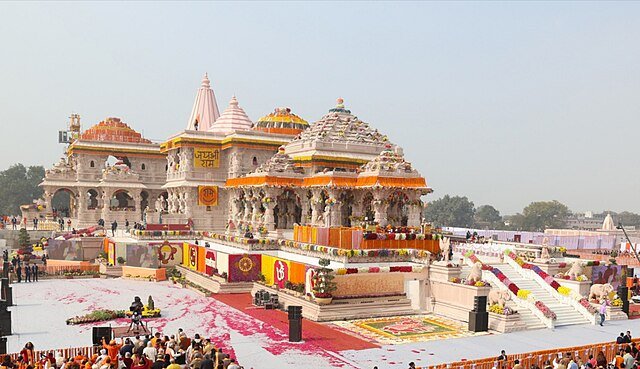
About Ram Mandir Bhubaneswar, Odisha
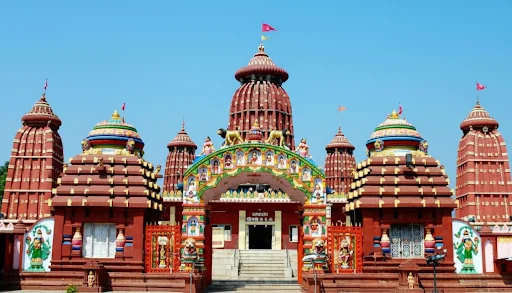
Ram Mandir is a modern Hindu temple in Kharavel Nagar on Janpath in Bhubaneswar, dedicated to Lord Rama, Goddess Sita and Lord Lakshmana. The temple is managed by a private trust and is one of the city's better-known shrines dedicated to Rama.
The temple is recognised by its tall central spire, saffron-coloured exterior and the group of shrines within its premises. Ram Navami, Vivaha Panchami, Janmashtami, Dussehra, Shivaratri and Pana Sankranti are among the major festivals observed here, with morning and evening aarti forming part of its regular devotional life.
Story of Ram Mandir Bhubaneswar
Unlike Lingaraj, Mukteshwar and the other ancient temples of Old Bhubaneswar, Ram Mandir belongs to the modern period of the city's religious development. The temple was formally consecrated on 27 June 1979 and was established as a shrine for the worship of Lord Rama in the growing capital city. It is managed by a private trust rather than being one of the medieval temple institutions of Ekamra Kshetra.
The principal images in the temple are Lord Rama, Goddess Sita and Lord Lakshmana. Their presence gives the shrine its central Rama Darbar character, while separate shrines within the complex are dedicated to deities including Lord Hanuman and Lord Shiva. The temple therefore combines the worship of Rama with other familiar forms of Hindu devotion rather than functioning as a single-deity shrine.
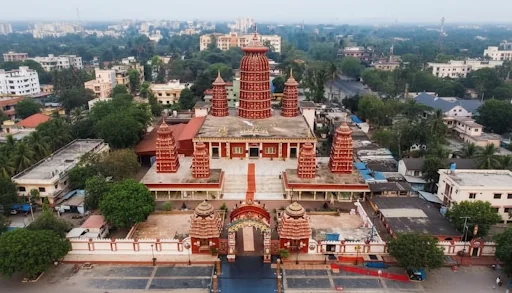
The most recognisable feature of Ram Mandir is its high central shikhara, which can be seen from different parts of Bhubaneswar. Public descriptions commonly associate the temple with Odisha's traditional temple vocabulary, while its saffron-coloured exterior and modern construction distinguish it from the older stone temples of the city. The complex has a garden and additional shrine spaces around the main temple, giving the site a different character from the tightly enclosed medieval temple compounds of Old Bhubaneswar.
The temple's importance is therefore tied less to architectural antiquity and more to its place in modern Bhubaneswar's religious life. Since its establishment, it has provided a prominent city-centre setting for Rama worship, daily aarti and annual festivals. Its tall spire has also made the temple a familiar landmark along the Janpath–Kharavel Nagar area.
What Makes Ram Mandir Bhubaneswar Sacred for Devotees
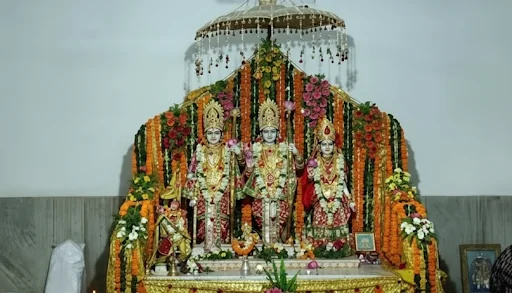
Lord Rama is worshipped here as the seventh avatar of Lord Vishnu and as the central figure of the Ramayana tradition. The presence of Sita and Lakshmana alongside Rama represents the familiar Rama Darbar form found across many Hindu temples.
The temple does not have a widely documented ancient sthala-purana comparable to the legends attached to several of Bhubaneswar's older shrines. Its religious identity is instead built around the continuing worship of Rama and the observances associated with the Ramayana, Vaishnava devotion and the Hindu festival calendar.
Hanuman also has an important place within the temple complex. His shrine reflects the close devotional relationship traditionally expressed between Hanuman and Rama, while the presence of Shiva and other deities gives the complex a broader Hindu character.
Daily worship includes regular puja and aarti, with the morning and evening aarti being among the recurring devotional observances associated with the temple. Festival days bring additional worship and larger gatherings, especially around Ram Navami and other major occasions.
Annual Festivals & Rituals at Ram Mandir Bhubaneswar, Odisha
Daily Aarti and Puja Celebrations at the Temple
The temple follows a regular cycle of puja and aarti. Morning and evening worship form part of the temple's daily devotional routine, while the detailed timing can vary according to temple practice and special occasions.
Ram Navami Celebrations at the Temple
Ram Navami is the principal festival associated with the temple. It marks the birth of Lord Rama and is observed with special worship, decoration and devotional gatherings.
Vivaha Panchami Celebrations at the Temple
Vivaha Panchami commemorates the traditional wedding of Lord Rama and Goddess Sita. Special worship is observed in keeping with the Rama-Sita tradition.
Janmashtami Celebrations at the Temple
Janmashtami, the celebration of the birth of Lord Krishna, is also observed at Ram Mandir as part of the temple's wider Hindu festival calendar.
Dussehra Celebrations at the Temple
Dussehra is associated with the victory of Rama over Ravana in the Ramayana tradition. The festival connects the temple directly with one of the best-known episodes of Rama's life.
Shivaratri Celebrations at the Temple
Shivaratri is observed with worship of Lord Shiva, reflecting the presence of Shiva within the temple complex and the wider religious culture of Odisha.
Pana Sankranti Celebrations at the Temple
Pana Sankranti, the traditional Odia New Year, is another important occasion in the temple's annual calendar and brings the shrine into the seasonal religious life of Odisha.
Raksha Bandhan Celebrations at the Temple
The temple has also been associated with an annual fair on Raksha Bandhan, adding a community dimension to its festival calendar.
Sacred Places to Visit Near Ram Mandir Bhubaneswar
Lingaraj Temple : Lingaraj Temple is one of Bhubaneswar's principal historic shrines and an important example of Kalinga temple architecture. Its ancient setting provides a strong contrast to the modern Ram Mandir.
Mukteshwar Temple : Mukteshwar Temple is known for its ornate gateway, sculptural detail and importance in the development of Odisha's temple architecture.
Rajarani Temple : Rajarani Temple is an 11th-century monument noted for its sandstone sculpture and distinctive architectural form.
Ananta Vasudeva Temple : Ananta Vasudeva is an important Vaishnava temple in Bhubaneswar and is dedicated to Krishna, Balarama and Subhadra. It provides another perspective on Vishnu worship within the city's historic temple landscape.
Udayagiri and Khandagiri Caves : The Udayagiri and Khandagiri caves preserve some of the city's most important early Jain heritage and offer a different chapter of Bhubaneswar's religious history.
Odisha State Museum : The Odisha State Museum contains sculptures, manuscripts, archaeological material and other collections that help place Bhubaneswar's temples within the broader history of Odisha.
Plan Ram Mandir Bhubaneswar Darshan
For current darshan planning, date-specific timings and Naman Darshan's Guided Darshan Assistance, continue to the dedicated Ram Mandir Darshan page.
Common Questions About Visiting Ram Mandir Bhubaneswar
Visitor Information
Entry Fee
General temple entry is generally described as free. – Any separate service or assistance should not be treated as temple entry.
Darshan Timing
Address
Ram Mandir, Janpath Road, Kharavel Nagar, Unit-3, Bhubaneswar, Odisha 751001, India
Notable Events
27 June 1979 — Formal consecration – Ram Mandir was formally consecrated and entered the modern religious landscape of Bhubaneswar. • 1979 onward — Development as a city-centre Rama shrine – The temple developed as a prominent modern place of worship dedicated to Rama, Sita and Lakshmana and is managed by a private trust. • Festival tradition continues – Ram Navami, Vivaha Panchami, Janmashtami, Dussehra, Shivaratri and Pana Sankranti became established parts of the temple's annual religious calendar, with Raksha Bandhan also associated with an annual fair. • Present day — Recognised city landmark – The temple continues to be listed by Odisha Tourism and other official or established travel references among Bhubaneswar's religious places, while its tall shikhara remains a recognisable landmark of the central city.
How to Reach the Temple
By Rail: Bhubaneswar Railway Station is the nearest major railway station and is roughly 1.5 kilometres from the temple according to established travel references.
By Air: Biju Patnaik International Airport is the main airport serving Bhubaneswar. The temple is located within the central city and can be reached by road from the airport.
By Road: Ram Mandir is on Janpath near Kharavel Nagar and is connected to other parts of Bhubaneswar by buses, auto-rickshaws, taxis and private vehicles.
Within Bhubaneswar: The temple is centrally located and can be combined with visits to the city's other religious and heritage sites. Traffic and parking conditions may become more difficult during major festivals.
Bhadrachalam, Telangana