
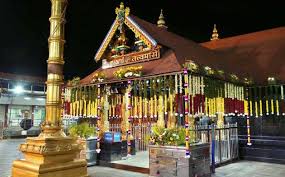
About Sabarimala Temple, Sabarimala, Kerala
Sabarimala Temple, also known as Sabarimala Sree Dharma Sastha Temple, is dedicated to Lord Ayyappa and stands on Sabarimala hill in Pathanamthitta district, Kerala. The shrine is surrounded by the forests and hills of the Western Ghats and forms the centre of the Sabarimala pilgrimage tradition.
The temple is known for the 41-day Vratham, the Irumudi carried by pilgrims, the sacred Pathinettampadi or 18 steps, Neyyabhishekam and the annual Mandala-Makaravilakku season. The traditions of Ayyappa, Malikappurathamma, Vavar and the sacred places along the route are closely connected with the temple.
Story of Sabarimala Temple
The history of Sabarimala is closely connected with the Pandalam royal family and the Ayyappa tradition. According to the religious tradition, Lord Ayyappa, also known as Manikandan, chose Sabarimala as his abode after completing his earthly mission. Written records are much later: a 1793 document of the Pandalam royal family refers to revenue from the Sabarimala temple, while an 1818 survey described the shrine and its annual festival.
The present temple has been rebuilt more than once. A fire led to restoration in the early 20th century, and another major fire in 1950 destroyed the temple and the earlier stone image of Ayyappa. The present panchaloha idol was then installed. The Sannidhanam stands on a raised plateau and includes the sanctum with its gold-plated roof, four finials, mandapams, balikkalpura and flagpost. The Pathinettampadi forms the principal sacred approach to the shrine and is covered with Panchaloha. Nearby are the shrines of Kannimoola Ganapathi, Malikappurathamma, Nagaraja, Valiya Kadutha and other associated deities.
What Makes Sabarimala Temple Sacred for Devotees
Lord Ayyappa and the Manikandan tradition
According to Ayyappa tradition, Lord Ayyappa was born as the son of Shiva and Mohini, the female form of Vishnu, and is worshipped at Sabarimala as Dharma Sastha. In the widely told Manikandan story, he was brought up by the king of Pandalam and later defeated the demoness Mahishi.
After completing his mission, Ayyappa is said to have chosen Sabarimala as his abode. The story explains why the shrine is placed in the forested hills and why the pilgrimage itself forms such an important part of worship.
Sabarimala and the Pandalam tradition
The Pandalam royal family remains closely connected with Sabarimala through religious customs and the annual Thiruvabharanam procession. The traditions surrounding the royal family form part of the sacred history of the temple and continue to be observed during the pilgrimage season.
Malikappurathamma
Malikappurathamma is the principal upadevatha associated with Sabarimala. One tradition identifies her with Mahishi after her defeat by Ayyappa, while another connects her with a woman associated with Ayyappa's life who chose to remain near him.
Her shrine stands close to Sannidhanam and forms an important part of the pilgrimage. The traditions of Ayyappa and Malikappurathamma are also connected with the custom of new devotees making their first pilgrimage to Sabarimala.
Vavar and Vavaru Nada
Vavar is traditionally remembered as a close associate and devotee of Lord Ayyappa. Vavaru Nada at Sabarimala and the Vavar mosque at Erumeli are part of this tradition.
The association of Vavar with the pilgrimage has long been remembered as an example of the wider social and religious connections that developed around Sabarimala.
The meaning of the 18 sacred steps
The Pathinettampadi, or 18 sacred steps, is one of the defining features of Sabarimala. Different traditions give different meanings to the number eighteen. One widely followed interpretation connects the steps with the five senses, eight emotions, the three gunas, knowledge and ignorance.
The symbolism is therefore devotional rather than architectural alone. The climb represents the discipline expected of the pilgrim before reaching the sanctum. Traditionally, devotees carrying the Irumudi and following the prescribed Vratham ascend the sacred steps.
Tat Tvam Asi
The phrase Tat Tvam Asi, meaning “That Thou Art,” is associated with the spiritual teaching of Sabarimala. It is placed on the temple tradition alongside the wider idea that the pilgrim approaches Ayyappa through discipline, self-control and recognition of the divine within.
Annual Festivals & Rituals at Sabarimala Temple, Sabarimala, Kerala
41-Day Vratham and Malayidal Celebrations at the Temple
The pilgrimage traditionally begins with Malayidal, when the devotee wears the sacred mala and begins the 41-day Vratham. During this period, devotees are expected to follow a disciplined way of life, including restraint, vegetarian food, prayer and abstinence from alcohol and other intoxicants. The Vratham prepares the devotee for the pilgrimage and is considered an important part of Sabarimala worship rather than simply preparation for the physical climb.
Irumudi and Neyyabhishekam Celebrations at the Temple
The Irumudi Kettu is a two-compartment bundle carried by pilgrims who undertake the traditional pilgrimage. Among its offerings is the ghee-filled coconut used for Neyyabhishekam, one of Sabarimala's central offerings. During Neyyabhishekam, the ghee is offered to Lord Ayyappa. Within the tradition, the ghee represents the individual self and its offering symbolises the union of the devotee with the divine.
Padi Pooja Celebrations at the Temple
Padi Pooja is the ritual worship of the 18 sacred steps. It is performed on designated days, when the Pathinettampadi is decorated with flowers, silk and lamps and worshipped by the Tantri.
Harivarasanam Celebrations at the Temple
At the end of the temple's nightly worship, Harivarasanam is sung before the sanctum is closed. The devotional song functions as the traditional lullaby of Lord Ayyappa and has become one of the best-known rituals of Sabarimala.
Mandala Pooja Celebrations at the Temple
The Mandala period marks the principal pilgrimage season. Devotees complete the traditional 41-day observance and travel to Sabarimala for darshan during this period. Mandala Pooja forms the first major part of the annual Mandala-Makaravilakku cycle and is closely connected with the larger Ayyappa pilgrimage tradition.
Makaravilakku Celebrations at the Temple
Makaravilakku is the major annual observance around Makara Sankranti. The festival includes the Thiruvabharanam procession, in which the sacred ornaments of Lord Ayyappa are brought from Pandalam to Sabarimala. The period is also associated with Makarajyoti, which devotees traditionally regard as an auspicious celestial light seen on Makara Sankranti.
Painkuni Uthram Celebrations at the Temple
The annual Painkuni Uthram festival is observed as a ten-day celebration and includes rituals such as Pallivetta and Aarattu. It forms part of the temple's wider annual festival calendar outside the main Mandala-Makaravilakku pilgrimage season.
Onam and Vishu Celebrations at the Temple
Sabarimala also observes Onam and Vishukani during their respective Malayalam calendar periods. These observances bring the shrine into Kerala's wider seasonal festival tradition.
Sacred Places to Visit Near Sabarimala Temple
Pampa and Pampa Ganapathy Temple : Pampa is the principal base point for the shorter route to Sabarimala. Pilgrims traditionally visit Pampa Ganapathy Temple before beginning the climb towards Sannidhanam.
Neelimala and Saramkuthi : Neelimala forms part of the traditional climb from Pampa. Further along the route, Saramkuthi is associated with the first-time pilgrim, or Kanni Ayyappan, and forms part of the traditional approach to the 18 steps.
Sabari Peedam : Sabari Peedam is traditionally associated with Sabari of the Ramayana. The site forms part of the sacred geography of the Sabarimala route before the final approach to Sannidhanam.
Malikappurathamma Temple : The shrine of Malikappurathamma stands close to the main temple and is an important stop in the Sabarimala pilgrimage. Her place in the Ayyappa tradition is connected with the legends surrounding Mahishi and Ayyappa.
Erumeli : Erumeli is the starting point of the traditional long forest pilgrimage. It is associated with Sree Dharma Sastha Temple, Vavar's mosque and the Petta Thullal performed by pilgrims.
Pandalam : Pandalam is closely connected with the life and traditions of Lord Ayyappa. The Pandalam Palace and Valiya Koyikkal Temple are associated with the Thiruvabharanam procession and the royal traditions of Sabarimala.
Nilakkal Mahadeva Temple : Nilakkal Mahadeva Temple is an important halt for Sabarimala pilgrims. It is dedicated to Lord Shiva and is administered by the Travancore Devaswom Board.
Plan Sabarimala Darshan
For current darshan planning, scheduled opening information, queue guidance and Naman Darshan's Guided Darshan Assistance, continue to the dedicated Sabarimala Darshan page.
Common Questions About Visiting Sabarimala Temple
Visitor Information
Darshan Timing
Address
Sabarimala Sree Dharma Sastha Temple, Sannidhanam, Sabarimala P.O., Pathanamthitta, Kerala – 689662, India
Notable Events
1793 — Pandalam document – A surviving Pandalam royal document refers to revenue associated with the Sabarimala temple. • 1818 — Early written description – A survey by Lieutenant B. S. Ward recorded the temple and reported a substantial annual pilgrimage, showing that Sabarimala was already an established shrine. • 1902 — Restoration after fire – The Travancore ruler ordered restoration work after the temple suffered fire damage. • 1950 — Major temple fire and rebuilding – A fire destroyed the temple and damaged the earlier stone image of Ayyappa. The temple was rebuilt and the present panchaloha idol was installed. • 1969 — Flagstaff installed – The temple's dhwajastambha was installed as part of the later development of the Sannidhanam. • 1985 — 18 steps covered in Panchaloha – The sacred Pathinettampadi received its Panchaloha covering, protecting and formalising one of the defining features of the pilgrimage. • Late 20th century onward — Rapid growth of the pilgrimage – Sabarimala developed into a major national pilgrimage centre, leading to the addition of transport, accommodation, health, security and crowd-management infrastructure around the route.
How to Reach the Temple
By air: The nearest major airports are Cochin International Airport and Thiruvananthapuram International Airport. Kerala Tourism currently places them at approximately 154 km and 170 km from Sabarimala respectively, with the remaining journey completed by road.
By rail: There is no railway station at Sabarimala. Chengannur, Thiruvalla and Kottayam are the main railway options used by pilgrims, followed by road travel towards Pampa.
By road: Pilgrims travel by road to the base areas, with Pampa serving as the principal access point for the shorter pilgrimage route. The traditional Erumeli route is longer and forms part of the older forest pilgrimage tradition.
From Pampa to Sannidhanam: Vehicles do not continue to the hill shrine. From Pampa, pilgrims continue on foot towards Sannidhanam, following the regulated pilgrimage route.
Traditional Erumeli route: The Erumeli route is associated with the older forest pilgrimage and includes Erumeli, the Dharma Sastha shrine and Vavar mosque before the longer trek towards Pampa and Sabarimala.
Gangotri, Uttarkashi, Uttarakhand