
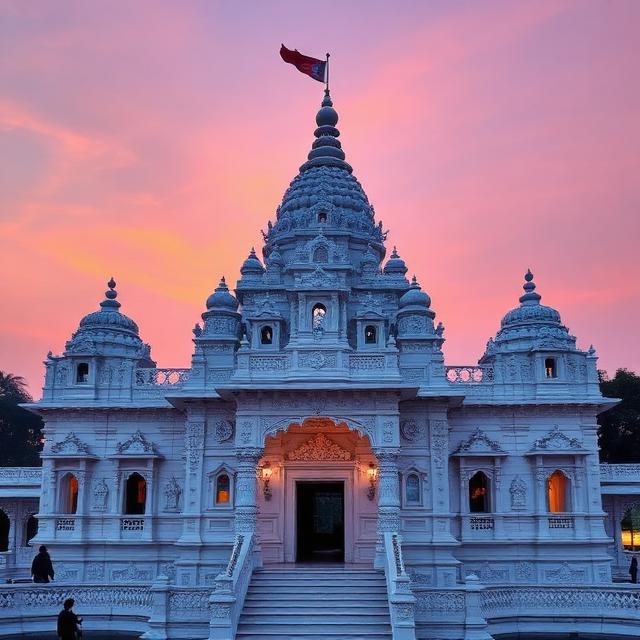
About Sringeri Sharada Peetham Temple, Sringeri, Karnataka
Sringeri Sharada Peetham is a historic centre of Advaita Vedanta on the banks of the Tunga River in Karnataka. According to the Peetham's tradition, Adi Shankaracharya established the Dakshinamnaya Sri Sharada Peetham here more than twelve centuries ago. It is regarded as the southern Amnaya Peetham among the four associated with his teaching tradition.
At the centre of the complex is Sri Sharadamba Temple, dedicated to Goddess Sharadamba, the form of Saraswati worshipped here as the deity of knowledge. The wider Peetham also includes Sri Vidyashankara Temple and several other shrines, while Vedic study, worship and the Guru Parampara remain part of Sringeri's living tradition.
Story of Sringeri Sharada Peetham Temple
According to the Peetham's history, Sringeri was chosen by Adi Shankaracharya as the place for his first Math in the south. A well-known tradition tells of the Acharya seeing a cobra spreading its hood over a frog in labour beside the Tunga. The sight is understood within the tradition as a sign of the sanctity of the place, where natural enemies appeared to live in harmony.
The original shrine of Sri Sharadamba was simple, with a sandalwood image installed over a Sri Chakra associated with Adi Shankaracharya. Over the centuries the shrine developed into the present granite temple. Sri Sharadamba's current temple structure was consecrated in 1916, and its Mahamandapa contains large carved stone pillars and images of deities and guardians.
Sri Vidyashankara Temple, built in 1338, is the other principal shrine of the complex. It combines Hoysala or Chalukyan and Dravidian architectural features and is known for its stone construction, sculptural work and twelve pillars associated with the zodiac signs. The sun's movement is traditionally connected with the arrangement of these pillars. The temple is maintained under the care of the Archaeological Survey of India because of its architectural importance.
The present form of Sringeri therefore grew in different periods rather than being the work of a single building phase. The Sharadamba shrine, Vidyashankara Temple, other temples and the institutions of the Math together form the pilgrimage centre that visitors see today.
What Makes Sringeri Sharada Peetham Temple Sacred for Devotees
Sringeri and the tradition of Adi Shankaracharya
Sringeri is closely identified with the Advaita Vedanta tradition of Adi Shankaracharya. The Peetham's own historical tradition states that the Acharya established the Sharada Peetham here for the preservation of Vedic learning and the teaching of Advaita.
Sri Sureshwaracharya, one of Adi Shankaracharya's principal disciples, is traditionally regarded as the first Acharya of the Peetham. The succession of Jagadgurus that followed is known as the Guru Parampara and remains central to the identity of Sringeri.
Goddess Sharadamba and the seat of learning
Sharadamba is worshipped at Sringeri as the deity of knowledge and learning. The name Sharada Peetham itself reflects this association with the goddess and with learning.
Aksharabhyasa, the traditional ceremony in which a child is introduced to letters and learning, is one of the important sevas associated with Sri Sharadamba. Families bring children to Sringeri for this ceremony as part of the temple's long association with education and knowledge.
The tradition of Rishyasringa
The name Sringeri is traditionally connected with Rishyasringa-giri, or the hill of Sage Rishyasringa. The sage is an important figure in the Ramayana tradition and is associated with the story of the drought in Romapada's kingdom and the Putrakameshti performed for King Dasharatha.
Kigga, near Sringeri, has a temple dedicated to Rishyasringa. The shrine and its traditions form part of the wider sacred geography associated with Sringeri.
Sringeri as a centre of learning
The Peetham's connection with learning continued long after its establishment. Successive Acharyas wrote works on Vedanta and other Shastras, while traditional schools and Veda Pathashalas developed under its patronage.
This role is still visible in Sringeri today through Vedic study, Sanskrit learning, religious discourses and the Peetham's wider educational activities.
Annual Festivals & Rituals at Sringeri Sharada Peetham Temple, Sringeri, Karnataka
Daily Worship and Sevas Celebrations at the Temple
Daily worship at Sri Sharadamba includes Archana and other traditional sevas. The Peetham also lists services such as Suprabhata Seva, Saraswati Puja, Aksharabhyasa, Udayastamana Puja and other special forms of worship.
Navaratri Celebrations at the Temple
Navaratri is the principal annual festival at Sri Sharadamba Temple and is observed for eleven days. Goddess Sharadamba is worshipped in different Alankaras, while special Vedic recitations and religious ceremonies form part of the festival. The Shata Chandi Homa concludes with Poornahuti on Mahanavami.
Shankara Jayanti Celebrations at the Temple
Shankara Jayanti commemorates Adi Shankaracharya. Recent celebrations at Sringeri have included special pujas, Veda Parayana, Pravachanams and gatherings of Vedic scholars.
Sharadamba Rathotsava Celebrations at the Temple
Sri Sharadamba Rathotsava is celebrated in the month of Magha. The festival centres on the processional worship of the goddess and is one of the important annual observances of the Sharadamba shrine.
Vidyatirtha Rathotsava Celebrations at the Temple
The Vidyatirtha Rathotsava is associated with Sri Vidyashankara Temple and is observed during the Kartika Shukla period. The traditional celebration extends over seven days and includes special pujas and Aradhana. Other observances in the annual calendar include Lalita Panchami, Deepotsava on Karthika Purnima, and special pujas on Chaitra Purnima and Vaisakha Krishna Pratipada.
Sacred Places to Visit Near Sringeri Sharada Peetham Temple
Sri Vidyashankara Temple : Sri Vidyashankara Temple is part of the main Sringeri Peetham complex and is one of its most important shrines. Its 14th-century stone architecture and zodiac pillars make it an essential part of a visit to Sringeri.
Sri Adi Shankaracharya Temple : The shrine dedicated to Adi Shankaracharya keeps the founder's connection with Sringeri visible within the Peetham complex. It is part of the religious and institutional landscape of the Math.
Kere Anjaneya Temple : Kere Anjaneya is a shrine dedicated to Lord Hanuman and is among the temples associated with the wider Sringeri pilgrimage area.
Sri Rishyasringa Temple, Kigga : Kigga, around 9 km from Sringeri, is home to the ancient shrine of Sri Rishyasringa. The temple is closely connected with the tradition from which Sringeri takes its name.
Sirimane Falls : Sirimane Falls is a nearby natural attraction in the Sringeri region and can be combined with the temple visit when planning a wider stay.
Horanadu Annapoorneshwari Temple : Horanadu is another important pilgrimage centre in the Western Ghats. Its Annapoorneshwari Temple is located about 75 km from Sringeri and can be included in a longer pilgrimage route through the Malnad region.
Plan Sringeri Sharada Peetham Darshan
For current darshan planning, temple timings, seva arrangements and Naman Darshan's Guided Darshan Assistance, continue to the dedicated Sringeri Darshan page.
Common Questions About Visiting Sringeri Sharada Peetham Temple
Visitor Information
Entry Fee
No general admission ticket is listed on the official Sri Sharadamba page – Specific sevas have their own arrangements.
Address
Dakshinamnaya Sri Sharada Peetham, Sringeri, Chikkamagaluru District, Karnataka – 577139, India
Notable Events
8th century — Establishment of the Sharada Peetham – According to the Peetham's tradition, Adi Shankaracharya established the Dakshinamnaya Sri Sharada Peetham at Sringeri. • 1338 — Sri Vidyashankara Temple – The stone Vidyashankara Temple was built during the period of the Sringeri Acharyas and with Vijayanagara-era patronage. • 1346 — Vijayanagara connection – A stone inscription at Sringeri records the relationship between the Peetham and the Vijayanagara rulers during the period associated with Sri Vidyaranya and Sri Bharati Tirtha. • 1895 — Vedic learning institution – Sri Sadvidya Sanjeevini Samskrita Pathashala was established at Sringeri, continuing the Peetham's role in traditional learning. • 1916 — Present Sri Sharadamba temple consecrated – The present granite temple structure of Sri Sharadamba was consecrated under Jagadguru Sri Chandrasekhara Bharati. • 1999 — Golden chariot for Sri Sharadamba – A golden chariot was dedicated to Goddess Sharadamba at Sringeri. • 2017 — Swarna Shikhara Kumbhabhisheka – The golden shikhara of the Sharadamba temple was consecrated as part of the centenary observance of the present temple structure.
How to Reach the Temple
By air: Mangalore International Airport is the nearest major airport, approximately 110 km from Sringeri by road.
By rail: Sringeri does not have its own railway station. Udupi and Shimoga are among the nearest railway connections, with onward travel by road.
By road: Sringeri is connected by bus, taxi and private vehicle to Mangalore, Udupi, Chikkamagaluru, Shimoga and Bengaluru.
Within Sringeri: The main temple area is concentrated around the Tunga River and the Math complex. Local transport can be used for shrines outside the immediate complex, including the temples around Kigga.
Siddhivinayak Temple: History, Deity & Visitor Guide
Learn about Siddhivinayak Temple in Mumbai, its history, distinctive Ganesha idol, architecture, rituals, festivals, timings and visitor information.
Mumbai, Maharashtra