
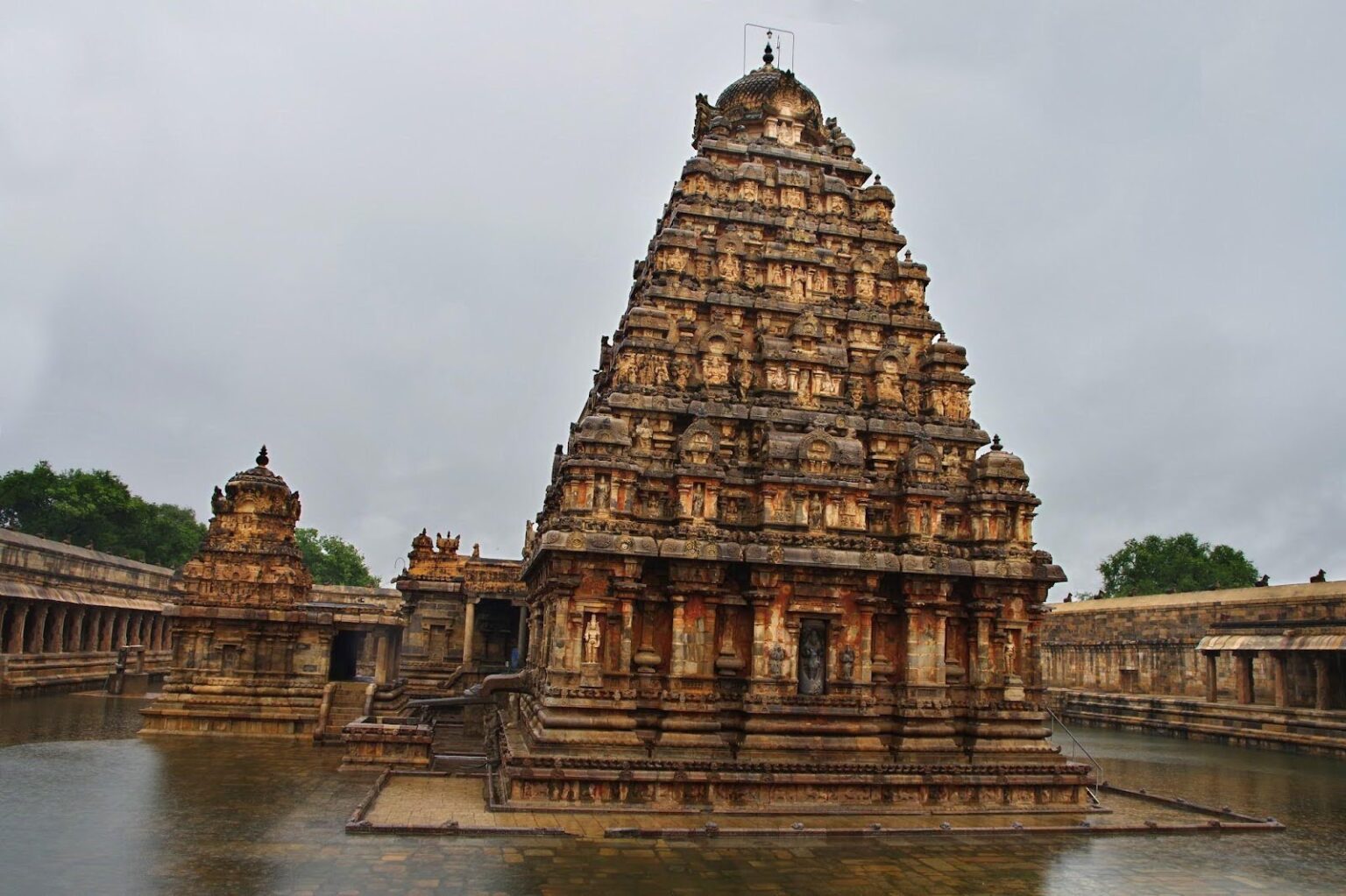
About Airavatesvara Temple, Darasuram, Tamil Nadu
Airavatesvara Temple is a 12th-century Shaiva temple at Darasuram near Kumbakonam, built during the reign of Chola king Rajaraja II. It is part of the UNESCO World Heritage property known as the Great Living Chola Temples, together with the Brihadisvara Temple at Thanjavur and the Brihadisvara Temple at Gangaikondacholapuram.
The temple is known for its stone chariot-shaped mandapa, finely carved pillars, the 24-metre vimana and the sacred traditions associated with Lord Shiva as Airavatesvara. Its sculptures also preserve stories of Shaiva saints, Hindu deities and temple life, while worship continues at the shrine as part of the living religious tradition of the region.
Story of Airavatesvara Temple
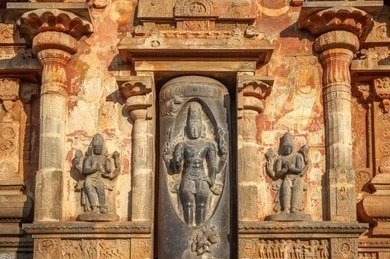
Airavatesvara Temple was built by Rajaraja Chola II in the 12th century when Darasuram formed part of the Chola urban centre around Ayirattali. An inscription belonging to the king's 21st regnal year, dated to 1166–67 CE, shows that the temple was already in existence by that time. The shrine was considerably larger in its earlier form; inscriptions refer to seven streets and seven courts, while only the principal surviving enclosure remains today.
The temple is dedicated to Lord Shiva as Airavatesvara, with Periya Nayaki Amman, also known as Deivanayaki, worshipped in a separate shrine nearby. The main temple is built in the Dravidian tradition, but its scale is more compact than the great Chola temples at Thanjavur and Gangaikondacholapuram. UNESCO notes that its character comes from its highly ornate execution, with a 24-metre vimana, axial mandapas and sculpture closely integrated with the architecture.
The most recognisable feature is the Rajagambhiran Tirumandapam, the front mandapa conceived in the form of a stone chariot. Its carved wheels and horses make the building itself part of the temple's visual language of procession and movement. The pillars and walls carry detailed sculpture, while miniature friezes narrate the lives of the 63 Nayanmars, reflecting the strong Shaiva devotional tradition of the Chola period.
Another distinctive feature is the set of carved stone steps near the bali-pitha, traditionally known as the singing steps because different notes are said to be produced when they are struck. The complex also contains subsidiary shrines and sculptures, including Shiva as Sarabhamurti, along with numerous representations of Hindu deities. The combination of architecture, inscription and sculpture is what gives Airavatesvara its particular place within Chola temple history.
What Makes Airavatesvara Temple Sacred for Devotees
The legend of Airavata
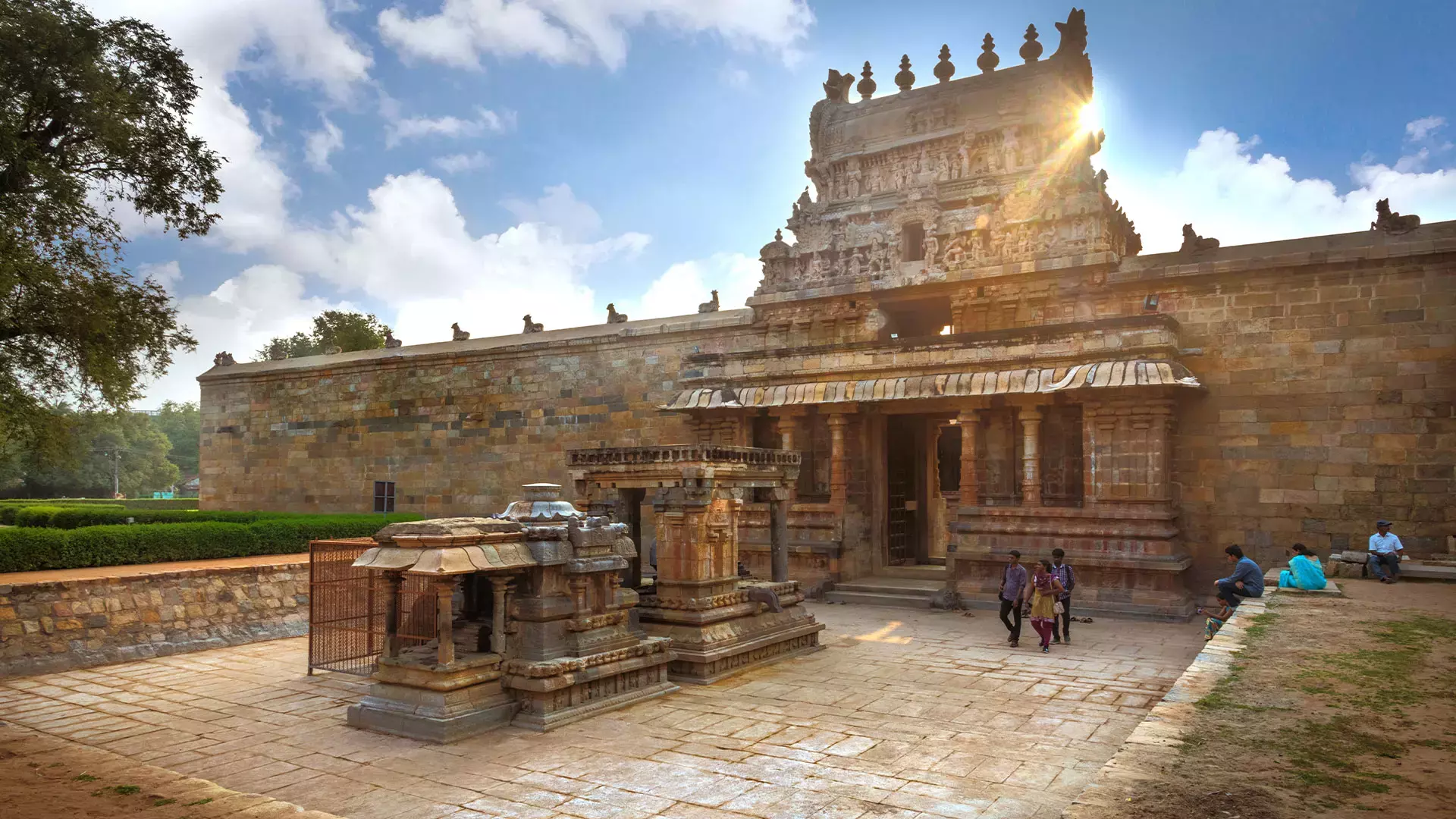
The name Airavatesvara is connected with Airavata, the white elephant of Lord Indra. According to temple tradition, Airavata lost its white colour under a curse and came to this sacred place to worship Lord Shiva. After bathing in the temple's sacred water and praying to Shiva, Airavata was believed to have regained its colour. The deity therefore came to be known as Airavatesvara.
This is a religious tradition associated with the temple and should be understood as part of its sacred history rather than as a historical explanation for the name.
The Yama tradition
Another tradition associates the temple with Yama, the god of death. According to the story, Yama suffered from an intense burning sensation and came to Darasuram to worship Lord Shiva. After bathing in the sacred water, he was believed to have been freed from the affliction. The associated sacred water is traditionally known as Yamatheertham.
The Nayanmar tradition
The temple's sculpture also reflects the strength of Tamil Shaivism. Miniature friezes depict episodes connected with the 63 Nayanmars, the celebrated devotees of Shiva whose stories became central to the Tamil Bhakti tradition.
These carved narratives are important because they bring religious teaching into the architecture itself. The devotee encounters the stories of Shiva's saints while moving through the temple, linking worship, literature and sculpture.
A living Shaiva temple
Airavatesvara is not only an archaeological monument. It remains a place of worship, and UNESCO specifically recognises the continuing ritual life of the Great Living Chola Temples. The temple therefore has to be understood both as a Chola architectural monument and as a living centre of Shaiva worship.
Annual Festivals & Rituals at Airavatesvara Temple, Darasuram, Tamil Nadu
Daily Worship Celebrations at the Temple
Daily worship at Airavatesvara follows the established Shaiva temple tradition, with regular puja and offerings to Lord Shiva. Darshan takes place around the temple's ritual schedule, so access may change during particular ceremonies.
Maha Shivaratri Celebrations at the Temple
Maha Shivaratri is one of the principal festivals associated with the shrine. Special worship and offerings are performed for Lord Shiva, and the temple receives increased devotional activity during the observance.
Arudra Darshan Celebrations at the Temple
Arudra Darshan, observed in the Tamil month of Margazhi, is associated with Shiva in his Nataraja form. The festival forms part of the wider Shaiva calendar followed in Tamil Nadu.
Panguni Uthiram Celebrations at the Temple
Panguni Uthiram is an important Tamil religious observance and is marked at many Shiva temples. Special worship and ceremonies may be held according to the temple calendar.
Brahmotsavam and Navaratri Celebrations at the Temple
The temple calendar also includes Brahmotsavam and Navaratri observances. Festival schedules and the form of public worship can vary from the ordinary temple routine.
Sacred Places to Visit Near Airavatesvara Temple
Brihadisvara Temple, Thanjavur : Brihadisvara Temple at Thanjavur is the largest of the three Great Living Chola Temples and provides an important comparison with the more compact Airavatesvara complex.
Gangaikondacholapuram : The Brihadisvara Temple at Gangaikondacholapuram is the second major monument in the UNESCO group. It was built by Rajendra I and forms the other important part of the Chola temple circuit.
Kumbeswarar Temple, Kumbakonam : Kumbeswarar Temple is one of Kumbakonam's major Shiva temples and is closely connected with the city's religious identity.
Sarangapani Temple, Kumbakonam : Sarangapani Temple is a major Vaishnava shrine in Kumbakonam and is one of the important sacred sites to include when exploring the town's temple tradition.
Swamimalai Murugan Temple : Swamimalai is one of the six major pilgrimage shrines of Lord Murugan and lies close to Kumbakonam, making it a natural addition to a wider temple visit in the region.
Patteeswaram Dhenupuriswarar Temple : Patteeswaram is an important Shaiva temple near Kumbakonam, known for its association with Tamil Shaiva tradition and the Tevaram heritage of the region.
Plan Airavatesvara Temple Darshan
For current darshan planning, temple entry guidance and Naman Darshan's Guided Darshan Assistance, continue to the dedicated Airavatesvara Temple Darshan page.
Common Questions About Visiting Airavatesvara Temple
Visitor Information
Entry Fee
Currently listed by major visitor sources as free – Confirm current arrangements on the day of visit.
Darshan Timing
Address
Airavatesvara Temple, Gurunathan Pillai Colony, Darasuram,, Kumbakonam, Thanjavur District, Tamil Nadu 612702, India
Notable Events
12th century CE — Temple built under Rajaraja Chola II – Airavatesvara was established during the later phase of Chola architectural development at Darasuram. • 1166–1167 CE — Early inscriptional record – An inscription from the 21st regnal year of Rajaraja II records the temple and associated endowments, showing that the shrine was already functioning by this period. • Later medieval period — Larger complex reduced – Inscriptions indicate that the original temple settlement was considerably larger, with seven streets and seven courts. Most of this larger complex has not survived. • 1954 — ASI protection – The Airavatesvara temple complex came under the protection of the Archaeological Survey of India. • 1987 — Great Living Chola Temples enter the UNESCO World Heritage List – Brihadisvara Temple at Thanjavur was the original property inscribed at the time. • 2004 — Airavatesvara added to the World Heritage property – The UNESCO property was extended to include Airavatesvara Temple at Darasuram and Brihadisvara Temple at Gangaikondacholapuram, creating the present Great Living Chola Temples group.
How to Reach the Temple
By rail: Kumbakonam Railway Station is the nearest major railway station, with Darasuram located a short distance from the town.
By air: Tiruchirappalli International Airport is the nearest major airport with regular commercial services. Darasuram can be reached from the airport by road.
By road: Darasuram is well connected by road with Kumbakonam, Thanjavur and Tiruchirappalli. Local taxis and buses serve the surrounding temple towns.
Within the region: Airavatesvara Temple is well suited to a wider Kumbakonam–Thanjavur temple circuit, including the Brihadisvara Temple at Thanjavur and other major Shaiva and Vaishnava shrines around Kumbakonam.
SEO Title Parasnath Digambar Jain Temple: History, Parshvanath & Guide
Meta Description Explore Parasnath Digambar Jain Temple in Kolkata, its history, Parshvanath deity, Digambar Jain traditions, architecture, rituals, festivals, timings and visitor information.
Kolkata, West Bengal