

About Guptar Ghat Ayodhya, Uttar Pradesh
Guptar Ghat is a sacred riverside pilgrimage site on the Sarayu in Ayodhya. Traditionally identified with Gopratara Tirtha, it is associated with the belief that Lord Rama completed his earthly life here and departed through the waters of the Sarayu.
The ghat is also home to a group of Vaishnava shrines, including the Sita-Ram, Chakrahari, Guptahari and Narasingh temples. The present stone ghats date mainly to the 19th century, while the religious tradition associated with Gopratara is much older.
Story of Guptar Ghat Ayodhya
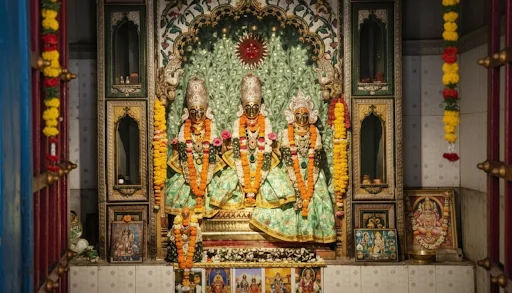
Guptar Ghat is traditionally identified with Gopratara Tirtha, an important sacred place in the religious geography of Ayodhya. The Skanda Purana's Ayodhya Mahatmya describes Gopratara in connection with the departure of Lord Rama and the sacred waters of the Sarayu. Medieval accounts also show that Gopratara was already part of Ayodhya's pilgrimage landscape.
The site continued to be recognised as an important tīrtha in the medieval period. A scholarly study of Ayodhya's sacred geography records Gopratara among the city's established pilgrimage places and notes that Jain pilgrim Jinaprabhasuri, writing in 1332, mentioned it along with other important ghats. The same study discusses the possibility of an early Vishnu shrine at Gopratara associated with the name Guptahari.
The stone ghats visible today belong to a much later period. They were built in the first half of the 19th century under Raja Darshan Singh, giving the riverfront the broad masonry steps and structured embankments seen today. Shrines were established or maintained along the upper part of the ghats, creating a compact pilgrimage area centred on Rama and Vishnu traditions.
There is no single presiding deity for the entire ghat. The Sita-Ram Temple represents Lord Rama and Devi Sita, while the Chakrahari and Guptahari shrines are associated with Lord Vishnu. The Narasingh Temple represents Lord Vishnu in his Narasimha form. Together, these shrines explain why Guptar Ghat is both a river tīrtha and a temple site.
What Makes Guptar Ghat Ayodhya Sacred for Devotees
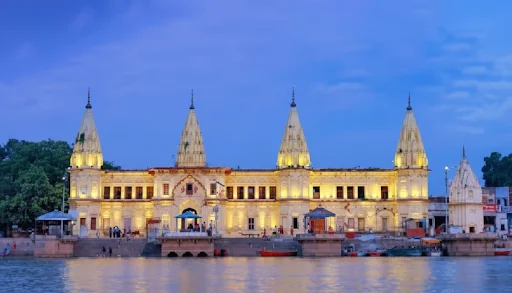
The Gopratara Tradition
The religious importance of Guptar Ghat comes primarily from its traditional identification with Gopratara Tirtha.
In the Skanda Purana's account, the time of Lord Rama's departure had arrived. Rama went towards the sacred place of departure, and the people of Ayodhya, along with his devotees, followed him. The account describes Rama giving up his earthly form and returning to the abode of Vishnu, while the people who followed him attained higher realms.
The present identification of Gopratara with Guptar Ghat has therefore given rise to the widely held tradition that this is the place where Lord Rama took Jal Samadhi in the Sarayu and departed for Vaikuntha.
This is a sacred tradition rather than a historical event that can be independently verified. It remains central to the religious meaning of the ghat.
Guptahari and the Vishnu Tradition
Guptar Ghat also has a longstanding association with Vishnu worship. The name Guptahari appears in the religious and pilgrimage traditions associated with Gopratara.
The Guptahari and Chakrahari shrines give the riverfront a distinctly Vaishnava character. The connection is also consistent with the theological understanding of Rama as an incarnation of Vishnu.
The Sarayu as a Sacred River
The river is not separate from the significance of the ghat. The Sarayu is itself a sacred river in Ayodhya, and bathing in its waters forms part of pilgrimage practice.
Devotees come to the ghats for Sarayu Snan, prayers and other forms of worship. The belief that bathing in the sacred river brings spiritual purification belongs to the religious tradition of Ayodhya.
Annual Festivals & Rituals at Guptar Ghat Ayodhya, Uttar Pradesh
Sarayu Snan Celebrations at the Temple
Holy bathing in the Sarayu is one of the main devotional practices associated with Guptar Ghat. Devotees descend the stone steps to the river, bathe and offer prayers before continuing to the nearby shrines.
Temple Worship Celebrations at the Temple
The Sita-Ram, Chakrahari, Guptahari and Narasingh shrines maintain their own worship traditions. Morning and evening worship take place around the daily temple cycle, with exact timings subject to local practice.
Ram Navami Celebrations at the Temple
Ram Navami is one of the major religious occasions in Ayodhya. Pilgrims gather across the city to worship Lord Rama and take part in Sarayu-related devotional practices, making the riverfront particularly active during the festival period.
Kartik Purnima Celebrations at the Temple
Kartik Purnima is an important bathing occasion at sacred rivers across North India and is also significant in Ayodhya. Devotees visit the Sarayu ghats for holy bathing, prayers and lamp offerings.
Deepotsav Celebrations at the Temple
During Ayodhya's annual Deepotsav celebrations, the Sarayu riverfront becomes part of the wider illumination and cultural programme. Guptar Ghat has also been included in the city's recent riverfront development and festival landscape.

Sacred Places to Visit Near Guptar Ghat Ayodhya
Ram Ki Paidi : Ram Ki Paidi is a major series of ghats along the Sarayu and one of Ayodhya's principal pilgrimage areas. It is particularly associated with large public celebrations and Deepotsav.
Hanuman Garhi : Hanuman Garhi is one of Ayodhya's best-known temples, dedicated to Lord Hanuman. It is commonly included in a pilgrimage of the city's principal temples.
Kanak Bhawan : Kanak Bhawan is a historic temple dedicated to Lord Rama and Devi Sita. Its richly decorated shrine makes it one of the important temple stops in central Ayodhya.
Shri Ram Janmabhoomi : The Shri Ram Janmabhoomi temple marks the principal Rama pilgrimage centre in modern Ayodhya. Together with Guptar Ghat, it represents two major points in the sacred geography of Lord Rama's life: his birth tradition and his final departure tradition.
Nageshwar Nath Temple : Nageshwar Nath Temple at Ram Ki Paidi is dedicated to Lord Shiva and is associated by local tradition with Kush, the son of Lord Rama. The temple is also an important stop during major Shaiva observances in Ayodhya.
Gupta Ghat Van : The garden area adjoining Guptar Ghat developed alongside the riverfront and is also known as Gupta Ghat Van. It forms part of the green and open character of the western side of the Ayodhya riverfront.
Plan Guptar Ghat Ayodhya Darshan
For current temple timings, queue guidance and Naman Darshan's date-specific Guided Darshan Assistance, continue to the dedicated Guptar Ghat Ayodhya Darshan page.
Common Questions About Visiting Guptar Ghat Ayodhya
Visitor Information
Entry Fee
No general entry ticket for the ghat – Boating or other private services are separate.
Darshan Timing
Address
Guptar Ghat, Faizabad Cantonment Area, Ayodhya,, Uttar Pradesh 224001, India
Notable Events
Medieval period — Gopratara in Ayodhya's sacred geography – Gopratara is described as an important tīrtha in the religious traditions of Ayodhya. • 1332 — Gopratara recorded in a pilgrimage account – Jain pilgrim Jinaprabhasuri included Gopratara among the important sacred places of Ayodhya. • First half of the 19th century — Present masonry ghats – Raja Darshan Singh is credited with constructing the well-maintained stone ghats visible today. • 2023–2024 — Major riverfront redevelopment – The Guptar Ghat area received major infrastructure and beautification work, including roads, parking, embankment improvements, parks and visitor facilities. • 2026 — Further redevelopment phase – A February 2026 report stated that the third phase, including an open-air theatre and additional visitor infrastructure, was around 90% complete. The final operational status should be checked against the latest local or government notice.
How to Reach the Temple
By Air: The nearest major airport is Maharishi Valmiki International Airport, Ayodhya, which serves the city and its pilgrimage circuit.
By Rail: Ayodhya Dham Junction is the principal railway station for visitors arriving in Ayodhya. Ayodhya Cantt is another useful railhead for the Guptar Ghat side of the city.
By Road: Guptar Ghat lies on the Faizabad Cantonment side of Ayodhya and can be reached by taxi, auto-rickshaw and other local transport from the main pilgrimage areas.
From central Ayodhya: The ghat is separated from the busiest central temple area and is normally reached by road. Allow additional travel time during major festivals and city-wide events.
By local transport: Auto-rickshaws and e-rickshaws are commonly used for local travel in Ayodhya. Vehicle access close to the riverfront can change during crowd-control measures.
Ayodhya, Uttar Pradesh