
About Kalaram Temple, Panchavati, Nashik, Maharashtra
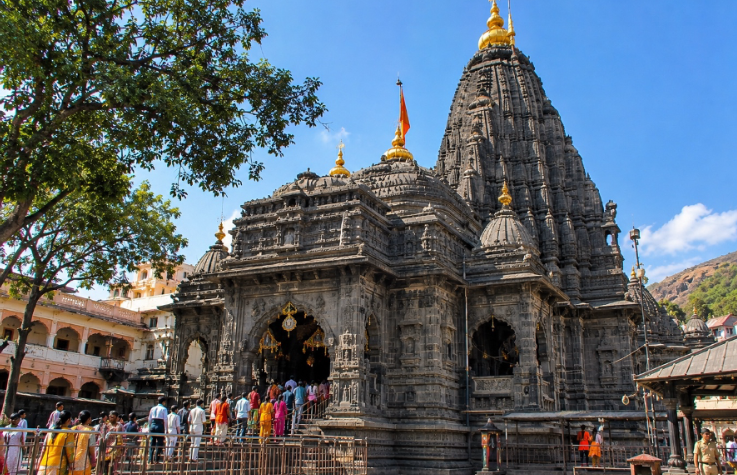
Kalaram Temple is a historic temple dedicated to Lord Rama in the Panchavati area of Nashik, Maharashtra. It takes its name from the black-stone image of Rama in the sanctum, worshipped alongside Sita and Lakshmana.
The temple is known for its black-stone construction, its long association with the Ramayana tradition of Panchavati, the Ram Navami Rath Yatra and the Kalaram Temple Satyagraha led by Dr. B. R. Ambedkar in 1930. These religious, architectural and social histories are all part of the temple's significance.
Story of Kalaram Temple
Kalaram Temple stands in Panchavati, a part of Nashik traditionally associated with Rama, Sita and Lakshmana during their exile. The present temple took shape in the late 18th century under the patronage of Sardar Rangarao Odhekar. The temple Sansthan and government sources give different starting dates for construction, but agree on Odhekar's role and the period in which the present shrine was built.
The name Kalaram means “Black Rama” and refers to the dark stone used for the principal image. The sanctum houses standing images of Rama, Sita and Lakshmana, each about two feet high according to the Nashik District Administration. A black-stone image of Hanuman stands at the entrance, facing his Lord. This arrangement gives the temple its distinctive identity: the colour of the images, rather than the name of the locality, is what sets Kalaram apart.
The temple is built largely from black stone brought from the Ramshej Hills near Nashik, according to the temple Sansthan's account. The main structure stands within an enclosed courtyard, with a separate sabhamandap that is open on the sides. The enclosure is supported by 96 pillars, and four entrance gates face the cardinal directions. The tall shikhara, topped by a gold-plated kalash, is one of the temple's most recognisable features.
Kalaram Temple is also important in the modern social history of India. On 2 March 1930, Dr. B. R. Ambedkar and local organisers supported a temple-entry Satyagraha demanding that Dalits be allowed to enter and worship at the shrine. The movement challenged caste-based exclusion at a prominent religious institution and became an important chapter in the wider struggle for equal rights. The temple is therefore associated not only with the worship of Rama but also with a decisive campaign for social equality.
What Makes Kalaram Temple Sacred for Devotees
Panchavati and the Ramayana Tradition
Panchavati is traditionally identified as a place where Rama, Sita and Lakshmana lived during part of Rama's exile. The surrounding area includes several sites connected in local religious tradition with episodes from the Ramayana. Kalaram Temple is part of this wider sacred geography, alongside Sita Gufa and the Godavari ghats.
These associations explain why many devotees include Kalaram Temple in a visit to Panchavati rather than treating it as a separate stop. The relationship between the temple and the Ramayana belongs to the region's living religious tradition.
The Story of Sardar Rangarao Odhekar
A well-known temple tradition tells that Sardar Rangarao Odhekar dreamt of a black image of Lord Rama submerged in the Godavari River. According to the account, he searched for the image after the dream and recovered it from the river. He then sponsored the construction of the present temple.
This story is part of the temple's sacred history and is traditionally used to explain the origin of its principal image. The historical record firmly associates Odhekar with the temple's construction, while the dream and discovery belong to the religious tradition surrounding the shrine.
The Kalaram Temple Satyagraha
In 1930, Kalaram Temple became a focal point of the movement for Dalit temple entry. Dr. B. R. Ambedkar and local organisers demanded equal access to worship, challenging the exclusion of Dalits from the shrine. The campaign began in March and continued through a series of confrontations and negotiations around access to the temple and participation in its public rituals.
The movement is remembered as the Kalaram Temple Satyagraha. Its significance extends beyond the temple itself: it brought the issue of caste-based exclusion in religious spaces into public debate and remains an important part of the history of the anti-caste movement.
Annual Festivals & Rituals at Kalaram Temple, Panchavati, Nashik, Maharashtra
Daily Worship and Aarti
The temple's daily worship includes a sequence of aartis, ritual puja, devotional singing and kirtan. The temple Sansthan publishes a daily programme that includes Kakad Aarti, Mangal Aarti, Maha Aarti, bhajan and evening worship. The exact schedule may change, so current timings should be checked before travel.
Ram Navratra and Ram Navami
Ram Navratra and Ram Navami, observed during the month of Chaitra, are among the temple's principal annual celebrations. Worship focuses on the birth of Lord Rama, with special puja and an increase in the number of devotees visiting the shrine.
Ram Rath Yatra
The Ram Rath Yatra is a major event in the temple's annual calendar. The procession takes the image of Lord Rama through the city and forms a central part of the Chaitra celebrations. The procession date and arrangements should be confirmed with the temple Sansthan for the relevant year.
Dussehra
On Vijayadashami, or Dussehra, the temple tradition includes a procession of Lord Rama in a silver palanquin. The observance connects the temple's worship with the wider celebration of Rama's victory over Ravana in the Ramayana tradition.
Sacred Places to Visit Near Kalaram Temple
Sita Gufa
Sita Gufa, or Sita's Cave, is a well-known site in Panchavati associated in local tradition with Sita and the Ramayana. It is close to Kalaram Temple and is commonly included in a visit to the surrounding sacred area.
Ramkund and the Godavari Ghats
Ramkund is a sacred bathing tank on the Godavari River. Pilgrims visit the ghats for religious observances and rites, making the riverfront an important part of Nashik's pilgrimage landscape.
Kapaleshwar Mahadev Temple
Kapaleshwar Mahadev is a Shiva temple near the Godavari ghats in Panchavati. It is one of the nearby shrines that visitors can include while exploring the temples and sacred sites around Kalaram.
Plan Your Visit to Kalaram Temple
NamanDarshan is a technology platform that arranges darshan and related services on your behalf through independent service providers.
Common Questions About Visiting Kalaram Temple
Kala means black, and the temple enshrines a black stone image of Lord Rama.
It is in the Panchavati area of Nashik, near the Godavari.
Ram Navami and the Kumbh Mela are the busiest times.
Photography is restricted inside the sanctum. Follow the temple's instructions.
NamanDarshan is a technology platform that arranges darshan and related services on your behalf through independent service providers. We are not the temple or its management, and the temple's rules always apply.
Visitor Information
Darshan Timing
Address
Kalaram Temple Panchavati, Nashik, Maharashtra, India
Notable Events
Late 18th century — Present temple built
The present black-stone temple was established under Sardar Rangarao Odhekar. The temple Sansthan dates the start of construction to 1780 and completion of the main temple to 1792; other government accounts record different starting dates.
By 1799 — Further work on the complex
The temple Sansthan records further work on the sabhamandap, surrounding structure and enclosure by 1799.
2 March 1930 — Kalaram Temple Satyagraha begins
The temple-entry movement associated with Dr. B. R. Ambedkar and local organisers began with a demand for equal access to worship. It became a significant moment in the campaign against caste-based discrimination.
1930 — The issue reaches the Ram Rath Yatra
The question of equal participation in the temple's public procession became part of the confrontation over access to worship. Accounts of the period document the procession and the associated tensions.
1930s — Temple entry remains a public issue
The campaign continued beyond its opening demonstration and became part of the wider history of social reform and the struggle for equal rights in India.
How to Reach the Temple
By air: Nashik's Ozar Airport is the airport listed by Nashik District Administration, about 24 kilometres from the city centre. Check current flight availability and the onward road journey before booking.
By rail: Nashik Road Railway Station is approximately 10 kilometres from the temple area. Taxis and local transport are available for the onward journey.
By road: Kalaram Temple is in Panchavati, about 3 kilometres from Nashik's Central Bus Stand according to the district administration. Local buses, auto-rickshaws and taxis operate around the city.
Within Panchavati: Sita Gufa, Ramkund and several other religious sites are in the surrounding area. The lanes around the temple can become congested during festivals, so allow extra time for the final approach.