
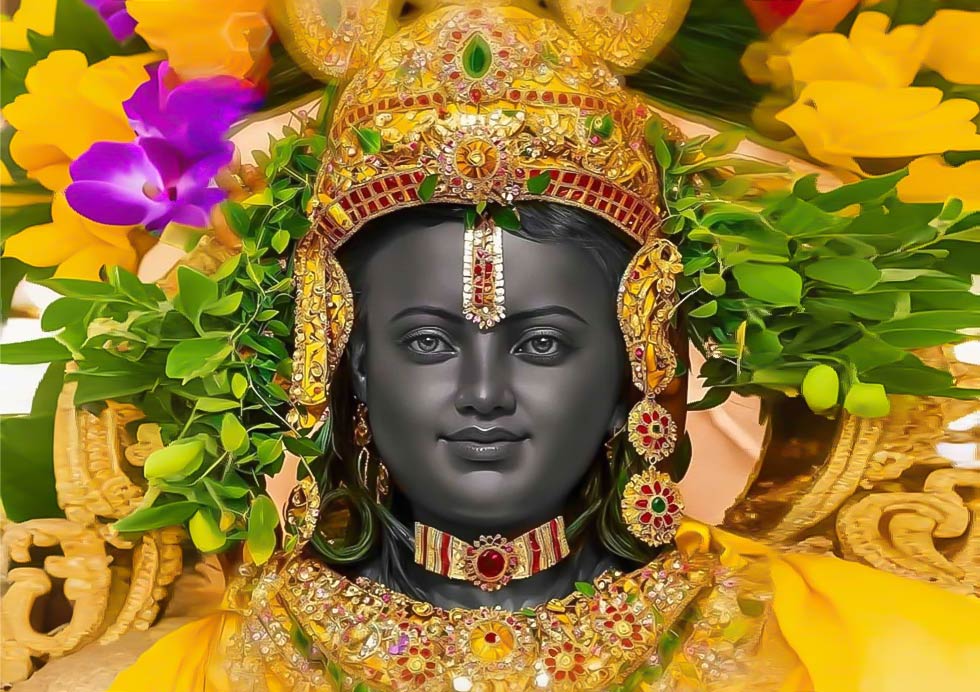
About Ram Janmabhoomi Temple, Ayodhya, Uttar Pradesh
Ram Janmabhoomi Temple is situated in Ayodhya, a city whose sacred identity is closely associated with Shri Ram. In Hindu tradition, Ayodhya is regarded as the birthplace of Shri Ram and is counted among the Sapta Puri, the seven sacred cities of Hindu pilgrimage.
The present temple stands at the centre of a sacred site whose religious importance predates the modern structure. Its contemporary history also includes a long legal dispute, the Supreme Court judgment of 2019, the beginning of temple construction and the Pran Pratishtha of Ram Lalla in January 2024.
Story of Ram Janmabhoomi Temple
The sacred history of Ayodhya is closely connected with the Ramayana and the life of Shri Ram. Hindu tradition identifies Ayodhya as the birthplace of Ram, the son of King Dasharatha and Queen Kaushalya, and associates the city with the ancient kingdom of Kosala.
The history of the present Ram Janmabhoomi site belongs to a much later period. The site became the subject of a prolonged legal and historical dispute involving competing claims concerning religious worship and possession. Earlier records and legal proceedings formed part of a dispute that continued into the modern period.
The Supreme Court of India delivered its judgment on the Ayodhya dispute on 9 November 2019. The Court directed that the disputed site be handed over for the construction of a temple and directed the allotment of an alternative five-acre site for the construction of a mosque. The judgment examined documentary, archaeological and other evidence presented before the Court; its findings should be understood in the context of that judicial proceeding rather than reduced to a single archaeological claim.
Following the judgment, the Shri Ram Janmabhoomi Teerth Kshetra Trust was established for the construction and management of the temple project. The Bhoomi Pujan was performed in August 2020, beginning the construction phase of the present temple.
The Pran Pratishtha of Ram Lalla took place on 22 January 2024. This ceremony marked the opening of the newly constructed sanctum for the worship of Ram Lalla in the principal temple structure.
The history of the site therefore extends from Ayodhya's older sacred traditions to the legal and institutional developments of the modern period. The temple seen today represents the latest stage in that longer history.
Deities and Architecture of Ram Janmabhoomi Temple
The principal deity of the temple is Ram Lalla, the child form of Shri Ram worshipped in the main sanctum. The temple complex also contains other shrines and sacred spaces connected with the wider Ramayana tradition and the religious geography of Ayodhya.
The main temple follows the traditional Nagara architectural style. The structure extends approximately 380 feet from east to west, is about 250 feet wide and rises to a height of 161 feet. Its scale is expressed through 392 pillars and 44 entrances.
The eastern entrance is approached through the Singh Dwar, where 32 steps lead towards the temple. Within the principal structure are five mandapas: the Nritya Mandap, Rang Mandap, Sabha Mandap, Prarthana Mandap and Kirtan Mandap. Together, these spaces form a progression towards the garbhagriha, where Ram Lalla is worshipped.
The temple foundation was designed with long-term structural stability in mind. The foundation includes a thick layer of roller-compacted concrete, while a granite plinth raises the temple above the surrounding ground and provides protection against moisture. The main temple structure does not use iron, reflecting the material approach adopted for the building.
The wider complex also includes sacred places connected with the temple's religious programme. Sita Koop is an ancient sacred well associated with the site, while Kuber Tila includes a restored Shiva temple and a statue of Jatayu.
Ram Darbar
The temple complex also includes Ram Darbar, representing Shri Ram together with Sita, Lakshman and Hanuman. Its Pran Pratishtha took place in June 2025, adding another important representation of the Ramayana tradition to the developing temple complex.
Ram Darbar places the worship of Ram Lalla within the wider family and devotional relationships through which Shri Ram is remembered in Hindu tradition.
Sapt Mandir
The temple complex includes a group of seven subsidiary shrines known as the Sapt Mandir. These shrines are dedicated to figures associated with the Ramayana tradition: Maharishi Vashishtha, Maharishi Vishwamitra, Maharishi Agastya, Maharishi Valmiki, Mata Ahilya, Nishadraj Guha and Mata Shabari.
The inclusion of these figures gives the larger complex a wider religious narrative. They represent teachers, devotees and characters whose stories are connected with different stages of Shri Ram's life and with the broader devotional traditions surrounding the Ramayana.
Sita Koop and Kuber Tila
Sita Koop and Kuber Tila form part of the sacred landscape within the temple complex.
Kuber Tila is associated with a restored Shiva temple and a statue of Jatayu, the legendary bird who, according to the Ramayana, attempted to protect Sita when she was being taken away by Ravana. The presence of these spaces connects the temple complex with episodes and figures extending beyond the central shrine of Ram Lalla.
What Makes Ram Janmabhoomi Temple Sacred for Devotees
Ayodhya and the Birth of Shri Ram
The central religious tradition associated with Ram Janmabhoomi is the belief that Shri Ram was born in Ayodhya. In the Ramayana tradition, Ram was born to King Dasharatha and Queen Kaushalya and later became the ruler of Ayodhya.
For devotees, Ram Janmabhoomi is therefore not simply a temple location. It is a sacred point within the larger landscape of Ayodhya associated with the life, worship and memory of Shri Ram.
Ram Lalla and the Child Form of Shri Ram
The principal deity is worshipped as Ram Lalla, meaning the child form of Ram. This form is significant within the temple's devotional identity because the sanctum represents the birthplace tradition rather than only the later image of Ram as king.
The Pran Pratishtha of Ram Lalla in January 2024 established the present murti as the central object of worship in the newly constructed temple.
Ayodhya in the Ramayana Tradition
Ayodhya occupies a central place in the Ramayana narrative. The city is associated with Dasharatha's kingdom, Ram's birth and childhood, his departure into exile and his eventual return.
Many locations across Ayodhya are connected through local religious traditions with episodes from the Ramayana. These associations form a wider sacred geography around Ram Janmabhoomi rather than limiting the significance of the pilgrimage to the temple structure alone.
The Sapt Mandir and the People of the Ramayana
The seven subsidiary shrines extend this narrative beyond Ram himself.
Vashishtha and Vishwamitra are remembered as important sages in Ram's story. Valmiki is traditionally regarded as the author of the Ramayana. Ahilya's story is associated with Ram's journey during his exile, while Nishadraj Guha and Shabari are remembered for their devotion and relationship with Ram.
The Sapt Mandir therefore brings together different figures from the Ramayana tradition within the same temple complex. Their inclusion reflects the wider devotional world surrounding Shri Ram.
Jatayu and the Memory of Devotion
The presence of Jatayu at Kuber Tila recalls one of the best-known episodes of the Ramayana. According to the epic tradition, Jatayu attempted to stop Ravana when Sita was being taken away.
The story is remembered as an example of loyalty and devotion to Ram's family. At Ram Janmabhoomi, the Jatayu installation places that episode within the wider sacred landscape of the temple complex.
Dharma Dhwaja
The temple complex received its Dharma Dhwaja in November 2025. The flag carries symbols associated with the religious identity of the temple, including the radiant Sun, the Kovidara tree and the Om.
The flag ceremony formed part of the continuing development of the temple complex and its associated shrines. Such ceremonies belong to the religious life of the temple and are distinct from the architectural completion of the main structure.
Annual Festivals & Rituals at Ram Janmabhoomi Temple, Ayodhya, Uttar Pradesh
Daily Worship of Ram Lalla
The worship of Ram Lalla is organised through the temple's daily ritual routine. Darshan takes place around the prescribed worship of the deity, while access may change when special rituals, festivals or ceremonies are being conducted.
For visitors, this means that general opening guidance should not be understood as a promise of uninterrupted darshan throughout the day.
Ram Navami
Ram Navami marks the birth of Shri Ram and is one of the principal festivals associated with Ram worship. At Ayodhya, the festival has particular significance because of the city's traditional association with Ram's birthplace.
The celebrations can involve special worship and large numbers of pilgrims. Access arrangements and darshan procedures may therefore differ from an ordinary day.
Deepotsav and Diwali
Ayodhya's association with Diwali is connected in religious tradition with the return of Shri Ram to the city after his exile and victory over Ravana.
The city is known for large-scale Deepotsav observances, during which lamps are lit across important parts of Ayodhya. The festival belongs to the wider sacred culture of the city and is not limited to the temple itself.
Vivah Panchami
Vivah Panchami commemorates the marriage of Shri Ram and Sita in the Ramayana tradition. The festival has a place in the devotional calendar of Ram worship and is observed in Ayodhya as part of the city's broader Ramayana-based religious traditions.
Special ceremonies on significant festival dates may affect ordinary visitor arrangements.
Shravan Jhula
The Shravan period is associated with seasonal devotional celebrations across Ayodhya. Jhula or swing traditions form part of this period, during which deities are ceremonially placed on swings in accordance with local religious customs.
The form and schedule of such observances can vary according to the temple calendar and prevailing arrangements.
Pran Pratishtha and Temple Milestones
The Pran Pratishtha of Ram Lalla on 22 January 2024 is the defining modern ritual milestone of the present temple.
Sacred Places to Visit Near Ram Janmabhoomi Temple
Hanuman Garhi
Hanuman Garhi is one of Ayodhya's important Hanuman temples and is traditionally associated with Hanuman's presence in the city. Its position within the old pilgrimage landscape makes it a natural part of a broader Ayodhya visit.
Kanak Bhawan
Kanak Bhawan is dedicated to Shri Ram and Sita and is known for its devotional tradition surrounding the divine couple. The temple is one of the important shrines in Ayodhya's Ramayana-related sacred circuit.
Ram Ki Paidi
Ram Ki Paidi is a series of ghats along the Sarayu River. The ghats form an important part of Ayodhya's religious landscape, particularly for devotees who combine temple visits with worship and bathing traditions associated with the river.
Nageshwar Nath Temple
Nageshwar Nath is a Shiva temple situated near Ram Ki Paidi. Local tradition associates its foundation with Kush, the son of Shri Ram, while the present temple is generally associated with an 18th-century reconstruction.
The temple's association with Shiva adds another dimension to Ayodhya's religious geography, where Vaishnava, Shaiva and other traditions exist alongside one another.
Deokaali
Deokaali is associated in local tradition with the Ramayana and with the worship of the divine feminine. It is among the sacred places commonly included in Ayodhya's wider pilgrimage circuit.
Guptar Ghat
Guptar Ghat lies along the Sarayu and is associated in religious tradition with the final departure of Shri Ram from the earthly realm. The site forms part of the wider sacred geography through which devotees understand the story of Ram beyond Janmabhoomi itself.
Plan Ram Janmabhoomi Darshan
Darshan at Ram Janmabhoomi is governed by the temple authorities and can change according to ordinary worship, festivals, ceremonies and security arrangements. Naman Darshan can provide independent guided assistance for visitors who want help understanding the visit, preparing for entry and navigating the local pilgrimage experience. Such assistance is separate from temple admission and should not be described as a temple-issued VIP or guaranteed skip-the-line facility. For current darshan windows, aarti information, passes and date-specific planning guidance, see the dedicated Ram Janmabhoomi Darshan page.
Common Questions About Visiting Ram Janmabhoomi Temple
Ram Janmabhoomi Temple is the temple dedicated to Shri Ram at the site traditionally revered in Hinduism as his birthplace in Ayodhya. Ram Lalla is worshipped as the principal deity in the main sanctum.
The Pran Pratishtha of Ram Lalla in the newly constructed temple was performed on 22 January 2024.
The temple follows the traditional Nagara architectural style. The main structure is approximately 380 feet long, 250 feet wide and 161 feet high, with 392 pillars and 44 entrances.
Ram Lalla is the child form of Shri Ram. At Ram Janmabhoomi, this form is worshipped as the principal deity of the temple's main sanctum.
The Sapt Mandir is a group of seven subsidiary shrines dedicated to figures associated with the Ramayana tradition: Vashishtha, Vishwamitra, Agastya, Valmiki, Ahilya, Nishadraj Guha and Shabari.
Ram Darbar represents Shri Ram with Sita, Lakshman and Hanuman. Its Pran Pratishtha at the Ram Janmabhoomi complex took place in June 2025.
Surya Tilak is a ceremonial illumination associated with Ram Navami in which sunlight is directed onto the forehead of Ram Lalla through an optical system. The first such ceremony at the new temple took place during Ram Navami in April 2024.
Visitors should check the prevailing temple guidance before travelling because darshan arrangements can change. Detailed information on current darshan windows, aarti, passes and visit planning belongs on the dedicated Ram Janmabhoomi Darshan page.
Visitor Information
Darshan Timing
Address
Shri Ram Janmabhoomi Temple, Ayodhya, Uttar Pradesh, India
Notable Events
9 November 2019 — Supreme Court Judgment
The Supreme Court delivered its judgment in the Ayodhya title dispute and directed the disputed site towards temple construction, while directing that an alternative five-acre site be allotted for a mosque.
5 August 2020 — Bhoomi Pujan
The Bhoomi Pujan ceremony marked the beginning of the construction phase of the present Ram Janmabhoomi Temple.
22 January 2024 — Pran Pratishtha of Ram Lalla
Ram Lalla was consecrated in the newly constructed main sanctum, establishing the present temple as an active centre of worship.
June 2025 — Ram Darbar Pran Pratishtha
The Pran Pratishtha of Ram Darbar added the representation of Shri Ram with Sita, Lakshman and Hanuman to the temple complex.
November 2025 — Dharma Dhwajarohan and Sapt Mandir
The Dharma Dhwaja was ceremonially installed, while the temple complex's Sapt Mandir shrines formed part of the continuing development of the larger religious complex.
March 2026 — Shri Ram Yantra Sthapana
A further ritual milestone took place in March 2026 with the Shri Ram Yantra Sthapana and Pujan at the temple.
How to Reach the Temple
By air: Maharishi Valmiki International Airport, Ayodhya, is the principal airport serving the city. Airport-to-city travel time can vary with traffic and local access restrictions.
By rail: Ayodhya Dham Junction is the principal railway station for visitors travelling to Ayodhya. Ayodhya Cantt is another rail option, depending on the train and route.
By road: Ayodhya is connected by road with Lucknow, Varanasi, Prayagraj and other major cities in Uttar Pradesh. Bus, taxi and private-car options are available.
Within Ayodhya: The temple lies within the historic pilgrimage area of the city. Local movement can change considerably during major festivals and security restrictions, so the final approach and drop-off point should be checked for the date of travel.