
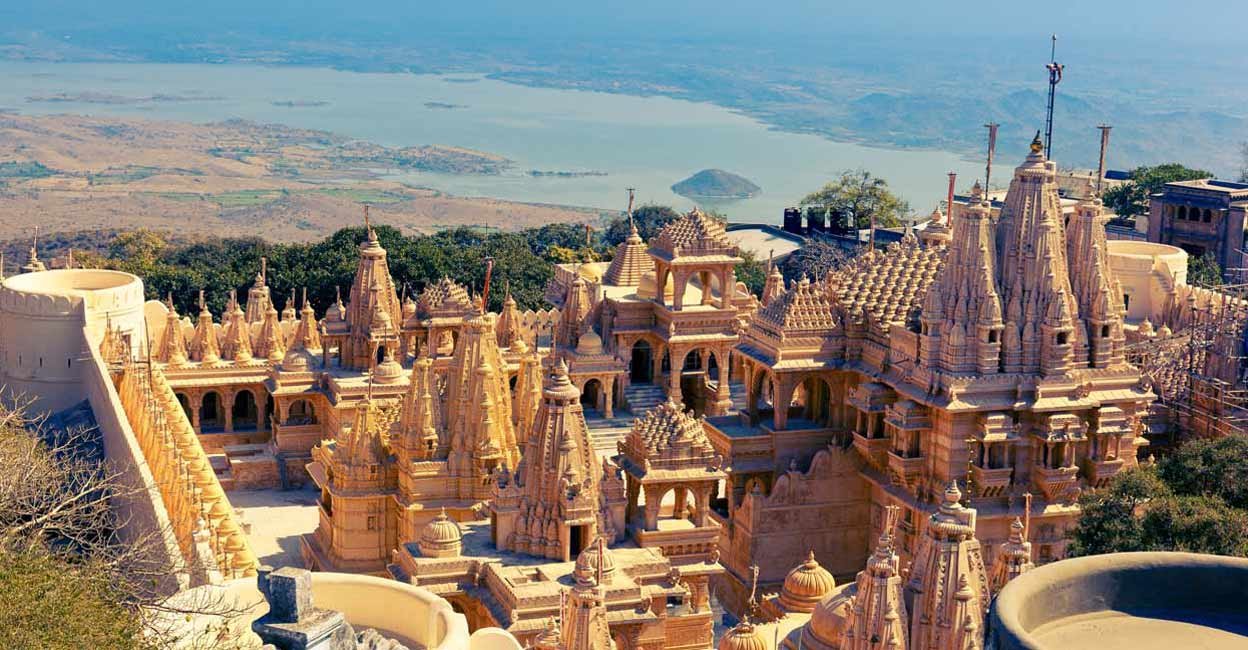
About Palitana Jain Tirth Temple, Palitana, Gujarat
Palitana Jain Tirth Temple refers to the great Jain temple complex on Shatrunjaya Hill near Palitana in Bhavnagar district, Gujarat. The hill is home to hundreds of Jain temples, with Adinath or Rishabhanatha, the first Tirthankara, as the principal deity of the main shrine.
The temples are spread across the hill in enclosed groups known as tunks. The pilgrimage involves a long ascent from the foothill, followed by darshan at Adinath and the other shrines across the summit. Shatrunjaya is also known for its association with Jain traditions of Rishabhanatha, Pundarika, pilgrimage, fasting and the repeated construction and restoration of the temple-city over many centuries.
Story of Palitana Jain Tirth Temple
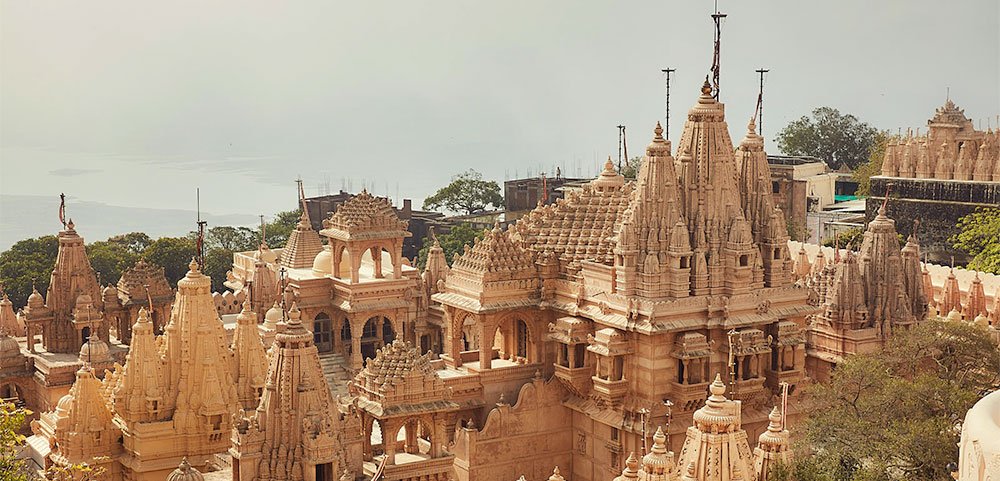
The sacred history of Shatrunjaya is older than the temples seen today. Jain tradition associates the hill with Rishabhanatha or Adinath, the first Tirthankara, and with his disciple Pundarika. The hill is traditionally known as Pundarikgiri, while Shatrunjaya is understood in Jain usage as a place associated with victory over inner enemies. The temple site was already part of Jain sacred geography by the medieval period, and temple-building on the hill is documented from the 11th century onward.
The present temple-city was not built at one time or by one ruler. Temples were constructed, damaged, rebuilt and expanded over several centuries, with Jain merchants, wealthy patrons, religious communities and trusts playing an important role. A major destruction took place in the early 14th century, after which rebuilding continued. The Adinath shrine was again rebuilt in the 16th century, and further temple construction expanded across the hill in the centuries that followed.
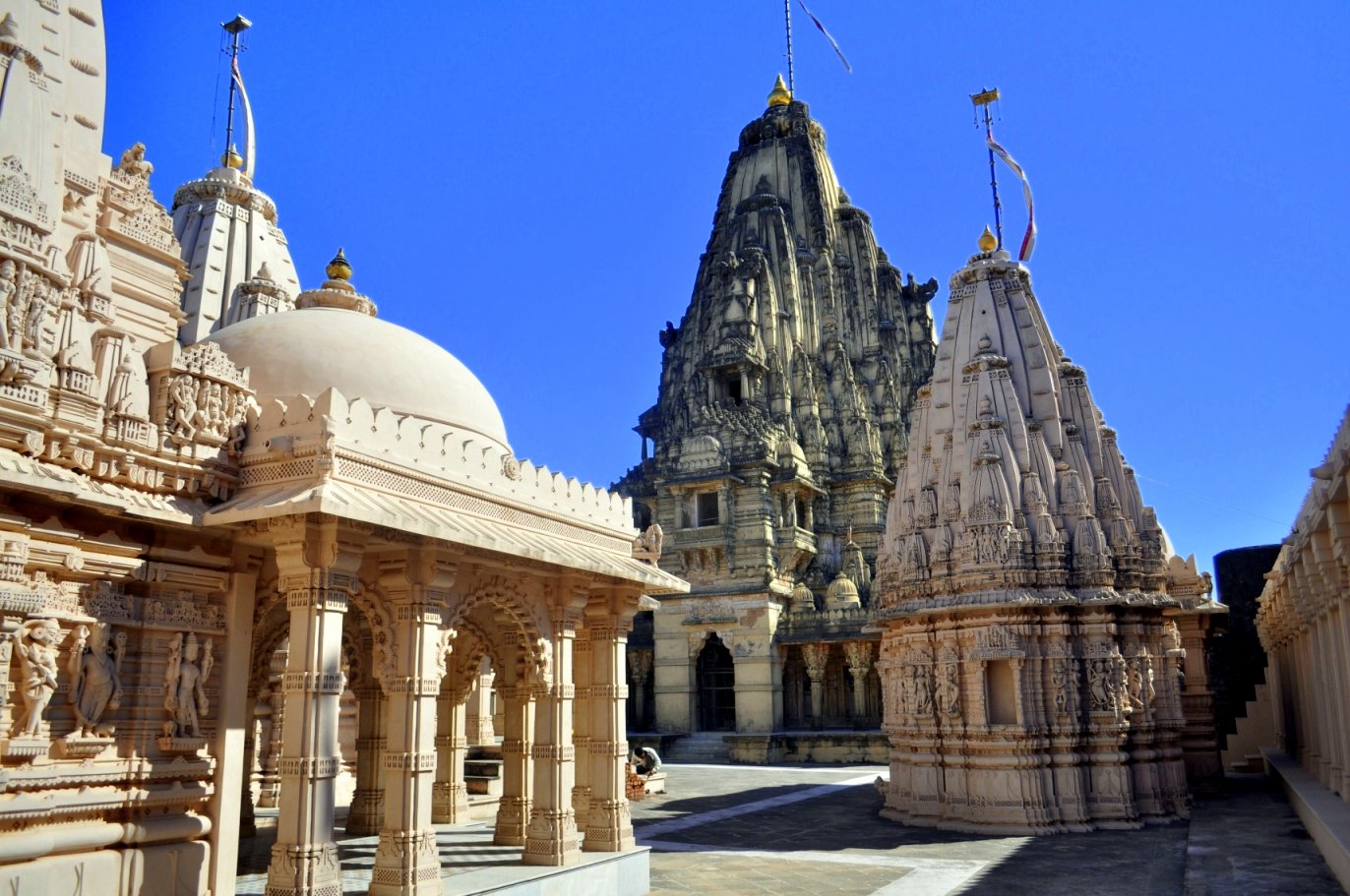
The temples seen today are mainly associated with the later medieval and early modern development of Shatrunjaya. The complex follows the Maru-Gurjara tradition of western India, expressed through white marble, carved pillars, domes, shikharas, gateways and detailed ornament. Instead of standing as one large temple, the shrines are arranged in fortified enclosures called tunks, creating a dense temple landscape across the two main ridges.
Among the principal shrines are the Adinath Temple, Chaumukh Temple, Kumarpal Temple, Vimal Shah Temple, Sampratiraja Temple, Sahasrakuta and Ashtapada. The Chaumukh Temple is noted for its four-faced image of Adinath facing the cardinal directions. The main Adinath shrine remains the central point of worship, while the surrounding temples form the wider sacred setting of the Shatrunjaya pilgrimage.
What Makes Palitana Jain Tirth Temple Sacred for Devotees
Rishabhanatha and Shatrunjaya
According to Jain tradition, Rishabhanatha, the first Tirthankara, sanctified Shatrunjaya and delivered his teachings here. His connection with the hill is one of the principal reasons Adinath occupies the main shrine of the Palitana complex.
Jain tradition also holds that 23 of the 24 Tirthankaras, with Neminatha traditionally excepted in this account, sanctified the hill through their association with the site. These traditions form part of Jain sacred geography rather than a claim of archaeological history.
Pundarika and the name Pundarikgiri
Pundarika, traditionally regarded as a close disciple and grandson of Rishabhanatha in Jain accounts, is associated with attaining liberation at Shatrunjaya. For this reason, the hill is also known in Jain tradition as Pundarikgiri.
The association with liberation gives the hill a significance beyond the individual temples. The mountain itself is treated as a sacred tirth, and the ascent is part of the pilgrimage rather than simply a route to the summit.
The Rayan Tree
A rayan tree near the summit is traditionally associated with Adinath's meditation. The site is remembered within the pilgrimage route and forms part of the sacred landscape around the main temple.
Navanu
Navanu is a Jain pilgrimage practice involving repeated journeys to Shatrunjaya. Devotees undertaking Navanu follow a demanding spiritual discipline that combines repeated ascent with religious observances and, for some pilgrims, fasting.
The practice shows how Shatrunjaya functions not only as a temple complex but also as a place where pilgrimage itself becomes part of religious discipline.
The Hill as a Sacred Tirth
For Jain devotees, the significance of Shatrunjaya extends beyond the individual shrines. The hill, its pathways, sacred trees, images, enclosures and summit temples together form the tirth. This is also why traditional rules governing conduct on the hill are stricter than those found at many ordinary temple visits.
Annual Festivals & Rituals at Palitana Jain Tirth Temple, Palitana, Gujarat
Daily Puja and Darshan Celebrations at the Temple
Worship at the Palitana temples centres on darshan and puja of the Tirthankaras, particularly Adinath at the main shrine. Devotees move through the temple enclosures, offer worship and follow traditional practices associated with Jain temple discipline. Silence, cleanliness and restraint form an important part of the pilgrimage. Some devotees also undertake the ascent while observing fasting or other religious vows.
Kartik Purnima Yatra Celebrations at the Temple
Kartik Purnima is one of the major pilgrimage occasions at Shatrunjaya. It marks the reopening of the hill after the Chaturmas period in the traditional pilgrimage calendar and attracts large numbers of Jain pilgrims. The day is closely associated with the beginning of the major annual pilgrimage season and the traditional circumambulation of the sacred hill.
Mahavir Janma Kalyanak Celebrations at the Temple
Mahavir Janma Kalyanak, commemorating the birth of Lord Mahavira, is observed with religious ceremonies and temple worship. As the last of the 24 Tirthankaras, Mahavira holds a central place in Jain religious life, and the occasion is marked across the Palitana pilgrimage community.
Falgun Feri and Chha Gau Yatra Celebrations at the Temple
During Falgun, Jain pilgrims undertake longer pilgrimage traditions around Shatrunjaya. The Chha Gau pilgrimage involves circumambulation of the sacred landscape and is one of the important annual pilgrimage observances associated with Palitana.
Navanu Yatra Celebrations at the Temple
Navanu is a repeated pilgrimage undertaken according to a religious discipline rather than a single festival day. Pilgrims complete multiple journeys to the hill as part of a longer programme of devotion, restraint and spiritual practice.
Sacred Places to Visit Near Palitana Jain Tirth Temple
Shri Vishal Jain Museum : The Shri Vishal Jain Museum in Palitana preserves Jain artwork, carved objects, manuscripts and other religious artefacts. Gujarat Tourism notes that the museum is close to the foothill of the Shatrunjaya ascent.
Hastgiri Jain Tirth : Hastgiri Jain Tirth is another important Jain pilgrimage site near Palitana. The hill shrine is associated with Rishabhanatha and provides a separate Jain sacred setting within the wider pilgrimage landscape of the region.
Samovsaran Mandir : The Samovsaran Mandir near the base of Shatrunjaya represents the Jain concept of the Samavasarana, the preaching assembly associated with a Tirthankara. A museum space is also associated with the modern temple complex.
Talaja Hills : Talaja, about 32 km from Palitana, contains sites associated with Jainism, Buddhism and Hinduism. Gujarat Tourism highlights the Jain temple on the hill along with its ancient Buddhist caves.
Bhavnagar : Bhavnagar is the nearest major city to Palitana and provides access to the wider region. The city can be combined with a Palitana pilgrimage for visits to sites such as Takhteshwar and other regional attractions.
Velavadar Blackbuck National Park : Velavadar lies in Bhavnagar district and is known for its blackbuck habitat and grassland ecosystem. It is better suited to an extended regional itinerary rather than a same-day temple visit.
Plan Palitana Jain Tirth Darshan
For current darshan planning, route preparation and Naman Darshan's Guided Darshan Assistance, continue to the dedicated Palitana Jain Tirth Darshan page.
Common Questions About Visiting Palitana Jain Tirth Temple
Visitor Information
Entry Fee
General access to the temple complex is not presented as a regular ticketed attraction – Follow prevailing temple and pilgrimage rules.
Darshan Timing
Address
Palitana Jain Tirth / Shatrunjaya Jain Temples, Shatrunjaya Hill, Palitana, Bhavnagar District, Gujarat 364270, India
Notable Events
11th century — Early documented temple-building phase – The Shatrunjaya temple complex developed into a major Jain pilgrimage centre, with surviving architectural and inscriptional evidence linking temple construction to the medieval period. • 1120 CE — Pundarika image consecrated – A marble image associated with Pundarika is recorded as having been consecrated in Vikram Samvat 1064, providing an early dated piece of evidence connected with the sacred hill. • 1311–1313 CE — Major destruction and rebuilding – Jain textual and historical records describe a major destruction of the temples in the early 14th century. Rebuilding followed in the years and centuries afterwards. • 1530–1531 CE — Major restoration of the Adinath shrine – The principal Adinath temple was rebuilt during the 16th century restoration associated with Karmashah. The present sacred complex largely reflects later phases of reconstruction and expansion. • Early 17th century — Chaumukh Temple built – The Chaumukh shrine became one of the major architectural landmarks of Shatrunjaya, with its four-faced Adinath image oriented towards the cardinal directions. • 1656 — Shantidas Jhaveri receives the Shatrunjaya grant – The Mughal governor of Gujarat, Murad Baksh, granted the Shatrunjaya site and temples to Shantidas Jhaveri, an influential Jain merchant and community leader. • 1730 — Anandji Kalyanji Pedhi assumes management – Management of the Palitana temples came under the Anandji Kalyanji organisation, which remains closely associated with the administration and preservation of Shatrunjaya's Jain temples. • 2016 — 108-foot Adinath image installed – A 108-foot image of Adinath was installed at Palitana, adding a modern landmark to the wider pilgrimage landscape.
How to Reach the Temple
By air: Bhavnagar Airport is the nearest airport, approximately 55 km from Palitana according to the Bhavnagar District administration.
By rail: Palitana has its own railway station. Bhavnagar provides a larger rail connection for travellers arriving from other parts of Gujarat.
By road: Palitana is approximately 51–55 km from Bhavnagar and is connected by road with major cities in Gujarat. Regular buses, taxis and private vehicles serve the town.
From Palitana town: The Shatrunjaya pilgrimage begins from the Taleti area at the foot of the hill. The temples on the summit are reached by the traditional stone stairway, and the final ascent is completed on foot or through locally available pilgrimage arrangements.
Tarapith, Birbhum, West Bengal