
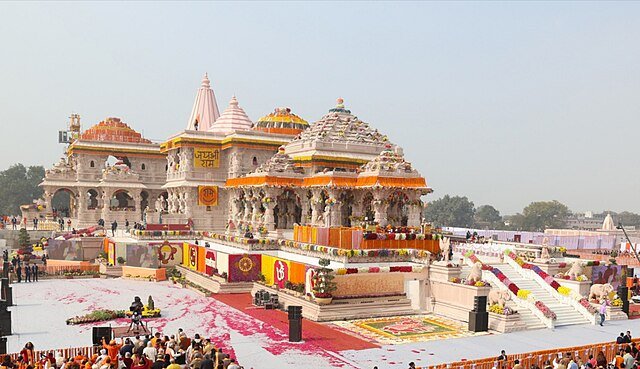
About Nageshwarnath Temple Ayodhya, Uttar Pradesh
Nageshwarnath Temple is a Shiva temple at Ram Ki Paidi in Ayodhya, on the bank of the Sarayu. The shrine is traditionally associated with Kush, the son of Lord Rama, while the present temple structure dates to 1750.
The temple is known for the worship of Lord Shiva in lingam form, its connection with the sacred riverfront of Ayodhya, and its large Mahashivratri celebrations. The annual Shiv Barat procession is one of the best-known traditions associated with the shrine.
Story of Nageshwarnath Temple Ayodhya
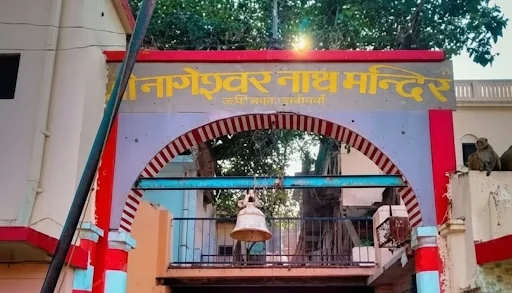
The traditional history of Nageshwarnath begins with Kush, the son of Lord Rama. According to the legend preserved by the Ayodhya tradition, Kush lost his armlet while bathing in the Sarayu. A Nag-Kanya found it and returned it to him. As she was a devotee of Lord Shiva, Kush is said to have established a Shiva temple for her. This account belongs to the sacred tradition of Ayodhya rather than to independently established archaeological history.
Another long-standing tradition connects Nageshwarnath with the later rediscovery of Ayodhya by King Vikramaditya. The story says that when the old city had fallen into ruins and become covered by forest, the temple remained as a surviving landmark and helped Vikramaditya recognise the sacred city. This tradition is repeated in Ayodhya's religious history and in modern accounts of the temple, but it should be understood as a traditional narrative rather than a verified record of the site's physical survival.
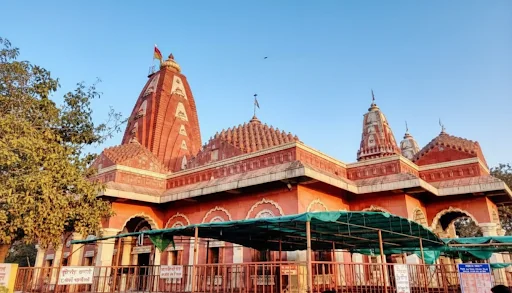
The present Nageshwarnath Temple is associated with 1750, when Naval Rai, a minister of Safdar Jung, built the structure that stands today. The temple is dedicated to Lord Shiva, worshipped here as Nageshwarnath, with the principal deity represented by a Shiva lingam in the sanctum. Its location beside Ram Ki Paidi gives the shrine a distinct place within Ayodhya's riverfront pilgrimage landscape.
The present structure reflects North Indian temple architecture, with the sanctum rising beneath a shikhara and a worship and assembly space leading toward it. Its architectural character belongs to the later historic temple tradition of North India rather than to the period traditionally assigned to Kush. The temple's identity therefore brings together two different layers: an ancient sacred origin preserved through tradition and an 18th-century structure that continues that worship today.
What Makes Nageshwarnath Temple Ayodhya Sacred for Devotees
Nageshwarnath and the Kusha Tradition
The association with Kush is central to the identity of Nageshwarnath. The story of the lost armlet, the Nag-Kanya and the establishment of the Shiva shrine explains, within local religious tradition, how a temple devoted to Shiva came to occupy this part of Ayodhya.
Nageshwarnath in Ayodhya's Sacred Landscape
Nageshwarnath is situated beside Ram Ki Paidi and the Sarayu, placing the shrine within one of Ayodhya's important sacred areas. The temple is part of a pilgrimage landscape where river bathing, temple worship and movement between different shrines are closely connected.
The Vikramaditya Tradition
The belief that Nageshwarnath survived the decline of the old city and helped Vikramaditya recognise Ayodhya is one of the temple's better-known historical traditions. It is best presented as a traditional account rather than as archaeological proof that the present structure dates to that period.
Shiva Worship at Nageshwarnath
The principal worship is centred on Lord Shiva in lingam form. Devotees offer water, flowers, bilva leaves and other traditional offerings, with Jalabhishek becoming especially important during the month of Shravan and on major Shiva observances.
Annual Festivals & Rituals at Nageshwarnath Temple Ayodhya, Uttar Pradesh
Daily Shiva Worship Celebrations at the Temple
Daily worship at Nageshwarnath centres on the Shiva lingam and includes offerings and Abhishek according to the temple's ritual practice. The exact sequence and timing of rituals can vary, so detailed daily darshan timings should be checked separately.
Mahashivratri Celebrations at the Temple
Mahashivratri is the most important festival associated with Nageshwarnath. Devotees gather for Shiva worship, Abhishek and night observances, while the temple's Shiv Barat procession forms a major part of the celebration in Ayodhya.
Shravan and Sawan Mondays Celebrations at the Temple
The month of Shravan brings a strong Shaiva pilgrimage tradition to Nageshwarnath. Devotees visit after bathing at the Sarayu and offer water to Shiva, with particularly heavy crowds on Sawan Mondays.
Nag Panchami Celebrations at the Temple
Nag Panchami is also observed with Shiva and serpent-related devotional traditions. Recent festival-day reporting from 2026 shows that the temple can experience significant crowds on days when Nag Panchami coincides with the Shravan pilgrimage period.
Sacred Places to Visit Near Nageshwarnath Temple Ayodhya
Ram Ki Paidi : Ram Ki Paidi is the riverfront beside Nageshwarnath Temple, with a series of ghats along the Sarayu. It is closely associated with bathing, pilgrimage and the wider religious life of Ayodhya.
Saryu River and Saryu Aarti : The Sarayu is central to Ayodhya's sacred geography. The riverfront and evening Saryu Aarti can be combined naturally with a visit to Nageshwarnath.
Shri Ram Janmabhoomi Mandir : The Shri Ram Janmabhoomi Mandir is the major modern pilgrimage centre of Ayodhya. Visiting it together with Nageshwarnath places the city's major Rama and Shiva traditions within the same pilgrimage circuit.
Hanuman Garhi : Hanuman Garhi is one of Ayodhya's prominent Hanuman temples and is located within the central pilgrimage area. The shrine is traditionally associated with Hanuman's role as protector of Ayodhya.
Kanak Bhawan : Kanak Bhawan is dedicated to Lord Rama and Devi Sita and is known for its distinctive temple setting and images of the divine couple. It is one of the important shrines commonly included in an Ayodhya pilgrimage.
Guptar Ghat : Guptar Ghat is an important Sarayu riverfront associated with the traditional account of Lord Rama's departure from the earthly world. It forms part of the wider sacred geography of Ayodhya.
Plan Nageshwarnath Temple Darshan
For current darshan planning, queue guidance, detailed ritual timings and Naman Darshan's Guided Darshan Assistance, continue to the dedicated Nageshwarnath Temple Darshan page.
Common Questions About Visiting Nageshwarnath Temple Ayodhya
Visitor Information
Darshan Timing
Address
Nageshwarnath Temple, Ram Ki Paidi, Ayodhya, Uttar Pradesh, India
Notable Events
Traditional foundation — Kush and the Nag-Kanya – Ayodhya tradition associates the origin of Nageshwarnath with Kush, son of Lord Rama, and a Nag-Kanya devoted to Lord Shiva. • Vikramaditya tradition – A later tradition says the surviving shrine helped King Vikramaditya identify and restore the sacred city of Ayodhya. • 1750 — Present temple structure – The present Nageshwarnath Temple was built by Naval Rai, a minister of Safdar Jung. • Modern pilgrimage centre at Ram Ki Paidi – The temple continues to function as an active Shiva shrine within Ayodhya's riverfront pilgrimage circuit. • 2026 — Large Shravan gatherings – Recent Shravan observances brought large numbers of devotees to Nageshwarnath for Jalabhishek, with additional security, traffic and parking arrangements around the pilgrimage area.
How to Reach the Temple
By air: Maharishi Valmiki International Airport, Ayodhya, is the nearest airport serving the city. From the airport, the temple can be reached by road toward Ram Ki Paidi.
By rail: Ayodhya Dham Junction is the principal railway station for the current pilgrimage circuit. Ayodhya Cantt is another rail option serving the city.
By road: Ayodhya is connected by road with Lucknow, Varanasi, Gorakhpur and other major cities in Uttar Pradesh. Local taxis, auto-rickshaws and e-rickshaws serve the temple area.
Within Ayodhya: Nageshwarnath is located beside Ram Ki Paidi. Vehicles may not be able to reach the temple entrance directly during busy festival periods, in which case the final approach may need to be completed on foot.
Ayodhya, Uttar Pradesh