
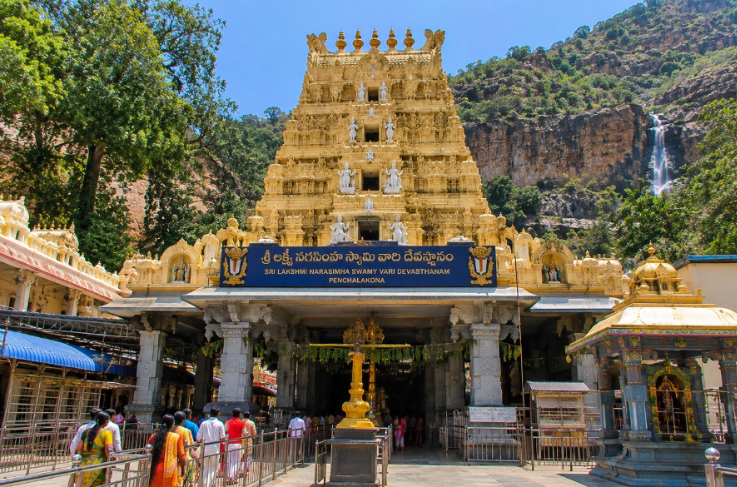
About Penchalakona Lakshmi Narasimha Swamy Temple, Penchalakona, Nellore District, Andhra Pradesh
Penchalakona Lakshmi Narasimha Swamy Temple is situated at the foot of Penchalakona Valley in Sri Potti Sriramulu Nellore district, Andhra Pradesh. The presiding deity is Lord Narasimha, a form of Lord Vishnu, worshipped here in a self-manifested rock form known as Penusila. The shrine is also associated with the regional tradition of the Nava Narasimha temples.
The temple is closely connected with the story of Narasimha and Chenchu Lakshmi, whose meeting is remembered in the local Sthala Purana. The annual Brahmotsavam in the Telugu month of Vaisakha brings devotees to Penchalakona for Narasimha Jayanti and related observances. The nearby sacred tank, associated shrines and waterfalls form part of the setting in which this pilgrimage has developed.
Story of Penchalakona Lakshmi Narasimha Swamy Temple
Penchalakona is regarded as an ancient place of worship, although the exact date when the present temple was first built is not firmly established in the sources available. The temple’s Sthala Purana connects the area with Sage Kanva, who is believed to have performed penance here. The shrine is administered by the Sri Penusila Lakshmi Narasimha Swamy Devasthanam under the Andhra Pradesh Endowments Department.
The main deity is Lord Penusila Lakshmi Narasimha Swamy, the Narasimha form of Vishnu. Unlike a conventional sculpted image, the presiding form is worshipped as Swayambhu—self-manifested—and is associated with intertwined stones that resemble a lion’s head above a human form. This distinctive rock form is central to the temple’s identity and to the local explanation of the name Penusila.
The temple’s principal sanctum is surrounded by a functioning ritual precinct with space for worship and associated shrines. The wider complex includes the Aadi Lakshmi Ammavari and Anjaneya Swamy shrines, along with the sacred Vaarla Pushkarini. These associated places are important to the temple’s daily religious life and should be understood as part of the same pilgrimage site, not simply as architectural additions.
Penchalakona’s natural setting is closely tied to its religious identity. The temple stands among the hills of the Eastern Ghats, in the valley associated with the Kandaleru and nearby waterfalls. The combination of the self-manifested form, the Chenchu Lakshmi tradition and the surrounding sacred landscape distinguishes Penchalakona from temples whose significance is defined primarily by a large constructed complex.
What Makes Penchalakona Lakshmi Narasimha Swamy Temple Sacred for Devotees
Narasimha and Chenchu Lakshmi
According to the local Sthala Purana, Lord Vishnu remained in his fierce Narasimha form after destroying Hiranyakashipu. In the tradition associated with Penchalakona, he travelled through the forest until he encountered Chenchu Lakshmi, the daughter of a Chenchu chief. She approached him, and the account says that their union brought Narasimha from his fierce state to a calmer form.
The tradition is also connected with the name Penusila. Some local explanations link it with penu vesukonuta, a Telugu expression associated with embracing or entwining. The legend explains the intertwined appearance of the sacred rock form and remains an important part of the temple’s religious identity.
Sage Kanva and the Sacred Valley
The temple’s Sthala Purana associates Penchalakona with Sage Kanva and his penance. Local tradition also links the old name Kanva Yeru with the watercourse now known as Kandaleru. These accounts place the shrine within a wider sacred landscape of hills, water and forest rather than treating it as an isolated structure.
The association with Sage Kanva is a religious tradition, not a securely dated historical record. Its importance lies in how the local sacred history explains the area’s identity and its longstanding place in pilgrimage.
The Penusila Form of Narasimha
The deity is worshipped as a Swayambhu form of Narasimha. The intertwined rock form is understood by devotees as the form in which the Lord manifested at this site. The name Penusila is commonly associated with this stone image, though published sources explain the wording in different ways.
Penchalakona is counted among the regional Nava Narasimha shrines. This association places the temple within the broader worship of Narasimha in Andhra Pradesh and neighbouring regions, while the local form and Chenchu Lakshmi tradition give this shrine its particular identity.
Aadi Lakshmi and the Associated Shrines
The temple precinct includes the shrine of Aadi Lakshmi Ammavaru, along with the Anjaneya Swamy shrine and the Vaarla Pushkarini. They form part of the wider religious space connected with the main deity. Devotees visiting Penchalakona may include these associated places in their worship, subject to current access arrangements and temple guidance.
Annual Festivals & Rituals at Penchalakona Lakshmi Narasimha Swamy Temple, Penchalakona, Nellore District, Andhra Pradesh
Daily Worship and Sevas
The temple follows a daily cycle of worship and offerings to Lord Penusila Lakshmi Narasimha Swamy. The temple’s published seva list includes Suprabhatam, abhishekam, archana, parayanam, nivedana and Kalyanotsavam. Worship at the associated shrines also forms part of the temple’s religious routine. The current schedule should be checked before travel, as daily sevas and public darshan periods are not the same.
Annual Brahmotsavam
The annual Brahmotsavam, also known as the Penchala Swamy festival, is the principal festival of Penchalakona. It is observed in the Telugu month of Vaisakha, usually around April or May. The programme extends over several days and includes special worship and processional observances. Exact dates and the festival schedule vary according to the religious calendar.
Narasimha Jayanti
Narasimha Jayanti commemorates the appearance of Lord Narasimha and is an important observance at Penchalakona. It falls during the same seasonal period in which the annual festival is held, bringing additional devotees to the shrine. Access and crowd conditions can differ considerably from an ordinary day.
Kalyanotsavam
Kalyanotsavam is the ceremonial wedding observance associated with the divine couple. At Penchalakona, this seva reflects the temple’s Narasimha and Lakshmi traditions, including the local account of Chenchu Lakshmi. Availability and timings should be confirmed with the Devasthanam before planning around this ritual.
Sacred Places to Visit Near Penchalakona Lakshmi Narasimha Swamy Temple
Aadi Lakshmi Ammavari Temple
The Aadi Lakshmi Ammavari shrine is part of the wider Penchalakona temple precinct and is closely associated with the worship of Lakshmi. Check current access arrangements before visiting, particularly while any announced redevelopment work is being carried out.
Anjaneya Swamy Temple
The Anjaneya Swamy shrine is one of the associated temples listed at Penchalakona. Devotees may include it as part of their visit to the main Narasimha shrine.
Vaarla Pushkarini
Vaarla Pushkarini is the sacred tank associated with the temple complex. It forms part of the local religious landscape and should be approached according to the rules and facilities available at the site.
Lokona Waterfalls
The waterfalls near Penchalakona are among the best-known natural features of the valley. The district’s tourism information connects the waterfall area with the origin of the Kandaleru river. Access to the falls is separate from temple darshan and may depend on weather, local conditions and safety directions.
Gollaboya Swamy Temple, Gonupally
The Gollaboya Swamy shrine at Gonupally is included among the associated places listed by the temple website. It offers another point of connection with the local sacred traditions around Penchalakona.
Plan Your Visit to Penchalakona Lakshmi Narasimha Swamy Temple
NamanDarshan is a technology platform that arranges darshan and related services on your behalf through independent service providers.
Common Questions About Visiting Penchalakona Lakshmi Narasimha Swamy Temple
The temple is in Penchalakona village, Rapur Mandal, Sri Potti Sriramulu Nellore district, Andhra Pradesh. It is approximately 70 kilometres from Nellore and about 30 kilometres from Rapur, according to the district government’s visitor information.
The name Penusila is associated with the intertwined rock form worshipped as Lord Narasimha. Local traditions also connect the name with the story of Narasimha and Chenchu Lakshmi.
In the local Sthala Purana, Chenchu Lakshmi is the daughter of a Chenchu chief who encounters Lord Narasimha after his battle with Hiranyakashipu. The tradition says their union brings the Lord to a calmer form and is central to Penchalakona’s sacred story.
Saturdays and Narasimha Jayanti are traditionally preferred.
NamanDarshan is a technology platform that arranges darshan and related services on your behalf through independent service providers. We are not the temple or its management, and the temple's rules always apply.
Visitor Information
Darshan Timing
Address
Penchalakona Lakshmi Narasimha Swamy Temple, Penchalakona, Nellore District, Andhra Pradesh, India
Notable Events
Ancient sacred tradition
The temple’s Sthala Purana associates Penchalakona with Sage Kanva’s penance and the worship of Lord Narasimha in a self-manifested form. These accounts belong to the shrine’s sacred history and do not provide a verified foundation date.
10th-century renovation — reported account
The Nellore District Government’s tourism page reports that the temple was renovated in the 10th century. Other published temple history material offers a different approximate chronology for the sanctum, so the date should be treated as a reported account rather than an uncontested historical fact.
Annual Brahmotsavam
The Vaisakha Brahmotsavam remains the temple’s principal annual festival, drawing devotees for Narasimha Jayanti and related observances. The dates are determined by the religious calendar and change each year.
2026 — reported precinct development
Public reporting in 2026 described funding and planned reconstruction work for the Aadi Lakshmi Ammavari shrine within the temple complex. This is a development milestone, but it should not be described as completed unless the Devasthanam confirms the current status.
How to Reach the Temple
By air: Tirupati Airport is one regional option for air travel, followed by a road journey to Penchalakona. Compare current flight availability and onward transport before booking.
By rail: Nellore is a practical railhead for reaching the temple. From there, continue by road toward Rapur and Penchalakona. Confirm current bus and taxi options for the date of travel.
By road: The district government lists Penchalakona as approximately 30 kilometres from Rapur and 70 kilometres from Nellore. The temple is reached by road to Penchalakona village at the foot of the valley. Travel time depends on the chosen route and road conditions.
Within Penchalakona: The main shrine, associated temples and waterfall area are separate stops within the wider locality. Follow local directions for access to the temple precinct and avoid assuming that the waterfall route is part of the normal darshan route.