
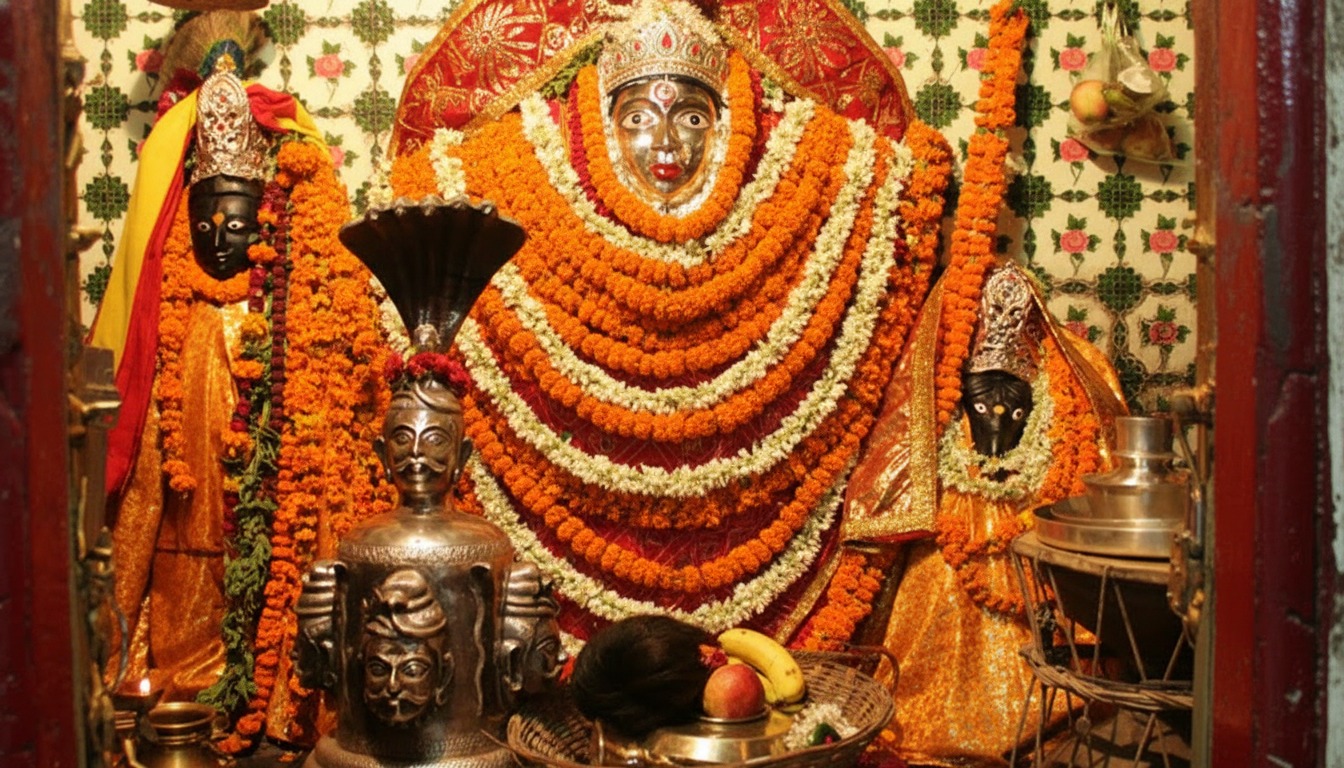
About Kashi Vishwanath Temple, Varanasi, Uttar Pradesh
Kashi Vishwanath Temple is dedicated to Lord Shiva, worshipped here as Vishwanath or Vishweshwara, the Lord of the Universe. It is one of the twelve Jyotirlinga shrines and stands in the old city of Varanasi near the western bank of the Ganga.
The present temple was built in 1780 under Maharani Ahilyabai Holkar of Indore. The shrine is known for its sacred Jyotirlinga, the golden shikharas, daily worship and its close connection with the religious life of Kashi.
Story of Kashi Vishwanath Temple
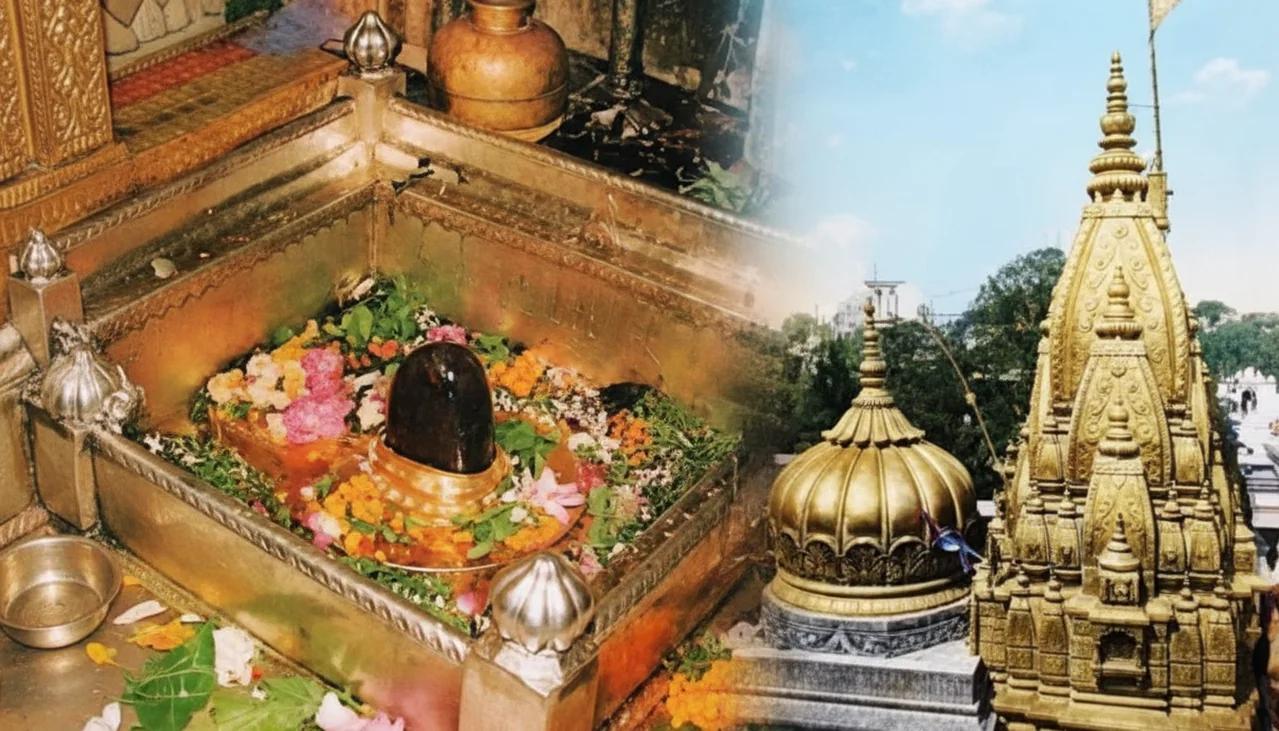
The history of Kashi Vishwanath Temple stretches across several periods of construction and rebuilding. The Kashi Khanda of the Skanda Purana describes Vishweshwara as the principal Shiva deity of Kashi, while historical accounts record earlier temples and later reconstructions at the site. A major reconstruction took place during the Mughal period under Raja Man Singh and Raja Todar Mal, before the temple was demolished in 1669.
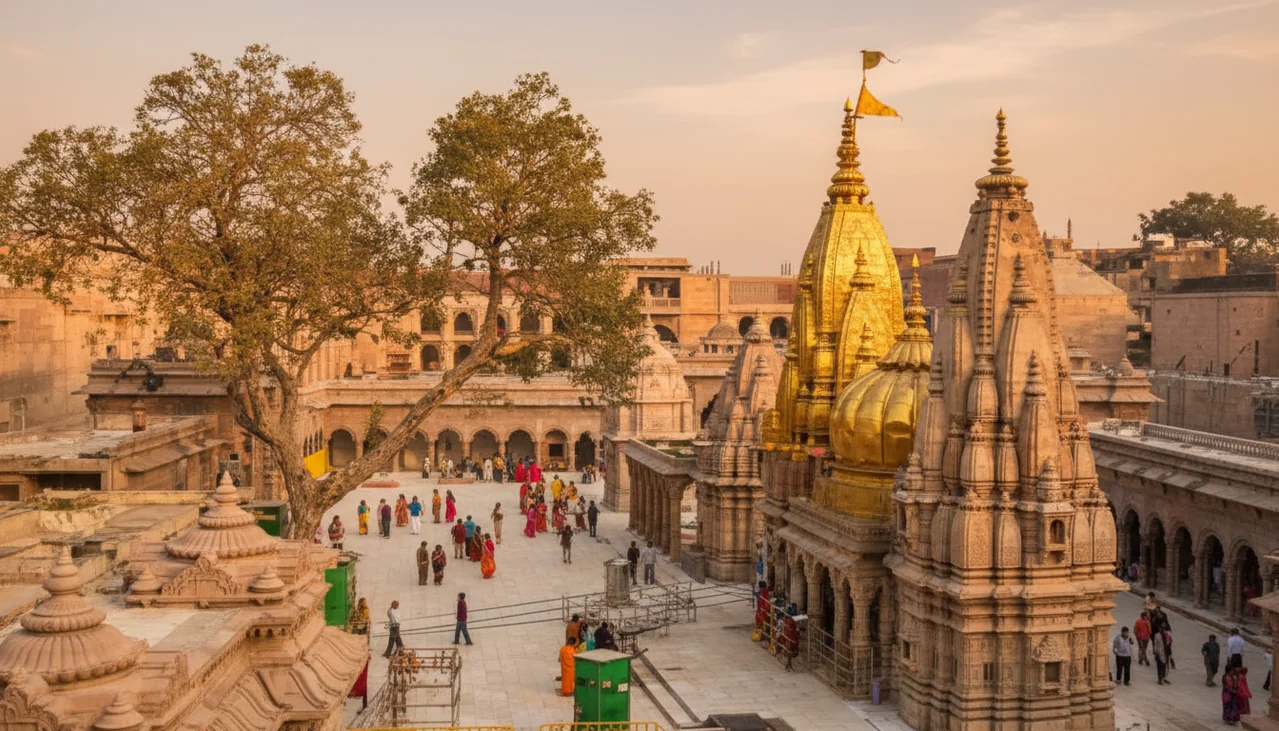
The present temple was built on an adjacent site in 1780 by Maharani Ahilyabai Holkar. Further additions followed, including the Naubatkhana in 1785 and later work supported by different royal patrons. In the 19th century, gold was added to the temple's domes, giving the shrine its familiar golden appearance. The temple's architecture is in the North Indian Nagara tradition, with the main sanctum containing the Vishwanath Jyotirlinga and smaller shrines around the principal shrine.
The sacred complex also includes shrines associated with deities such as Annapurna, Dandapani, Avimukteshwar, Vishnu, Vinayaka and other forms of Shiva and Shakti. To the north is the Gyan Vapi, or Well of Knowledge, which has its own place in the religious traditions of Kashi.
What Makes Kashi Vishwanath Temple Sacred for Devotees
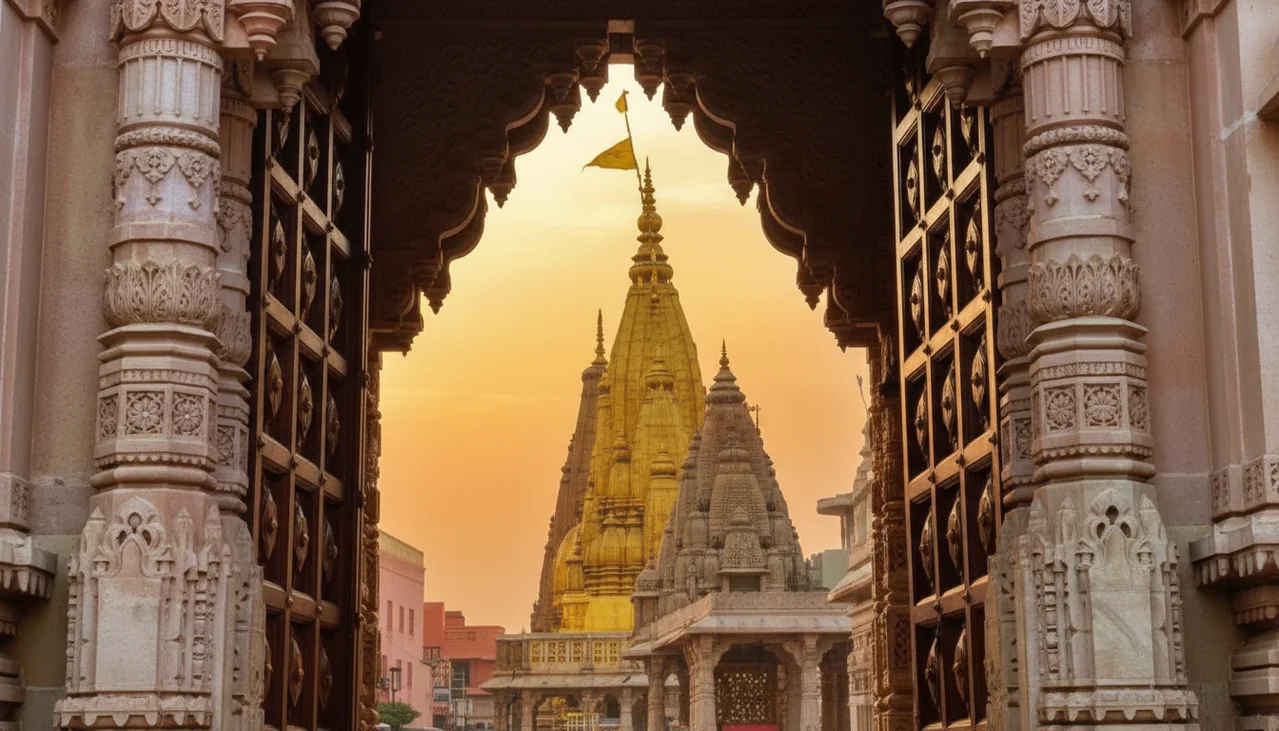
The Jyotirlinga of Vishwanath
Kashi Vishwanath is one of the twelve Jyotirlingas of Lord Shiva. According to a widely known Shaiva tradition, Shiva appeared as an endless pillar of light before Brahma and Vishnu when they disputed their supremacy. Neither deity could find the beginning or end of the light, and Shiva revealed himself through that infinite form.
At Kashi Vishwanath, Shiva is worshipped as Vishweshwara, linking the shrine with the religious understanding of Kashi as the sacred city of Shiva.
Kashi and Lord Shiva
Religious traditions describe Kashi as the city of Shiva and place Vishwanath at its centre. The Kashi Khanda and other sacred traditions connect the temple with the spiritual geography of the city, including the Ganga, the ghats and the wider Panchakroshi area.
The belief that Kashi is closely associated with liberation is an important part of the city's religious identity. Traditional accounts also connect Shiva with the Taraka Mantra, believed to guide a soul towards liberation at the time of death. These are sacred beliefs within the Hindu tradition and should be understood as such.
Gyan Vapi
The Gyan Vapi, or Well of Knowledge, stands within the wider Vishwanath precinct. Religious tradition gives the well an important place in the history of the shrine and in the sacred geography surrounding the Jyotirlinga.
Accounts concerning the protection or concealment of the Jyotirlinga at the time of the temple's destruction belong to historical and religious traditions and should not be presented as independently established archaeological fact.
Annapurna and Vishwanath
The nearby Annapurna Temple is closely associated with the Vishwanath shrine. In Hindu tradition, Annapurna is the goddess who nourishes the world, and the relationship between Annapurna and Vishwanath reflects the traditional pairing of Shiva and Shakti in Kashi.
For many pilgrims, visiting Vishwanath and Annapurna together forms part of the customary pilgrimage through the old city.
Kal Bhairav and the sacred geography of Kashi
Kal Bhairav is traditionally regarded as the guardian or Kotwal of Kashi. His shrine lies away from the main Vishwanath complex, but he has an important place in the religious geography of the city.
The association of Vishwanath, Annapurna, Kal Bhairav and the Ganga shows how Kashi is understood not as a single temple site but as a larger sacred landscape.
Annual Festivals & Rituals at Kashi Vishwanath Temple, Varanasi, Uttar Pradesh
Daily Worship and Aarti Celebrations at the Temple
The temple follows a daily sequence of worship that includes Mangala Aarti, Bhog Aarti, Saptarishi Aarti, Shringar Bhog and Shayan Aarti. General darshan takes place around these rituals, and access may pause while temple worship is being performed. The current timings are managed by the temple authorities and may change on Purnima, eclipses, festivals and other special occasions.
Mahashivratri Celebrations at the Temple
Mahashivratri is one of the major annual festivals at Kashi Vishwanath. Devotees observe fasts and night-long worship, while the temple and the city take part in special celebrations associated with Shiva and Parvati. Kashi also holds a traditional Shiva procession during the festival period, adding a wider public dimension to the temple's own observances.
Shravan Maas Celebrations at the Temple
The month of Shravan is especially important for Shiva worship. Special shringar is performed on Mondays, with different traditional forms of decoration associated with the month. Devotees also visit Kashi to offer water to Shiva as part of their Shravan observances.
Rangbhari Ekadashi Celebrations at the Temple
Rangbhari Ekadashi comes before Holi and is associated with the arrival of Shiva and Parvati in Kashi in local religious tradition. The temple observes the occasion through special worship, decoration and devotional music.
Annakoot Celebrations at the Temple
Annakoot is marked with a large food offering known as Chhappan Bhog. After the offering and worship, the food is distributed as prasad according to temple tradition.
Dev Deepawali Celebrations at the Temple
Dev Deepawali is observed on Kartik Purnima, fifteen days after Diwali. The ghats of Varanasi are illuminated with lamps, and the festival is closely connected with the city's wider worship of the Ganga and the deities of Kashi.
Sacred Places to Visit Near Kashi Vishwanath Temple
Annapurna Temple : Annapurna Temple is located close to Kashi Vishwanath and is dedicated to Goddess Annapurna, traditionally regarded as the goddess of nourishment. The two shrines are closely linked in the religious tradition of Kashi.
Kal Bhairav Temple : Kal Bhairav is traditionally known as the guardian of Kashi. His temple forms an important part of the city's Shiva pilgrimage and is commonly included by devotees visiting Vishwanath.
Dashashwamedh Ghat : Dashashwamedh Ghat is one of the best-known ghats on the Ganga and an important site for the evening Ganga Aarti. It is also one of the principal riverfront points associated with a pilgrimage to Vishwanath.
Manikarnika Ghat : Manikarnika is one of the traditional cremation ghats of Kashi and occupies an important place in the city's religious understanding of life, death and liberation.
Vishalakshi Temple : Vishalakshi Temple is a Shakti shrine in the old city, traditionally associated with the Shakti Peetha tradition. Its location near Vishwanath makes it part of the wider pilgrimage geography of central Kashi.
Sankatha Temple : Sankatha Temple is dedicated to Devi Sankatha and is among the important goddess shrines of the old city. It can be included in a wider pilgrimage through the sacred lanes and ghats of Varanasi.
Plan Kashi Vishwanath Temple Darshan
For current darshan timings, queue guidance, aarti bookings and Naman Darshan's Guided Darshan Assistance, continue to the dedicated Kashi Vishwanath Temple Darshan page.
Common Questions About Visiting Kashi Vishwanath Temple
Visitor Information
Darshan Timing
Address
Shri Kashi Vishwanath Temple, Vishwanath Gali, Lahori Tola, Varanasi, Uttar Pradesh – 221001, India
Notable Events
1780 — Present temple built – Maharani Ahilyabai Holkar of Indore established the present Kashi Vishwanath Temple on an adjacent site. • 1785 — Naubatkhana added – A Naubatkhana was constructed in front of the temple during the late 18th century. • 1839 — Gold added to the temple domes – The official temple history records the gold work associated with Maharaja Ranjit Singh of Punjab. • 1983 — Government administration begins – The temple came under the management arrangement of the Government of Uttar Pradesh and the associated trust system. • 2019 — Kashi Vishwanath Dham foundation – The foundation stone for the Kashi Vishwanath Dham project was laid, with the stated purpose of improving the connection between the temple and the Ganga. • 2021 — Kashi Vishwanath Dham inaugurated – Phase 1 of the Kashi Vishwanath Dham was inaugurated on 13 December 2021, creating a much larger connected pilgrimage area around the historic shrine.
How to Reach the Temple
By Air: Lal Bahadur Shastri International Airport is the main airport serving Varanasi. The temple lies in the old city and is reached from the airport by road.
By Rail: Varanasi Junction and Banaras railway stations provide rail connections to major cities across India. From the railway station, continue by taxi, auto-rickshaw or other local transport toward the old city.
By Road: Varanasi is connected by road with major cities in Uttar Pradesh and neighbouring states. Because the temple lies inside the old city, vehicles cannot enter every part of the approach route.
Within Varanasi: The final approach to Kashi Vishwanath is through the historic lanes and the Kashi Vishwanath Dham area. Vehicle restrictions and pedestrian arrangements can change during busy periods, so allow additional time for the final part of the journey.
Shirdi, Ahilyanagar, Maharashtra