
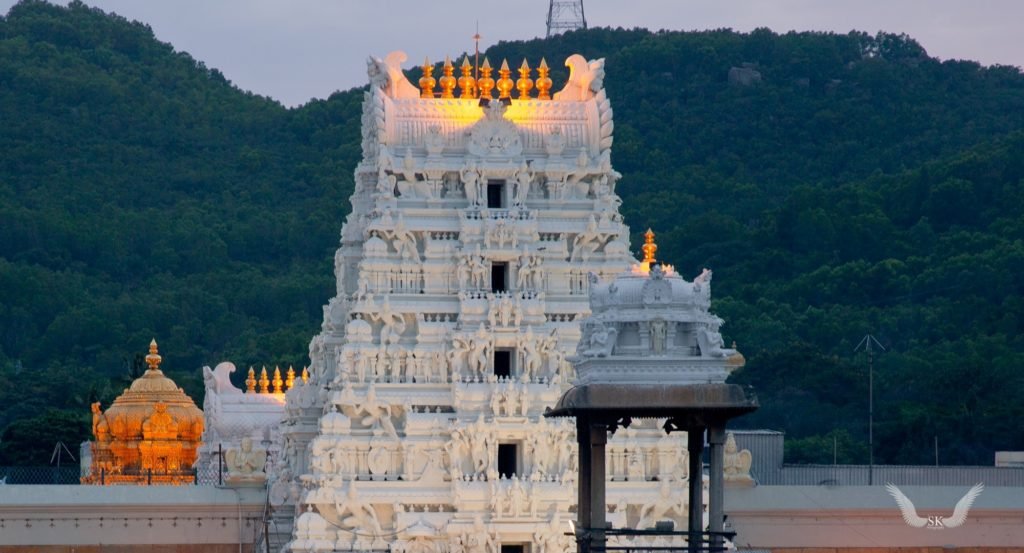
About Sri Venkateswara Swami Temple, Tirumala, Andhra Pradesh
Sri Venkateswara Swami Temple is the principal shrine of Tirumala, dedicated to Lord Venkateswara, a form of Lord Vishnu. The temple stands on the Seshachalam Hills and is the centre of the Venkateswara tradition followed by millions of pilgrims.
The shrine is known for its Vaishnava worship, the Ananda Nilayam Vimanam, the daily Nitis and Sevas, Brahmotsavam, Vaikunta Ekadashi and the long-standing tradition of offering one's hair as a vow. The sacred landscape also includes Bhu Varaha Swamy Temple, Swami Pushkarini and several other places connected with the Tirumala pilgrimage.
Story of Sri Venkateswara Swami Temple
The history of the Tirumala shrine extends across many centuries. Temple tradition associates the original shrine with Thondaman, while inscriptions provide firmer evidence of royal patronage from the Pallava, Chola, Pandya and Vijayanagara periods. A major early record is the 966 CE endowment of Pallava queen Samavai, while Vijayanagara rulers, especially Krishnadevaraya, later made substantial gifts of gold, jewels and other offerings to the temple. Ramanujacharya's visits in the 11th and 12th centuries are also important because the temple's ritual system and Vaishnava traditions were further organised during this period.
The present complex follows the South Indian Dravidian tradition and developed in stages rather than being built at one time. The sacred centre is the Garbhagriha, covered by the Ananda Nilayam Vimanam. Devotees approach through the temple's successive entrances, including the Mahadvaram, Vendivakili and Bangaru Vakili, with the inner areas arranged around the sanctum and its circumambulatory paths. The complex today covers about 16.2 acres.
What Makes Sri Venkateswara Swami Temple Sacred for Devotees
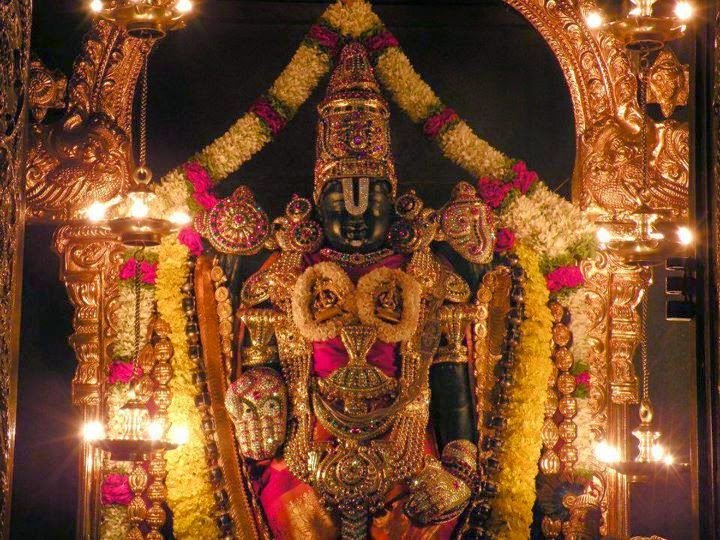
Venkateswara and the Tirumala Hills
According to Tirumala tradition, Lord Venkateswara came to Tirumala in the present Kali Yuga and made the hills His abode. The name Srinivasa is also closely associated with the Lord in the temple's religious literature and worship.
Bhu Varaha Swamy and the first worship
Tirumala is traditionally regarded as Adivarahakshetra, the abode of Bhu Varaha Swamy. According to temple legend, Srinivasa sought land from Varaha Swamy to remain on the hills and promised that Varaha would receive the first worship and offering from pilgrims. The tradition continues at Tirumala, where devotees are traditionally expected to visit Bhu Varaha Swamy before proceeding to the main shrine.
Srinivasa Kalyanam
One of the central traditions connected with Venkateswara is His marriage to Padmavathi, the daughter of King Akasa Raja. The story includes Vakula Devi, who is traditionally identified with Yashoda reborn, and describes her role in arranging the marriage of Srinivasa and Padmavathi.
Srinivasa Kalyanam remains part of the living religious tradition at Tirumala and is also represented through temple Sevas and ritual observances.
Vaikhanasa Agama
Worship at the Tirumala temple follows the Vaikhanasa Agama tradition. The Agama provides the framework for the temple's daily worship, offerings and many of its annual observances, giving the temple's ritual calendar a continuity that extends beyond individual festival days.
Sri Vaishnava tradition and Ramanujacharya
Ramanujacharya is closely associated with the development of the temple's religious and administrative traditions. TTD records his role in organising worship according to Vaikhanasa practice, introducing the recitation of the Divya Prabandham and strengthening the institutional role of the Jeeyars in maintaining temple customs.
Hair offering as a vow
Offering one's hair, or tonsure, is one of the most recognisable traditions associated with Tirumala. Devotees offer their hair as an act of surrender and fulfilment of a personal vow. The practice is traditionally carried out at the Kalyanakatta facilities maintained by TTD.
Annual Festivals & Rituals at Sri Venkateswara Swami Temple, Tirumala, Andhra Pradesh
Daily Nitis and Sevas Celebrations at the Temple
The temple day follows a sequence of Nitis, beginning with Suprabhatam and continuing through Thomala Seva, Archana, offerings and other prescribed services. Darshan takes place around this ritual cycle, so the daily pattern is not simply a fixed opening-and-closing timetable.
Brahmotsavam Celebrations at the Temple
Srivari Brahmotsavam is the principal annual festival of Tirumala. Over nine days, the processional deity Sri Malayappa Swamy is taken around the Mada streets on different Vahanas, including Garuda, Hanumantha, Surya Prabha and the great temple chariot. The festival combines daily worship with public processions and traditional ceremonial observances.
Vaikunta Ekadashi Celebrations at the Temple
Vaikunta Ekadashi is one of the most important Vaishnava observances at Tirumala. The sacred Vaikunta Dwaram is opened for pilgrims as part of the festival, and the day attracts exceptionally large numbers of devotees.
Rathasapthami Celebrations at the Temple
Rathasapthami marks the ceremonial movement of Sri Malayappa Swamy through a series of Vahana processions in a single day. It is one of the major annual observances in the Tirumala calendar.
Pavithrotsavam Celebrations at the Temple
Pavithrotsavam is observed as a purification festival. TTD describes it as a period in which Tirumanjanam and Homam are performed, with the rituals traditionally serving as a ceremonial purification of omissions and shortcomings in the course of the year's worship.
Pushpa Yagam Celebrations at the Temple
Pushpa Yagam is performed after Brahmotsavam and is associated with the Sravanam star, regarded as the birth star of Lord Venkateswara. The processional deities are worshipped with large quantities of flowers following Tirumanjanam.
Sacred Places to Visit Near Sri Venkateswara Swami Temple
Sri Bhu Varaha Swamy Temple : Located beside Swami Pushkarini, Bhu Varaha Swamy is closely tied to the traditional history of Tirumala. The temple is important because Varaha is traditionally regarded as the earlier presiding deity of the hills.
Swami Pushkarini : Swami Pushkarini is the sacred temple tank beside the main shrine. It has an important place in the religious geography of Tirumala and is associated with several major temple observances.
Akasaganga Teertham : Akasaganga is a sacred water source on Tirumala traditionally associated with temple worship and ritual use. It is also one of the recognised pilgrimage places around the main shrine.
Silathoranam : Silathoranam is a natural rock formation near Tirumala. The arch-shaped formation has become one of the better-known geographical landmarks associated with the hills.
Srivari Padalu : Srivari Padalu is a sacred spot on the Tirumala Hills associated by tradition with the footprints of Lord Venkateswara. It forms part of the wider sacred landscape beyond the main temple complex.
Kapila Theertham : Kapila Theertham is a Shiva shrine and sacred waterfall at the foot of the Tirumala Hills in Tirupati. It provides a Shaiva counterpart to the predominantly Vaishnava pilgrimage of Tirumala.
Plan Sri Venkateswara Swami Temple Darshan
For current darshan planning, entry procedures, date-specific schedules and Naman Darshan's Guided Darshan Assistance, continue to the dedicated Sri Venkateswara Swami Temple Darshan page.
Common Questions About Visiting Sri Venkateswara Swami Temple
The main deity is Lord Venkateswara, a form of Lord Vishnu, also worshipped as Srinivasa and Balaji. The principal image stands in the Garbhagriha of the Ananda Nilayam.
The temple follows the Vaikhanasa Agama tradition for its worship and ritual practices. The system governs many of the daily, weekly and annual Sevas performed at the shrine.
According to Tirumala tradition, Varaha Swamy granted Srinivasa a place to remain on the hills and received the right to the first worship and offering. This tradition continues in the pilgrimage practice at Tirumala.
Hair offering is traditionally performed as an act of surrender and as fulfilment of a personal vow. TTD maintains Kalyanakatta facilities for this practice.
Ananda Nilayam is the sacred central structure over the Garbhagriha of the main temple. The golden Vimanam above the sanctum is known as the Ananda Nilaya Vimanam.
Brahmotsavam is the principal annual festival of the shrine. During the nine-day celebration, Sri Malayappa Swamy and the accompanying deities are taken in procession on different Vahanas around the temple streets.
They are closely connected but are not the same place. Tirupati is the town at the foot of the hills, while Tirumala is the hill settlement where the Sri Venkateswara Swami Temple is located.
Visitor Information
Entry Fee
Current access categories are administered by TTD – Ticket/token arrangements can change.
Darshan Timing
Address
Sri Venkateswara Swamy Temple, Tirumala, Tirupati, Andhra Pradesh 517504, India
Notable Events
966 CE — Samavai endowment – Pallava queen Samavai made an important recorded endowment to the Tirumala shrine, including a silver processional image, ornaments and arrangements for festivals. • 11th–12th century — Ramanujacharya's association with Tirumala – Ramanujacharya visited Tirumala and became closely associated with the organisation of Vaishnava worship, the Divya Prabandham tradition and the institutional role of the Jeeyars. • 14th–16th centuries — Vijayanagara patronage – The temple received major patronage under the Vijayanagara rulers. Krishnadevaraya made repeated visits and substantial gifts, including support connected with the gilding of the Ananda Nilayam. • 1843 — Administration passes to Hathiramji Mutt Mahants – The East India Company transferred management of the temple to the Mahants of Hathiramji Mutt, who administered the shrine for nearly a century. • 1933 — TTD administration – The Tirumala Tirupati Devasthanams came into existence under the 1933 administrative framework, marking the beginning of the temple's modern institutional management. • 1985 — Nithya Annaprasadam begins – TTD began its organised free-food programme for pilgrims, which later developed into the present Annaprasadam Trust and large-scale pilgrim food service system.
How to Reach the Temple
By air: Tirupati Airport is the main airport serving the pilgrimage area. From the airport, continue to Tirupati and then travel onward to Tirumala.
By rail: Tirumala does not have its own railway station. Tirupati is the main railway access point, with onward road connections to the hills.
By road: Tirumala is connected with Tirupati by the ghat roads, with regular bus services operated by APSRTC and other authorised transport. TTD also provides transport facilities for pilgrims within Tirumala.
On foot: Pilgrims can climb to Tirumala through two traditional pedestrian routes, Alipiri and Srivari Mettu. TTD provides drinking water, rest shelters, medical assistance and other facilities along the pedestrian routes.
Within Tirumala: TTD operates free bus services within the hill town, connecting pilgrim facilities, temples and other major points.
Amritsar, Punjab