
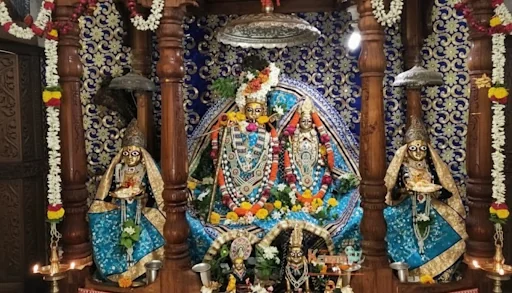
About Shri Radha Rani Temple, Barsana, Uttar Pradesh
Shri Radha Rani Temple, also known as Shriji Temple or Ladli Ji Temple, is a historic temple in Barsana dedicated to Shri Radha Rani. It stands on the hill traditionally associated with Radha's home in Braj and is an important centre of Radha-Krishna worship.
The temple is known for the worship of Radha as Ladli Ji, with Krishna worshipped alongside her as Ladli Lal. Its red sandstone architecture, hilltop setting and festivals such as Radhashtami and Lathmar Holi have made the temple an important part of the religious life of Barsana.
Story of Shri Radha Rani Temple
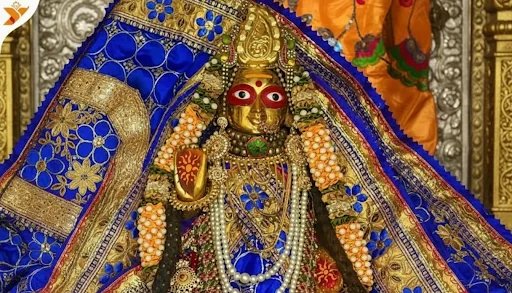
Barsana is one of the important pilgrimage towns of Braj, and its religious identity is closely connected with Shri Radha Rani. In Braj tradition, Barsana is regarded as the home of Radha, daughter of Vrishabhanu and Kirti. Some traditions also identify it as her birthplace. The temple therefore represents more than a shrine within the town; it is part of the sacred landscape associated with Radha's life.
Temple traditions trace an ancient shrine at the site to King Vajranabh, regarded as a great-grandson of Shri Krishna. This is a religious tradition rather than a documented date for the present building. The later revival of Radha worship at Barsana is associated with Narayan Bhatt, the Vaishnava scholar and Braj pilgrimage organiser of the 16th century. The historic temple phase is generally dated to 1675 and is associated with Raja Bir Singh Deo, while accounts also credit Narayan Bhatt and Raja Todarmal with the development of the shrine.
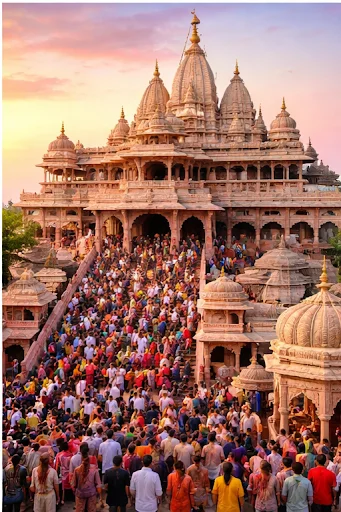
The temple stands on the summit of Bhanugarh or Brahmanchal Hill and is reached by a long flight of steps. The historic structure uses red sandstone and features carved pillars, arches, domes and decorative stonework. Paintings depicting Radha and Krishna's pastimes are also associated with the temple, giving the interior the character of a devotional rather than purely architectural space.
The palace-like appearance of Shriji Temple reflects the architectural idiom of the period in which the historic structure developed, with Rajput and Bundela features alongside Mughal-period influences. From the hilltop, the temple overlooks Barsana and connects naturally with the sacred places spread across the surrounding hills and pilgrimage routes.
What Makes Shri Radha Rani Temple Sacred for Devotees
Radha as Ladli Ji
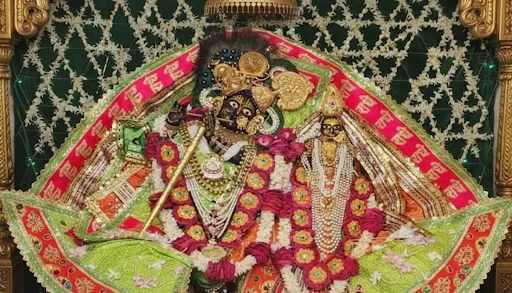
At Barsana, Radha is worshipped as Ladli Ji, the beloved daughter of Vrishabhanu Maharaj. Krishna is worshipped with her as Ladli Lal, giving the shrine a Radha-centred form of worship that is especially characteristic of Barsana.
The name Ladli Ji expresses the way Radha is regarded within the local Braj tradition—not simply as Krishna's consort, but as the beloved daughter and central figure of Barsana.
Barsana and Radha's Home
According to Braj tradition, Radha's father Vrishabhanu and Krishna's father Nanda were close associates. When their families moved through the Braj region, Vrishabhanu settled at Barsana while Nanda settled at neighbouring Nandgaon. Bhanugarh became associated with Vrishabhanu's family and, in devotional tradition, with Radha's childhood home.
The story is part of Braj's sacred geography and explains the close relationship between Barsana and Nandgaon that continues in pilgrimage and festival traditions.
Radha's Birthplace Tradition
Barsana is widely regarded by devotees as the birthplace or home of Radha Rani, and this belief is central to the town's identity. Other Braj traditions identify Rawal as Radha's birthplace. The distinction belongs to differing sacred traditions rather than a settled historical question.
For the temple, the important point is that Barsana is traditionally understood as Radha's own town and the principal setting of her worship.
Radha and Krishna in Braj Tradition
The religious identity of Barsana is part of the wider Braj Bhakti tradition centred on the relationship between Radha and Krishna. The surrounding hills, kunds, forests and villages are remembered through stories of their childhood and youth.
The Radha Rani Temple forms one part of this wider sacred landscape. The annual calendar of Barsana, especially Radhashtami and Lathmar Holi, continues to express these traditions through worship, music, procession and community observance.
Barsana Parikrama
Barsana is also associated with its own parikrama tradition. The District Mathura pilgrimage information identifies a larger route of about seven kilometres and a smaller route of about four kilometres, passing places such as Radha Rani Temple, Sankari Khor and Priya Kund.
The parikrama belongs to the wider pilgrimage of Barsana and should be understood separately from the visit to the main temple.
Annual Festivals & Rituals at Shri Radha Rani Temple, Barsana, Uttar Pradesh
Daily Worship Celebrations at the Temple
Daily worship at Shri Radha Rani Temple follows the traditional cycle of darshan, shringar, bhog and aarti. The deity is treated with the forms of seva followed in the Braj tradition, and public darshan takes place around these rituals. Exact timings can change with the season, festival calendar and temple arrangements.
Radhashtami Celebrations at the Temple
Radhashtami is the principal festival associated with Radha Rani. It commemorates the appearance of Radha according to Vaishnava tradition and is celebrated with special worship, decoration, bhog, music and large gatherings of devotees in Barsana.
Lathmar Holi Celebrations at the Temple
Lathmar Holi is the best-known festival tradition of Barsana and Nandgaon. It is associated with the playful meeting of Krishna and Radha's Braj communities and is expressed through Holi songs, colours and the traditional lathi-play between the women of Barsana and men from Nandgaon. The festival extends beyond the temple itself and involves the wider town, making access and crowd arrangements different from ordinary days.
Laddoo Holi Celebrations at the Temple
Laddoo Holi is one of the early observances of the Barsana Holi celebrations. Devotees gather around Shri Radha Rani Temple for the traditional distribution and celebration associated with laddoos before the larger Lathmar Holi observances.
Janmashtami Celebrations at the Temple
Janmashtami, marking the birth of Shri Krishna, is also observed at the temple. Special decoration, worship and devotional programmes form part of the festival calendar of Barsana.
Jhulan Yatra Celebrations at the Temple
During Jhulan Yatra, Radha and Krishna are placed on decorated swings as part of the monsoon devotional tradition. The festival is celebrated across Braj and is reflected in the temple's seasonal worship.
Sharad Purnima Celebrations at the Temple
Sharad Purnima is an important Vaishnava observance in Braj. The full-moon festival is associated with Radha-Krishna devotion and forms part of the wider annual religious calendar followed in Barsana.
Sacred Places to Visit Near Shri Radha Rani Temple
Kirti Mandir : Kirti Mandir, also known as Rangeeli Mahal, is associated with Kirti Maiya, Radha's mother. The temple forms part of the Radha-centred sacred landscape at the foot of Barsana's hill.
Maan Mandir : Maan Mandir is a hilltop shrine associated with Radha-Krishna traditions and the devotional stories of Barsana. It is one of the important sacred places included in the town's pilgrimage circuit.
Mor Kutir : Mor Kutir is associated with the peacock form of Radha and Krishna in Braj tradition. The site is part of the wider network of places connected with their leelas around Barsana.
Sankari Khor : Sankari Khor is a narrow sacred passage in the Barsana hills associated with Radha-Krishna traditions. It is also included in the Barsana parikrama route.
Priya Kund : Priya Kund, also known as Pili Pokhar, is one of the sacred water bodies associated with Radha in local Braj tradition. It forms part of the religious landscape around Barsana.
Nandgaon : Nandgaon is the neighbouring Braj town traditionally associated with Nanda Maharaj and Krishna's childhood. Together with Barsana, it forms an important part of the Radha-Krishna pilgrimage landscape and the Lathmar Holi tradition.
Plan Shri Radha Rani Temple Darshan
For current darshan planning, entry preparation and Naman Darshan's date-specific Guided Darshan Assistance, continue to the dedicated Shri Radha Rani Temple Darshan page.
Common Questions About Visiting Shri Radha Rani Temple
Visitor Information
Entry Fee
General temple entry is generally not charged. – Special assistance, transport or other services are separate from temple entry.
Darshan Timing
Address
Shri Radha Rani Temple / Shriji Temple, Barsana, Mathura District, Uttar Pradesh 281405, India
Notable Events
Ancient tradition — Shrine associated with Vajranabh – Braj tradition attributes an early shrine at Barsana to Vajranabh, Krishna's great-grandson. This belongs to the sacred history of the site rather than a documented date for the present temple. • 16th century — Narayan Bhatt and the revival of Braj pilgrimage – Narayan Bhatt is associated with the revival and organisation of important sacred sites across Braj, including traditions connected with the Radha shrine at Barsana. • 1675 — Major historic temple phase – The historic temple structure is generally dated to 1675 and is associated with Raja Bir Singh Deo. Accounts also credit Narayan Bhatt and Raja Todarmal with the temple's development. • Modern pilgrimage period — Growth of Barsana's Radha-centred worship – Shri Radha Rani Temple became firmly established as the principal Radha shrine of Barsana and a central destination within the wider Braj pilgrimage circuit. • Present day — Radhashtami and Lathmar Holi remain major occasions – The temple continues to form the centre of major Barsana religious celebrations, with special crowd and access arrangements required during peak festival periods.
How to Reach the Temple
By air: For visitors arriving by air, Kheria Airport in Agra is one of the airports listed by the District Mathura administration for the region. Indira Gandhi International Airport in Delhi is another major option for visitors travelling from outside the region.
By rail: Mathura Junction and Mathura Cantt are the main railway stations serving the Mathura-Barsana pilgrimage area. From Mathura, continue to Barsana by road.
By road: Barsana is connected by road with Mathura, Vrindavan, Govardhan and Nandgaon. Taxis, buses and private vehicles are commonly used for the journey.
Within Barsana: The final approach to Shri Radha Rani Temple is uphill. During major festivals, vehicle movement and parking can be restricted, with devotees directed through temporary pedestrian routes.
Gokul, Mathura, Uttar Pradesh