
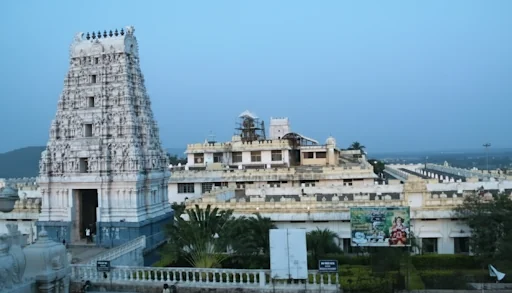
About Annavaram Sri Satyanarayana Swamy Temple, Annavaram, Andhra Pradesh
Annavaram Sri Veera Venkata Satyanarayana Swamy Temple is dedicated to Lord Satyanarayana Swamy and stands on Ratnagiri Hill beside the Pampa River. The temple is one of the major pilgrimage centres of Andhra Pradesh and is especially known for Sri Satyanarayana Swamy Vratham.
The shrine is also distinctive for its chariot-shaped main temple, its two-storey sanctum and the large cylindrical image of the deity associated with the Trimurti. Sri Anantha Lakshmi and Lord Shiva are worshipped alongside the main deity, giving Annavaram a place within both Vaishnava and Shaiva devotional traditions.
Story of Annavaram Sri Satyanarayana Swamy Temple
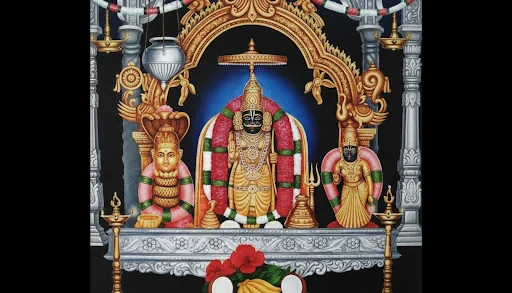
Sri Veera Venkata Satyanarayana Swamy Temple at Annavaram stands on Ratnagiri Hill in Andhra Pradesh and is dedicated to Lord Veera Venkata Satyanarayana Swamy, a form of Lord Vishnu. The temple was established in 1891 under the patronage of Raja I.V. Ramanarayana, the zamindar associated with the Gorsa and Kirlampudi estates. The present temple complex was substantially rebuilt in 1933–34, giving the shrine the form in which it is known today.
The main shrine is distinctive in its arrangement and is traditionally described as being built in the form of a chariot, with four wheels at the corners. The temple has two principal levels. The lower level contains the Yantra and Peetham, while the upper level houses the main form of Satyanarayana Swamy. The hilltop setting on Ratnagiri, with the Pampa River around the hill, is also closely connected with the temple's identity.
At the centre of the upper sanctum is Lord Veera Venkata Satyanarayana Swamy, with Ananta Lakshmi Satyavathi Devi traditionally worshipped on his right and Lord Shiva on his left. The arrangement gives the shrine a distinctive theological character, bringing together Vishnu, Lakshmi and Shiva within the principal sacred composition. The lower level is also associated with Ganapati, Suryanarayana, Bala Tripurasundari and Maheswara around the Yantra.
A notable feature of Annavaram is therefore not only the form of its architecture but the way the temple presents the worship of Satyanarayana within a wider sacred arrangement. The temple's central deity, the Yantra beneath the sanctum and the associated forms of Lakshmi and Shiva are part of the tradition through which Annavaram is understood as a place of Satyanarayana worship. The temple is particularly known for the Satyanarayana Vratam, which remains one of its principal forms of devotional worship
What Makes Annavaram Sri Satyanarayana Swamy Temple Sacred for Devotees
The Ratnagiri Sthala Purana
According to the Sthala Purana associated with Annavaram, Meru, the king of the mountains, and his consort Menaka performed penance to Lord Vishnu. They were blessed with two sons, Bhadra and Ratnakara, who later became sacred mountains.
Bhadra is associated with Bhadrachalam and the worship of Lord Rama. Ratnakara is identified with Ratnagiri, where Lord Satyanarayana is believed to have taken his abode. This tradition explains the sacred character of the hill on which the present temple stands.
The discovery of the deity
Another important temple tradition concerns the rediscovery of the deity in 1891. Eeranki Prakasam is said to have received a dream in which Lord Satyanarayana revealed that his image lay unattended on the hill. The same tradition associates a similar dream with Raja I. V. Ramarayanam.
The idol was then traced on Ratnagiri and brought to the site where the temple was established. The account forms part of Annavaram's sacred history and should be understood as a temple tradition rather than as an independently documented archaeological event.
Why the place is called Annavaram
Temple tradition gives more than one explanation for the name Annavaram. One associates it with annam, meaning food, referring to the custom of feeding pilgrims and travellers. Another connects the name with anina varam, or the desired boon believed to be received through the grace of the deity.
These explanations remain part of the local religious tradition and the cultural identity of Annavaram.
Sri Satyanarayana Vratham
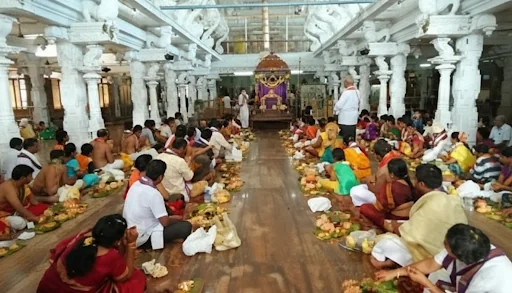
The most closely associated ritual of the shrine is Sri Satyanarayana Vratham. The Vratham is performed by devotees at Annavaram throughout the year and forms an important part of family and household worship, particularly around occasions such as marriages, housewarming ceremonies and other auspicious events.
The ritual centres on worship of Satyanarayana Swamy and the recitation of the traditional Vratha Katha. Its importance at Annavaram has made the temple closely identified with Satyanarayana worship across Andhra Pradesh and Telugu-speaking regions.
Annual Festivals & Rituals at Annavaram Sri Satyanarayana Swamy Temple, Annavaram, Andhra Pradesh
Sri Satyanarayana Swamy Vratham Celebrations at the Temple
Satyanarayana Vratham is the principal devotional ritual associated with Annavaram. It is performed daily in the temple's dedicated Vratham Mandapams, allowing many devotees to participate in the worship on the same day.
Annual Kalyana Mahotsavam Celebrations at the Temple
The annual Sri Swamy Vari Kalyana Mahotsavam is the principal festival of the temple. It is now observed over six days beginning with Vaishakha Shuddha Ekadashi, usually in April or May, with the Divine Kalyanam, processions and other traditional ceremonies.
Sri Swamy Vari Jayanti Celebrations at the Temple
The birth anniversary of Sri Satyanarayana Swamy is observed according to the traditional lunar calendar. The temple marks the occasion with special worship and celebrations.
Sri Rama Navami Celebrations at the Temple
Sri Rama Navami is observed at the temple's Sri Sita Rama shrine with Sita Rama Kalyanotsavam and related worship.
Devi Navaratri Celebrations at the Temple
During Devi Navaratri, special worship is offered to the goddess, including Mahanyasa Abhishekam and Laksha Kumkumarchana at the Yantralayam according to the temple's festival programme.
Teppotsavam, Giripradakshina and Jwalatoranam Celebrations at the Temple
Karthika observances include the Teppotsavam on the Pampa River and the Giripradakshina and Jwalatoranam connected with Karthika Pournami. These celebrations form an important part of Annavaram's annual pilgrimage calendar.
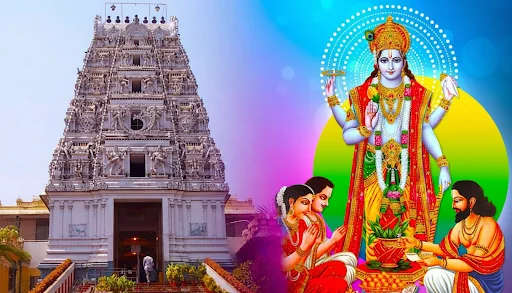
Sacred Places to Visit Near Annavaram Sri Satyanarayana Swamy Temple
Sri Sita Rama Temple : The Sri Sita Rama shrine within the temple complex is regarded as the kshetra palaka temple. The site is also associated with the traditional account of the original discovery of Sri Satyanarayana Swamy.
Vana Durga and Kanaka Durga Shrines : The shrines of Vana Durga and Kanaka Durga are located within the Ratnagiri temple complex and form part of the wider worship tradition of Annavaram.
Pithapuram : Pithapuram is an important pilgrimage town in Kakinada district, known for Sri Kukkuteswara Swamy Temple, Puruhutika Devi Temple, Kuntimadhava Swamy Temple and the Padagaya tradition.
Samalkota : Samalkota is home to Kumararama Bhimeswara Swamy Temple, one of the Pancharama Kshetras. The temple is also known for its large Shiva Linga and stone architecture.
Draksharamam : Draksharamam is another major Shaiva pilgrimage centre in the region, associated with Bhimeswara Swamy and the Pancharama tradition.
Talupulamma Lova : Talupulamma Lova is a hill shrine dedicated to Talupulamma Thalli and is another established religious destination in the wider Kakinada region.
Annavaram Temple Darshan
For current darshan preparation, entry guidance, detailed timings and Naman Darshan's Guided Darshan Assistance, continue to the dedicated Annavaram Darshan page.
Common Questions About Visiting Annavaram Sri Satyanarayana Swamy Temple
Visitor Information
Entry Fee
Sarva Darshan is currently listed as free – Seva and other darshan categories are separate.
Darshan Timing
Address
Sri Veera Venkata Satyanarayana Swamy Vari Devasthanam, Annavaram, Kakinada District, Andhra Pradesh – 533406, India
Notable Events
1891 — Consecration of Sri Satyanarayana Swamy – The deity was discovered and consecrated on Ratnagiri Hill, marking the beginning of the present temple's documented history. • 1933–34 — Stone reconstruction – The temple was reconstructed in stone as the pilgrimage centre expanded. • 2011–12 — Further reconstruction – The temple underwent another major reconstruction after the earlier structure had deteriorated. • Present day — Major pilgrimage centre of Kakinada district – Annavaram continues to function as a major pilgrimage centre, with daily Vratham, regular temple worship and an annual festival calendar centred on Sri Satyanarayana Swamy.
How to Reach the Temple
By air: Rajahmundry Airport is the nearest major airport serving the Annavaram pilgrimage area. Government tourism sources place it roughly 70–85 kilometres away depending on the reference and road route.
By rail: Annavaram Railway Station is the nearest station and is located a short distance from the temple. The station lies on the major Chennai–Howrah railway corridor.
By road: Annavaram is well connected by road and lies along the NH16 corridor. Buses and taxis connect the temple with Tuni, Kakinada, Rajahmundry, Visakhapatnam and other cities in Andhra Pradesh.
Within Annavaram: The temple can be reached from the base of Ratnagiri Hill by road or by the traditional stone steps. Vehicle access and local movement can be affected by festival crowds and traffic arrangements.
Thaiyur, Kelambakkam, Tamil Nadu