
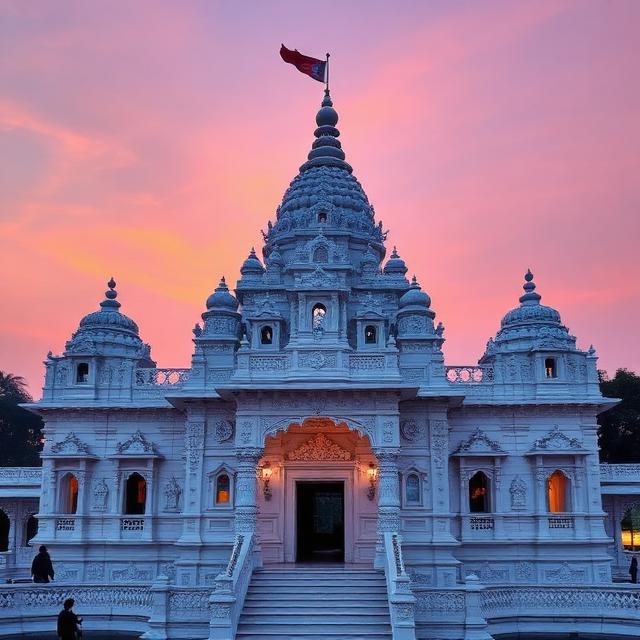
About Mehandipur Balaji Temple, Dausa, Rajasthan
Mehandipur Balaji Temple is a famous Hanuman temple at Ghata Mehandipur in Dausa district, Rajasthan. Here Lord Hanuman is worshipped as Shri Balaji Maharaj in his child form.
The temple is especially known for the combined worship of Balaji Maharaj, Pret Raj Sarkar and Bhairav Ji. Its identity is closely connected with a long-standing tradition of seeking relief from spirit-related troubles through prayer and prescribed religious practices. The shrine has grown with Mehandipur itself and remains the centre of the town's religious life.
Story of Mehandipur Balaji Temple
The history of Mehandipur Balaji begins with temple tradition rather than a dated historical record. According to the shrine's traditional account, the area was once covered by forest between two hills. Gosai Ji Maharaj, an ancestor of the mahant family, is said to have received a series of dreams in which he saw Balaji Maharaj, Bhairav Baba and Pret Raj Sarkar and was instructed to take up their worship. He later came to the same place and began regular puja and seva.
The same tradition holds that the Balaji image appeared there by divine manifestation. The Rajasthan Government's heritage study records the belief that the image is more than a thousand years old, while describing the temple building surrounding it as a 20th-century structure. This distinction is important: the antiquity of the sacred image belongs to temple belief, while the present built complex is much later.
The temple has a roughly rectangular plan and rises over two levels. The main Balaji shrine and the queue/assembly area are on the ground floor, while the upper portion contains spaces associated with Pret Raj Sarkar and other parts of the temple's ritual arrangement. The government inventory records typical Rajasthani arches, chhatri-like features on the roof, sandstone finishes and marble flooring.
The three principal forms worshipped at Mehandipur are Balaji, Pret Raj Sarkar and Bhairav Ji. Together they give the shrine its distinctive religious structure and are central to the way devotees understand the temple as a darbar. The present temple and the wider settlement have continued to expand as the number of pilgrims has grown. Mahant Ganesh Puri Ji began major rebuilding and development work; in 1965 he handed temple management to Mahant Kishore Puri Ji, and Mahant Dr. Naresh Puri Ji took charge of the trust in August 2021.
What Makes Mehandipur Balaji Temple Sacred for Devotees
The Prakatya tradition of Balaji Maharaj
The best-known origin story of Mehandipur Balaji is the Prakatya Katha connected with Gosai Ji Maharaj. According to temple tradition, he first saw a remarkable procession in a dream, followed by a vision of Balaji Maharaj, Bhairav Baba and Pret Raj Sarkar. After receiving repeated instructions to serve them, he reached the place between the hills and began worship there.
Another part of the tradition says that people once questioned whether the Balaji image had been made by human hands. The image is said to have disappeared and then become visible again after the people sought forgiveness. This story remains part of the shrine's sacred tradition and should be understood as a devotional account rather than archaeological evidence.
Balaji, Pret Raj Sarkar and Bhairav Ji
Mehandipur is unusual because the temple's principal religious identity is built around three forms worshipped together. Balaji Maharaj is the presiding form of Hanuman; Pret Raj Sarkar is traditionally associated with the judgement of spirit-related afflictions; and Bhairav Ji is revered as the protective Kotwal of the darbar. The exact theological interpretation varies in popular accounts, but the threefold arrangement is central to Mehandipur's living tradition.
Peshī and the temple's healing tradition
Mehandipur has a long association with peshī, a term used for ritual practices undertaken by devotees who believe they are affected by spirit-related problems. Such practices form part of the religious life of the shrine and are one of the main reasons for its distinctive reputation.
These beliefs should not be presented as medical proof. The temple itself states that its priests do not provide medical treatment, while academic research has documented the kinds of psychological and social problems brought by visitors to the shrine. Religious practice and medical care should therefore be understood separately.
The sacred water tradition
Temple tradition also speaks of water associated with the Balaji image. Devotees regard this as a sacred feature of the shrine and connect it with the continuing divine presence of Balaji Maharaj. The explanation belongs to the religious tradition of the temple rather than to a verified scientific account.
Mehandipur as a living pilgrimage centre
The temple has influenced the development of the settlement around it. The Rajasthan Government's planning study describes Balaji Temple as the nucleus of Mehandipur, with shops, dharamshalas, roads and other facilities developing around the pilgrimage centre. This connection between temple and town is part of the history of Mehandipur itself.
Annual Festivals & Rituals at Mehandipur Balaji Temple, Dausa, Rajasthan
Daily Puja and Aarti Celebrations at the Temple
The temple follows a daily cycle of puja, darshan, Bhog and aarti. The official schedule records morning worship, morning darshan, Rajbhog and a second darshan period, with the exact timings subject to temple management changes.
Chola Seva Celebrations at the Temple
Chola is an important form of devotional offering to Balaji Maharaj. The temple's current schedule notes special Chola-related closure of darshan on Mondays, Wednesdays and Fridays during the stated afternoon period.
Sawamani Celebrations at the Temple
Sawamani is a traditional food offering made to Balaji Maharaj, often as an expression of gratitude or on a special occasion. The temple describes it as an offering of 1.25 quintals of cooked food and provides separate arrangements for Sawamani booking.
Hanuman Janmotsav Celebrations at the Temple
Hanuman Janmotsav is one of the principal annual observances at Mehandipur Balaji. The temple celebrates the occasion with special worship, Bhog, Abhishek and increased devotional activity.
Ram Navami Celebrations at the Temple
Ram Navami is observed as part of the temple's wider Hanuman and Ram-bhakti tradition. Special worship and devotional programmes are associated with the festival.
Navaratri Celebrations at the Temple
Navaratri forms part of the annual religious calendar of the shrine. The Rajasthan Government's heritage documentation lists Navaratris among the important festival periods associated with Mehandipur.
Holi Celebrations at the Temple
Holi is another major festival observed at the temple. It forms part of the annual cycle of special worship and attracts increased numbers of devotees.
Dussehra Celebrations at the Temple
Dussehra is an important annual observance at Mehandipur Balaji. The temple identifies it along with Hanuman Janmotsav and Holi among its principal festivals, with special worship and offerings during festival days.
Sacred Places to Visit Near Mehandipur Balaji Temple
Ganesh Puri Maharaj Samadhi Sthal : The samadhi of Mahant Ganesh Puri Maharaj is one of the heritage structures identified in the Rajasthan Government's Mehandipur study. Devotees traditionally perform parikrama at the site.
Teen Pahari Mandir : Teen Pahari Mandir is another religious site in the Mehandipur area and forms part of the settlement's wider pilgrimage landscape. The government study identifies it as one of the important religious structures around the main temple.
Chand Baori, Abhaneri : Chand Baori at Abhaneri is one of the best-known heritage sites in Dausa district. Rajasthan Tourism identifies it as a historic stepwell with thousands of steps and places it among the principal attractions of the district.
Harshat Mata Temple, Abhaneri : Harshat Mata Temple stands near Chand Baori and is dedicated to the goddess associated with joy and happiness. Rajasthan Tourism highlights the temple for its architecture and sculptural remains.
Dausa : Dausa is an historic town and an important base for exploring the district's temples, stepwells and heritage sites. Rajasthan Tourism identifies Dausa as a historic settlement associated with the early Kachhawaha period.
Plan Mehandipur Balaji Temple Darshan
For current darshan planning, queue information, date-specific timings and Naman Darshan's Guided Darshan Assistance, continue to the dedicated Mehandipur Balaji Temple Darshan page.
Common Questions About Visiting Mehandipur Balaji Temple
Visitor Information
Entry Fee
No ticket required – The official temple FAQ says there is no VIP or advance-booked darshan system. No entry fee – Special offerings are separate from general temple entry.
Darshan Timing
Address
Shri Mehandipur Balaji, Ghata Mehandipur, Tehsil – Sikrai, District – Dausa, Rajasthan 321610, India
Notable Events
Traditional beginning of worship – Temple tradition traces the beginning of organised worship to Gosai Ji Maharaj, an ancestor of the mahant family, after his reported divine visions of Balaji, Bhairav and Pret Raj. • Temple rebuilding and expansion – Mahant Ganesh Puri Ji began major rebuilding and development work so that the growing number of devotees could be accommodated more effectively. • 1965 — Management passed to Mahant Kishore Puri Ji – Mahant Ganesh Puri Ji entrusted the management responsibilities of the temple to Mahant Kishore Puri Ji. His period of service was also associated with educational and social initiatives. • 2015 — Government heritage inventory – The Rajasthan Government's heritage study documented the Balaji Temple, Ganesh Puri Maharaj Samadhi and Teen Pahari Mandir as significant heritage structures in Mehandipur. • 21 August 2021 — Mahant Dr. Naresh Puri Ji takes charge – Mahant Dr. Naresh Puri Ji formally took charge of the Shri Balaji Maharaj Trust and subsequently continued development and service projects connected with the temple and surrounding area. • 2023 onward — Continuing development – The temple trust has continued work on infrastructure, sanitation, security, facilities and associated institutions as part of the ongoing development of the shrine and settlement.
How to Reach the Temple
By Road: Mehandipur is connected by road with Jaipur, Dausa, Agra, Delhi and surrounding towns. The official temple website places the shrine at approximately 103 kilometres from Jaipur and identifies the Jaipur–Agra road corridor as the main approach.
By Rail: Bandikui Junction is the nearest major railway station, approximately 35 kilometres from the temple. Local taxis and buses can be used for the onward journey.
By Air: Jaipur International Airport is the nearest major airport, roughly 110–115 kilometres from Mehandipur depending on the route used.
Within Mehandipur: The temple is at the centre of the settlement, with shops, dharamshalas and other pilgrim facilities developing along the approach roads. The Rajasthan Government's planning study identifies the Balaji Temple as the nucleus around which the settlement has grown.
Kolkata, West Bengal