
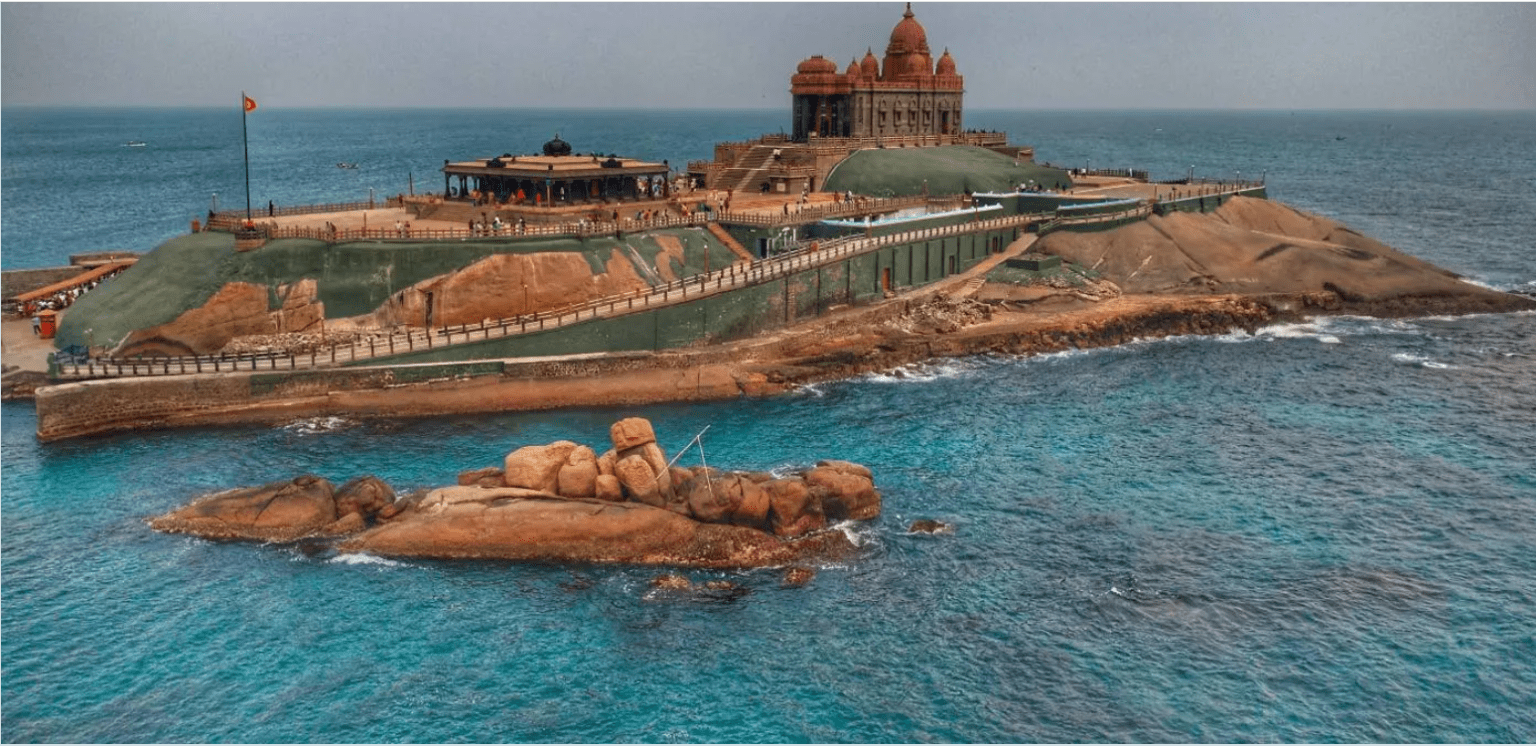
About Kanyakumari Bhagavathy Amman Temple, Kanyakumari, Tamil Nadu
Kanyakumari Bhagavathy Amman Temple, also known as Kumari Amman Temple, is dedicated to Goddess Kanya Kumari, the virgin form of Devi. The shrine stands at the southern tip of mainland India, close to the meeting of the Arabian Sea, the Bay of Bengal and the Indian Ocean.
The temple is known for its ancient pilgrimage tradition, the distinctive image of the Goddess with her rosary and nose ornament, the annual Vaikasi festival, Navaratri and the sacred traditions associated with her penance and the defeat of Banasura. The shrine's history also includes important medieval inscriptional evidence, making it both a living centre of worship and an important part of the history of Kanyakumari.
Story of Kanyakumari Bhagavathy Amman Temple
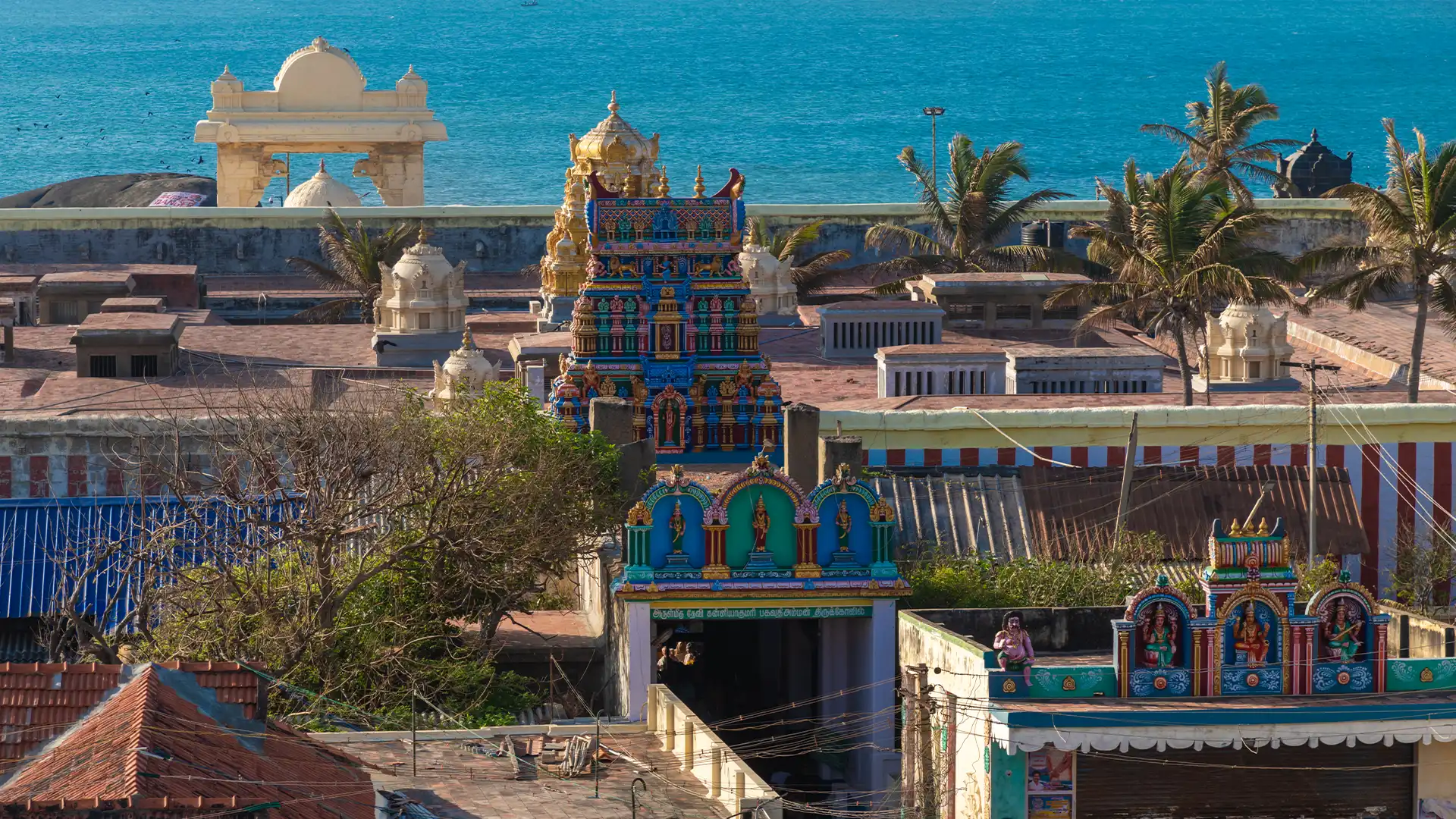
The sacred history of Kanyakumari is older than the present temple structure. Ancient accounts of the southern cape describe it as a place connected with religious bathing and vows of celibacy, while later inscriptional evidence confirms that the shrine was an established centre of worship by the medieval period. One of the most important records is the inscription of Vira Rajendra Chola, dated to around 1070 CE, engraved on the stone pillars of the temple's Mani Mandapa.
The present temple stands within an enclosed complex close to the sea and reflects the architectural traditions of the southern Tamil and former Travancore region. The main entrance for devotees is through the northern side, while the sanctum is oriented towards the sea. The temple includes the Mani Mandapa, Navaratri Mandapa, inner and outer corridors, a flagstaff and subsidiary shrines associated with the Goddess and other deities.
The principal deity is Goddess Kanya Kumari, worshipped as a youthful virgin form of Parvati. She is shown standing with a rosary, and the nose ornament associated with the image has become one of the best-known features of the shrine. Within the complex are shrines associated with forms such as Balasundari and Vijaya Sundari, along with Surya, Ganesha and Ayyappa.
The sea-facing eastern doorway has a special place in temple tradition. It remains closed for most of the year and is opened on particular ritual and festival occasions. A long-standing legend connects this practice with the brilliance of the Goddess's nose ornament, which was believed to have been visible from the sea. The story is part of the temple's sacred tradition rather than a documented explanation of maritime accidents.
What Makes Kanyakumari Bhagavathy Amman Temple Sacred for Devotees
The Legend of Kanya Kumari
According to the temple's sthala tradition, the Devas were troubled by the demon Banasura and worshipped Parashakti for protection. The Goddess appeared as a virgin girl and came to the southern end of the land to undertake penance.
Lord Shiva, worshipped at nearby Suchindram, wished to marry her, and preparations were made for the wedding. According to the traditional account, Sage Narada knew that Banasura could only be defeated by an unmarried woman. He therefore caused the marriage to be interrupted before it could take place.
The Goddess remained a virgin and continued her penance. When Banasura later approached her, she fought him and defeated him with her divine weapon. The tradition identifies this victory with the sacred story behind the continuing worship of Kanya Kumari.
Kanyakumari in the Shakti Peetha Tradition
Kanyakumari is revered within the Shakti Peetha tradition, although different Shakta sources do not always give identical lists or descriptions of the Peethas. The temple is therefore best described as a sacred Shakti centre whose association with Sati belongs to religious tradition.
The shrine's importance is also connected with the Goddess's identity as Kanya Kumari. The unmarried form of Devi gives the temple a distinctive place within Shakta worship and is closely tied to the story of her penance.
The Three Seas and Sacred Kanyakumari
The temple's setting is part of its religious identity. The confluence of the three seas around Kanyakumari has long been associated with sacred bathing and pilgrimage.
The coastal geography is therefore not simply the backdrop of the temple. It forms part of the sacred landscape in which the Goddess is worshipped as the guardian of the southern land and shore.
The Nose-Ring Tradition
The diamond nose ornament of the Goddess is surrounded by one of the best-known legends of Kanyakumari. Temple tradition holds that its brilliance could be seen from a considerable distance over the sea, and one version of the story says that a mariner mistook the light for a beacon.
The same tradition connects the story with the closing of the eastern sea-facing entrance for most of the year. The claim belongs to the temple's oral and devotional tradition and should not be treated as a verified historical account of navigation.
Worship of the Virgin Goddess
Kanya Kumari is understood in different traditions as a form of Parvati, Devi, Katyayani or Bhadrakali. Temple worship also gives importance to the Goddess as a young maiden engaged in penance.
This aspect of the deity is central to the temple's identity. The shrine is therefore not only a temple to Kali or Bhagavathy in a general sense; it is specifically centred on the worship of Devi as Kanya Kumari.
Annual Festivals & Rituals at Kanyakumari Bhagavathy Amman Temple, Kanyakumari, Tamil Nadu
Daily Worship Celebrations at the Temple
Daily worship includes abhishekam, deeparadhana, offerings and other temple services performed according to the established worship tradition of the shrine. Darshan takes place around the ritual cycle, so public access may vary during special worship.
Chitra Pournami Celebrations at the Temple
Chitra Pournami is observed on the full-moon day of the Tamil month of Chithirai. The festival has a long association with the sacred calendar of Kanyakumari and draws additional devotees to the shrine.
Vaisakha / Vaikasi Festival Celebrations at the Temple
The Vaisakha or Vaikasi festival is the principal annual festival of the temple and is celebrated over ten days. The utsava deity is taken in procession during the festival, with special worship and ceremonial observances continuing throughout the period.
Navaratri Celebrations at the Temple
Navaratri is celebrated over nine days in September–October. The Navaratri Mandapam becomes an important part of the festival, and music and other devotional offerings form part of the observances.
Car Festival Celebrations at the Temple
The annual Car Festival is associated with the procession of the Goddess's utsava form in the temple chariot. It forms part of the major festival cycle of the shrine and is generally observed around May or June.
Float Festival Celebrations at the Temple
The Float Festival is another important annual observance in which the festival deity is associated with a ceremonial water procession. The timing follows the traditional temple calendar.
Kalabham Festival Celebrations at the Temple
During the Kalabham or Sandal Festival, the sacred image of the Goddess is associated with the application of sandal paste. The festival is traditionally observed towards the end of the Tamil month of Aadi or Karkidakam.
Sacred Places to Visit Near Kanyakumari Bhagavathy Amman Temple
Triveni Sangam : The meeting of the three seas is closely connected with the sacred geography of Kanyakumari. Pilgrims traditionally associate the waters around the cape with bathing and purification.
Vivekananda Rock Memorial : Vivekananda Rock Memorial stands on the offshore rock associated with Swami Vivekananda's meditation at Kanyakumari. It is also connected in local tradition with the sacred landscape around the Goddess.
Thiruvalluvar Statue : The Thiruvalluvar Statue stands on the neighbouring offshore rock and forms part of Kanyakumari's coastal landmark group. It can be combined with a visit to the temple and the Vivekananda Rock Memorial.
Suchindram Thanumalayan Temple : Suchindram is about 12 kilometres from Kanyakumari and is home to the Thanumalayan Temple, where Shiva, Vishnu and Brahma are represented together. The temple is also connected with the Kanya Kumari wedding tradition.
Gandhi Memorial Mandapam : The Gandhi Memorial stands close to the temple and commemorates the place where Mahatma Gandhi's ashes were kept before immersion. It forms part of the historic coastal area surrounding the shrine.
Plan Kanyakumari Bhagavathy Amman Temple Darshan
For current darshan planning, queue guidance, date-specific timings and Naman Darshan's Guided Darshan Assistance, continue to the dedicated Kanyakumari Bhagavathy Amman Temple Darshan page.
Common Questions About Visiting Kanyakumari Bhagavathy Amman Temple
Visitor Information
Entry Fee
No general admission fee is normally listed – Separate puja or service charges may apply.
Darshan Timing
Address
Arulmigu Bhagavathy Amman Temple, Sannathi Street, Kanyakumari, Tamil Nadu 629702, India
Notable Events
Ancient pilgrimage tradition – Kanyakumari was known as a sacred southern cape long before the present town developed around the temple. Early external accounts describe religious bathing and vows of celibacy at the cape. • c. 1070 CE — Vira Rajendra Chola inscription – A major inscription associated with Vira Rajendra Chola is engraved on six stone pillars in the Mani Mandapa. It provides important evidence for the historical presence and patronage of the goddess's shrine in the medieval period. • Medieval and later patronage – The temple remained part of the changing political and religious history of the southern Tamil and Travancore region. Its present complex reflects additions and continuities from different periods rather than one single phase of construction. • Modern Kanyakumari pilgrimage centre – The temple continues to function as the principal shrine of Kanyakumari, with its religious importance closely connected to the town's coastal sacred geography and annual festival calendar.
How to Reach the Temple
By air: Thiruvananthapuram International Airport in Kerala is the nearest major airport serving Kanyakumari and is around 90 kilometres away by road.
By rail: Kanniyakumari Railway Station is the nearest railway station to the temple. Nagercoil is the nearest major railway hub for additional train connections.
By road: Kanyakumari is connected by road with Nagercoil, Thiruvananthapuram, Madurai and other major towns in Tamil Nadu and Kerala. State transport and private buses operate to Kanyakumari.
Within Kanyakumari: The temple is located in the main pilgrimage and coastal area of the town. Local roads can become congested during festival periods, so the final approach may involve walking from the vehicle drop-off point.
SEO Title Adiyogi Shiva Temple: 112-Foot Adiyogi, Timings & Guide
Meta Description Learn about Adiyogi Shiva Temple in Coimbatore, its 112-foot Adiyogi, Yogeshwara Linga, yoga tradition, Divya Darshanam, timings and visitor information.
Coimbatore, Tamil Nadu