
Ayodhya Yatra
Available Packages
Book Your Trip
Enter your details to receive a quote on WhatsApp.
Ayodhya Divine Darshan
Duration: 1 Night / 2 Days
- Day 1: Darshan at Shri Ram Janmabhoomi, visit Hanuman Garhi, and witness the evening Sarayu Aarti.
- Day 2: Visit Kanak Bhawan, explore Ram Ki Paidi ghats, and local market shopping before departure.
Ayodhya Heritage Experience
Duration: 2 Nights / 3 Days
- Day 1: Ram Lalla Darshan, Hanuman Garhi, and evening Laser Show at Ram Ki Paidi.
- Day 2: Explore Guptar Ghat, Sita Ki Rasoi, and the historic Dashrath Mahal.
- Day 3: Visit Bharat Kund (Nandigram) and the ancient Sun Temple before departure.
Overview
Ayodhya, the “Saket” of ancient times, is one of the seven most sacred cities (Sapta Puri) in Hinduism. Situated on the serene banks of the Sarayu River, it is revered globally as the birthplace of Lord Shri Ram. With the inauguration of the grand Shri Ram Janmabhoomi Mandir, the city has transformed into a modern spiritual hub while retaining its timeless Vedic charm.
Key Highlights of the Yatra
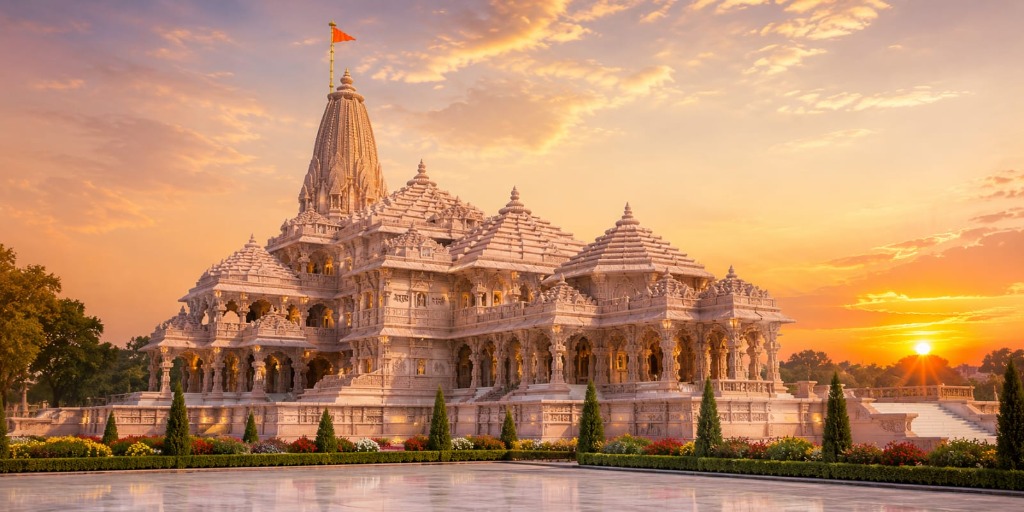
Shri Ram Janmabhoomi Mandir: The crown jewel of Ayodhya. Marvel at the Nagara-style architecture and seek blessings of Ram Lalla.
Hanuman Garhi: A 10th-century fortress-temple. It is custom to visit Lord Hanuman here first before heading to the Ram Mandir.
Sarayu River Aarti: Witness the magical evening Aarti at the ghats, where thousands of lamps light up the riverbank.
Kanak Bhawan: A stunning “Golden Palace” gifted to Mata Sita, famous for its exquisite idols and bhajan recitations.
Ram Ki Paidi: A beautiful series of ghats perfect for a holy dip and photography, especially during the illuminated evenings.
History
1. The Ancient & Vedic Era (The City of Gods)
Ayodhya, meaning “Unconquerable”, is described in the Atharvaveda as a city built by gods.
The Solar Dynasty (Suryavansha): According to the Ramayana, Ayodhya was founded by Manu, the first man. It became the capital of the Ikshvaku dynasty.
The Era of Lord Ram: It reached its pinnacle during the reign of Lord Shri Ram, the seventh avatar of Vishnu. His “Ram Rajya” (ideal kingdom) is still the global benchmark for justice and prosperity.
The Sacred Geography: The city was designed in the shape of a fish and stretched along the holy Sarayu River.
2. The Classical & Buddhist Period
For several centuries, Ayodhya remained a major cultural and political hub.
Buddhist Influence: During the time of Gautama Buddha (6th century BCE), the city was known as Saketa. Buddha is said to have lived here for several years, and it became a significant center for Buddhist learning.
The Gupta Empire: In the 4th and 5th centuries CE, during the “Golden Age of India,” Emperor Skandagupta moved his capital to Ayodhya, restoring many ancient Hindu temples that had fallen into ruin.
3. The Medieval & Struggle Period
Like many Indian cities, Ayodhya faced significant turbulence during the medieval era.
The 1500s: In 1528, following the Mughal invasion, the Babri Masjid was constructed. Historical and archaeological evidence suggests it was built over the site traditionally revered as the Ram Janmabhoomi (Birthplace of Ram).
Nawabi Influence: In the 18th century, Ayodhya fell under the Nawabs of Awadh. While they moved their capital to nearby Faizabad, Ayodhya remained a site of constant pilgrimage and intermittent conflict over the sacred sites.
4. The Modern Era & Resurrection (21st Century)
The late 20th and early 21st centuries marked the “Reawakening” of Ayodhya.
The Legal Journey: After decades of legal disputes, the Supreme Court of India delivered a historic unanimous verdict in November 2019, handing over the site for the construction of a Ram Temple.
The “Pran Pratishtha” (2024): On January 22, 2024, the new Shri Ram Janmabhoomi Mandir was inaugurated by Prime Minister Narendra Modi. This marked the official end of a 500-year-long struggle for the devotees.
Ayodhya 2.0: Today, Ayodhya is undergoing a massive $10 billion+ infrastructure overhaul, including a new international airport and a “smart city” layout, making it the “Vatican of the East.”