
Types of Kanwar: Jhula, Khadi, Baithi, and Dak Kanwar Explained
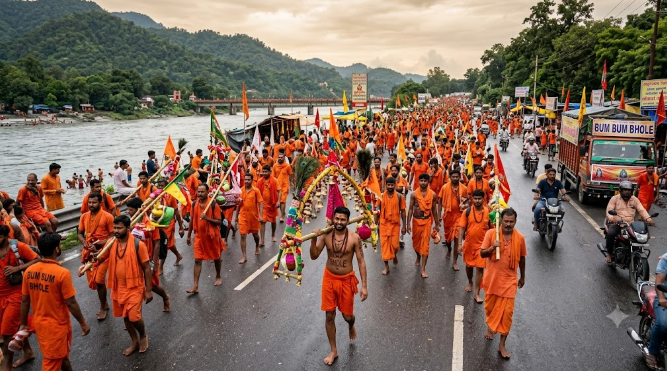
Table of Contents
What Is Kanwar Yatra?
Kanwar Yatra is an annual pilgrimage where devotees of Lord Shiva, known as kanwariyas, walk to sacred sites like Haridwar and Sultanganj to collect Gangajal, then carry it on their shoulders to offer at a Shiva temple during Shravan month, most often on Sawan Shivratri. It's one of the largest devotional walking traditions in India, chanted through with Bol Bam and Har Har Mahadev. For a full breakdown of the pilgrimage itself, its history, and 2026 dates, see our complete Kanwar Yatra Guide
How Many Types of Kanwar Are There?
There are four widely recognized types of Kanwar: Baithi Kanwar, Khadi Kanwar, Jhula Kanwar, and Dak Kanwar. Each differs mainly in whether, and how, the devotee is permitted to rest during the journey, which is what determines how physically demanding it becomes.
The Four Types of Kanwar Explained
Baithi Kanwar (General Kanwar)
Baithi Kanwar, sometimes simply called the general or samanya kanwar, is the most common and accessible form. Kanwariyas carry it on their shoulders but can stop, rest, and set it down on a stand at camps and pandals along the route. It's still a serious physical undertaking over several days, but the freedom to rest is what makes it approachable for first-timers, families, and older devotees.
What Is Khadi Kanwar? (Khadi Kanwar Meaning)
Khadi Kanwar means the kanwar must never be set down or allowed to stay still, even during rest. When the kanwariya tires, a companion takes over, keeping it gently swaying or upright so it's technically never at rest. This form almost always requires walking with a partner or small group, since someone has to be minding the kanwar at every moment.
What Is Jhula Kanwar? (Jhula Kanwar Meaning)
Jhula Kanwar takes its name from its bamboo, swing-like structure, with pots of Gangajal hung from either end. Like Khadi Kanwar, it can't touch the ground, but instead of a person holding it during rest, it's hung on a dedicated jhula stand. The real test here is balance, both pots need equal weight or the frame becomes unsteady mid-walk, making it as much a mental discipline as a physical one.
What Is Dak Kanwar? (Dak Kanwar Rules)
Dak Kanwar is the fastest and most demanding form. Once the water is collected, dak kanwariyas, often called Dak Bam, walk or run continuously without stopping until the water is offered, commonly completing the journey within 24 hours. The Sultanganj-to-Baba Baidyanath Dham route in Bihar and Jharkhand, roughly 105 to 108 kilometers, is the most famous Dak Kanwar stretch, closely tied to the annual Shravani Mela at Deoghar. If a Dak Bam stops even once before reaching the shivling, the vow is considered broken, so other pilgrims and local arrangements typically clear the way for them to pass without pausing.
Which Kanwar Is Best for First-Time Pilgrims?
For anyone attempting Kanwar Yatra for the first time, Baithi Kanwar is generally the most suitable choice. It allows normal rest stops, doesn't require a dedicated companion just to manage the kanwar, and lets a new devotee gauge their own stamina before considering a more demanding form in future years.
Which Kanwar Is the Most Difficult?
Dak Kanwar is widely regarded as the hardest of the four. Walking continuously for up to 24 hours with minimal food or water, often through the night, takes a level of endurance that most kanwariyas build up to over several years rather than attempt on a first yatra. Khadi and Jhula Kanwar are also demanding, but the ability to pause, even without setting the kanwar down, makes them somewhat more manageable than Dak Kanwar's non-stop pace.
Things to Carry for Different Types of Kanwar
Basic essentials stay largely the same across all four types: the bamboo kanwar itself, water pots, saffron cloth, a stand (for Baithi and Jhula Kanwar especially), comfortable footwear or none at all for barefoot walkers, and personal supplies for a multi-day journey. Dak Kanwar groups typically travel lighter, since there's no overnight halt, prioritizing hydration and quick, sattvic food over camping gear. For a full checklist by category, see our detailed Kanwar Yatra samagri guide.
Which Kanwar Should You Choose?
Temple Timings
- Baithi Kanwar: Beginners
- Khadi Kanwar: Experienced devotees
- Jhula Kanwar: Traditional devotees
- Dak Kanwar: Highly experienced devotees
Planning Your Own Kanwar Yatra or Darshan
Not every devotee can take on the physical demands of any of these four forms, whether due to health, distance, or time. If you'd like Gangajal offered on your behalf at temples like Baidyanath Dham or Neelkanth Mahadev, NamanDarshan's darshan booking service can arrange it, along with prasad delivered to your home. You can also check current Kanwar Yatra 2026 dates, explore major Kanwar routes, browse our Kanwar accommodation guide for stays along the way, or read our Bol Bam guide to understand the chant's significance.
Namandarshan
Dedicated to sharing authentic spiritual knowledge, temple heritage, and Vedic traditions across India.