
Radha Ashtami 2026 in Barsana: Meaning, Traditions and a Family Darshan Guide
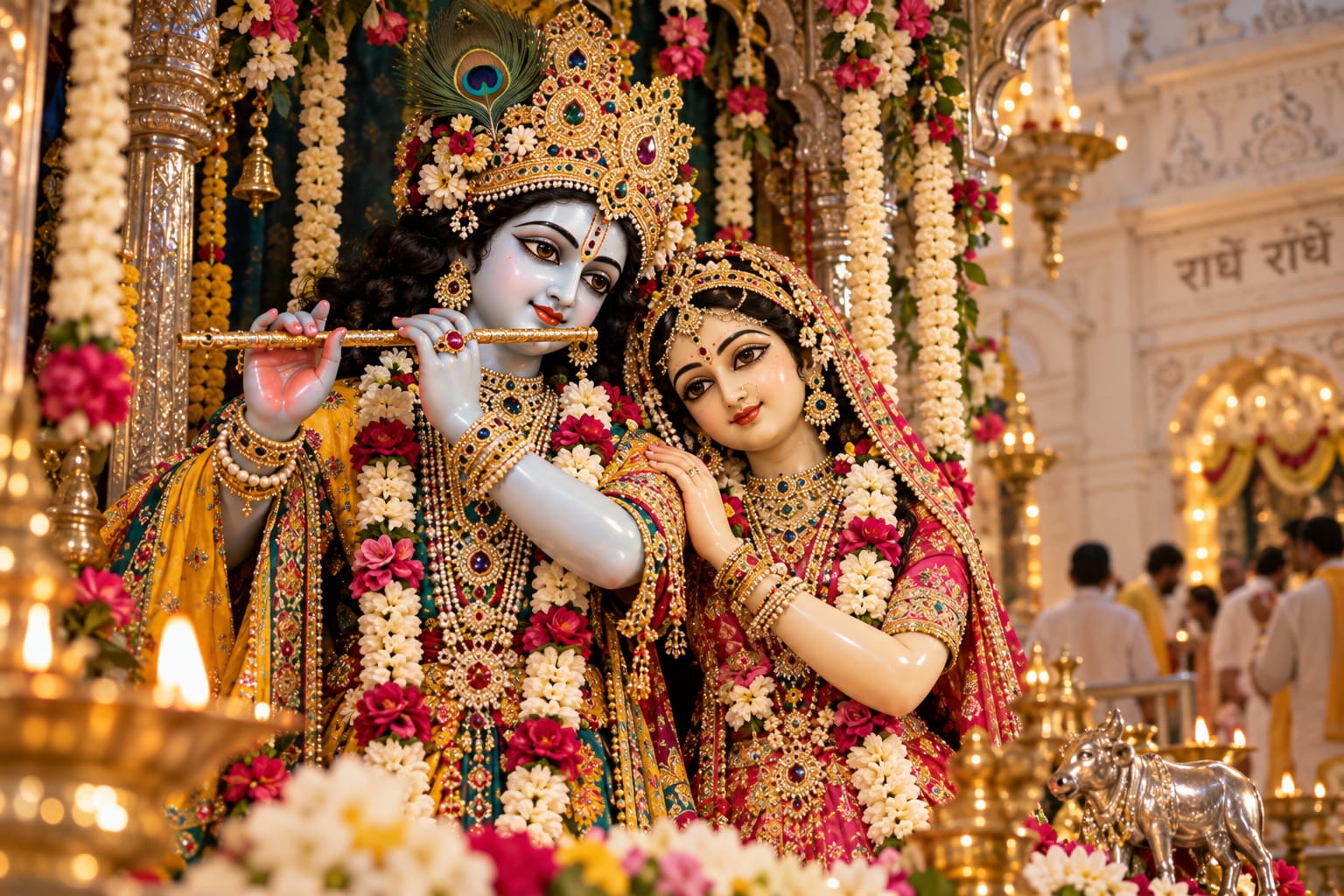
Table of Contents
In Barsana—the town traditionally associated with Radha Rani—the day carries a meaning that cannot be understood through dates and puja timings alone.
Radha Ashtami celebrates a form of devotion defined by love, humility and surrender. To remember Radha Rani in Barsana, amid the landscape associated with her life and devotion, is therefore a deeply held wish for many families.
Yet a festival-day visit has its own demands. Shri Radha Rani Mandir stands on a hill, and the journey may involve remote parking, long walks, waiting and changing entry routes. When children or senior devotees are travelling with you, preparing for those realities becomes part of preparing for darshan.
The best visit is not the one that covers the most places. It is the one that leaves your family with enough strength, patience and peace for the darshan you came for.
Radha Ashtami 2026: Date and Puja Time
Radha Ashtami falls on Shukla Paksha Ashtami in the Hindu month of Bhadrapada, shortly after Krishna Janmashtami.
Occasion Date and time
Radha Ashtam Saturday, 19 September 2026
Ashtami Tithi begins 1:00 PM on 18 September 2026
Ashtami Tithi ends 3:26 PM on 19 September 2026
Madhyahna Puja period for New Delhi 11:01 AM – 1:28 PM on 19 September 2026
Panchang timings vary by location. If you are observing Radha Ashtami at home, use a panchang set to your city and follow the customs of your family or sampradaya.
The Madhyahna puja period is also not the same as a temple’s public darshan schedule. Barsana temples may follow festival-specific timings and arrangements, which should be checked separately before travelling.
The Meaning and Traditions of Radha Ashtami
In many Vaishnava traditions, Radha Ashtami commemorates the appearance of Shri Radha Rani. Yet the deeper meaning of the day lies in what she represents: loving devotion to Shri Krishna without pride, demand or expectation.
That is why Radha Ashtami is not celebrated only through ritual. It is also a day to reflect on bhakti—on what it means to remember the divine with humility, affection and surrender.
Different families and temples observe the festival differently. Some devotees fast according to their health and tradition. Some offer flowers, bhog, incense or a lamp. Others chant the names of Radha and Krishna, listen to katha, recite prayers or join a temple for bhajan, kirtan, abhishek and aarti.
There is no need to turn these variations into one rigid checklist. Let your family practice, spiritual tradition or chosen temple guide your observance. The essence of the day is devotion—not anxiety about whether every online instruction has been completed.
And for many devotees, that devotion naturally draws the heart towards Barsana.
Why Devotees Go to Barsana on Radha Ashtami
Barsana is part of the Braj pilgrimage landscape and is traditionally associated with Shri Radha Rani. Its best-known shrine, Shri Radha Rani Mandir, stands on Brahmasanu hill and is also called Shriji Mandir or Ladli Ji Mandir.
On Radha Ashtami, the connection between the occasion and the place brings devotees from across India. A visit to Barsana is not simply a visit to a prominent temple. It is an opportunity to remember Radha Rani in a landscape associated with her life and devotion.
The setting that gives the temple its beauty also makes the journey demanding. Official Mathura district information places Barsana approximately 47 kilometres from Mathura and describes the temple area as being on a hill around 200 feet high. On the festival day, parking controls and pedestrian routes may add more walking and waiting before the uphill approach even begins.
This is especially important when travelling with a senior citizen. “Reaching Barsana” and “reaching the temple” are not the same thing. A vehicle may have to stop at a designated parking point, after which the family must continue along the route announced for that day.
Knowing this in advance is not meant to discourage the journey. It prepares you for what the main festival day may actually involve.
What to Expect in Barsana on Radha Ashtami 2026
District officials have described a large crowd-management and public-support plan for the 2026 celebration. The numbers are useful because they show the likely scale of movement around Barsana—not because they guarantee that every facility will be available in the same way throughout the day.
Reported 2026 arrangement Announced provision
Administrative divisions 7 zones and 20 sectors
Crowd holding areas 38
Barricade locations on approach routes 88
Parking locations 50
Surveillance 6 watchtowers, 155 CCTV cameras and 63 temporary cameras at 27 locations
Medical support 12 health camps, medical teams and bike ambulances
Public amenities 35 water tankers, 30 mobile toilets, 100 loudspeakers and 7 shoe houses
Roadways buses on 18–19 September 160 buses, with 40 more in reserve
These arrangements indicate the scale of the gathering. They do not tell every visitor exactly where a vehicle will be parked or which route will be open when the family arrives. That may depend on your direction of travel, the movement of the crowd and live instructions from the authorities.
Before leaving, check the latest vehicle restrictions, the parking point for your route, available buses or shuttles, pedestrian entry and exit arrangements, any provision announced for senior citizens or persons with disabilities, and the temple’s public darshan schedule.
Do not rely only on an old map pin, a forwarded message or a driver’s experience from a previous year. On the day, live police and administration directions take precedence.
Weather also matters when the approach may involve a long walk. Forecasts reviewed on 15 September indicated daytime temperatures around 33–34°C; the services differed on the likelihood of rain, with some showing possible showers or thunderstorms. Recheck the live forecast before departure and prepare for heat, humidity and potentially wet ground.
Once you understand these conditions, the question is no longer simply whether you wish to be in Barsana on Radha Ashtami. It is whether the main festival day will allow every member of your family to experience the visit safely and meaningfully.
Is the Main Festival Day Right for Your Family?
The significance of Radha Ashtami can make the answer feel obvious: of course one should go on the main day. In practice, the better question is whether the conditions will allow every member of your family to participate safely and peacefully.
If a senior family member can walk on an incline, manage waiting periods and remain comfortable in a dense gathering, a carefully paced visit may be possible. Keep Radha Rani darshan as the only non-negotiable part of the day and leave everything else optional.
If someone has significant mobility difficulty, becomes distressed in crowds or has a medical condition affected by heat and exertion, consider visiting Barsana on a quieter day unless suitable access arrangements are specifically confirmed. Choosing a calmer day is not a lesser expression of devotion.
The same principle applies to young children. The energy of a festival can be memorable, but long waits, changing routes and the risk of separation make a packed itinerary unwise. One principal darshan, one clear meeting point and plenty of time will serve the family better than a long list of temples.
For some devotees, the right observance may be prayer at home, a visit to a nearby Radha-Krishna temple or a verified live darshan. The form may change; the devotion need not.
Planning the Visit Without Losing the Spirit of the Day
If your family decides to travel, plan the entire day around the person who can walk or wait the least—not around the fastest member of the group.
If Shri Radha Rani Mandir is the purpose of your visit, let it anchor the day. Trying to include Barsana, Nandgaon, Govardhan, Mathura and Vrindavan on the same festival day can turn devotion into deadline management.
Before booking, ask honestly: How long can the least-mobile traveller stand? Can they manage an incline or steps? Do they need medicines or meals at fixed times? How do they respond to heat and crowds? What will the family do if the route becomes too difficult?
These are not merely logistical questions. They are part of caring for the people with whom you are making the pilgrimage.
Arriving in or near Barsana on 18 September may remove the uncertainty of a same-morning highway journey. It will not guarantee closer parking, priority entry or a shorter wait on 19 September, but it can give your family more breathing room.
Mathura Junction and Mathura Cantt are the main railway gateway for most visitors, followed by a road journey to Barsana.If you are travelling from Delhi or NCR, do not build the plan around normal-day driving time. Festival diversions, restricted zones and remote parking can change both the route and the duration.
The return journey deserves as much attention as the onward one. Your driver may not be allowed to collect you from the original drop-off point. Save the driver’s number, vehicle details, accommodation address and an alternative meeting location on your phone and on paper.
Avoid bookings that depend on a precise exit time. A train, flight or distant temple scheduled immediately after your expected darshan can create pressure at exactly the point when the family may need to slow down.
Identification, essential medicines, emergency details, a charged phone, a compact power bank, modest cash and sun or rain protection will be more useful than a heavy bag. Carry water or simple food where permitted and medically necessary, and check temple rules before taking offerings or photography equipment.
Agree on a visible meeting point before approaching the main crowd. Place a contact card in the pocket of a child or senior family member. Mobile networks may become congested during a large gathering, so do not keep important phone numbers and addresses only online.
Thoughtful planning should not make the day feel clinical. Its purpose is to settle the practical details early so that they occupy less of your attention when you reach the temple.
If You Want to See More of Barsana and Braj
Barsana has much more to offer than one temple, but Radha Ashtami is not the ideal day to treat its sacred places as a sightseeing checklist.
If you are staying longer and local conditions permit, you may consider Kirti Mandir, dedicated to Kirti Maiya, revered as Radha Rani’s mother. Priya Kund, Maan Mandir and Mor Kutir are also part of Barsana’s wider devotional landscape. Verify local timings before setting out because regular schedules may change during the festival.
There is also a larger Barsana parikrama of approximately seven kilometres and a smaller route of about four kilometres. Either should be planned as a separate physical undertaking, not added casually after a crowded temple visit.
If you are choosing between Barsana and Vrindavan, choose Barsana when your family’s central wish is darshan at Shri Radha Rani Mandir in the place traditionally associated with Radha Rani. Vrindavan may suit devotees who prefer to visit several important Radha-Krishna temples within one pilgrimage city, although its major temples may also be crowded.
Trying to cover both places on 19 September may be possible under favourable conditions, but separate days will generally create a calmer experience—especially for families with children or senior devotees.
When Guided VIP Darshan Assistance May Be Useful
For first-time and outstation visitors, the difficult part of a festival journey is often not deciding where to go. It is knowing how to navigate the day once they arrive. On Radha Ashtami, unfamiliar approach routes, remote parking, heavy crowds and the uphill journey can make that uncertainty more demanding—particularly for families travelling with children or senior devotees.
Naman Darshan provides Guided VIP Darshan, also referred to as VIP Darshan Assistance, for devotees visiting temples. The service facilitates VIP darshan in accordance with the temple’s rules and current local guidelines, along with the guidance and coordination needed for the visit.
It can be especially useful for devotees who are visiting Barsana for the first time, are unfamiliar with local arrangements or would prefer support in planning and navigating their temple visit. For families, it can also reduce the practical uncertainty around the day so that their attention remains on Radha Rani’s darshan rather than on unfamiliar logistics.
Planning Radha Ashtami darshan in Barsana? Explore Naman Darshan’s Guided VIP Darshan assistance for a more organised and supported temple visit.
Namandarshan
Dedicated to sharing authentic spiritual knowledge, temple heritage, and Vedic traditions across India.
Frequently Asked Questions
When is Radha Ashtami in 2026?
Radha Ashtami will be observed on Saturday, 19 September 2026. For New Delhi, Ashtami Tithi begins at 1:00 PM on 18 September and ends at 3:26 PM on 19 September. Check the New Delhi timings on Drik Panchang.
What is the Radha Ashtami puja time in 2026?
The Madhyahna period for New Delhi is 11:01 AM–1:28 PM on 19 September. Timings vary by location, and temple darshan schedules must be confirmed separately. Source: Drik Panchang.
Why is Radha Ashtami celebrated?
In many Vaishnava traditions, the day commemorates the appearance of Shri Radha Rani and honours her loving, selfless devotion to Shri Krishna.
How far is Barsana from Mathura?
Barsana is approximately 47 kilometres from Mathura. Travel may take considerably longer during the festival because of diversions and parking restrictions. Source: District Mathura
Is Barsana suitable for senior citizens on Radha Ashtami?
The visit can involve crowds, waiting, walking and an uphill temple approach. Assess the person’s health and mobility, verify current arrangements and keep the plan short. A quieter date may be more appropriate for someone with significant difficulty.
Can a private vehicle go up to Radha Rani Temple?
Do not assume that it can on the festival day. Visitors may have to park at a designated point and continue according to the route announced by the authorities.
How can Guided VIP Darshan assistance help on Radha Ashtami?
Naman Darshan’s Guided VIP Darshan service facilitates VIP darshan in accordance with the temple’s rules and current local guidelines. It is particularly useful for first-time visitors, outstation devotees and families who would value guidance and local coordination during a busy festival-day temple visit.