
The Story of Goddess Durga: The Eternal Triumph of Good Over Evil
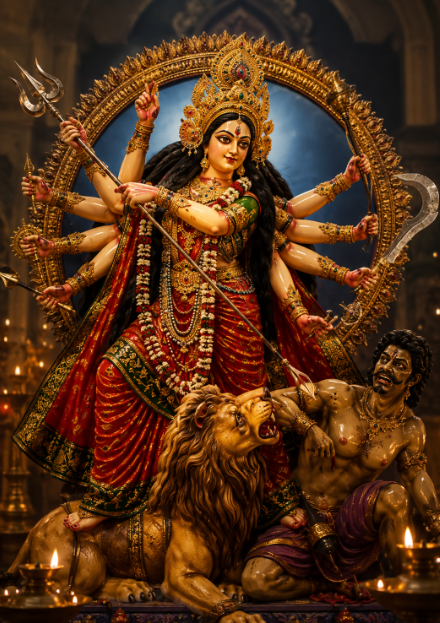
Table of Contents
Who is Goddess Durga?
Goddess Durga is considered the supreme form of Shakti — the divine feminine energy that sustains and protects the universe. She is often depicted riding a lion or tiger while carrying celestial weapons in her multiple hands. Each weapon represents a different power gifted by the gods, showing that she possesses unmatched strength and wisdom. Durga is known by many names such as Mahadevi, Adi Shakti, Jagadamba, and Mahishasura Mardini. While her appearance may look fierce, she is also seen as a compassionate mother who protects her devotees from suffering and fear. Her dual nature reflects the balance between kindness and power.
The Rise of Mahishasura
Long ago, there lived a powerful demon named Mahishasura. He was born with extraordinary strength and ambition. Determined to become invincible, he performed intense penance and meditation to please Lord Brahma. Impressed by his devotion, Brahma granted him a boon. Mahishasura asked that no man or god should ever be able to kill him. Since he underestimated the power of women, he believed no woman could ever defeat him. After receiving this blessing, Mahishasura became arrogant and cruel. He attacked heaven, defeated the gods, and drove them out of their celestial kingdom. Fear and chaos spread across the universe as the demon king used his powers to terrorize both gods and humans. The gods realized that no male warrior could destroy him because of Brahma’s boon.
The Creation of Goddess Durga
Unable to defeat Mahishasura, the gods approached Lord Brahma, Lord Vishnu, and Lord Shiva for help. Together, the divine trinity decided to create a powerful female warrior who could destroy the demon. From their combined divine energies emerged a magnificent goddess filled with unmatched brilliance and strength. This divine form was Goddess Durga. Each god offered her celestial weapons and blessings: Lord Shiva gave her the trident. Lord Vishnu presented the Sudarshan Chakra. Lord Indra gifted the thunderbolt. Varuna offered the conch shell. Agni gave her a fiery spear. Vayu blessed her with speed and power. Himalaya gifted her a lion as her vehicle. Durga’s appearance was majestic and terrifying to evil forces. Her many arms carried divine weapons, symbolizing her ability to protect righteousness from all directions. She became the living embodiment of divine energy, courage, and justice.
The Great Battle Between Durga and Mahishasura
When Goddess Durga challenged Mahishasura, the demon laughed arrogantly. He could not believe that a woman had come to defeat him. However, Durga fearlessly declared that evil would soon come to an end. A fierce battle began that lasted for nine days and nights. The skies thundered, mountains shook, and the oceans roared as the powerful goddess fought against the demon army. Mahishasura constantly changed forms during the battle. At times he appeared as a buffalo, lion, elephant, and even a giant warrior to confuse Durga. But the goddess remained calm, fearless, and unstoppable. Every weapon in Durga’s hands represented divine strength and wisdom. She defeated countless demons sent by Mahishasura. Finally, on the tenth day, the demon transformed into his mighty buffalo form and charged at the goddess with full force. At the perfect moment, Durga leaped forward, pinned him down with her foot, and struck him with her trident and chakra. Mahishasura was finally destroyed. The universe celebrated as light triumphed over darkness. The gods returned to heaven, and peace was restored once again. This victory became a timeless symbol of the triumph of good over evil.
Symbolism Behind the Story
The story of Durga is much more than a mythological battle. It carries deep spiritual and moral meanings that continue to inspire people even today. Mahishasura represents negative qualities such as arrogance, greed, anger, ego, and ignorance. Goddess Durga symbolizes inner strength, wisdom, purity, courage, and righteousness. Her victory teaches humanity that evil may appear powerful for a while, but truth and goodness always prevail in the end. Durga’s lion symbolizes determination and courage. Her weapons represent spiritual knowledge and divine power. Her calm face during battle shows that true strength comes from inner peace and confidence rather than anger.
The Importance of Navratri and Durga Puja
The victory of Goddess Durga over Mahishasura is celebrated every year through the festivals of Navratri and Durga Puja. These festivals are among the most important celebrations in Hindu culture. Navratri, meaning “nine nights,” honors the nine forms of Goddess Durga. Devotees pray, fast, sing devotional songs, perform dances like Garba and Dandiya, and seek blessings from the goddess. The tenth day, called Vijayadashami or Dussehra, marks the victory of good over evil. Durga Puja is celebrated grandly, especially in West Bengal, Assam, and Odisha. Beautiful idols of the goddess are created, decorated, and worshipped with devotion. The festival atmosphere is filled with lights, music, cultural performances, and spiritual energy. On the final day, the idols are immersed in water, symbolizing the goddess returning to her divine abode while blessing her devotees.
Durga as a Symbol of Women’s Strength
Goddess Durga is also seen as a powerful symbol of feminine strength and empowerment. Her story reminds society that women possess immense courage, intelligence, leadership, and resilience. She breaks the idea that power belongs only to men. Instead, Durga proves that divine feminine energy is capable of protecting the universe itself. In modern times, many people see Durga as an inspiration to fight injustice, overcome struggles, and stand strong during difficult times. Her story encourages people to face fear with confidence and to never surrender to negativity.
The Spiritual Message of Durga’s Story
At its core, the story of Goddess Durga teaches that every human being has an inner battle between good and evil. Fear, anger, jealousy, selfishness, and ignorance are the “demons” that people must overcome within themselves. Durga represents the divine strength that exists inside every soul. Her story inspires people to develop courage, discipline, compassion, and faith. It reminds humanity that even during darkness and suffering, goodness and truth will eventually rise victorious.
Conclusion
The story of Goddess Durga is a timeless tale of bravery, justice, and divine power. From her creation by the gods to her legendary battle against Mahishasura, every part of her journey carries deep spiritual meaning. She is not merely a warrior goddess but a universal symbol of hope, protection, and righteousness. Even today, millions of people worship Goddess Durga with faith and devotion because her story continues to inspire humanity. Her victory reminds the world that no matter
Namandarshan
Dedicated to sharing authentic spiritual knowledge, temple heritage, and Vedic traditions across India.