
Santoshi Mata: The Divine Daughter of Lord Ganesha and Goddess of Contentment
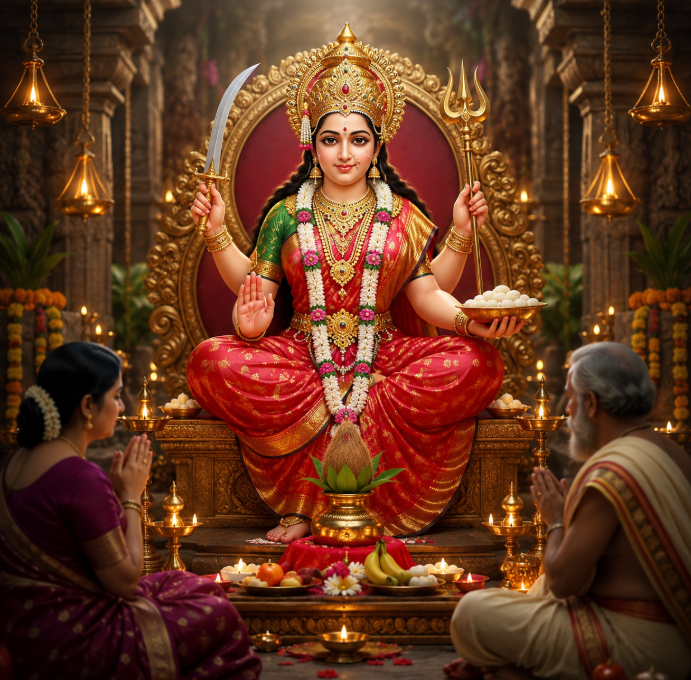
Table of Contents
The Divine Origin of Santoshi Mata
The birth of Santoshi Mata is associated with the sacred family of Lord Ganesha. According to Hindu beliefs, Lord Ganesha, the son of Lord Shiva and Goddess Parvati, was married to Riddhi and Siddhi, who symbolized prosperity, wisdom, and spiritual success. Through these divine unions, Ganesha was blessed with two sons named Shubh and Labh, representing auspiciousness and profit. Although the family was complete in many ways, Shubh and Labh longed for a sister. They wished to experience the joy of sibling affection and protection. One day, during a sacred ceremony, they observed Lord Ganesha tying a protective thread to his sister. Curious about this loving ritual, they asked their father about its meaning. Lord Ganesha explained that the sacred thread represented love, care, and protection between brothers and sisters. The young boys became emotional and requested their father to bless them with a sister who would bring happiness into their lives. Moved by the innocent wish of his sons, Lord Ganesha decided to fulfill their desire. Using his divine energy and the spiritual powers of Riddhi and Siddhi, he created a radiant and divine girl filled with purity, compassion, and joy. This celestial child became known as Santoshi Mata — the goddess who grants peace, happiness, and satisfaction to all. Her birth symbolized not only divine love but also the importance of harmony within a family. Santoshi Mata’s appearance brought joy to the heavens and blessings to humanity.
Santoshi Mata: The Goddess of Happiness and Satisfaction
Santoshi Mata is often depicted as a calm and graceful goddess seated on a blooming lotus flower. The lotus symbolizes purity, spiritual awakening, and peace. Her divine appearance radiates compassion and serenity, reminding devotees to remain humble and satisfied in life. She is traditionally shown with four hands. In her hands she carries sacred objects such as: A sword, symbolizing protection against evil A trident, representing divine strength and power A bowl of sweets or jaggery, signifying prosperity and sweetness in life A gesture of blessing known as Abhaya Mudra, assuring protection and fearlessness to devotees The hidden symbolism in her form teaches that true happiness does not come from greed or material wealth alone. Instead, contentment, kindness, and faith bring real peace into life. Her devotees believe that Santoshi Mata protects her followers from negativity, suffering, and difficulties. She is considered a compassionate mother goddess who listens to sincere prayers and blesses people with emotional and spiritual fulfillment.
Importance of Santoshi Mata Worship
The worship of Santoshi Mata became especially popular among women, who pray to her for family happiness, prosperity, marital harmony, and fulfillment of desires. However, her blessings are not limited to women alone. Men, children, and entire families worship her seeking peace and success. Friday is regarded as the most sacred day dedicated to Santoshi Mata. On this day, devotees observe special prayers in her honor. Temples dedicated to Santoshi Mata witness large gatherings of worshippers offering flowers, fruits, sweets, and prayers. The rituals generally include: Lighting oil lamps before the goddess Offering jaggery and gram as sacred prasad Singing devotional hymns and bhajans Reading or listening to the Santoshi Mata Vrat Katha Performing aarti with devotion Devotees believe that worshipping Santoshi Mata with sincerity removes obstacles from life and fills the home with positivity and peace.
The Sacred Friday Worship of Santoshi Mata
A famous legend connected with Santoshi Mata revolves around a devoted woman named Dhanya. She was a simple washerwoman who worshipped Santoshi Mata with complete dedication. Dhanya’s husband, Shankar, often mocked her devotion and questioned the value of prayers. Despite criticism and hardships, Dhanya continued her Friday worship with unwavering faith. Over time, their family faced poverty and misfortune. Shankar became frustrated and decided to test his wife’s faith. Disguising himself as a holy man, he approached Dhanya and tried to convince her to stop worshipping Santoshi Mata. However, Dhanya remained firm in her belief. She declared that true devotion and patience always receive divine blessings. Witnessing her dedication and purity, Shankar realized his mistake and sought forgiveness. Soon after, Santoshi Mata blessed the couple with prosperity, happiness, and peace. Their suffering disappeared, and their lives transformed completely. This story beautifully highlights the power of faith, devotion, and perseverance. It teaches devotees that sincere prayers offered with a pure heart never go unanswered.
Symbolism and Spiritual Teachings of Santoshi Mata
The story and worship of Santoshi Mata carry deep spiritual meaning. She represents the idea that true wealth lies not only in money but in inner satisfaction and peace. Her lotus seat symbolizes purity rising above worldly difficulties. Her weapons remind devotees that goodness must be protected against negativity and injustice. The sweets she carries represent the sweetness that comes from compassion, gratitude, and faith. Santoshi Mata inspires people to: Live with contentment Avoid greed and jealousy Respect family relationships Practice patience and kindness Maintain faith during difficult times Her teachings remain relevant even in modern life, where stress, competition, and dissatisfaction often disturb inner peace.
The Universal Devotion Towards Santoshi Mata
The devotion to Santoshi Mata is not confined to a particular region or community. Her followers can be found throughout India and in many parts of the world. Devotees from different cultures and backgrounds worship her seeking happiness, peace, and emotional strength. Temples dedicated to Santoshi Mata often become centers of hope and faith. People gather together to share prayers, sing bhajans, and narrate stories of blessings received through her grace. The popularity of Santoshi Mata increased greatly after devotional songs, vrat kathas, and spiritual stories became widely known among Hindu families. Her image as a compassionate and caring mother goddess continues to inspire millions.
Lessons from Santoshi Mata’s Story
The divine story of Santoshi Mata offers timeless lessons for humanity: Faith Brings Strength Devotion helps individuals face hardships with courage and positivity. Contentment Leads to Happiness True peace comes from appreciating what we have instead of constantly desiring more. Patience is Powerful Difficult times eventually pass when faced with faith and perseverance. Compassion Creates Harmony Kindness, love, and understanding strengthen relationships and families. Spiritual Devotion Gives Inner Peace Worship and prayer calm the mind and guide people toward a balanced life
Conclusion
Santoshi Mata is much more than a goddess of fulfilled wishes; she is a divine symbol of peace, love, and inner satisfaction. As the spiritual daughter of Lord Ganesha, she represents the blessings of family harmony, devotion, and happiness. Her worship continues to inspire millions of devotees who seek hope during difficult times and gratitude during moments of success. Through her stories, rituals, and teachings, Santoshi Mata reminds humanity that true joy lies in faith, simplicity, patience, and contentment. In today’s fast-moving world filled with stress and desires, the message of Santoshi Mata remains deeply meaningful — happiness is not found in endless possessions but in a peaceful heart filled with devotion and satisfaction.
Namandarshan
Dedicated to sharing authentic spiritual knowledge, temple heritage, and Vedic traditions across India.