
The Three Chariots of Jagannath Rath Yatra: Nandighosa, Taladhwaja & Darpadalana
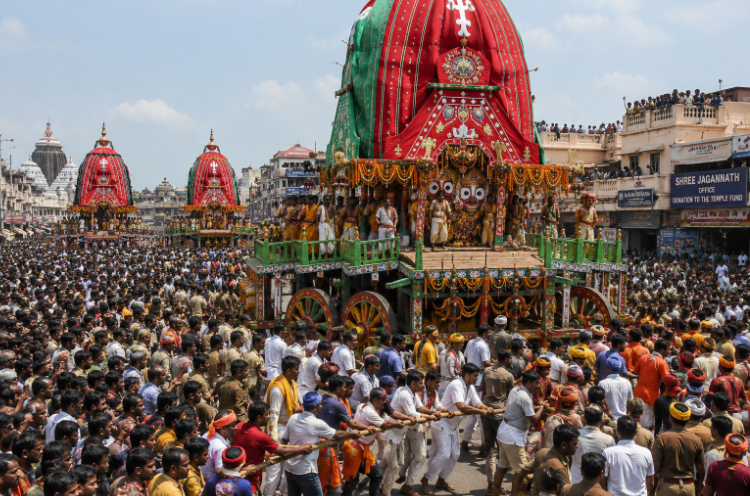
Table of Contents
Every year, during the Jagannath Rath Yatra in Puri, three magnificent wooden chariots carry Lord Jagannath, his elder brother Lord Balabhadra, and their sister Goddess Subhadra from the Jagannath Temple to the Gundicha Temple along the Bada Danda (Grand Road). One of the most remarkable traditions of the festival is that these three chariots are built afresh every year by hereditary artisans following centuries-old temple customs.
The Three Chariots of Jagannath Rath Yatra: A Closer Look at Puri's Sacred Tradition
Each chariot is unique in its size, number of wheels, canopy colours and religious significance. Together, they represent one of the most recognisable traditions of the Jagannath Rath Yatra and attract millions of devotees from India and around the world.
The Three Chariots at a Glance
Chariot Deity Approx. Height Wheels Canopy Colours Nandighosa Lord Jagannath 45 feet 16 Red and Yellow Taladhwaja Lord Balabhadra 44 feet 14 Red and Blue Darpadalana (Devadalana) Goddess Subhadra 43 feet 12 Red and Black
Nandighosa – Lord Jagannath's Chariot
Nandighosa is the largest and most prominent of the three chariots. Standing approximately 45 feet tall, it has 16 wooden wheels and is covered with a traditional red and yellow canopy. During the Rath Yatra, Lord Jagannath travels in this grand chariot from the Jagannath Temple to the Gundicha Temple, where the deities stay for several days before returning during the Bahuda Yatra.
Taladhwaja – Lord Balabhadra's Chariot
Taladhwaja is the chariot of Lord Balabhadra, the elder brother of Lord Jagannath. It stands around 44 feet tall, has 14 wooden wheels, and is decorated with a red and blue canopy. Traditionally, Taladhwaja leads the Rath Yatra procession and is the first of the three chariots to begin the journey.
Darpadalana (Devadalana) – Goddess Subhadra's Chariot
Darpadalana, also known as Devadalana, is the chariot of Goddess Subhadra. It is the smallest of the three, standing approximately 43 feet tall with 12 wooden wheels. Recognised by its red and black canopy, it travels between the chariots of Lord Balabhadra and Lord Jagannath during the procession.
How Are the Chariots Built?
One of the most distinctive features of the Jagannath Rath Yatra is that the three chariots are constructed anew every year rather than being reused. Construction begins on Akshaya Tritiya, an auspicious day in the Hindu calendar. Timber is sourced from designated forests in Odisha, and hereditary groups of carpenters, blacksmiths, painters and tailors work together following traditional measurements and temple customs that have been preserved for generations. Once the festival concludes, the wooden structures are ceremonially dismantled, and a fresh set of chariots is built for the next Rath Yatra.
Why Does Jagannath Rath Yatra Have Three Chariots?
Each of the three principal deities of the Jagannath Temple travels in a separate chariot during the Rath Yatra. Their distinct sizes, wheel counts and traditional canopy colours reflect the individual identity of Lord Jagannath, Lord Balabhadra and Goddess Subhadra. This centuries-old tradition symbolises the divine journey of the sibling deities from the Jagannath Temple to the Gundicha Temple and remains one of the defining features of the festival. If you're planning a pilgrimage to Puri, you can also explore our detailed Jagannath Temple Guide to learn about darshan timings, daily rituals, temple history and important visitor information before your visit.
ChariotDeityApprox. HeightWheelsCanopy Colours NandighosaLord Jagannath45 feet16Red and Yellow TaladhwajaLord Balabhadra44 feet14Red and Blue Darpadalana (Devadalana)Goddess Subhadra43 feet12Red and BlackAuthor
Dedicated to sharing authentic spiritual knowledge, temple heritage, and Vedic traditions across India.