
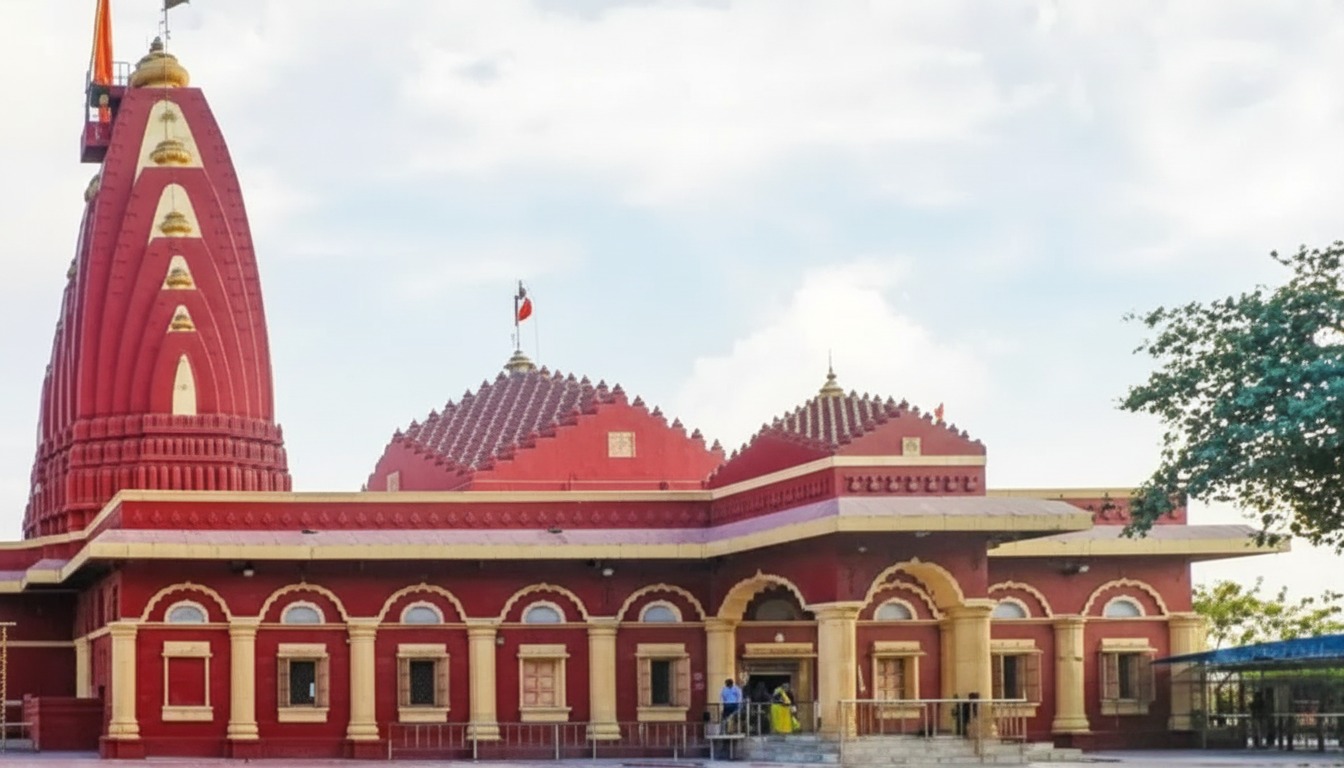
About Nageshwar Jyotirlinga Temple, Dwarka, Gujarat
Nageshwar Jyotirlinga Temple is a Shiva temple near Dwarka in Gujarat, traditionally identified with one of the twelve Jyotirlingas. The shrine stands on the route between Dwarka and Bet Dwarka and is associated with the ancient sacred region of Darukavana described in the Shiva Purana.
The temple is known for its underground sanctum, Nageshwar Mahadev, the large seated Shiva statue outside the main shrine and the traditions surrounding the Daruka-Supriya legend. Its importance comes from the connection between the Jyotirlinga tradition, the sacred geography of Dwarka and the continuing worship of Shiva at the site.
Story of Nageshwar Jyotirlinga Temple
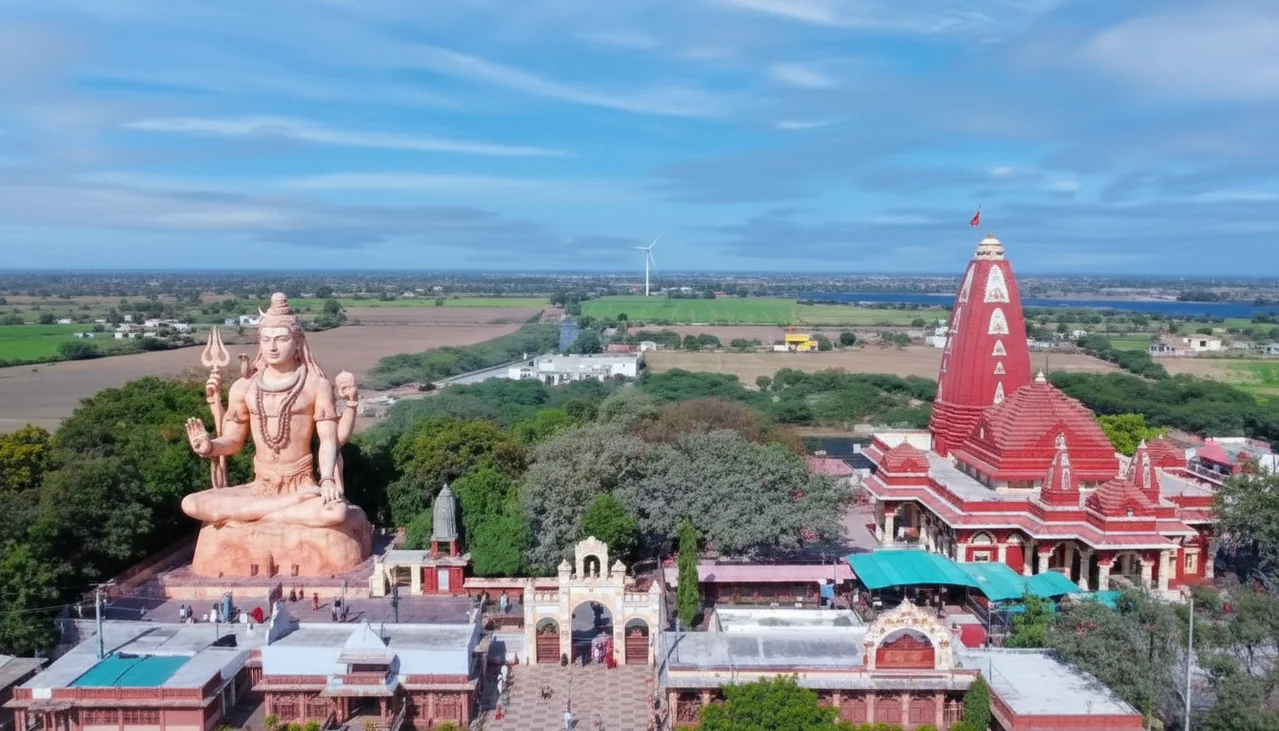
The sacred tradition of Nageshwar is older than the present temple structure. In the Shiva Purana, the Jyotirlinga known as Nagesha is associated with Darukavana, a forest in which Shiva appears to protect his devotee Supriya. The exact historical date of the original shrine at the present site is not firmly established, so the antiquity of the religious tradition should be kept separate from the history of the building seen today.
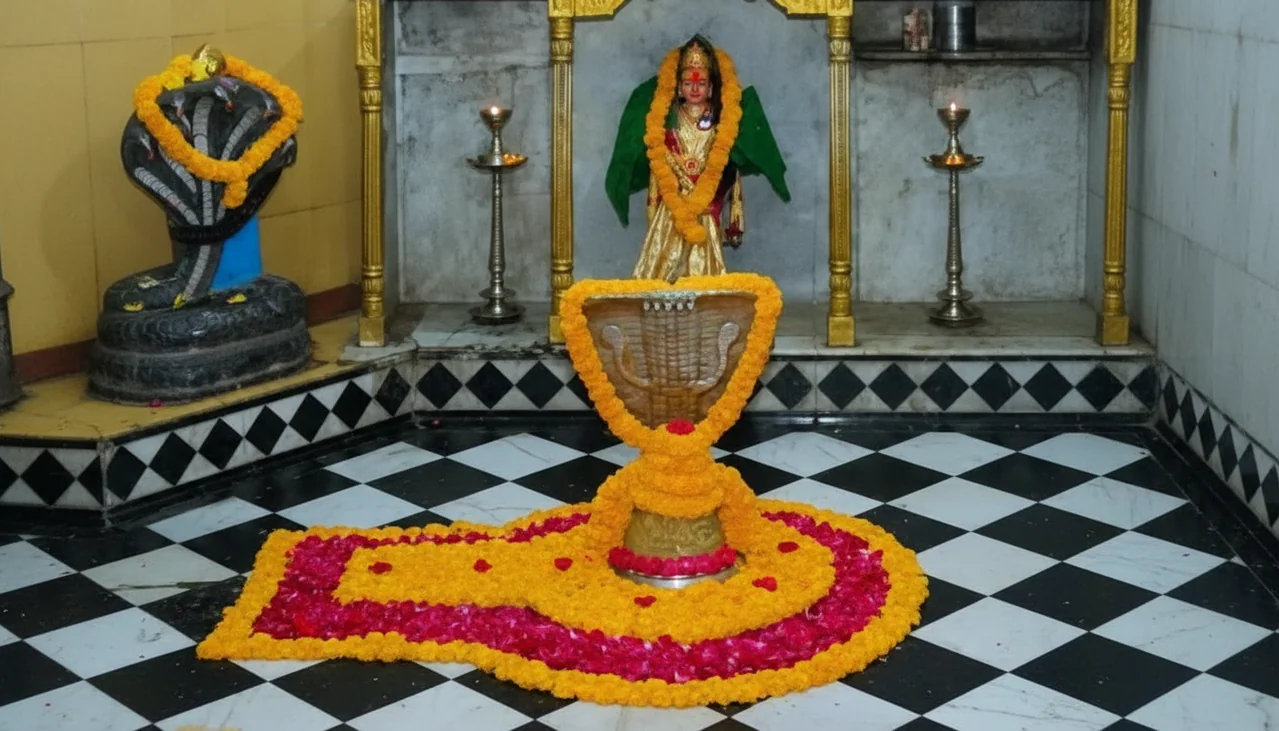
The presiding deity is Lord Shiva in the form of Nageshwar Mahadev. The Jyotirlinga is housed in an underground sanctum reached through the main temple hall. The present complex also includes a large seated statue of Lord Shiva, about 25 metres high, which has become one of the most recognisable features of the Nageshwar site.
The modern temple has a large hall leading towards the sanctum and follows a distinctive architectural interpretation based on Sayanam, or the sleeping posture of the human body. Published descriptions of the temple divide this plan into sections corresponding to the feet, hands, chest and head, with the garbhagriha placed at the head end. This gives the present structure an unusual internal arrangement while keeping the sanctum at the centre of worship.
The Shiva linga at Nageshwar is traditionally described as facing south, while the gomukha faces east. A religious tradition connects this orientation with the story of the devotee Naamdev and Shiva's presence in every direction. This is part of the sacred tradition associated with the temple and should be understood in that context rather than as a modern architectural mystery.
What Makes Nageshwar Jyotirlinga Temple Sacred for Devotees
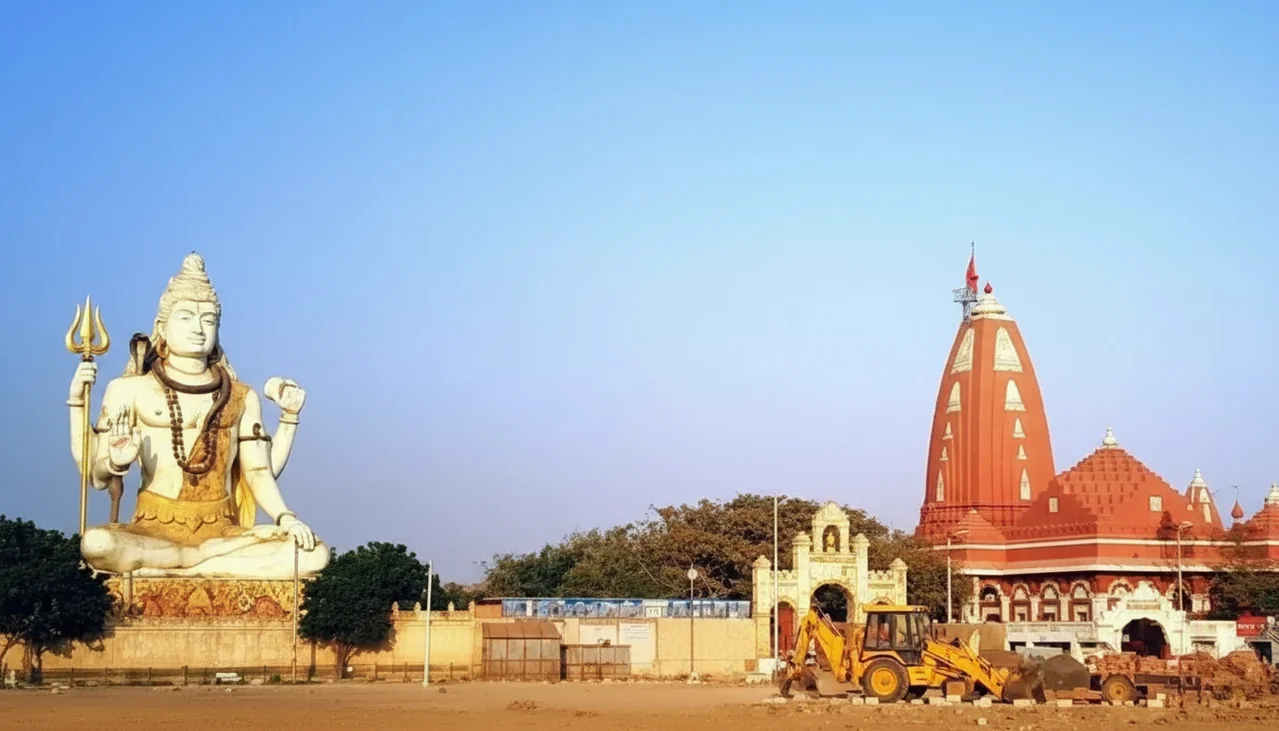
The Daruka and Supriya legend
The best-known Nageshwar tradition comes from the Shiva Purana. Daruka and Daruki, described in the tradition as powerful rakshasas, established themselves in Darukavana and troubled those who worshipped Shiva.
A devotee named Supriya was captured by Daruka and imprisoned with other people. Supriya continued to worship Shiva and encouraged the prisoners to recite Om Namah Shivaya. According to the tradition, Shiva appeared in response to their devotion and manifested as a Jyotirlinga. He protected Supriya and promised to remain in the region as a form of divine presence.
The story explains the name and religious importance of Nageshwar through the relationship between Shiva, the forest of Darukavana and the devotee who continued his worship even while imprisoned.
The Balakhilyas tradition
A separate legend, recorded by the District Devbhumi Dwarka administration with reference to the Vamana Purana, describes the sages known as the Balakhilyas worshipping Shiva in Darukavana.
According to the tradition, Shiva appeared before the sages in the form of a naked ascetic. The sages became disturbed and cursed him, causing the linga to fall to the earth. As the world began to tremble, Brahma and Vishnu approached Shiva and requested him to restore balance. Shiva then promised his continuing presence in Darukavana as a Jyotirlinga.
This is a religious narrative attached to the site and should be read as part of the Puranic tradition rather than as a historical account of the temple's construction.
Nageshwar and the Jyotirlinga tradition
Nageshwar is widely regarded in Gujarat and Dwarka pilgrimage traditions as one of the twelve Jyotirlingas of Shiva. At the same time, the identity of the Nagesh or Nagnath Jyotirlinga is discussed differently in different traditions, with Aundha Nagnath in Maharashtra and Jageshwar in Uttarakhand also associated with the same Jyotirlinga tradition.
For Naman's temple page, it is more accurate to acknowledge this traditional difference than to present one location as the only possible historical identification.
Darukavana and Dwarka
Darukavana is an important part of the Nageshwar story because it connects the Jyotirlinga tradition with a sacred forest rather than only with a built temple. Gujarat's official tourism material identifies the Nageshwar site with this tradition, while the wider religious literature does not provide a single universally accepted modern identification of Darukavana.
The connection with Darukavana is therefore best presented as the religious basis of Nageshwar's identity, while the modern location is stated separately as the temple near Dwarka in Gujarat.
Annual Festivals & Rituals at Nageshwar Jyotirlinga Temple, Dwarka, Gujarat
Daily Shiva Puja and Abhishek Celebrations at the Temple
Daily worship at Nageshwar centres on Lord Shiva in the Jyotirlinga form. Abhishek, offerings and other forms of puja are performed according to the temple's ritual schedule.
Maha Shivaratri Celebrations at the Temple
Maha Shivaratri is the principal annual festival at Nageshwar. Special worship and extended devotional observances take place, and the temple sees a substantial increase in pilgrims.
Shravan Celebrations at the Temple
The month of Shravan has special importance in Shiva worship. Devotees visit Nageshwar to offer prayers and perform traditional worship, particularly on the Mondays of the month.
Kartik Purnima Celebrations at the Temple
Kartik Purnima is also observed at the shrine as part of the annual religious calendar. The occasion brings additional devotional activity around the temple and other pilgrimage sites in the Dwarka region.
Sacred Places to Visit Near Nageshwar Jyotirlinga Temple
Dwarkadhish Temple : Dwarkadhish Temple is the principal Krishna temple of Dwarka and forms the central shrine of the city's Vaishnava pilgrimage tradition. Nageshwar is commonly visited as part of the wider Dwarka temple circuit.
Rukmini Devi Temple : Rukmini Devi Temple is dedicated to Goddess Rukmini and is one of the important shrines around Dwarka. Its location makes it a natural addition to a Nageshwar and Dwarka pilgrimage route.
Gopi Talav : Gopi Talav is associated with the traditions of Krishna and the gopis of Braj. The lake forms part of the sacred landscape around Nageshwar and Dwarka.
Bet Dwarka : Bet Dwarka is traditionally associated with Lord Krishna and is reached through the coastal pilgrimage route from the mainland. Nageshwar lies on the wider route used by pilgrims travelling between Dwarka and Bet Dwarka.
Gomti Ghat : Gomti Ghat lies beside the Dwarkadhish Temple and the mouth of the Gomti River. It is an important part of the ritual geography of Dwarka.
Plan Nageshwar Jyotirlinga Darshan
For current darshan planning, entry guidance, date-specific timings and Naman Darshan's Guided Darshan Assistance, continue to the dedicated Nageshwar Jyotirlinga Darshan page.
Common Questions About Visiting Nageshwar Jyotirlinga Temple
Visitor Information
Darshan Timing
Address
Nageshwar Jyotirlinga Temple, Daarukavanam, near Dwarka, Devbhumi Dwarka, Gujarat, India
Notable Events
Puranic tradition — Nagesha Jyotirlinga and Darukavana – The Shiva Purana preserves the religious tradition of Nagesha Jyotirlinga and connects it with Darukavana and the devotee Supriya. • Puranic tradition — Balakhilyas and Darukavana – The Balakhilyas story, cited by the District Devbhumi Dwarka administration from the Vamana Purana, links Shiva's continuing presence in Darukavana with the Jyotirlinga tradition. • 1990s — Modern reconstruction of the shrine – Secondary accounts associate the modern rebuilding and development of the present Nageshwar complex with Gulshan Kumar. The current structure should therefore be distinguished from the much older religious tradition attached to the site. • Modern period — Large seated Shiva statue established – The present complex includes a seated Shiva statue approximately 25 metres high, now one of the principal visual landmarks of Nageshwar. • 2026 — Current government tourism guidance – The District Devbhumi Dwarka administration and Gujarat Tourism continue to list Nageshwar as a major pilgrimage site on the Dwarka-Bet Dwarka route, with visitor arrangements subject to change.
How to Reach the Temple
By road: Nageshwar lies approximately 16-18 km from Dwarka, depending on the starting point and route. The temple is on the road towards Bet Dwarka.
By rail: Dwarka Railway Station is the nearest major rail connection. The District Devbhumi Dwarka administration places the temple at about 16 km from the station.
By air: Jamnagar and Porbandar are the main airports used for reaching the Dwarka region. From either airport, continue by road towards Dwarka and then Nageshwar.
Within the Dwarka circuit: Nageshwar is commonly combined with Dwarkadhish Temple, Rukmini Devi Temple and Bet Dwarka, making it practical to plan the shrine as part of a wider Dwarka pilgrimage circuit.
Vrindavan, Uttar Pradesh