
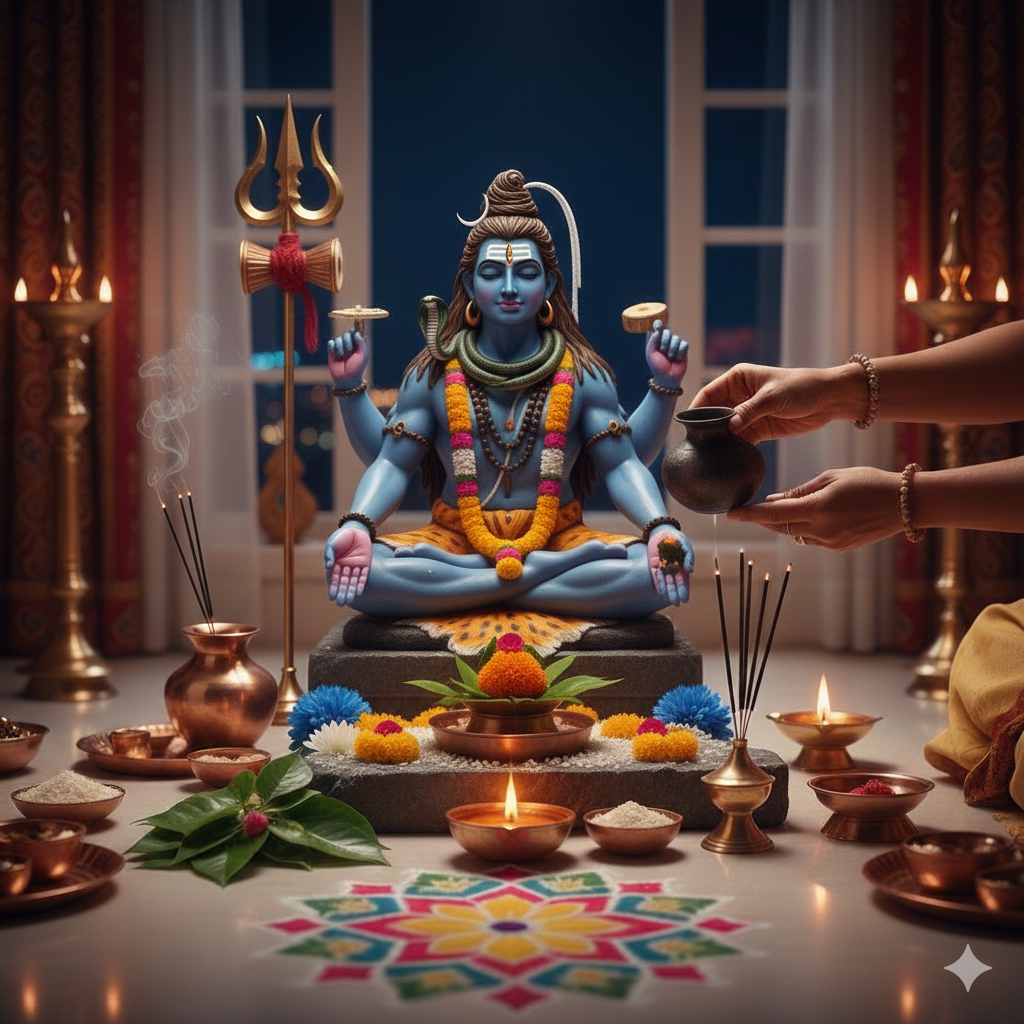
Online Shiv Rudrabhishek Puja
.png)
Select Puja Package
Book your puja in easy steps
Individual Seva
Sankalp with 1 Name & Gotra
- Live WhatsApp Video Proof
- Personalized Sankalp
- Prasad Home Delivery
Family Seva
Sankalp for up to 4 Members
- All benefits of Individual
- Complete Family Protection
ABOUT ONLINE SHIV RUDRABHISHEK PUJA
You can attend online or simply have the puja performed on your behalf with your name and gotra in the sankalp. It is a devotional offering and prayer and does not promise any outcome.
Benefits of this Online Shiv Rudrabhishek Puja
Offer prayers to Lord Shiva for calm and clarity.
Practise gratitude and surrender.
Spend a moment of stillness in your day.
Family Well-being
Pray for health and harmony in the family.
Include names and gotra in the sankalp.
Mark Mondays, Pradosh or Shivratri with devotion.
Online Convenience
Take part from any city or country.
Choose a date that suits your family.
Join the ritual remotely where the booking allows.
Note: Puja is a spiritual and devotional practice and should not be considered a substitute for medical, legal or financial advice.
Puja Samagri Included
Milk, Curd, Honey, Ghee, Sugar, Gangajal, Bilva Patra, Flowers, Sandalwood
Who Should Do This Online Shiv Rudrabhishek Puja?
Those who wish to offer Rudrabhishek but cannot be present at a temple.
NRIs and Families Abroad
Devotees living away from India who wish to participate in a traditional ritual.
Families Marking an Occasion
Households celebrating a birthday, anniversary or festival.
Spiritual Significance of Online Shiv Rudrabhishek Puja
Best Days & Muhurat Dates
Online Shiv Rudrabhishek Puja – How the Process Works
Choose your preferred date on NamanDarshan and share the devotee's name and gotra.
2. Personalised Sankalp
A sankalp is made in the devotee's name, with prayers for the well-being of the family.
3. Ritual Performed
The puja is performed by experienced priests according to traditional customs and temple practice.
4. Updates
Where temple guidelines permit, photo or video updates are shared.
5. Prasad
Prasad is arranged wherever applicable and sent to the registered address.
Spiritual Significance of Online Shiv Rudrabhishek Puja
Select Puja Package
Book your puja in easy steps
Individual Seva
Sankalp with 1 Name & Gotra
- Live WhatsApp Video Proof
- Personalized Sankalp
- Prasad Home Delivery
Family Seva
Sankalp for up to 4 Members
- All benefits of Individual
- Complete Family Protection
Devotee Experiences
"The pandits were very knowledgeable. Everything was arranged perfectly, and we received the video proof on time."
- Rahul Sharma
"Highly recommend! The process was so transparent and I felt truly blessed after the sankalp."
- Priya Desai
Common Questions About Online Shiv Rudrabhishek Puja
Ready to perform your puja?
Select your preference and submit Sankalp details to secure your spot.
Related Pujas
🕉 Suggested Temples to Explore
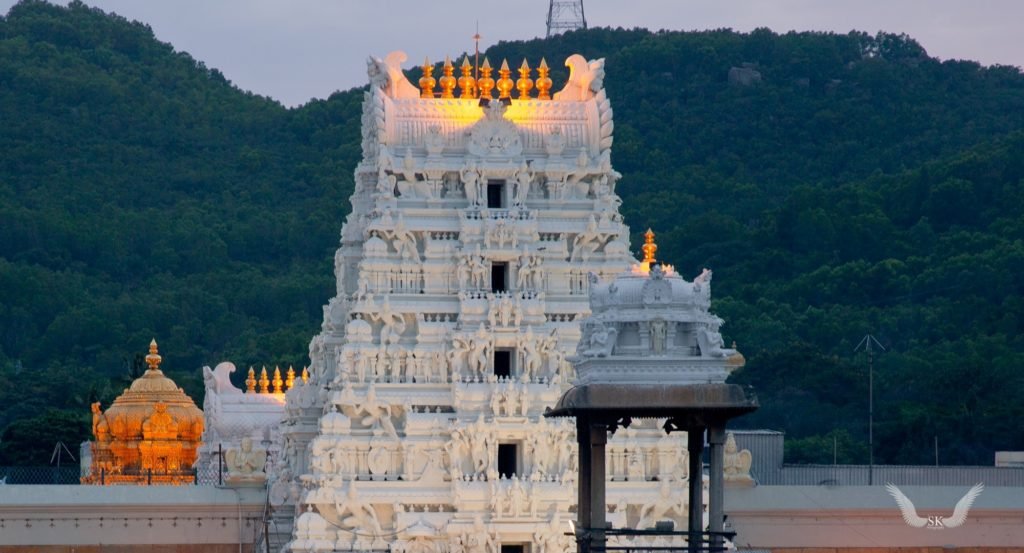
Sri Venkateswara Swami Temple
Sri Venkateswara Swami Temple is the principal shrine of Tirumala, dedicated to Lord Venkateswara, a form of Lord Vishnu. The temple stands on the Seshachalam Hills and is the centre of the Venkateswara tradition followed by millions of pilgrims. The shrine is known for its Vaishnava worship, the Ananda Nilayam Vimanam, the daily Nitis and Sevas, Brahmotsavam, Vaikunta Ekadashi and the long-standing tradition of offering one's hair as a vow. The sacred landscape also includes Bhu Varaha Swamy Temple, Swami Pushkarini and several other places connected with the Tirumala pilgrimage.
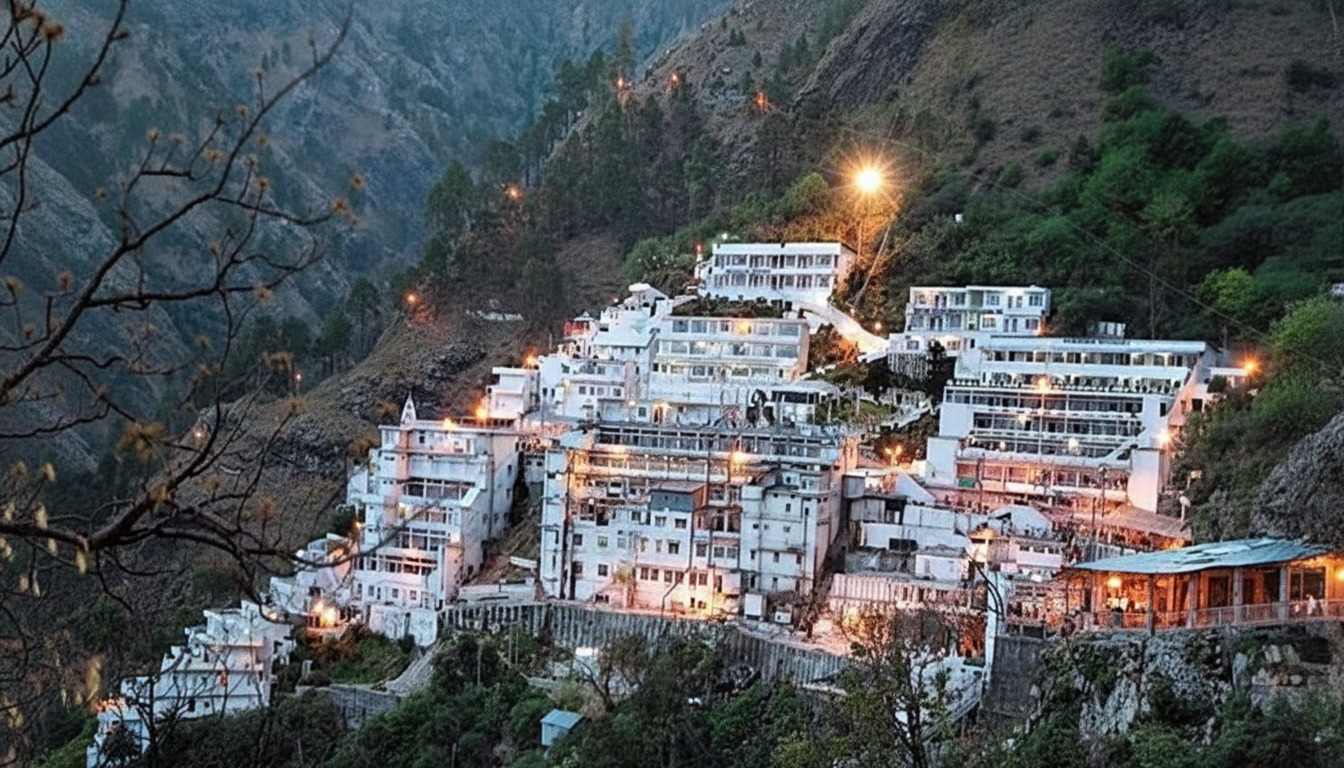
Vaishno Devi Temple
Vaishno Devi Temple, formally the Shri Mata Vaishno Devi Shrine, is a cave shrine in the Trikuta Hills near Katra. The pilgrimage ends at Bhawan, where devotees enter the Holy Cave for darshan of the three natural Pindies worshipped as Maha Kali, Maha Lakshmi and Maha Saraswati. The route to the cave passes through places associated with the Vaishno Devi tradition, including Banganga, Charan Paduka and Ardhkuwari, before reaching Bhawan and, traditionally, Bhairon Ghati.
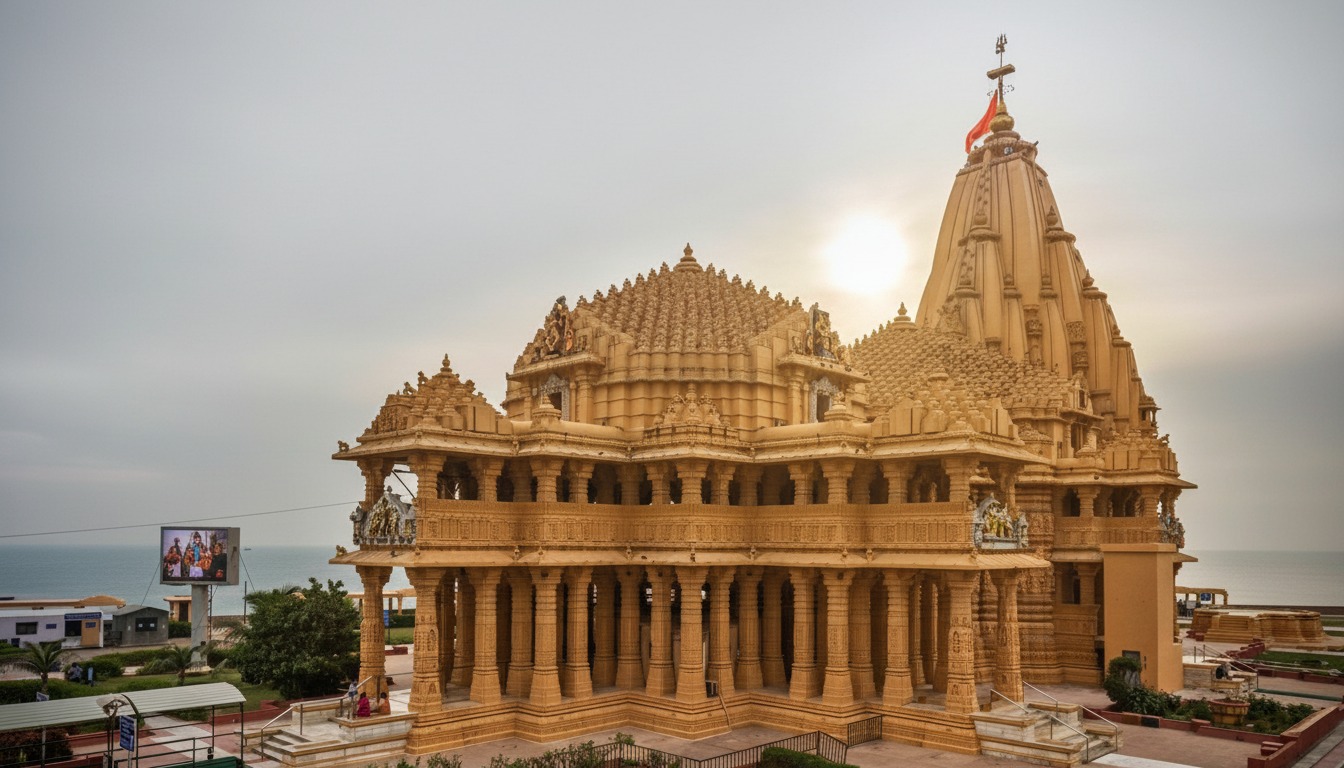
Dwarkadhish Temple
Dwarkadhish Temple, also known as Jagat Mandir, is dedicated to Lord Krishna in his form as Dwarkadhish, the Lord of Dwarka. The temple stands near the Gomti creek on the western coast of Gujarat and is one of the principal pilgrimage centres associated with Krishna. Dwarka holds a distinctive place in Hindu tradition. Here, Krishna is remembered not as the child of Gokul or the youthful Krishna of Vrindavan, but as the ruler who established his kingdom at Dwarka. The temple's importance therefore comes from the connection between Krishna's sacred story, the historic temple at the heart of the city, and the living traditions that continue to shape pilgrimage in Dwarka.