
Five Days of Diwali: Uncovering the Traditions Behind the Festival of Lights
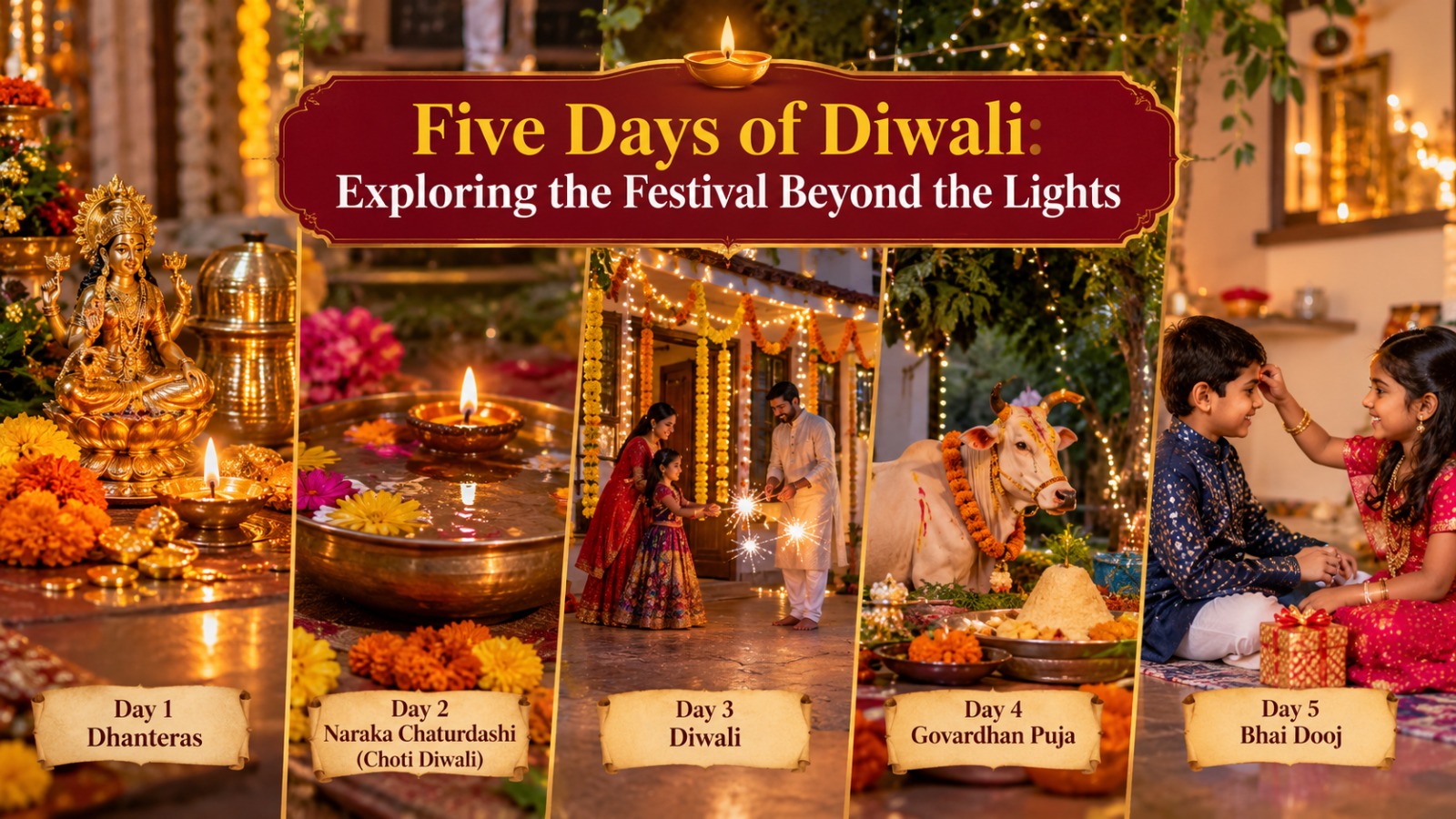
Table of Contents
Diwali is often remembered as a single evening filled with glowing diyas, family gatherings and festive prayers. However, the five days of Diwali reveal a much wider celebration, with each day carrying its own customs, meaning and place in the festival calendar. The observances traditionally begin with Dhanteras, continue through Naraka Chaturdashi and the main Diwali night, and conclude with fourth-day traditions and Bhai Dooj.
The celebrations are not exactly the same in every part of India. Some communities use different names for particular days, while regional calendars may place certain observances on different dates. Understanding this sequence makes it easier to appreciate the festival beyond its best-known night. This guide explains the five days of Diwali, their traditional practices, regional variations and the simple preparations that help families follow the festival.
Understanding the Five-Day Diwali Festival at a Glance
The Diwali festival is commonly described as a five-day celebration. Its observances move from preparation and auspicious beginnings to worship, gratitude and family relationships. Although the main Diwali night receives the most attention, the days around it have their own significance.
Here is a quick overview of the Diwali five days names and the themes commonly associated with them.
| Day | Traditional name | Main theme |
|---|---|---|
| Day 1 | Dhanteras or Dhantrayodashi | Prosperity, health and auspicious beginnings |
| Day 2 | Naraka Chaturdashi or Choti Diwali | Early morning observances and regional customs |
| Day 3 | Diwali or Lakshmi Puja | Worship, light and the main festive celebration |
| Day 4 | Govardhan Puja, Annakut, Bali Pratipada or Diwali Padwa | Gratitude, food offerings and regional traditions |
| Day 5 | Bhai Dooj or Yama Dwitiya | Family bonds and sibling relationships |
This is a widely recognised framework for understanding the five days of Diwali festival, not a fixed schedule followed identically by every community. In some regions, the fourth day is associated with a new-year observance or Bali Pratipada, while Govardhan Puja is especially prominent in other traditions. Local panchang calculations can also affect the dates.
Day 1 – Dhanteras: Preparing for an Auspicious Beginning
Dhanteras marks the traditional beginning of the Diwali festival sequence. Also known as Dhantrayodashi, it falls on the thirteenth lunar day of the dark fortnight in the Hindu month associated with Diwali. The word is connected with dhan, meaning wealth, and teras, referring to the thirteenth lunar day.
The day is commonly associated with prosperity, well-being and preparing the home for the celebrations ahead. Rather than being limited to buying something new, Dhanteras can also be understood as an occasion to organise the household and begin the festive period with a sense of care and gratitude.
Why Does Dhanteras Mark the Beginning of Diwali?
Dhanteras tradition is linked with Lord Dhanvantari, who is associated with Ayurveda and health. This gives the observance an important dimension beyond material prosperity: good health and well-being are also considered valuable forms of wealth.
Some households also worship Goddess Lakshmi, associated with prosperity, and Lord Kubera, associated with wealth. The specific deities and prayers observed can differ according to family and regional customs.
Traditional Preparations Before the Main Diwali Celebration
Dhanteras is often a day for getting the home ready for the coming festivities. Common preparations include:
These are traditions rather than compulsory rules. The meaning of an auspicious purchase is not determined by its price; families may choose a modest, useful item or follow their own customs.
Day 2 – Naraka Chaturdashi: The Day of Early Morning Observances
The second day of the Diwali celebrations is widely observed as Naraka Chaturdashi, also known as Choti Diwali, while Kali Chaudas is an important regional observance in parts of western India. A key tradition of this day is Abhyanga Snan, an early morning oil bath taken before sunrise, after which people wear clean or new clothes and begin their festive preparations. The morning ritual is traditionally associated with purification, freshness and preparing to celebrate the victory of good over evil. Although these names are closely connected, the customs and their timing can vary across regions and family traditions.
Naraka Chaturdashi, Choti Diwali and Kali Chaudas: Are They the Same?
Naraka Chaturdashi is the traditional name associated with the fourteenth lunar day. Choti Diwali, meaning “small Diwali”, is a commonly used name for the observance before the main Diwali celebration.
Kali Chaudas is particularly associated with regional practices in parts of western India. Depending on the local calendar and tradition, it may be observed alongside or in connection with Naraka Chaturdashi. The names therefore describe closely related festive observances, but their precise customs and timing are not identical everywhere.
The Importance of Abhyanga Snan and Traditional Morning Customs
One of the best-known customs associated with Naraka Chaturdashi is Abhyanga Snan, a traditional oil bath taken early in the morning. In households that observe it, the bath is part of preparing for the festive day and welcoming it with a sense of freshness.
Along with the traditional oil massage, some families use Ubatan, a natural paste made from ingredients such as turmeric, sandalwood, gram flour and other herbs. It is gently applied to the skin before the bath as part of the cleansing ritual. The use of Ubatan is a traditional practice associated with freshness and purification, although its ingredients and preparation can vary between regions and households.
Other family customs may include:
The details vary, and not every household follows every practice.
How Naraka Chaturdashi Is Observed in Different Parts of India
Regional differences help explain why searches for Choti Diwali traditions and Kali Chaudas significance can lead to different descriptions.
Maharashtra: Many households observe Abhyanga Snan early in the morning, traditionally applying oil before bathing and then wearing clean or new clothes. Families may also prepare festive snacks such as karanji and chakli, light diyas and complete household preparations for the main Diwali celebration.
Gujarat: Kali Chaudas is an important observance, with families following customs connected with prayers for protection and the removal of negativity. Depending on family tradition, people may offer prayers to Goddess Kali, light lamps and perform customary household rituals before the main Diwali festivities.
Southern India: Naraka Chaturdashi is often given particular importance, with celebrations beginning early in the morning. Many families observe an oil bath before sunrise, wear new clothes, offer prayers and prepare traditional sweets and savouries, followed by lighting lamps and other Deepavali celebrations.
The day is a useful example of how one part of the Diwali calendar can have several regional expressions.
Day 3 – Diwali: The Main Celebration of Lights and Lakshmi Puja
The third day is commonly regarded as the main Diwali celebration. It is widely associated with Lakshmi Puja, the lighting of diyas, family gatherings and festive meals. While the preceding days prepare for the occasion, the main Diwali night brings many of the festival's best-known customs together. For example, families may perform Lakshmi Puja in the evening, light rows of diyas at their doorways and share sweets with neighbours and relatives. Making Rangoli is another popular Diwali tradition across India. Families decorate entrances, courtyards and spaces near their puja areas with colourful patterns made using coloured powders, rice flour, flower petals or rice. These designs often feature flowers, diyas, geometric patterns and auspicious symbols, adding a festive welcome to the home. In many households, creating Rangoli is also a shared family activity that brings everyone together during the celebrations.
Why Is the Main Diwali Night Considered the Centre of the Festival?
The main Diwali observance is commonly associated with Amavasya, the new-moon day. In many Hindu households, prayers are offered to Goddess Lakshmi for prosperity and well-being, along with Lord Ganesha, who is associated with wisdom and auspicious beginnings.
The lighting of lamps is an important part of the celebration. Diyas illuminate homes and shared spaces, creating a festive atmosphere and expressing the familiar symbolism of light overcoming darkness.
How Families Prepare for Lakshmi Puja
Preparations for Lakshmi Puja often begin before the evening. Families may:
The exact Diwali puja samagri and method of worship can differ. Families generally follow their own customs, a trusted puja guide or the advice of their religious tradition.
You can explore Namandarshan's Diwali Lakshmi Puja service for related puja information.
What Happens During the Evening Celebration?
A common sequence for the evening may include:
The order is not universal. Some families perform the puja at a time recommended by their local calendar, while others follow established household practices.
How the Main Night Takes Different Forms Across Communities
Diwali is celebrated in different ways across religious and regional communities. In many Hindu households, Lakshmi Puja is central to the evening. In Bengal and some other communities, Kali Puja is an important observance that takes place around the same time.
Sikhs observe Bandi Chhor Divas, which has its own religious significance connected with Guru Hargobind Sahib and his release from imprisonment. It is important to recognise this as a distinct Sikh observance rather than describe it as a form of Lakshmi Puja.
These differences show why Diwali is best understood through the traditions of the communities celebrating it, rather than through one single account of the festival.
Day 4 – The Fourth Day of Diwali: Govardhan Puja, Annakut and Padwa
The fourth day is one of the most regionally varied parts of the festival. It is often described simply as Govardhan Puja, but that name does not cover every observance associated with the day. Depending on the community, it may be connected with Annakut, Bali Pratipada, Diwali Padwa or a new-year celebration.
Why Does the Fourth Day Have Different Names?
The fourth day reflects several traditions that share the same broad place in the Diwali period but have different meanings.
These observances may fall on different dates in some years because the relevant lunar-day rules do not always line up in a simple five-consecutive-date pattern.
Annakut: The Tradition of Offering Food
The word Annakut is commonly understood as a “mountain of food”. In traditions that observe it, a variety of cooked dishes, sweets and other foods are arranged as an offering.
The offering expresses gratitude and devotion. In temples, the presentation may be especially elaborate, while household observances can be simpler. After the offering, food may be distributed as prasad according to the customs of the temple or family.
Annakut also provides an opportunity to appreciate the role of food in community life: preparing it, offering it, sharing it and ensuring that others can participate in the celebration.
Govardhan Puja and the Traditions of the Braj Region
Govardhan Puja is associated with the tradition of Lord Krishna lifting Govardhan Hill to protect the people of Braj from heavy rains. The observance is commonly understood as a reminder of devotion, protection and respect for the natural world.
In the Braj region, Govardhan is also associated with parikrama, a devotional circumambulation of the sacred hill. For more about the region's Krishna traditions, explore our Vrindavan Yatra.
Diwali Padwa and Bali Pratipada in Other Regions
Bali Pratipada is connected with the story of King Mahabali and the Vamana form of Lord Vishnu. It is observed in several traditions, although the details and emphasis differ.
Diwali Padwa is particularly associated with Maharashtra, where the day may carry significance for married couples and family relationships. In Gujarat, the period is also connected with the Gujarati New Year in traditions that follow that calendar.
The fourth day is therefore a strong example of why the five days of Diwali should not be reduced to one uniform list of rituals. Its names and practices reflect different regional histories and beliefs.
Day 5 – Bhai Dooj: Bringing the Festival to a Family Celebration
Bhai Dooj is commonly described as the final day of the five-day Diwali sequence. Also known as Yama Dwitiya in some traditions, it places the focus on the relationship between brothers and sisters. After days associated with preparation, worship and food offerings, this observance gives the festival a family-centred conclusion.
Why Is Bhai Dooj Observed at the End of Diwali?
Bhai Dooj is traditionally associated with the story of Yama, the deity connected with death, and his sister Yamuna. The story is remembered in connection with a visit between the siblings and the blessings associated with their bond.
The observance is therefore linked with prayers for a brother's well-being and the affection shared between siblings. The story and its interpretation may be told differently across families and regions.
What Happens During the Bhai Dooj Ceremony?
A common Bhai Dooj ceremony may include:
The exact ceremony varies. Some families celebrate with a simple tilak and meal, while others include additional customs passed down through generations.
Bhai Dooj, Bhau Beej and Bhai Tika: Regional Names
The observance is known by different names across India. Bhau Beej is commonly used in Maharashtra, while Bhai Tika is used in Nepal. Bhai Phonta is a name associated with Bengal, and Bhai Dooj or Bhai Duj is widely recognised elsewhere.
These names reflect regional language and custom. The shared theme is the celebration of sibling affection, prayers and family ties, even though the ceremony may differ from one household to another.
Naman Darshan
Dedicated to sharing authentic spiritual knowledge, temple heritage, and Vedic traditions across India.
Frequently Asked Questions
What are the five days of Diwali in order?
The commonly recognised sequence is Dhanteras, Naraka Chaturdashi or Choti Diwali, Diwali or Lakshmi Puja, Govardhan Puja or related fourth-day observances, and Bhai Dooj. Names and dates can vary by region and calendar.
Why is Diwali celebrated over five days?
The festival includes several observances, each associated with different traditions. Together, they cover themes such as prosperity, worship, gratitude, regional identity and family relationships. The five-day sequence is a common way of describing these celebrations.
Is Naraka Chaturdashi the same as Choti Diwali?
The names are closely connected and are often used for the second day of the Diwali sequence. However, regional customs and the use of names such as Kali Chaudas can differ, so the terms are not always identical in every local tradition.
Why is the fourth day of Diwali called Govardhan Puja or Padwa?
Different communities observe different traditions on this day. Govardhan Puja and Annakut are important in some traditions, while Bali Pratipada and Diwali Padwa are significant in others. The name depends on the regional or religious custom being followed.
Why do Diwali dates differ between calendars?
Diwali observances are based on lunar tithis rather than fixed Gregorian dates. Since a tithi can begin or end at different times of the day, local calendar rules may assign an observance to different civil dates.
Does every region in India celebrate all five days?
No. The five-day sequence is a widely used framework, but not every region or household observes all five days in the same way. Some communities place greater emphasis on particular observances or follow additional traditions.